
 Worksheets
Modupe Energy and Power
Total questions: 143
Worksheet time: 3hrs 16mins
_________ is the ability to do work
Power
Strength
Energy
Force
Energy can neither be created nor destroyed.
True
False
Which is energy in motion?
Kinetic energy
Potential energy
Which one is energy at rest?
Kinetc energy
Potential energy
Potential energy + Kinetic energy = ____________
Chemical energy
Electrical energy
Mechanical energy
Thermal energy
Another word for "thermal energy" is ________________
Solar energy
Light energy
Heat energy
Electrical energy

What form of energy is this?
Electrical
Mechanical
Chemical
Thermal

What form of energy is at work here?
Heat energy
Chemical energy
Mechanical energy
Light energy
which of the following is not an example of mechanical energy?


We get __________________ energy from the radio.
light
sound
chemical
mechanical
Which of these are sources of heat energy?


What form of energy does a remote control use?
Thermal energy
Light energy
Mechanical energy
Electromagnetic energy

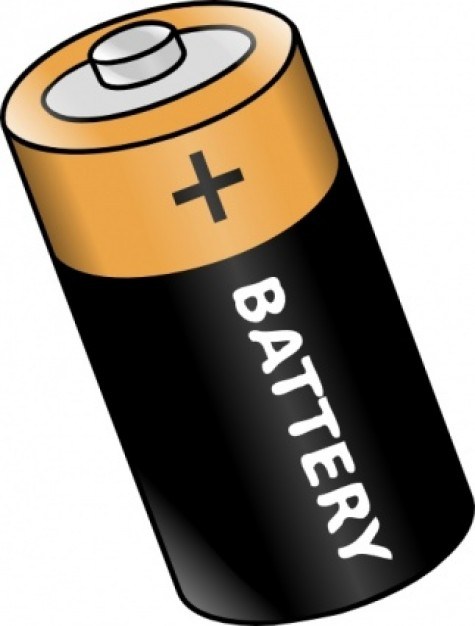
What form of energy is stored in a battery?
Chemical energy
Light energy
Mechanical energy
Heat energy

Which of the following is not a form of chemical (stored) energy?


All is correct

Which is an example of electrical energy?


Kinetic energy is associated with ---.
speed
position
direction
temperature
Potential energy is associated with ---.
speed
position
direction
temperature
The SI Unit for Energy is
Joule
Newton
Calorie
Watt
Where is the kinetic energy of pendulum at its highest?
at the top of the swing
at the bottom of the swing
at 1/4 of the swing
at 3/4 of the swing
Two workers use 100 N of force to move a sofa 2 meters in 2 seconds. How much power is required?
100 watts
400 watts
104 watts
50 watts
A worker climbs a ladder and does 8 J of work on a 2 N object. What is the distance they lift the object?
18 m
4 m
10 m
6 m
A soccer player kicks a ball with 20 Newtons of force causing it to travel 100 meters. How much work is done on the ball?
200 J
80 J
5 J
2000 J

At which point of this roller coaster is the energy 1/2 kinetic and 1/2 potential?
A
B
C
D

Suppose a cart has a kinetic energy of 0.5 J. If you add enough mass to double the mass and make the cart go three times as fast, its kinetic energy is now ---.
6 J
3 J
18 J
9 J

Two equal mass marbles are at the top of a ramp. One marble falls to the ground off the back while the other rolls down the ramp. What is true about the marbles when they reach the ground?
The marble that rolled down the ramp is moving faster than the marble that fell.
The marble that fell down the back of the ramp is moving faster than the marble that rolled.
The marble that rolled down the ramp is not moving when it reaches the ground.
The two marbles are moving with the same speed.

A block starts at rest at point P at the top of a ramp which is height h above the ground. The block slides down one side and up the other, stopping at a point less than h above the ground. Which statement is TRUE?
The block did not go as high on the other side because gravity pulls down.
The block did not go as high on the other side because potential energy always has to decrease.
The block did not go as high on the other side because work from friction made the mechanical energy less.
The situation as described is impossible to happen.

If there is no friction on this track, at which point would the coaster have the most kinetic energy?
A
B
C
D

Where is the roller coaster gaining potential energy?
A to B
B to C
C to D
The roller coaster is always losing potential energy
A 40-kg person is climbing 3 m up a flight of stairs in 6 seconds. How much work did they do climbing the stairs?
400 J
1200 J
200 J
120 J
How high up is a 3200-kg plane if it has 960000 J of potential energy?
10 m
30 m
307200000 m
300 m
The SI unit of work
Joules
Watts
Newtons
meters
The SI unit for power
Watts
Joules
Newtons
Meters
Gravitational potential energy depends on the ________ and ________ of the object.
Height and mass
Spring constant and Distance away from equilibrium
Mass and Velocity
Height and Friction
A student with a mass of 62 kg walks up a flight of stairs with a height of 3.4 meters. How can he decrease his power?
walk slower
walk faster
carry his friends books
A student with a mass of 62.0 kg walks up a flight of stairs with a height of 3.40 meters. If it takes him 7.00 seconds to get to the top, how much power did he generate?
295 W
2070 W
86.8 W
295.12 W
Kinetic energy depends on the ________ and ________ of the object.
Height and Mass
Spring constant and Distance away from equilibrium
Mass and Velocity
Height and Friction
Definition: the transfer of energy that occurs when a force moves an object
power
energy
work
Efficiency
If the amount of time to takes to move a box up the stairs decreases, what happens to power?
decreases
increases
stays the same
If the amount of time to takes to move a box up the stairs decreases, what happens to the amount of work?
decreases
increases
stays the same
Energy of Motion
kinetic
potential
power
efficiency
When using a machine, what would you call the work done by the machine?
work in
work out
distance in
distance out
efficiency
When using a machine, what would you call the work done by the operator?
work in
work out
distance in
distance out
efficiency
When using a machine, what would you call the height moved by the weight?
work in
work out
distance in
distance out
efficiency
The efficiency of a ramp is 86.7%. If the ramp does 65 J of work, how much work have you done?
more than the work done by the ramp
less than the work done by the ramp
the same amount of work done by the ramp
The efficiency of a ramp is 86.7%. If the ramp does 65 J of work, how much work have you done?
1.33 J
74.97 J
5635.5 J
56.35 J
Potential energy is stored energy. Objects that are higher up have more potential energy than objects that are lower (if both objects have the same mass). If two objects have different masses, the more massive objects has more potential energy (if they are are at the same height).
I don't get it.
GOT IT!
Potential energy is...
energy in motion
stored energy
What two factors affect an object's potential energy?
area and volume
area and height
mass and height
mass and velocity

The least amount of potential energy is at
a
b
c
d

The most potential energy is at
a
b
c
d

Where would a person have to be located to have the minimum potential energy?
up on the roof
down in the basement
in the middle
outside

Where would a person have to be located to have the maximum potential energy?
up on the roof
down in the basement
in the middle
outside

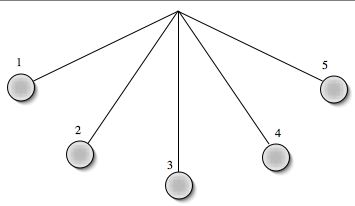
Which object will have the largest value for its potential energy?
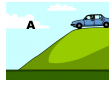
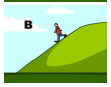
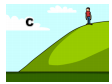
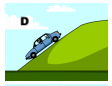
The drop tower has more potential energy...
at the top of the ride.
at the bottom of the ride.
Potential energy stays the same
I need more information
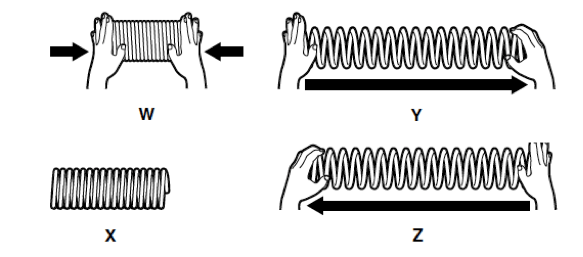
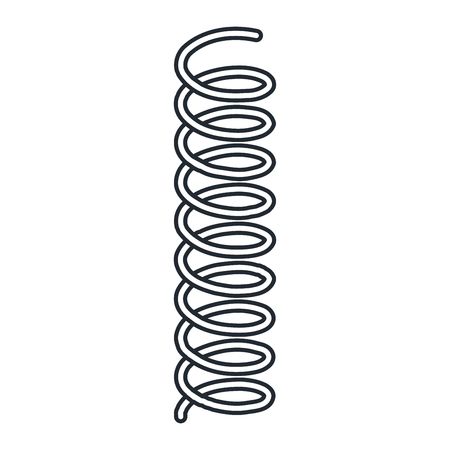
Elastic potential energy is energy stored in an object, such as a spring, due to the object being stretched or compressed. In which position is it most likely that the spring has lost its elastic potential energy?
W
Y
X
Z
Energy stored because of gravity is called:
Gravitational Potential Energy
Kinetic Energy
Mechanical Advantage
Chemical Energy
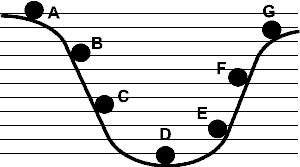
At which point does the ball has the greatest gravitational potential energy (GPE)?
A
G
D
C
G
Which would have the LEAST gravitational potential energy (GPE)?
A ball sitting on the ground
Moon viewed from the Earth
An airplane flying 30,000 feet above the ground
A rock sitting on top of Mt. Everest
How could you increase the gravitational potential energy of an object without changing its mass and gravity?
Make the object larger
Lower the object towards the ground
Raise the object farther off the ground
Allow the object to roll on the ground
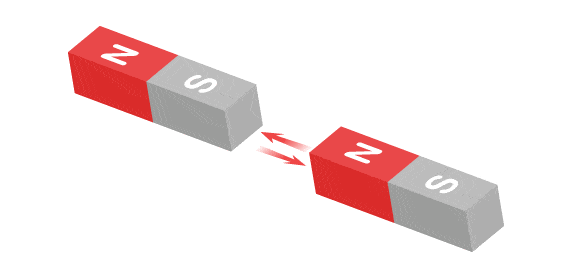

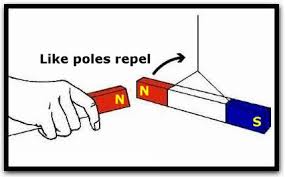
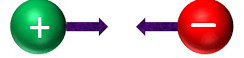
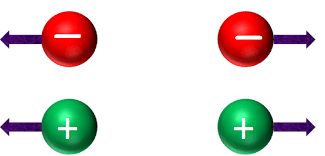
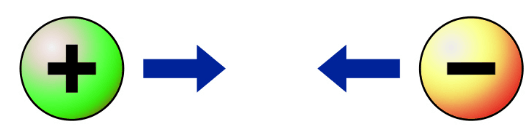

Which picture is NOT an example of Chemical PE?


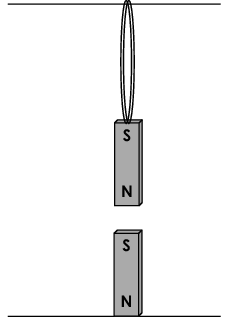
The upper magnet is hung from the top of a box with a rubber band.
The bottom magnet is held in place at the bottom of a box.
What THREE potential energies are affecting this attraction in the picture?
Gravitational, Electrical, Chemical
Gravitational, Elastic, Chemical
Magnetic, Elastic, Chemical
Gravitational, Magnetic, Elastic
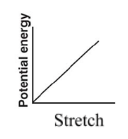
What potential energy is this graph representing?
Electric
Elastic
Magnetic
Gravitational
Which piece of evidence BEST represents Chemical PE being released?
a rubber band flung a far distance
an apple falling from a tree
2 magnets repelling
water temperature increasing
Energy stored because of gravity is called:
Gravitational Potential Energy
Kinetic Energy
Mechanical Advantage
Chemical Energy
At which point does the ball has the greatest gravitational potential energy (GPE)?
A
G
D
C
G
Which would have the LEAST gravitational potential energy (GPE)?
A ball sitting on the ground
Moon viewed from the Earth
An airplane flying 30,000 feet above the ground
A rock sitting on top of Mt. Everest
How could you increase the gravitational potential energy of an object without changing its mass and gravity?
Make the object larger
Lower the object towards the ground
Raise the object farther off the ground
Allow the object to roll on the ground
How could you increase the object's gravitational potential energy (GPE) without changing its distance from the ground (height) and gravity?
Decrease the object's mass
Increase the object's height
Increase the object's mass
Decrease the object's height
____________ is the ability to do work.
Energy
Force
Friction
Motion
When you are holding a book, energy is stored between the book and Earth; this type of energy is called ________ potential energy.
Kinetic Energy
Chemical Energy
Gravitational Potential Energy
Electric Energy
Gravitational potential energy depends on the strength of gravity, ________ and ________ of the object.
height and mass
friction and movement
mass and movement
height and friction

You throw a ball into the air as shown in the diagram. At what point does the ball have the most gravitational potential energy?
W
X
Y
Z

At which position does the child on the swing have the most gravitational potential energy?
W
X
Y
Z

At which point on the roller coaster is the gravitational potential energy the greatest?
W
X
Y
Z

What kind of energy is in a rock at the edge of a cliff?
Gravitational Potential Energy
Kinetic Energy
Both potential and kinetic energy
none of the above
Which is the correct unit for expressing gravitational potential energy?
Joule
Newton
m/s2
meter
Which of the following is the correct equation for calculating an object's gravitational potential energy?
PE = mgh
PE = mg / h
PE = mg + h
PE = gh
What is the value of the Earth's acceleration due to gravity (g)?
9.8 m/s2
100 m/s2
25 m/s2
3.14 m/s2
What is the gravitational potential energy (GPE) of a 1 kilogram book that is 1 meter above the ground?
g = 9.8 m/s2
9.8 Joules
1.0 Joule
0.10 Joule
11.8 m/s2

A cheetah can run briefly with a speed of 31.0 m/s. Suppose a cheetah with a mass of 47.0 kg runs at this speed. What is the cheetah’s kinetic energy?
1457 Joules
22,584 Joules
15 Joules
45,167Joules
The statement that "the energy within a system remains constant and cannot be created or destroyed, only transformed" best sums up _________.
Something Mr. Lance likes to say.
Life
Law of Conservation of Energy
The scientific method
Newton's Third Law
What is energy?
something that picks up things, like a magnet.
Motion of an object
ability to do work
magic rays of sunshine that come down when you're feeling blue.
What is the kinetic energy of a 4kg shotput thrown with a velocity of 13m/s
676 J
52 J
17J
338 J
What is the kinetic energy of a ball with a mass of 5kg rolling at 10m/s
50 J
500 J
250 J
25 J


