
 Worksheets
2nd semester review
Total questions: 105
Worksheet time: 3hrs 46mins

Choose the correct electron configuration for Nickel (Ni).
1s2 2s2 2p6 3s2 3p6 4s2 3d8
1s2 2s2 2p6 3s2 3p6 4s2 4d8
1s2 2s2 2p6 3s2 3p6 4s10
1s2 2s2 2p6 3s2 3p6 4s2 4p8

What is the position of an element in the periodic table if its electron configuration is 1s2 2s2 2p6 3s2 3p5?
Group 1A
Group 2A
Group 5A
Group 7A

What is the noble gas configuration for silicon?
[Ne] 3s2 3p1
[Ar] 4s1
[Kr] 5s1
[Ne] 3s2 3p2

This orbital diagram represents which neutral element?
Hint: Each half arrow is an electron
Nitrogen
Oxygen
Carbon
Neon

This orbital diagram represents which element?
Hint: Each half arrow is an electron
Sodium
Magnesium
Aluminum
Iron
How many valence electrons are in Phosphorus?
Hint: Use the group # on the periodic table to tell you how many electrons it has on the outer orbital.
Which of the following is a correct electron dot structure?
Hint: Use the group # it is in to figure out how many valence electrons it has.


How many valence electrons does Tin (Sn) have?
Hint: Use the group # it is in to figure out how many valence electrons it has.
8
7
5
4

What type of compound is this?
Ionic = metal & nonmetal
Covalent = nonmetal only
Metallic = metallic only
Ionic
Covalent
Metallic

What type of bonding happens between the atoms in this compound?
Ionic bonding - electrons move from one atom to another
Covalent bonding - electrons are shared between 2 atoms.
Metallic bonding - electrons are released by all the atoms and they are free to move around.

What type of bonding exists between the atoms in this compound?
Ionic bonding - electrons move from one atom to another
Covalent bonding - electrons are shared between 2 atoms.
Metallic bonding - electrons are released by all the atoms and they are free to move around.

What type of compound is this?
Ionic = metal & nonmetal
Covalent = nonmetal only
Metallic = metallic only
Ionic
Molecular
Metallic
How many atoms are there TOTAL in:
CH3CH2CH2OH
7
9
12
14
How many atoms are in the compound: Al(OH)3
3
4
6
7
Calculate the molar mass of Ba(C2H3O2)2
Hint: Molar mass is calculated by adding all the element masses using the periodic table.
255.43 g = 1 mol
237.43 g = 1 mol
228.43 g = 1 mol
196.43 g = 1 mol
Calculate the molar mass of NH4NO2
Hint: Molar mass is calculated by adding all the element masses using the periodic table.
50.06 g = 1 mol
60.12 g = 1 mol
64.06 g = 1 mol
78.04 g = 1 mol

What is the percent composition by mass of oxygen in the compound MgSO4?
20%
27%
46%
53%

What is the percent by mass of magnesium in MgO?
20%
40%
50%
60%

What is the empirical formula if you have a compound that is made up of 81.82% carbon and 18.18% hydrogen?
C3H8
CH4
C2H2
C4H10

What is the empirical formula of a compound that has the molecular formula of C2H4?
Hint: Empirical formulas are just the most simplified version of the molecular formula.
C2H3
CH3
C2H6
C2H2

Name the following compound: Li3P
Hint: Use your ion reference sheet and periodic table
lithium phosphate
lithium phosphide
lithium phosphorus
lithium phosphite

What is the name of the compound Ni3N2?
Hint: Use your ion reference sheet and periodic table
nickel (I) nitride
nickel (II) nitride
nickel (III) nitrite
nickel (II) nitrate

The chemical compound for sodium phosphite would be:
Hint: Use your ion reference sheet and periodic table
Na3P
Na2PO4
Na3PO3
Na(PO3)3

Name the following ionic compound: Cr(NO2)3
Hint: Use your ion reference sheet and periodic table
chromium nitrite
chromium nitride
chromium III nitride
chromium III nitrite
Ionic compounds have ____ melting point temperatures.
high
low
medium
very low
Ionic compounds are _______ at room temperature.
gas
liquid
solid
plasma
Ionic compounds are good electrical conductors when _____.
solids
crystalline
gaseous
melted or in a solution
Ionic compounds are _____.
malleable
ductile
soft
brittle
Ionic compounds are brittle because when trying to hammer, stretch, or bend them ions with LIKE charges get lined up beside each other, and they ___ each other.
strongly attract
only mildly attract
strongly repel
only mildly repel
Ionic compounds usually (a) dissolve in water.

The reason that a sodium ion bonds with a chlorine ion is because
(two correct answers)
Chlorine transfers an electron to Sodium
the opposite charge forms a strong attraction
small ions are attracted to large ions
Sodium transfers an electron to Chlorine
If I gain electrons by rubbing my shoes on a carpet, I will...
become positive because I've added more particles to my body.
become negative because I've added more negative charge to my body.
become positive because I've added more positive charge to my body.
stay neutral because I already had electrons, now I just have more.

What do the dots represent for the oxygen atom?
There are 6 valence electrons.
There are 6 total electrons.
Oxygen has atomic number of 6.
Oxygen will give away 6 electrons in order to gain stability.
Which is the only nonmetal that is able to bond with 4 different atoms?
Oxygen
Carbon
Nitrogen
Hydrogen
Which Electron Dot Model correctly shows an O2 molecule?


How many total atoms are present in a molecule of diphosphorus pentoxide?
Hint: The prefixes tell you the number of atoms of each element!
2
5
7
9
Which of the following elements can form a triple covalent bond?
Hint: You would need to draw the dots it has and see how many dots are single and able to bond.
Nitrogen
Oxygen
Chlorine
Potassium

The chemical name of SO3 is:
Hint: Molecular compounds use prefixes in their names.
However, you do not use "mono" on the first element.
sulfate
sulfur oxide
sulfur trioxide
monosulfur trioxide

The chemical formula of dinitrogen tetroxide is:
Ni₂O₄
NiO
N₂O₄
NiO₂

What is the correct name for NO?
Hint: Molecular compounds use prefixes in their names.
However, you do not use "mono" on the first element.
Mononitrogen Monoxide
Nitrogen Monoxide
Mononitrogen Dioxide
Nitrogen Oxide
How many total electrons are shared between two atoms in a double bond?
2
4
6
8
the number of valence electrons
the amount of paired dots it has
the amount of unpaired dots it has
the group number
Some are solids, some are liquids, and some are gases at room temperature.
Which type of compound is this?
ionic compounds
molecular compounds
Which of the following substances will not dissolve in water?
Salt
Sugar
Oil
Baking Soda
Water is polar. What does that mean?
it is a molecule with opposite charges on opposite ends
it is a molecule with no charge
it is a molecule with identical charges on opposite ends
it is a molecule with too many protons

What are the intermolecular attractions called between two water molecules?
Hydrogen Bonds
Dispersion Forces
Dipole-Dipole Forces
Covalent Bonds
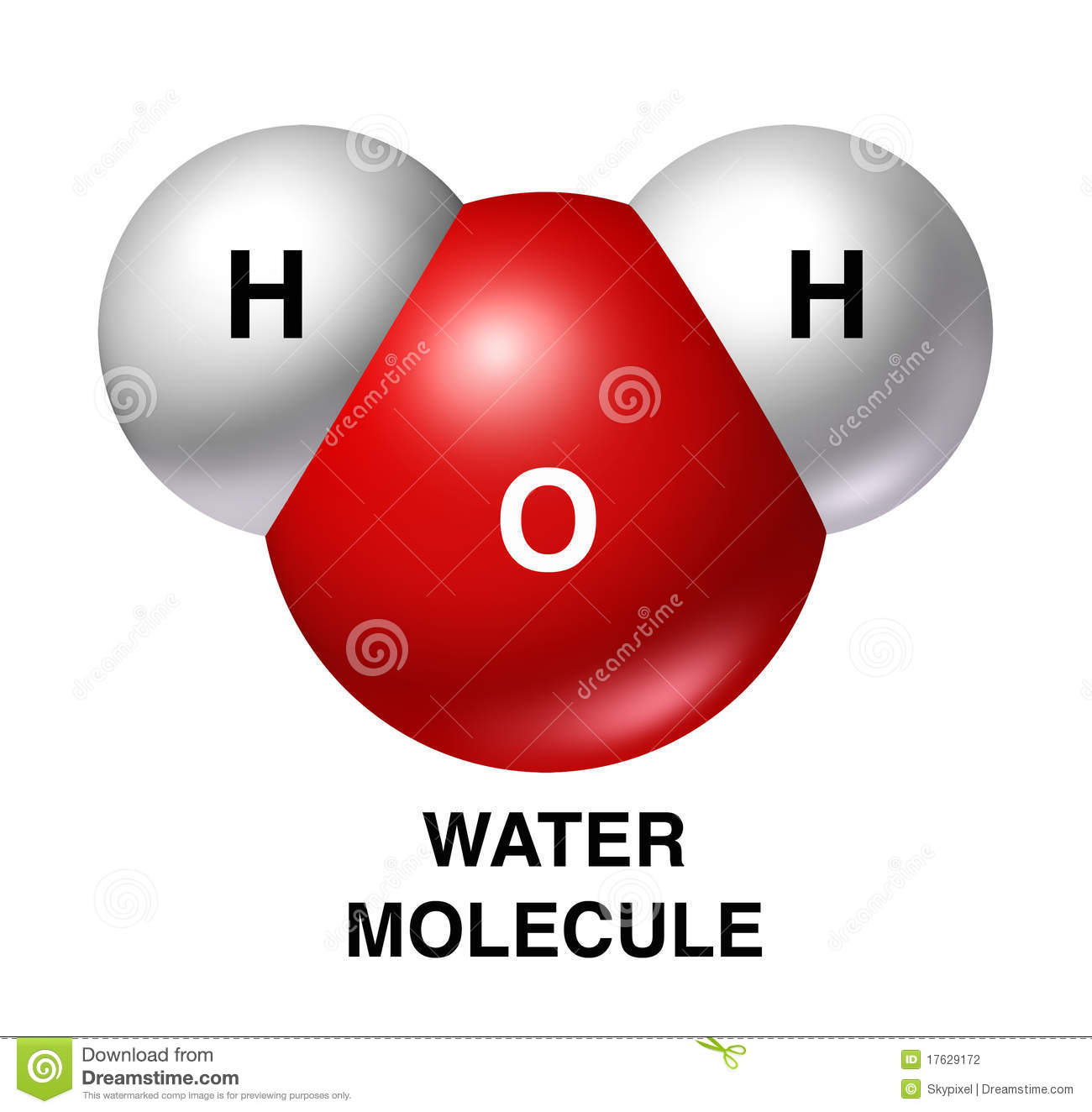
Which part of a water molecule has a Positive Charge?
Hint: it's the atom that is less electronegative
The Hydrogen
The Oxygen
The Top
The Bottom

Which formula represents a nonpolar molecule?
Nonpolar bonding has a electronegativity difference of 0.0 - 0.4
Polar bonding has an electronegativity difference of 0.5 - 1.9
HBr
H2S
NH3
PCl3

Classify the following as having polar or nonpolar bonding: SF2
Nonpolar bonding has a electronegativity difference of 0.0 - 0.4
Polar bonding has an electronegativity difference of 0.5 - 1.9
polar
nonpolar

Classify NH3 in terms of polarity.
Nonpolar bonding has a electronegativity difference of 0.0 - 0.4
Polar bonding has an electronegativity difference of 0.5 - 1.9
polar
nonpolar

Classify CH4 as having polar or nonpolar bonding.
Nonpolar bonding has a electronegativity difference of 0.0 - 0.4
Polar bonding has an electronegativity difference of 0.5 - 1.9
polar
nonpolar

The strongest intermolecular attractions for this compound is
Dipole-dipole
London dispersion
Hydrogen bonds
dipole-induced dipole attractions
Which molecule has the strongest intermolecular forces?
Hint: dispersion is the weakest, dipole-dipole is middle, and hydrogen bonding is strongest
H-F
H-Cl
Br-Br
Cl-I
Type of intermolecular force present in I2, Br2, and Cl2.
Hint: these molecules are all non-polar
dipole-dipole
hydrogen bonding
dispersion
Which of the following molecules can attract to other molecules with dispersion and dipole-dipole, but not hydrogen bonding?


List the 3 intermolecular forces from strongest to weakest.
Hydrogen Bond, London Dispersion, Dipole-dipole
London Dispersion, Dipole-dipole,
Hydrogen Bond
Hydrogen Bond, Dipole-dipole, London Dispersion
Dipole-dipole, Hydrogen Bond, London Dispersion
Which of the following forces are found between two NONPOLAR molecules?
Dispersion Forces
Dipole-dipole interactions
Hydrogen bonding
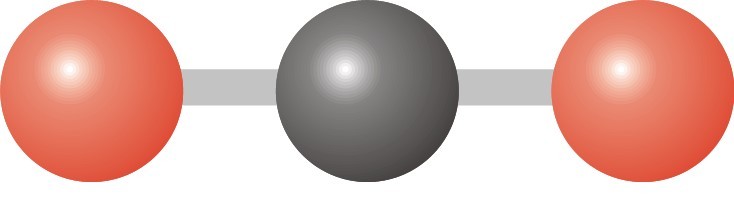
What shape does this molecule have?
trigonal planar
tetrahedral
bent
linear
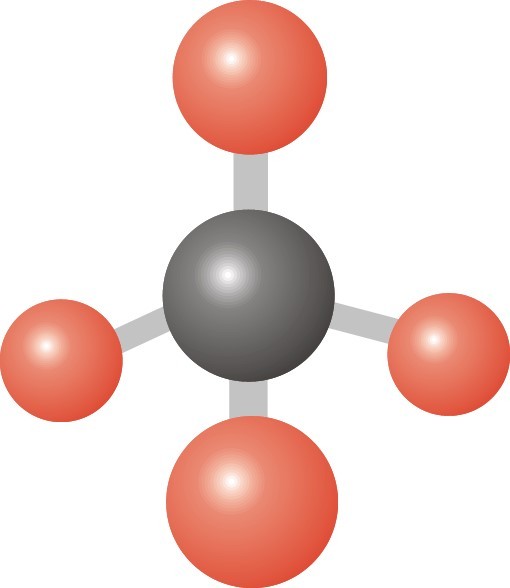
What is the name of this molecule shape?
tetrahedral
octahedral
trigonal pyramidal
bent
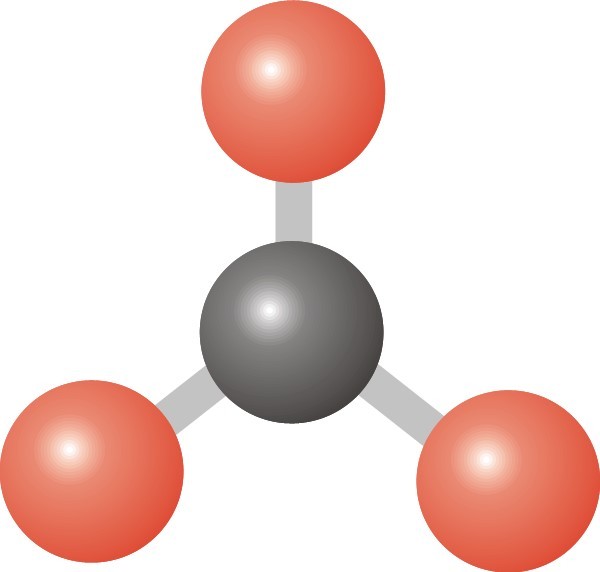
What is the name of this molecule shape?
trigonal pyramidal
trigonal planar
bent
tetrahedral
Metallic bonds form because metals
"want" to give up valence electrons
always share valence electrons
have many valence electrons
always gain valence electrons
Metals are used to make electric wires mainly because of which two properties?
are ductile
are shiny
have free moving electrons
They have a high melting point
What are some benefits of metal alloys, such as steel, bronze, and brass? (choose all that apply)
they can be stronger than pure metal
they may not rust/corrode as easily
they don't have electrons
they form covalent bonds

What is the formula for phosphorous acid?
Hint: "Sprite is delicious"
H3PO4
H2PO4
H3P
H3PO3

What is the formula for nitric acid?
Hint: "I ate something icky"
HNO2
HNO3
HNO4
H2NO3
Name this acid with the formula HF
hydrofluoric acid
hypofluoric acid
hydrogen fluorine acid
fluoric acid

What kind of compound is H2CO3?
molecular
covalent
base
acid

Name the following base
Al(OH)3
Aluminum monohydroxide
Aluminum hydroxide
Monoaluminum trihydroxide
Aluminum Trioxide

Write the formula of the following compound.
Iron(III) hydroxide.
Fe(OH)3
Fe(OH)2
Fe OH3
Balance this equation.
_CF4 + _Br2 --> _CBr4 + _F2
2,1,2,1
1,2,2,1
1,2,1,2
2,2,2,2
_Al +_HCl --> _H2 +_AlCl3
2 Al + 3 CuCl2 ----> 3 Cu + 2 AlCl3
combustion
synthesis
double replacement
single replacement
C3H8 + 5 O2 ---> 3 CO2 + 4 H2O
single replacement
double replacement
combustion
decomposition
AgNO3 + NaCl ---> AgCl + NaNO3
double replacement
single replacement
combustion
decompostion
2 MgO ----> 2 Mg + O2
synthesis
single replacement
combustion
decomposition
What are the correct products for this acid base reaction HBr + Mg(OH)2 →
Hint: This is an acid base reaction that follows the pattern of double replacement.
HMg + Br(OH)2
H2O + MgBr2
H2O + Mg2Br
MgO2 + H2Br
4 Fe + 3O2 ---> 2 Fe2O3
decomposition
combustion
synthesis
single replacement
a solid substance dissolving in a liquid

In what state is this substance?
solid precipitate
dissolved in water
released as a gas
liquid
Translate the word equation below.
Sulfur Trioxide reacts with Water to form Sulfuric Acid (H2SO4).
SO3 + H2O → H2SO4
SO → HO + HSO
SO2 + H2O → H2SO4
SO → H2O + H2SO4
Translate the word equation below:
Nitrogen gas reacts with Hydrogen gas to form Nitrogen trihydride gas
N → H + NH3
N2 + H2 → NH3
N + H → NH3
N2 → H2 + NH3

Which is the correct chemical equation for the following: Solid Zn reacts with silver (I) chloride to produce Zinc (II) chloride and silver metal
Zn + AgCl → ZnCl2 + Ag
ZnCl2 + Ag → Zn + AgCl
ZnCl2 + Ag2 → Zn + AgCl
Zn2Cl + Ag → Zn + AgCl

Which is the correct chemical equation for the following: Barium Chloride combined with sodium sulfide yields barium sulfide and sodium chloride
BaCl + NaS → BaS+ NaCl
BaCl2 + Na2S → BaS+ NaCl
BaS+ NaCl → BaCl + NaS
BaCl2 + Na2S → BaS+ NaCl2

Magnesium can be burned in oxygen to produce solid magnesium oxide.
Mg(s) + O2(g)→ MgO(s)
Mg(s) + O(g) → MgO(s)
Mg(s) + CO2(g) → MgO(s) + C(s)
Mg(s) + O2(g) → Mg2O2(s)
7.3 x 1025
3.3 x 10²²
3.1 x 1024
8.6 x 1024
What is the mass of 2.5 mole of oxygen gas O2?
40. g
80. g
16 g
32 g
Calculate the number of atoms in 0.0340 g Zn.
5.20 x 10⁻⁴ atoms Zn
3.13 x 10²³ atoms Zn
3.13 x 10²⁰ atoms Zn
2.05 x 10²² atoms Zn
You have 3.5 L of H2 at STP. How many moles of gas are there?
22.4 mol
22.4 L
0.16 mol
0.16 L
2H2 + O2 → 2H2O How many moles of oxygen are consumed if 8 moles H2 react completely?
How many moles of oxygen are produced when 6.7 moles of KClO3 decompose completely?
How many grams of aluminum sulfate would be formed if 250g H2SO4 completely reacted with aluminum?
How many moles of carbon dioxide are produced from the combustion of 110 g of CH4?
12.00 moles of NaClO3 will produce how many grams of O2?
What volume, in milliliters, of 10.0 M NaOH is needed to prepare 300 mL of 2.00 M NaOH by dilution?
0.067 mL
60.0 mL
100 mL
125 mL
How many liters 0.110 M nitric acid can be prepared by diluting 5.00 mL of 15.3 M stock solution?
1530 mL
1.53 L
0.0654L
0.153 L
A solution is made by dissolving 0.50 mole of NaCl in enough water to give a final volume of 400.0 mL. What is the molarity of the solution?
0.10 M
0.40 M
1.25 M
2.33 M

