wayground logo

Free Printable Worksheets

Font size

S
M
L
XL
Worksheets

Practice-DNA

Total questions: 35

Worksheet time: 31mins

Name
Class
Date
1.

What makes up the SIDES of a DNA ladder?

a)

nitrogen bases

b)

sugars & phosphates

c)

genes & chromosomes

d)

RNA

2.

What makes up the rungs (steps) of a DNA ladder?

a)

sugars & phosphates

b)

nitrogen bases

c)

sugars

d)

genes & chromosomes

3.
Which of the following best describes a DNA molecule?
a)
double helix
b)
contains ribose
c)
made of amino acids
d)
contains Uracil
4.
Nitrogenous bases are joined by which type of bond?
a)
polar bonds
b)
ionic bonds
c)
covalent bonds
d)
hydrogen bonds
5.
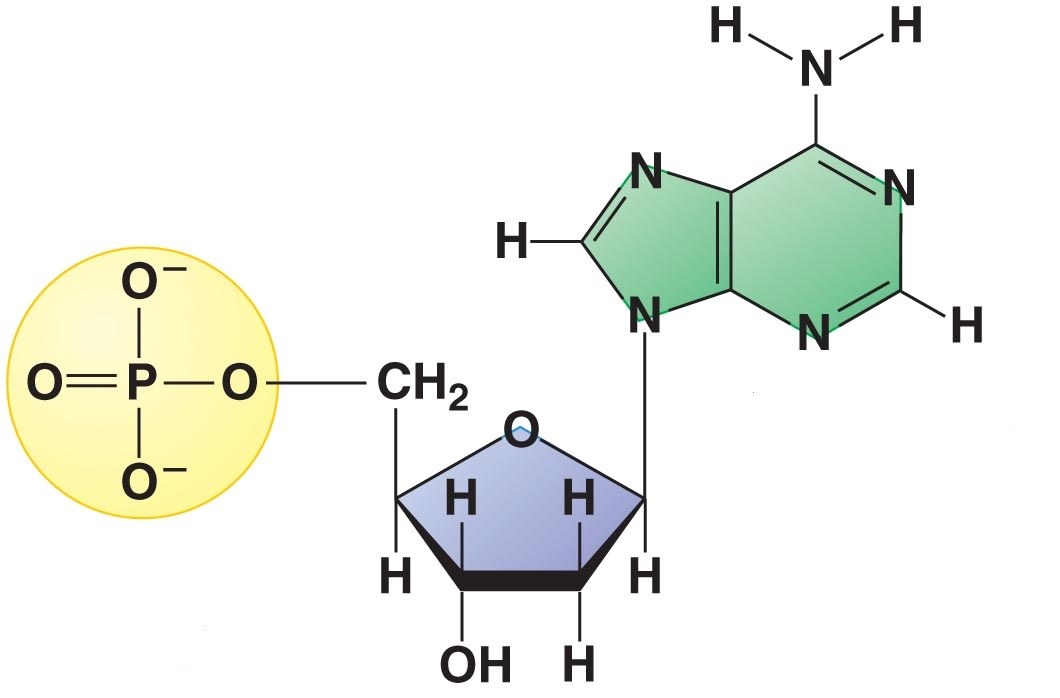
What are the three components of a nucleotide?
a)
sugar, hydrogen, nitrogen base
b)
sugar, oxygen, nitrogen base
c)
sugar, phosphate, nitrogen base
d)
sugar, phosphate, protein
6.
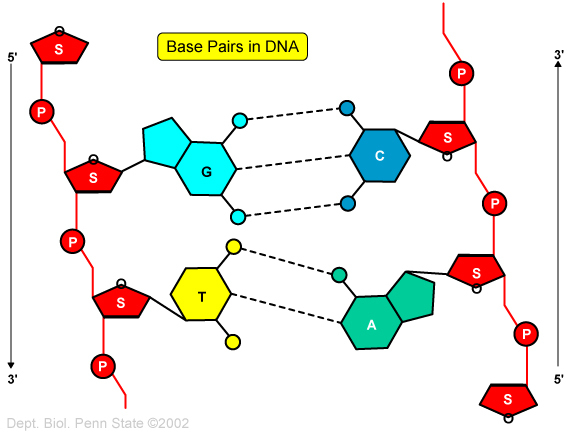
Cytosine always pairs with
a)
Adenine
b)
Thymine
c)
Uracil
d)
Guanine
7.
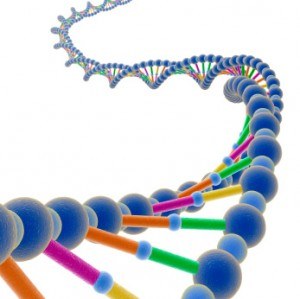
Name this structure
a)
double helix
b)
nucelotide
c)
twisted ladder
d)
hydrogen bond
8.
Guanine bonds with ______________.
a)
Adenine
b)
Guanine
c)
Cytosine
d)
Thymine
9.
What is the complement to the DNA strand below:
5'-ATGCCAT-3'
a)
5'-TACGGTA-3'
b)
3'-TACGGTA-5'
c)
3'-ATGGCAT-5'
d)
5'-ATGGCAT-3'
10.
What is the significance of the sequence (order) of the Nitrogen Bases in DNA?
a)
The order of the Nitrogen Bases determines the number of chromosomes present in an organism.
b)
The order of the Nitrogen Bases determines the traits that an organism will possess (have).
c)
The order of the Nitrogen Bases determines the gender of an organism.
d)
The order of the Nitrogen Bases determines whether an organism is abiotic biotic.
11.

Which of the following is a base pair?

a)

Adenine - Cytosine

b)

Cytosine - Thymine

c)

Deoxyribose - Cytosine

d)

Cytosine - Guanine

12.
The sugar in DNA is ?
a)
sucrose
b)
glucose
c)
deoxyribose
d)
fructose
13.
Which sequence of DNA bases would pair with this partial strand
CAT TCA CTG
a)
ATG TGA CAG
b)
TAC ACT GTC
c)
GTA AGT GAC
d)
CAT TCA CTG
14.
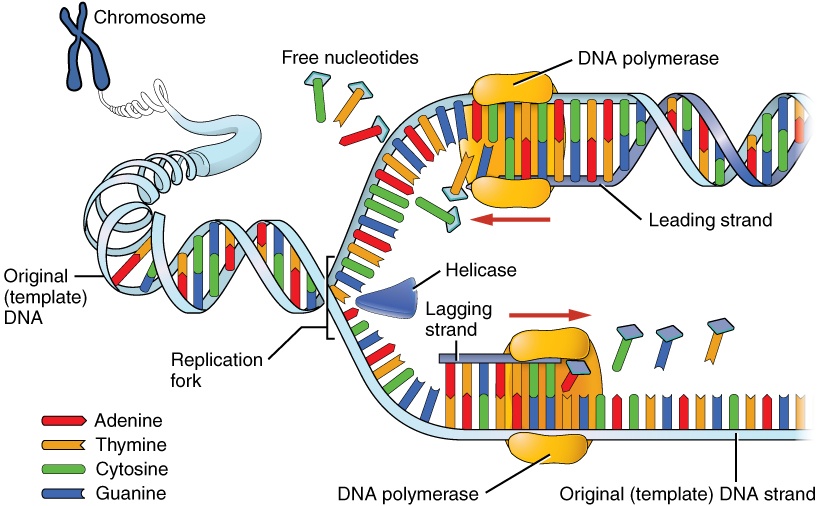
The enzyme that unwinds the DNA to prepare for replication
a)
helicase
b)
replicase
c)
polymerase
d)
synthase
15.
DNA replication results in two DNA molecules,
a)
each one with two original strands
b)
each one with two new strands
c)
each one with one new strand and one original strand
d)
one with two new strands and the other with two original strands
16.
A process in which DNA has the unique ability to make an exact copy of itself.
a)
Replication
b)
Translation
c)
Transcription
17.
Which enzyme is responsible for adding nucleotides?
a)
Topoisomerase
b)
DNA Polymerase
c)
Ligase
d)
Primase
18.

Which of the following units are repeatedly joined together to form a strand of DNA?

a)

Amino Acids

b)

Nucleotides

c)

Fatty Acids

d)

Polysaccharides

19.

In what phase of the cell cycle does DNA replication take place?

a)

G1

b)

S

c)

G2

d)

Prophase

20.

Why does DNA replicate?

a)

To create a duplicate copy in case the original gets damaged

b)

New cells will have a copy of the DNA

c)

To create a new copy to replace the damaged original

21.

Why is DNA important?

a)

it is very small and very complicated

b)

it's in everything

c)

it serves as the blueprint for traits of all living things

d)

because we eat it every day for energy

22.

Cytosine bonds with ____

a)

Adenine

b)

Thymine

c)

Guanine

d)

Uracil

23.

What is needed for DNA replication to unzip at the hydrogen bonds?

a)

phosphates

b)

enzymes

c)

deoxyribose (sugar)

d)

hydrogen

24.

What causes mutations? Choose three answers

a)

the environment

b)

random assortment

c)

chemicals

d)

independent assortment

25.

This is an example of -

THE DOG HID THE TOY (ORIGINAL)

THE DOH IDT HET OY? (NEW)

a)

addition

b)

substitution

c)

deletion

26.

This is an example of -

THE DOG HID THE TOY (ORIGINAL)

THE DOG SHI DTH ETO Y??

a)

addition

b)

deletion

c)

substitution

27.

This is an example of -

THE DOG HID THE TOY (ORIGINAL)

THE DOG HIM THE TOY (NEW)

a)

addition

b)

deletion

c)

substitution

28.

Frameshift mutations result from - (2 answers)

a)

additions

b)

substitutions

c)

deletions

d)

all of these

29.

Point mutations result from -

a)

none of these

b)

substitutions

c)

additions

d)

deletions

30.
Where the better adapted organisms survive to pass traits along to offspring.
a)
Evolution
b)
Natural Selection
c)
Extinction
d)
Artifical Selection
31.
Why are advantageous traits more likely to be passed onto offspring?
a)
Because they are more likely to survive and reproduce.
b)
Because they come from dominant alleles.
c)
Because they come from recessive alleles.
d)
Because the trait is an acquired phenotype.
32.
Natural selection is when ____________ decides who survives and who doesn't
a)
nature
b)
humans
c)
animals
d)
years
33.
Change over time
a)
Natural Selection
b)
Selective Breeding
c)
Homeostasis
d)
Evolution
34.
Which best describes mutations?
a)
Always helpful
b)
Always harmful
c)
Can be helpful or harmful
d)
Always neutral
35.
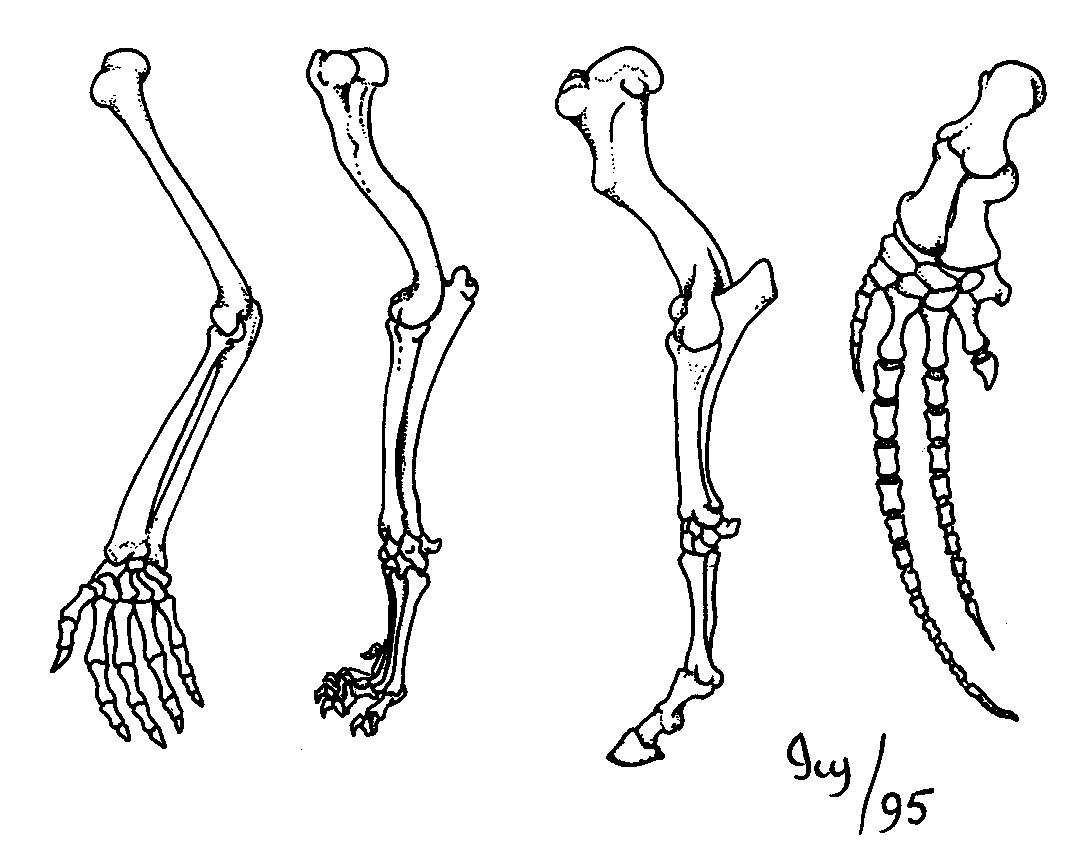
Structures with the same parts have different functions; suggests that organisms share a common ancestry
a)
vestigial structures
b)
homologous structures
c)
adaptive radiation
d)
fossil