
Font size
 Worksheets
Y11 Revision
Total questions: 70
Worksheet time: 39mins

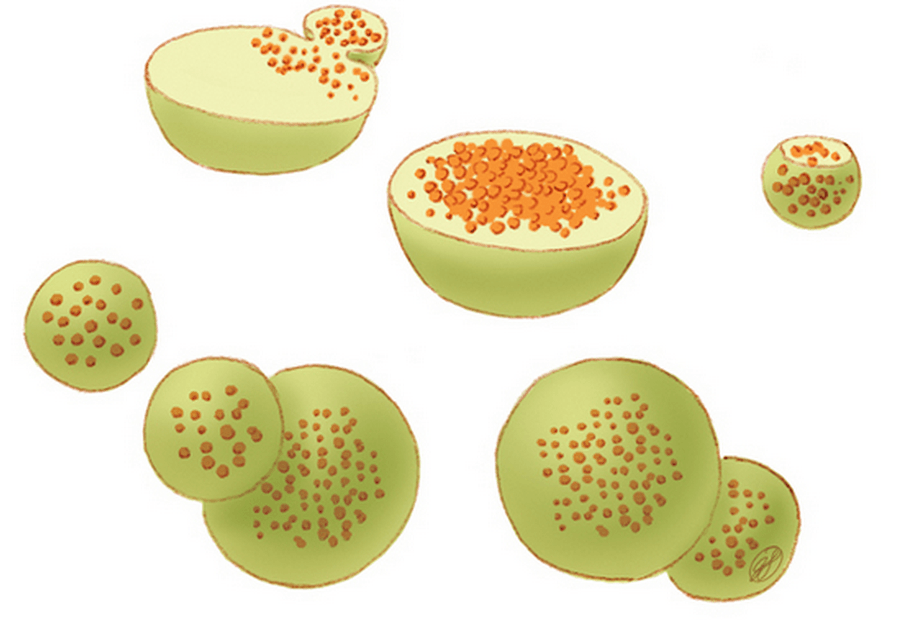
Main producer of ATP in all eukaryotes
chloroplast
mitochondria
lysosome
Smooth Endoplasmic Reticulum


This image is an example of a phospholipid. Which part of a phospholipid is HYDROPHOBIC?
the phosphate "head"
the lipid "tails"
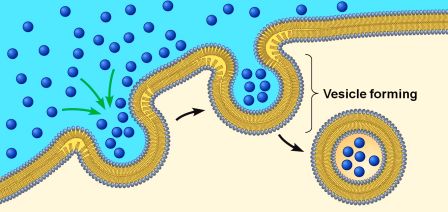

Active transport is movement of particles through the cell membrane from a region of ...1... to a region of ...2... using energy in the form of ...3...
1: lower concentration, 2: higher concentration, 3: NADPH
1: higher concentration, 2: lower concentration, 3: NADPH
1: higher concentration, 2: lower concentration, 3: ATP
1: lower concentration, 2: higher concentration, 3: ATP
Which one is the definition of active transport?
movement of particles through the cell membrane from a region of lower concentration to a region of higher concentration using energy in the form of ATP.
passage of water molecules from a region of their higher concentration to a region of their lower concentration through a partially permeable membrane
net movement of molecule from a region of higher concentration to region of lower concentration. Molecule down a concentration gradient
net movement of molecule from a region of lower concentration to region of higher concentration. Molecule down a concentration gradient

This red blood cell swell and burst in a ....solution
hypotonic
isotonic
elektronic
hypertonic


in the cell cycle, what is the next stage after TELOPHASE (most of the time)?
Metaphase
anaphase
cytokinesis
interphase

If there are 20 chromosomes in the nucleus before mitosis how many will there be in each new daughter cell after cytokinesis?
20
10
40
200
Cells of organisms must go through cell division for?
growth
repair of damaged cells
replacement of dying cells.
All of these
A stem cell is
The same as a blood cell
an undifferentiated cell that can develop into different cell types
I don't know, I wasn't listening
A stomach cell that can turn into a liver cell
The two types of stem cells are..
Adult stem cells
pluripotent stem cells
skin cells
Embryonic stems cells
Describe potency...
The ability to go through several cycles without differentiation
The ability to differentiate into specialised cells
umm... this is a hard one
the process of making more cells
What does "multipotent" mean?
able to divide but has a limited amount of closely related cell types.
able to divide and make multiple (but not all) types of cells
able to divide and make all different types of cells
cannot divide
What is the difference between embryonic stem cells and adult stem cells?
Embryonic can differentiate into more cell types than adult
Adult can differentiate into more cell types than embryonic
undifferentiated and can turn into any type of cell
differentiated cells that do one job
Why is the use of embryonic stem cells controversial?
The embryos are destroyed in the process of extracting the stem cells.
People consider their use as destroying a life.
They are taken from little kids, which is painful.
They are put into a different person.
What do plants need to perform photosynthesis?
Love
Soil with a high nitrogen (N) content
Water (H2O) + Carbon Dioxide (CO2) and Sunlight Energy
Pollinators such as bees and hummingbirds
Gwen is investigating how exercise affects the rate at which she can squeeze a ball. After several minutes, she begins to experience muscle soreness and fatigue. She knows that this means her muscles are beginning to run out of oxygen.
Which process is likely causing the soreness in her muscle cells?
Lactic acid fermentation
Photosynthesis
Ethanol fermentation
Krebs cycle
In what part of the cell does the Krebs cycle take place?
Cytosol
Matrix of the mitochondria
Cristae of mitochondria
Outer membrane of mitochondria
After glycolysis, pyruvate is oxidized to produce carbon dioxide, NADH, and a molecule that contains 2 of the 3 carbons from the pyruvate.
Which product of pyruvate oxidation enters the Krebs cycle?
Carbon dioxide
Acetyl-CoA
NADH
Glucose
Which of the following statements is true regarding glycolysis?
Glycolysis can occur without the presence of oxygen
Glycolysis takes place in the mitochondria of a cell
Glycolysis is the final step in aerobic respiration
Glycolysis produces a net of 1 ATP, 1 NADH, and 2 pyruvate
In what part of the cell does glycolysis take place?
Cytoplasm
Mitochondria
Chloroplast
Nucleus
Several molecules are produced as a result of glycolysis.
What is the net production of ATP, pyruvate, and NADH when one molecule of glucose undergoes glycolysis?
2 ATP, 2 NADH, and 2 pyruvate
4 ATP, 1 NADH, 2 pyruvate
4 ATP, 2 NADH, and 4 pyruvate
2 ATP, 1 NADH, and 1 pyruvate
What is true of NAD in cellular respiration?
NAD carries the oxygen needed to break down the glucose molecules into the cell.
NAD is used to directly break apart the glucose molecules.
NAD carries and transfers electrons and H+ ions.
NAD carries excess carbon dioxide out of the cell.
What stage of cellular respiration produces the most number of ATP?
Glycolysis
Krebs cycle
Electron transfer chain
anaerobic respiration
Which of the following is the correct equation for aerobic cellular respiration?
6CO2 + 6H2O ⟶ C6H12O6 + 6O2 + ATP
6O2 + C6H12O6 ⟶ 6H2O + 6CO2 + ATP
C6H12O6 + 6H2O ⟶ 6CO2 + 6O2 + ATP
6O2 + 6H2O ⟶ C6H12O6 + 6CO2 + ATP


Recall which part of the digestive system is indicated by the red arrow in the picture below.
Liver
Rectal Cavity
Small Intestine
Large Intestine
Recall what mechanical digestion is.
Where you replace part of your digestive tract with complex machinery
The act of drinking special chemicals after a meal to aid your digestion
The process of physically breaking up food into smaller pieces
The process of converting large complex food molecules into simpler molecules
Recall why we need to break down macromolecules into monomers during digestion.
To allow the molecules to be absorbed
To release energy by respiration
To help the molecules move down the gut
To product heat to keep us warm

Recall what type of enzyme breaks down starch into sugars
Lipase
Protease
Amylase
Nuclease
Recall where in the body amylase digests carbohydrates.
Select ALL correct options
Small Intestine
Stomach
Mouth
Pancreas
Liver
Recall another name for digestion of macromolecules into smaller molecules.
Assimilation
Condensation
Hydrolysis
Absorption
Recall what lipids are.
Select ALL correct options
Fats
Carbohydrates
Sugars
Oils
Which organ stores and releases bile?
liver
gallbladder
pancreas

What are these structures called that are found on the lining of the small intestine?
Gallbladder
Villi
Sphincter
Duodenum
What type of digestion occurs in the stomach?
Chemical digestion (Enzymes) only
Mechanical digestion (churning) only
Chemical digestion (gastric juices) only
Mechanical (churning) and Chemical digestion (enzymes and gastric juice)
Where is bile produced?
Kidney
Pancreas
Liver
Small intestine
What is the function of the caecum in a hindgut fermenter?
It has no function
It breaks down animal and plant matter
It breaks down animal protein
It holds food for fermentation by bacteria

