
Font size
 Worksheets
Chem final Sp 23
Total questions: 83
Worksheet time: 1hrs 28mins
What is the molarity of a 0.5L sample of a solution that contains 60.0 g of sodium hydroxide (NaOH)
0.8 M
1.5M
3.0M
6.0M
Name the ionic compound, LiCl
lithium chlorine
lithium chloride
lithium chlorate
lithium monochloride
Cs2S
Al2O3

Name the ionic compound.
Magnesium Di-iodide
Magnesium Iodide
Magnesium iodine

Name the covalent bond.
Sulfur Chloride
Disulfur chloride
Disulfur Dichloride

Name the covalent bond.
Trihydrogen Chloride
Monohydrogen Trichloride
Hydrogen Trichloride

Name the covalent bond.
Phosphorus trichloride
Phosphorus chloride
Triphosphurs chloride

Name the ionic compound.
Beryllium fluoride
Diberyllium fluoride
Beryllium difluoride
What is the correct formula for iron III phosphate
Fe3P4
Fe(PO4)
Fe2(PO4)2
Fe6(PO4)3
What is the correct name for Mn(SO4)3
Manganese (VI) Sulfite
Manganese (VI) Sulfate
Manganese (III) Sulfate
What is the correct name for the compound with the formula Pb(NO3)2
Lead (I) Nitrate
Lead Nitrite
Lead (II) Nitrate
Lead Nitrate
What is the correct formula for aluminum nitrate
Al2(NO3)3
Al(NO3)3
Al(NO3)2
Al2(NO3)4
What is the correct formula for a mercury II sulfate
Hg(SO4)3
Hg(SO4)4
Hg(SO4)2
HgSO4
What is the name for the compound with the formula NH4Cl
ammonium chloride
ammonium hypochlorite
ammonium hypochlorate
ammonium chlorate

Nitrogen triiodide based off the Lewis Dot structures would be what type of VSPER geometrical shape?
tetrahedral
bent
pyramidal
trigonal planar
What is the correct Lewis Dot Structure for ammonia NH3


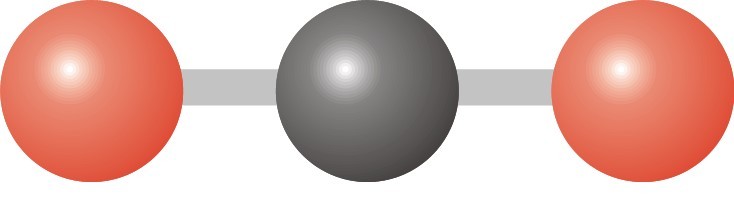
Which is the correct molecular structure for carbon dioxide?


For a solution, pH + pOH =
7
14
1.0 x 10⁻¹⁴
-log (1.0 x 10 -14)
If the pH of a solution is 4.0, what is the pOH?
4.0
10.0
1.0 x 10 -4
cannot be determined from the information
The pH of a solution is 8.43. What is the [H3O+]concentration?
3.7 x 10 -9
1.0 x 10-8.43
2.7 x 10⁻⁶
1.0 x 10⁻¹⁴
If the [H3O+] of a solution is 1 x 10⁻³ M, the pH is
11
-3
3
1
If the pH of a solution is 8 the [H3O+] is
1.0 x 10⁶ M
8.0 x 101 M
1.0 x 10⁸ M
1.0 x 10⁻⁸ M
If the [OH-] of a solution is 2.7 x 10⁻⁴ M, the pOH of the solution is
10.44
1.00
3.57
-4.43
Oranges have a [H3O+] of 1.7 x 10⁻² M. Their pOH is
1.77
12.23
10.91
3.09
Ammonia has a pOH of 2. Ammonia is a(n) __________.
acid
base
neutral
metal
Find the pH of a solution with [OH-] = 8.41 x 10⁻⁴.
3.08
10.92
9.88
11.23
PCl5 + ___ H2O → ___ HCl + H3PO4
4, 5
1, 6
3, 8
2,2
__ Al + __ FeO → Al2O2 + __ Fe
1, 1, 2
2,1,2
2, 2, 2
2,4,2
_SnO2 +_H2-->_Sn +_H2O
_CF4 + _Br2 -- _CBr4 + _F2
Example: H2
_Al +_HCl --> _H2 +_AlCl3
_CH4 + _O2 --> _CO2 + _H2O
_CF4 + _Br2 -- _CBr4 + _F2

The two sides of a chemical equation are called?
Reactants (left) and Products (right)
Ingredients (left) and Product (right)
Cations and Anions
Reactants (left) and Results (right)
H2SO4
Which type of chemical reaction has two or more reactants to make one product?
combustion
single displacement
double displacement
synthesis
decomposition
Identify the following chemical reaction.
2 NaBr + 1 Ca(OH)2 ----> 1 CaBr2 + 2 NaOH
Synthesis (or combination)
Decomposition
Single displacement
Double displacement
Identify the following chemical reaction.
3 HBr + 1 Al(OH)3 ----> 3 H2O + 1 AlBr3
Synthesis (or combination)
Decomposition
Single displacement
Double displacement
Identify the following chemical reaction.
Pb + FeSO4 ----> PbSO4 + Fe
Synthesis (or combination)
Decomposition
Single displacement
Double displacement
What reaction has the following general formula:
AB --> A + B
Synthesis
Decomposition
Single Replacement
Double Replacement
Combustion
What reaction has the following general formula:
A + CD --> C + AD
Synthesis
Decomposition
Single Replacement
Double Replacement
Combustion
What reaction has the following general formula:
AB + CD --> CB + AD
Synthesis
Decomposition
Single Replacement
Double Replacement
Combustion
What reaction has the following general formula:
A + B --> AB
Synthesis
Decomposition
Single Replacement
Double Replacement
Combustion
Which chemical reaction always starts with a hydrocarbon that reacts with oxygen and produces carbon dioxide and water?
Decomposition
Synthesis
Combustion
Single Replacement
Which phrase describes what happens to atoms in a chemical reaction?
never lost or gained, just rearranged
sometimes lost, never rearranged
sometimes lost, gained, or rearranged
lost or gained, never rearranged
Which of the following is a compound?
zinc (Zn)
magnesium (Mg)
sodium chloride (NaCl)
potassium (K)
Which of the following is an element?
potassium chloride (KCl)
water (H2O)
carbon (C)
calcium carbonate (CaCO3)

What happens to the equilibrium if we add methane (CH4)?
It shifts left, towards the reactants
It shifts right, towards the products
It does not shift
What happens to the equilibrium if we remove water (H2O)?
It shifts left, towards the reactants
It shifts right, towards the products
It does not shift
What happens to the equilibrium if we remove heat?
It shifts left, towards the reactants
It shifts right, towards the products
It does not shift
What happens to the equilibrium if we add hydrogen (H2)?
It shifts left, towards the reactants
It shifts right, towards the products
It does not shift
What happens to the equilibrium if we remove carbon monoxide (CO)?
It shifts left, towards the reactants
It shifts right, towards the products
It does not shift

What happens when sodium ions (Na+) are added?
The reaction shifts left, towards the reactants
The reaction shifts right, towards the products
There is no shift
N2(g) + 3H2(g) ↔ 2 NH3(g) + heat
Removing N2 will cause the equilibrium to:
Shift right
Shift left
Have no change
Speed up

N2(g) + 3H2(g) ↔ 2 NH3(g) + heat
Increasing the temperature will cause the equilibrium to:
Shift right
Shift left
Have no change
Speed up

