wayground logo

Free Printable Worksheets

Font size

S
M
L
XL
Worksheets

VCE U1 Chemistry Review

Total questions: 75

Worksheet time: 1hrs 25mins

Name
Class
Date
1.

Subatomic particles with a negative charge

a)

Electrons

b)

Neutrons

c)

Protons

d)

Quarks

2.
Subatomic particles with a positive charge
a)
neutrons
b)
atomic mass
c)
protons
d)
isotopes
3.
Measure mainly of the nuclear particles: protons + neutrons
a)
Subatomic Particles
b)
Atomic Number
c)
Atomic Mass
d)
Gluons
4.
Value representing the number of protons in an element
a)
Atomic Mass
b)
Mass Number
c)
Valence Electrons
d)
Atomic Number
5.
How many neutrons does the isotope of lithium have?
a)
8
b)
3
c)
4
d)
5
6.
24.1% of all the isotopes of a an element have a mass of 75.23 amu, 48.7% have a mass of 74.61 amu, and 27.2% have a mass of 75.20 amu.
What is the average mass of this element?
a)
74.92 amu
b)
24.97 amu
c)
75.01 amu
d)
74.51 amu
7.
4.35% of all X atoms have a mass of 39.946 amu. 83.79% have a mass of 41.941 amu, 9.50% have a mass of 42.941 amu, and 2.36% have a mass of 43.939 amu. What is the average atomic mass of atom X?
a)
41.97 amu
b)
42.19 amu
c)
10.43 amu
d)
40.04 amu
8.
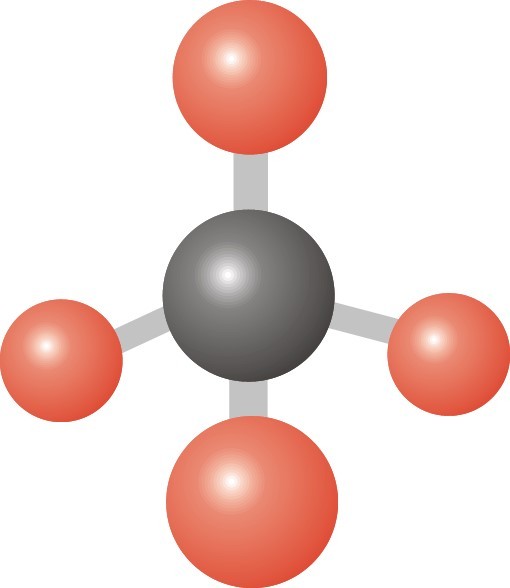
Which molecule would have this shape?
a)
BF3
b)
CH4
c)
PCl5
d)
CO2
9.
Who could this molecule be?
a)
CH4
b)
CO2
c)
PCl5
d)
BF3
10.
Consider the molecule below.  Determine the molecular geometry at each of the 2 labeled carbons.
a)
C1 = tetrahedral, C2 = linear
b)
C1 = trigonal planar, C2 = bent
c)
C1 = bent, C2 = trigonal planar
d)
C1 = trigonal planar, C2 = tetrahedral
11.
What molecular shape is the structure shown here? (H2O)
a)
tetrahedral
b)
trigonal planar
c)
bent
d)
trigonal pyramidal
12.

Which of the following molecules would be non-polar?

a)

NH3

b)

H2O

c)

HCl

d)

CCl4

13.

Which of the following molecules would be polar?

a)

CH4

b)

CO2

c)

H2CO

d)

CF4

14.

Carbon dioxide would be

a)

Polar because oxygen has a higher electronegativity than carbon

b)

Non-polar because oxygen and carbon have very similar electronegativity

c)

ionic because there is a large difference in electronegativity between oxygen and carbon

d)

Non-polar because carbon dioxide's symmetry results in a net zero dipole

15.

Strongest type of Intermolecular force present in Cl2?

a)

dipole dipole

b)

H-bond

c)

dispersion

d)

metallic

16.

Strongest type Intermolecular force present in HCl?

a)

dipole dipole

b)

dispersion

c)

H-bond

d)

ionic

17.

Strongest type of intermolecular force present in HF.

a)

dipole dipole

b)

dispersion

c)

H-bond

d)

ionic

18.
Type of intermolecular force present in I2, Br2, and Cl2.
a)
dipole dipole
b)
H-bond
c)
dispersion
d)
metallic
19.
What explains the very high melting and boiling point of water
a)
Strong dipole-dipole bonds between water molecules
b)
Strong hydrogen bonds between water molecules
c)
Dispersion forces which are present in all molecules
d)
Asymmetrical shape of the polar bonds.
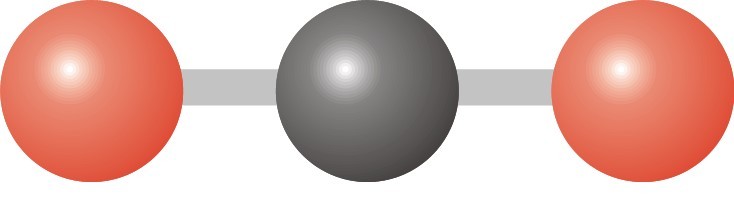
20.
What shape would this molecule have?
a)
Trigonal planar
b)
Tetrahedral
c)
Pyramidal
d)
Bent
21.
What shape would this have?
a)
Trigonal planar
b)
Pyramidal
c)
Bent
d)
Linear
22.
Electronegativity is:
a)
The tendency of an atom to attract an electron
b)
The ability of an atom to form a chemical bond
c)
The strength of an atom's covalent bond
d)
How much a nucleus repels an electron pair
23.
If a molecule has 2 lone pairs of electrons and 2 single bonds, the molecular shape would be:
a)
Trigonal planar
b)
Linear
c)
Bent or V-shaped
d)
Tetrahedral
24.
Which type of force is this?
a)
Intramolecular
b)
Intermolecular
25.
Which of these typically increases when intermolecular forces increase?
a)
Boiling Point
b)
Melting Point
c)
Viscosity
d)
All of these
26.
Which kind of intermolecular force is strongest?
a)

hydrogen bonding

b)

dipole-dipole attraction

c)

Dispersion forces

27.

The name for the ionic compound NaF is

a)

Sodium fluoride

b)

Nappium fluoride

c)

Sodium fluorine

d)

Fluorine sodiumide

28.

The nitrate ion is

a)

N3-

b)

NO3-

c)

NO2-

d)

Ni-

29.

If a sulfate ion has a charge of 2-, how many sodium ions will combine with one sulfate ion?

a)

1

b)

2

c)

3

d)

2.5

30.

The sulfate (SO42-) ion has

a)

2 atoms

b)

4 atoms

c)

5 atoms

d)

8 atoms

31.
What formula results when Ca+2  and  Br- ions bond?
a)
Ca2Br2
b)
CaBr
c)
Ca(br)2
d)
CaBr2
32.
How do the following two elements bond together?
Cr3+  O2-         
a)
CrO
b)
Cr3O2
c)
Cr2O3
d)
CrO3
33.

Ionic compounds form giant ionic lattices. What forces hold the giant ionic lattices together?

a)

strong frictional forces between the surfaces of the atoms

b)

strong magnetic forces of attraction between the poles of ions

c)

strong electrostatic forces of attraction between cations and anions

34.

Why do ionic compounds have high melting and boiling points?

a)

Their ions are free to move.

b)

Their ions are held in fixed positions.

c)

They have many strong bonds.

d)

They have many weak bonds.

35.
At room temperature, most metals are
a)
liquid
b)
solid
c)
gas
d)
an alloy
36.
What does malleable mean?
a)
able to be shaped
b)
will break easily
c)
can be used for wire
d)
is shiny
37.
Why do metals conduct
a)
They are shiny
b)
The electrons are held tightly within the lattice
c)
The electrons are delocalised and able to move
d)
The electrons are shared between two metal ions
38.

Identify the correct statement about the carbon compounds solubility in water

a)

A, B and C will be soluble in water

b)

C is soluble, A and B are not

c)

A is soluble, B and C are not

d)

A, B, and C are not soluble in water

39.

Identify the correct order in boiling points (highest to lowest)

a)

A > B > C

b)

C > A > B

c)

B > C > A

d)

C > B > A

40.

Identify the correct statement relating to solubility of the following

a)

A, B and C are soluble in water

b)

Only C is soluble in water

c)

A and B are soluble in water

d)

Only B is soluble in water

41.

The name of molecule A is

a)

3-fluoropentane

b)

pentan-2-ol

c)

2-pentanol

d)

2-fluoropentane

42.

Identify which of the following has dispersion forces only

a)

A

b)

B

c)

C

43.

Identify the correct name for structure B

a)

3-fluoro-4-methylpentane

b)

2-fluoro-4-methyl-pentane

c)

2-methyl-4-fluoropentane

d)

2-fluoro-4-methylpentane

44.

Select the correct name of the following formula

a)

Butene

b)

Propene

c)

Butyne

d)

Decyne

45.

Select the correct name of the following formula.

a)

ethanoic acid

b)

propanoic acid

c)

hexanoic acid

d)

butanoic acid

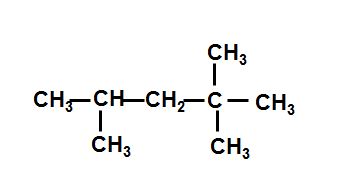
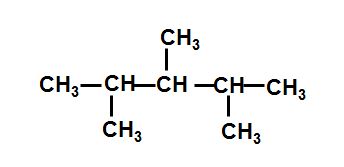
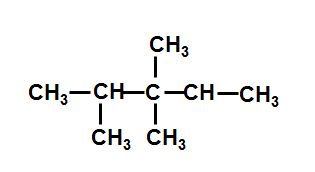
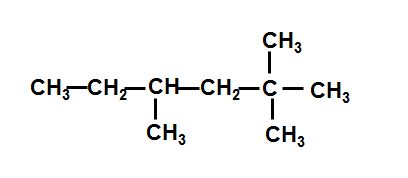
46.

Which is the structures with IUPAC nomenclature


2,2,4-trimethylpentane
a)
b)
c)
d)
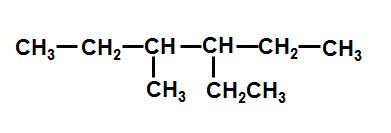
47.

Give the IUPAC name for this compound

a)

3-methyl-4-ethylhexane

b)

3-ethyl-4-methylhexane

c)

3-methyl-4-ethylheptane

d)

3-ethyl-4-methylheptane

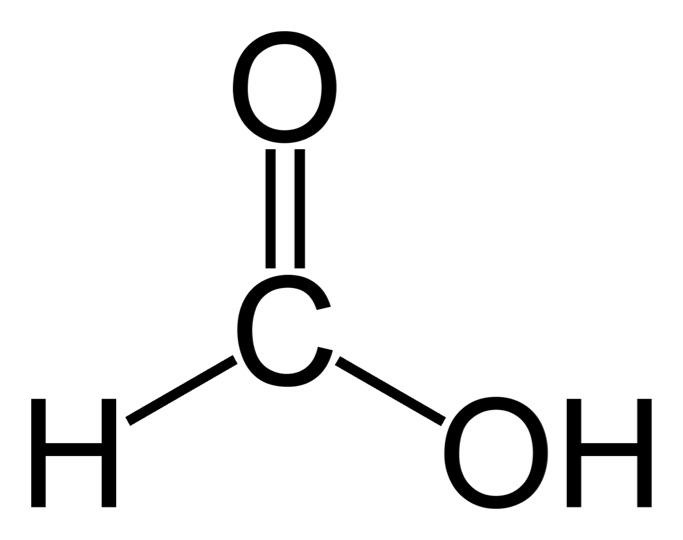
48.
Name this structure.
a)
methanoic acid
b)
methanal
c)
methanol
d)
methanone
49.

The IUPAC name for this compound is:

a)

3-ethyl-2-fluorohexan-2-ol

b)

3-propyl-2-fluoropentan-2-ol

c)

2-fluoro-2-hydroxy-3-ethylhexane

d)

2-fluoro-3-ethylhexan-2-ol

50.

What is a polymerisation reaction?

a)

Formation of hydrocarbons

b)

Combustion of hydrocarbons

c)

Addition of polymers to make a monomer

d)

Addition of monomers to make a polymer

51.

In this reaction, Ethene is a:

a)

Polymer

b)

Monomer

c)

Catalyst

d)

Saturated hydrocarbon

52.

Which repeat unit would be formed by the polymerisation of propene?

a)
b)
53.

What monomer forms this polymer chain?

a)
b)
c)
d)
54.

What monomer forms this polymer chain?

a)
b)
c)
d)
55.

A polymer that cannot be reheated and remelted

a)

Thermoset

b)

Thermoplastic

56.

Look at the image and identify the group of plastics in which it belongs.

a)

Thermosetting Plastic

b)

Thermoplastics

57.

Which plastic does this polymer chain represent?

a)

Thermoplastic

b)

Thermosetting

c)

Elastomer

58.

Thermoplastics can be reshaped

a)

True

b)

False

59.

Thermosets can be reshaped

a)

True

b)

False

60.
Rigid and very strong Polymer.
a)
Linear
b)
Branched
c)
Cross-Linked
d)
Thermoset
61.

Reactions that produce water during polymerisation are called:

a)

dehydration

b)

addition

c)

condensation

d)

None of these

62.
How many molecules of sugar (C6H12O6) are in a mole?
a)
24 molecules
b)
180 molecules
c)
180 g
d)
6.02 x 10²³ molecules
63.

How many grams are in 1.2 x 1024 molecules of CO? (molar mass of CO = 28 g/mol)

a)

28.2 g

b)

55.8 g

c)

6.02 g

d)

1.2 g

64.

How many atoms of carbon are in 6.00 g of carbon?

a)

1.20x1024 atoms C

b)

6.02x10²³ atoms C

c)

3.01x10²³ atoms C

d)

1.50x10²³ atoms C

65.

How many moles are in 3.01 x 10²² atoms of magnesium?

a)

0.05 moles

b)

1.81 x 1046 moles

c)

5.00 x 10²¹ moles

d)

5 moles

66.
What is the definition for Avogadro's number?
a)
number of grams per one mole of a substance
b)
whole number ratio that is a multiple of a chemical formula
c)
simplest, whole number ratio of a chemical formula
d)
6.02 x 10^23 particles per one mole of a substance
67.

Number of atoms in 52 g of He are:

a)

2.865 X 10²³

b)

7.83 X 1024

c)

6.023 X 10²³

d)

5000

68.

Number of moles of sugar in 547.2 gram are:


(Mol. mass of sugar = 342)

a)

1.6

b)

2.2

c)

342

d)

548

69.

Number of atoms in 52 g of He are:

a)

2.865 X 10²³

b)

7.83 X 1024

c)

6.023 X 10²³

d)

5000

70.

The mass percentage of iron in copper pyrites (CuFeS2) is:

a)

36.28 %

b)

34.91 %

c)

30.44 %

d)

NONE OF THE ABOVE

71.
How many moles are in 3.01 x 10²² atoms of magnesium?
a)
0.0500 moles
b)
1.81 x 1046 moles
c)
5.00 x 10²¹ moles
d)
5.00 moles
72.
What is the mass of 2.50 mol of oxygen gas O2?
a)
40 g
b)
80 g
c)
16 g
d)
32 g
73.

What is the mass of 6.02 x 10²³ platinum atoms? Round to the nearest hundredths place.

a)

30.97 g

b)

106.42 g

c)

140.91 g

d)

195.09 g

74.
A compound consists of 72.2% magnesium(Mg) and 27.8% nitrogen(N) by mass. What is the empirical formula?
a)
Mg4N3
b)
MgN2
c)
Mg3N
d)
MgN
75.
You are given the following percentages: 40.05% S and 59.95% O. Find the empirical formula for these elements.
a)
SO
b)
SO2
c)
SO3
d)
SO4