wayground logo

Free Printable Worksheets

Font size

S
M
L
XL
Worksheets

KS3 Y8 End of Year

Total questions: 177

Worksheet time: 2hrs 20mins

Name
Class
Date
1.
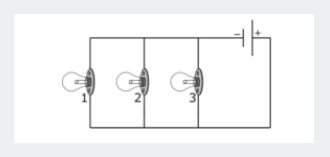
What kind of circuit is this?
a)
series
b)
parallel
2.
What is a switch's function in a circuit?
a)
to make the current hotter or colder
b)
turn on and off the flow of current
c)
the pathway that current flows
d)
to add more power to the circuit
3.
If bulb 1 burns out, what will occur?
a)
bulbs 2 and 3 will go out
b)
bulbs 2 and 3 receive more volts
c)
bulbs 2 and 3 will stay lit
d)
nothing will happen
4.
Does this statement best describe a parallel or a series circuit.
 
When more light bulbs are added they all remain bright. 
a)
Parallel circuit
b)
Series circuit
5.
A material in which electrons are not able to move easily is called _______.
a)
Circuit 
b)
Insulator 
c)
Resistance 
d)
Conductor
6.
This image represents what type of circuit?
a)
open
b)
wire
c)
series
d)
parallel
7.
This is the symbol for a _____?
a)
switch
b)
light 
c)
battery
d)
wires
8.
What is this symbol for?
a)
light bulb
b)
switch
c)
battery
d)
resistor
9.
Is the circuit pictured complete or incomplete? 
a)
Complete
b)
Incomplete
10.

What electrical charge to electrons carry?

a)

Positive

b)

Negative

c)

Neutral

11.
What will happen to the other bulbs in the circuit if one bulb goes out?
a)
The other bulbs will go out
b)
The other bulbs will get brighter
c)
The other bulbs will get dimmer
d)
They will flash on and off
12.
What will happen when a light bulb is removed from the circuit below?
a)
The remaining bulbs will go out
b)
The remaining bulbs will brighten
c)
The remaining bulbs will dim
d)
The brightness of the remaining bulbs will not change
13.

What type of circuit is shown in the picture?

a)

Series circuit

b)

Parallel circuit

c)

Open circuit

14.

What is a circuit?

a)

The buildup of electric charges

b)

A complete, closed path through which electric charges flow

c)

Opposition to the flow of charge

d)

Electric potential

15.
An example of a parallel circuit is
a)
the wiring in a house
b)
a flashlight
c)
a single circular path
16.
Copper is used in wiring because it is an excellent______________ of electricity.
a)
circuit breaker
b)
conductor
c)
insulator
d)
fuse
17.

Why do electricians always wrap wires in plastic?

a)

Plastic comes in many different colors

b)

Plastic is a good electrical conductor

c)

Plastic makes the wires easy to bend

d)

Plastic is a good electrical insulator

18.
A small device that stores energy in a chemical form
a)
Complete circuit
b)
Switch
c)
Power source
d)
Battery
19.
The unit for current is the 
a)
Volt
b)
Ohm
c)
Electron
d)
Amp
20.
What is the unit for resistance?
a)
Volts
b)
Amperes
c)
Ohms
21.
Tiny particles that have a negative charge
a)
protons
b)
neutrons
c)
electrons
d)
circuits
22.
You measure a potential difference with..
a)
a voltmeter
b)
An Ammeter 
23.
the tendency for a material to oppose the flow of electrons
a)
current
b)
circuit
c)
resistance
d)
difference
24.
The flow of electricity in a circuit-
a)
current
b)
flow
c)
circuit
25.
____________ allows electricity to flow.
a)
A conductor
b)
An insulator
c)
A magnet
26.
To complete a circuit the switch must be
a)
unattached
b)
open
c)
closed
27.
The plastic around the wire is
a)
conductor
b)
insulator
c)
decoration
28.
Two batteries in a circuit make the lights in the circuit brighter than one battery.
a)
true
b)
false
29.
In a parallel circuit the current
a)
makes one circle
b)
stays in one path
c)
splits and goes through two components
30.
Two types of circuits are
a)
parallel and magnetic
b)
electromagnetic and series
c)
series and parallel
31.
The flow of electricity requires a
a)
complete path
b)
incomplete path
c)
insulated current
32.

An ammeter measures

a)

Voltage

b)

Current

c)

Flow

d)

Charge

33.

A voltmeter measures

a)

Current

b)

Energy

c)

Voltage

d)

Charge

34.

Current is the same across all components in a series circuit

a)

True

b)

False

35.
Light travels in a straight line
a)
True
b)
False
36.

What does reflection mean?

a)
It is when the light changes the material and the direction of it changes as well. 
b)
It is when the material is rebounding the light.
37.
Which explains why the fork looks different under water?
a)
light can't pass through the glass
b)
the wavelength of light lengthens
c)
the amount of light increases when going through water
d)
light is refracted at an angle
38.
Smooth surfaces _______ a lot of light.
a)
reflect
b)
bend
c)
absorb
d)
twist
39.
Why do we see objects as white?
a)
They absorb all light
b)
They reflect all light
c)
They absorb some light and reflect some light
40.
Another name for light bending is ....
a)
Reflaction
b)
Absorbing
c)
Refraction
d)
mirror
41.
The Law of Reflection:
The angle of incidence is _________ the angle of reflection
a)
bigger than
b)
the same as
c)
smaller than
42.
Luminous means...
a)
Gives out its own light
b)
Reflects light from other things
43.
The color you see is the color that is ___.
a)
reflected
b)
absorbed
44.
Which color absorbs all light?
a)
White
b)
Black
c)
Orange
d)
Green
45.
Which color reflects all light?
a)
White
b)
Black
c)
Orange 
d)
Green
46.

Why is the component of colour in a rainbow can be seen when light passes through a glass prism?

a)

phenomena of scattering of light

b)

phenomena of dispersion of light

c)

phenomena of reflection of light

d)

phenomena of diffraction of light

47.
What is being blocked when a shadow is formed?
a)
Light Source
b)
Light Path
c)
Object
d)
Eye
48.

Which of the following is NOT a source of light?

a)

eyes

b)

lit candle

c)

sun

d)

firefly

49.

We are able to see the moon because it ____________

a)

gives out light

b)

glows

c)

reflects light from the sun

d)

reflects light from the earth

50.

Light is able to pass through __________________ materials

a)

transparent

b)

shiny

c)

dull

d)

opaque

51.

Light is unable to pass through ________________ objects

a)

opaque

b)

coloured

c)

blunt

d)

dark

52.
An object appears red because it
a)
reflects light waves of all colors
b)
reflects light waves of red
c)
absorbs light waves of red
d)
transmits light waves of all colors
53.
Which is true of a green grape?
a)
It absorbs green light.
b)
It absorbs white light.
c)
It reflects green light.
d)
It reflects white light.
54.
Which is the angle of refraction?
a)
Angle 1
b)
Angle 2
55.

Which lens represents the path light takes through a concave lens?

a)
b)
c)
d)
56.

What is the name given to the columns on the periodic table?

a)

periods

b)

groups

c)

rows

d)

columns

57.

What happens to the size of atoms as you go down a group?

a)

they increase in size

b)

they decrease in size

58.

Which group are known as the alkali metals?

a)

Group 0

b)

Group 7

c)

Group 2

d)

Group 1

59.

The vertical (up and down) columns in the Periodic Table are called

a)

groups

b)

towers

c)

periods

d)

atomic numbers

60.
The Modern Periodic Table of Elements is arranged by
a)
atomic mass
b)
atomic number
c)
valence electrons
d)
number of isotopes
61.
These are found on the Periodic Table.
a)
Compounds
b)
Elements
c)
Mixtures
62.

The horizontal (side to side) rows in the Periodic Table are called

a)

groups

b)

families

c)

periods

d)

atomic numbers

63.

what is the name of group number 1

a)

halogens

b)

noble gases

c)

alkali

d)

alkaline earth

64.
All matter is made of .....
a)
energy 
b)
atoms 
c)
air
d)
chemistry
65.
The atomic number of an element tells the number of _____ in the nucleus of an atom of that element.
a)
protons
b)
neutrons
c)
electrons
d)
isotopes
66.
Most of the mass of an atom is found it its _____.
a)
electron cloud
b)
nucleus
c)
atomic number
d)
empty space
67.
An element is made up of only one kind of _____.
a)
isotope
b)
plastic
c)
atom
d)
metal
68.
Which is an electron?
a)
A
b)
B
c)
C
69.

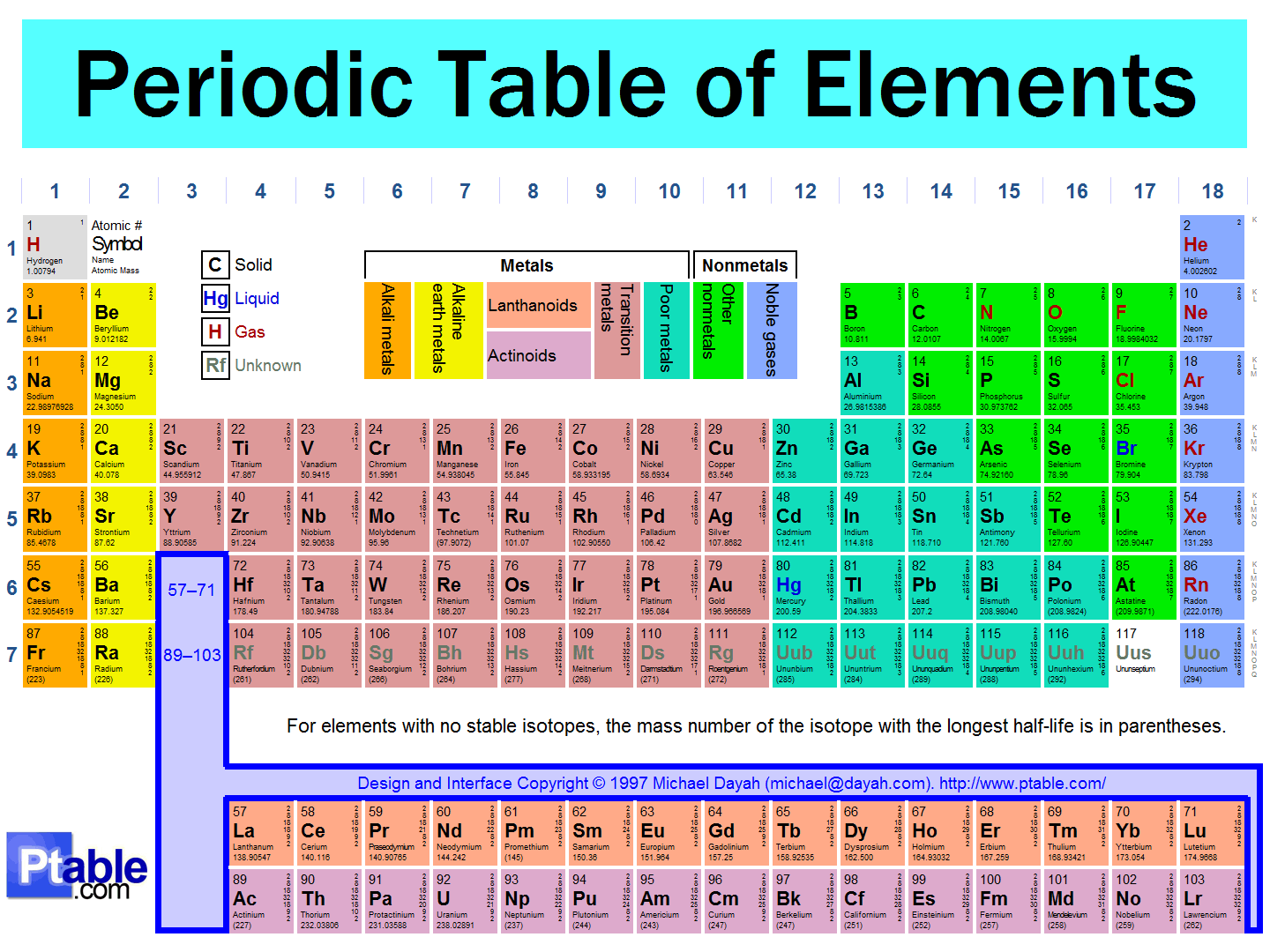
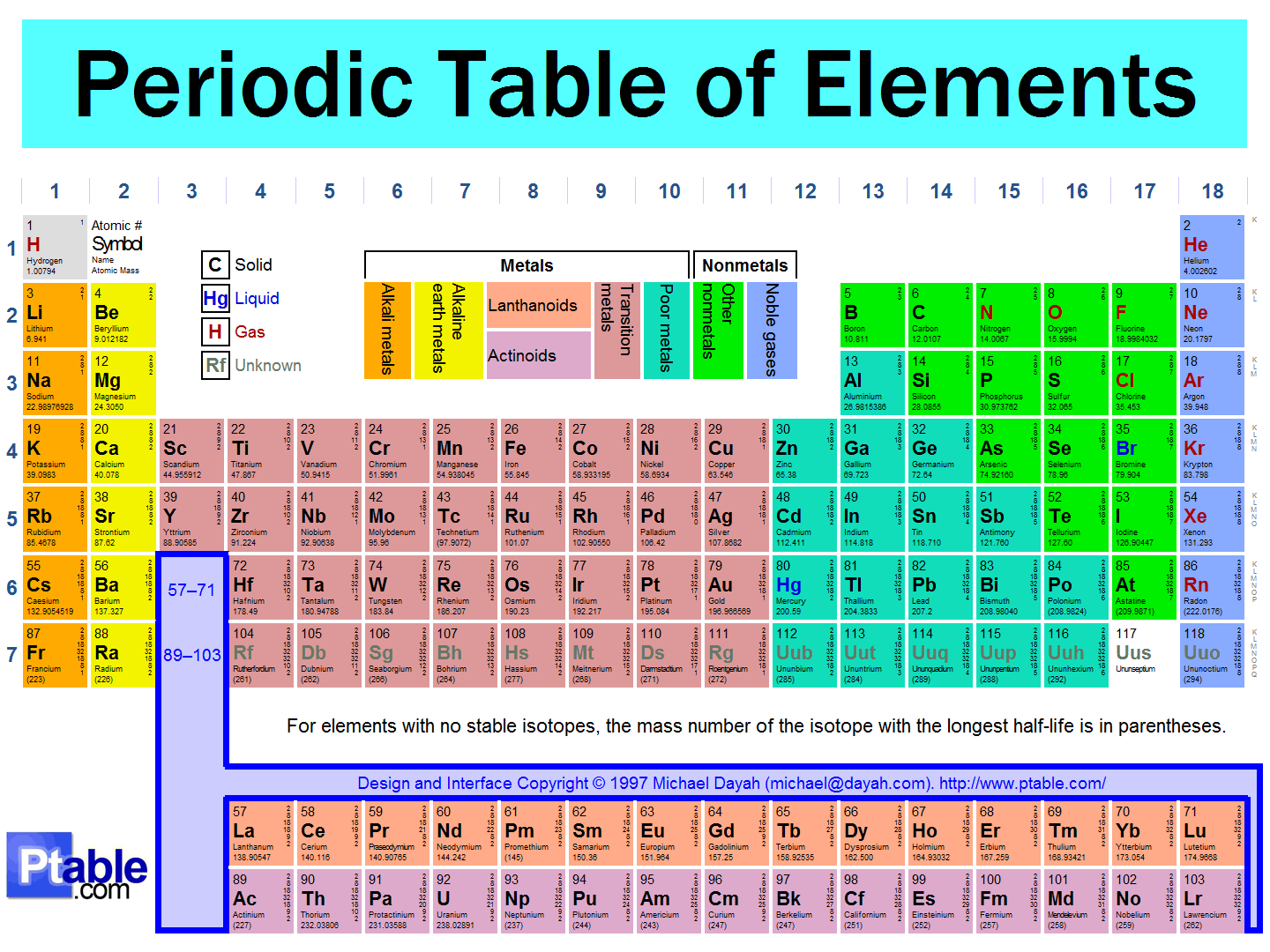
What is the name of the element? (Periodic table will be needed)

a)

sodium

b)

magnesium

c)

vanadium

70.
What does the 1 stand for?
a)
Hydrogen
b)
atomic number
c)
atomic mass
d)
atomic explosion
71.
Is water an element or a compound?
a)
Element
b)
Compound
72.
A compound consists of two or more elements bound together.
a)
True
b)
False
73.
Is Iron (Fe) an element or a compound?
a)
Element
b)
Compound
74.
What is this element...Au
a)
Iron
b)
Titanium
c)
Gold
d)
Flourine
75.
Element:Fe
a)
Gold
b)
Flourine
c)
Phosphorus
d)
Iron
76.
Element is a
a)
pure substance
b)
compound
c)
mixture
d)
molecule
77.
Which of the following represents an element?
a)
H2O
b)
H2
c)
NaCl
d)
CaCO3
78.
Which of the following is not a compound?
a)
HCl
b)
Cl
c)
NaCl
d)
CO2
79.
What is H2SO4 
 made up of?
a)
2 hydrogen, 1 sulfur, 4 oxygen
b)
1 hydrogen, 2 sulfur, 4 oxygen
c)
2 hydrogen & 4 sodium
d)
1 hydrogen & 6 sodium
80.
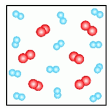
Classify the picture with the correct label.
a)
Element
b)
Compound
c)
Mixture of Elements
d)
Mixture of Compounds
81.
Classify the picture with the correct label.
a)
Element
b)
Compound
c)
Mixture of Elements and Compounds
d)
Mixture of Elements
82.
Classify the picture with the correct label.
a)
Element
b)
Compound
c)
Mixture of Elements & Compounds
d)
Mixture of Compounds
83.
Classify the picture with the correct label.
a)
Compounds
b)
Mixture of Elements
c)
Mixture of Compounds
d)
Mixture of Elements & Compounds
84.
Classify the picture with the correct label.
a)
Mixture of Elements
b)
Compound
c)
Mixture of Compounds
d)
Element
85.
How many atoms are there TOTAL in:
H2SO4
a)
6
b)
5
c)
7
d)
3
86.
What is the term for combining 2 or more atoms together?
a)
atoms
b)
elements
c)
molecules
d)
compounds
87.
What is the picture displayed?
a)
atom
b)
element
c)
molecule
d)
compound
88.
This diagram represents a _____.
a)
pure substance that is a compound
b)
mixture of elements
c)
pure substance that is an element
d)
mixture of compounds
89.
This diagram represents a _____.
a)
pure substance that is a compound
b)
mixture of elements
c)
pure substance that is an element
d)
mixture of compounds
90.
a)
Element
b)
Compound
c)
Mixture of compound and element
d)
Mixture of elements
91.
Based off of the image, what type of matter is shown?
a)
gas
b)
solid
c)
liquid
92.

What does inhalation mean?

a)

Breathing in

b)

Breathing out

93.

What does exhalation?

a)

Breathing in

b)

Breathing out

94.

When we breathe in...................enters our lungs and passes into the blood.

a)

oxygen

b)

carbon dioxide

95.

When we breathe out , ................. leaves our body.

a)

oxygen

b)

carbon dioxide

96.
Which 2 substances are exchanged in the Respiratory System?
a)
oxygen and nitrogen
b)
carbon dioxide and oxygen
c)
oxygen and glucose
d)
glucose and carbon dioxide
97.
The place in the lungs where oxygen and carbon dioxide are exchanged 
a)
Diaphragm
b)
Alveolus
c)
Bronchi Tube
d)
Trachea
98.
Letter D is pointing to which Respiratory organ?
a)
Alveoli
b)
Diaphragm
c)
Lung
d)
Bronchi
99.
Letter B is pointing to which organ of the Respiratory System?
a)
Nose
b)
Trachea
c)
Lungs
d)
Diaphragm
100.

When the diaphragm relaxes and moves up and the ribs move down and in, the lungs are...

a)

expanding with air

b)

shrinking - pushing air out

101.

When the diaphragm contracts and moves down and the ribs move up and out, the lungs are...

a)

expanding with air

b)

shrinking - pushing air out

102.

Letter C is pointing to which organ of the Respiratory System?

a)

Nose

b)

Trachea

c)

Lungs

d)

Diaphragm

103.

What is released during respiration?

a)

energy

b)

food

c)

air

d)

glucose

104.

Respiration is aerobic if it requires

a)

carbon dioxide

b)

energy

c)

oxygen

d)

lungs

105.

Which of these is the correct word equation for respiration?

a)

glucose + oxygen → carbon dioxide + water

b)

carbon + dioxygen → glucose + oxygen

c)

glucose → energy

d)

oxygen + carbon → carbon dioxide

106.

During inhalation, rib and diaphragm muscles:

a)

contract to increase the pressure inside the lungs.

b)

relax to reduce the pressure inside the lungs.

c)

contract to reduce the pressure inside the lungs.

d)

relax to increase the pressure inside the lungs.

107.

On the diagram, the part labelled X is the:

a)

blood vessel

b)

oesophagus

c)

trachea

d)

bronchus

108.

Dust is prevented from getting into the lungs by a layer of mucus, which is swept away by:

a)

alveoli

b)

cilia

c)

filaments

d)

flagella

109.

Anaerobic respiration can occur in a cell if

there is a lack of:

a)

oxygen

b)

water

c)

glucose

d)

nitrogen

110.

During gas exchange in the lungs, there is overall diffusion of:

a)

carbon dioxide into the lung and oxygen into the blood.

b)

oxygen into the lung and carbon dioxide into the blood.

c)

oxygen and carbon dioxide into the blood.

d)

oxygen and carbon dioxide into the lung.

111.

The main difference between combustion and aerobic respiration is that:

a)

only combustion releases energy by heating

b)

only respiration produces carbon dioxide

c)

only respiration produces water

d)

combustion is much faster

112.

How is carbon dioxide transported around the body?

a)

carried on red blood cells

b)

as a gas

c)

carried on white blood cells

d)

dissolved in blood plasma

113.

During strenuous exercise:

a)

the pulse rate increases so that oxygen can get to cells faster for respiration.

b)

the pulse rate decreases to stop so much carbon dioxide getting to cells.

c)

the pulse rate increases so that carbon dioxide can get to cells for respiration.

d)

the pulse rate decreases so less carbon dioxide can get into the blood from respiring cells.

114.

When carbon dioxide is added to lime water:

a)

the limewater turns from cloudy to clear

b)

the limewater turns from clear to cloudy

c)

the limewater turns green

d)

nothing happpens

115.

One cause of excess post-exercise oxygen consumption is:

a)

an increased rate of anaerobic respiration after exercise.

b)

aching muscles

c)

replacing stores of oxygen in the body

d)

being thirsty

116.

Which substance does anaerobic respiration in humans produce?

a)

water

b)

lactic acid

c)

carbon dioxide

d)

carbon monoxide

117.
What type of respiration requires oxygen?
a)
Aerobic
b)
Anaerobic
118.
Where in the cell does anaerobic respiration take place?
a)
Nucleus
b)
Cytoplasm
c)
Mitochondria
d)
Cell membrane
119.
The burning or breaking down of glucose is known as...
a)
photosynthesis
b)
transpiration
c)
respiration
d)
transport
120.
What type of respiration does not require oxygen?
a)
Aerobic
b)
Anaerobic
121.
4. What is the job of the respiratory system?
a)
To pump blood to all your cells.
b)
To break down food into glucose
c)
To take in Oxygen that will transported by blood.
122.
2. Which protein in blood helps blood collect Oxygen?
a)
Hydrogen
b)
Hemoglobin
c)
Platelets
123.
What happens to your breathing rate when you exercise?
a)
It increases
b)
It decreases
c)
It stays the same
124.

Why does anaerobic respiration occur during hard exercise?

a)

There may be insufficient oxygen supplied to the muscle cells

b)

Carbon dioxide builds up in the respiring muscle cells

c)

Anaerobic respiration releases more energy from glucose than aerobic respiration.

125.

Given the following structures:-

1.Alveoli

2.Bronchi

3.Bronchioles

Which of the following is the correct order in which air would flow after inhalation?

a)

1,2,3

b)

3,2,1

c)

2,3,1

d)

1,3,2

126.

What are the reactants in the equation for cellular respiration?

a)

oxygen and lactic acid

b)

carbon dioxide and water

c)

glucose and oxygen

d)

water and glucose

127.

Cellular respiration is called an aerobic process because it requires

a)

light

b)

exercise

c)

glucose

d)

oxygen

128.

Which of the following is a product of cellular respiration?

a)

Radiant Energy

b)

Water

c)

Oxygen

d)

Glucose

129.

What chemical reaction has almost the same products and reactants as cellular respiration but reversed?

a)

Rusting

b)

Photosynthesis

c)

Combustion

d)

None of them

130.

Another name for sugar is 

a)

ATP

b)

Cellular

c)

Glucose

d)

Both a and b

131.
A combustion reaction is when
a)
A fuel burns realeasing heat and light energy
b)
A substance burns and goes black
132.
The reactants of all combustion reactions are
a)
Fuel and Water
b)
Fuel and Oxygen
c)
Fuel and heat
133.
When a fuel is burnt the gases released are
a)
Oxygen and Carbon
b)
Carbon dioxide and Water
c)
Sulfur dioxide
134.
The test for carbon dioxide is
a)
Limewater turning cloudy
b)
Cobalt chloride paper turning from blue to pink
135.
Combustion reactions are an example of an exothermic reaction because
a)
they release light
b)
they release heat
c)
they give out smoke
136.
The fuel used in a petrol engine is
a)
coal
b)
petrol or diesel
c)
water
137.
When cars burn fuels they release the greenhouse gas __________ which is leading to global warming
a)
Oxygen
b)
water
c)
Carbon dioxide
138.
Incomplete combustion occurs when
a)
there is not enough oxygen
b)
there is not enough fuel
139.
The product of incomplete combustion which is toxic to humans is
a)
Carbon monoxide
b)
water
c)
soot
140.

Has unlimited oxygen

a)

Complete combustion

b)

Incomplete combustion

141.

Has limited oxygen

a)

Complete combustion

b)

Incomplete combustion

142.

Hydrocarbon is made of what two elements?

a)

Carbon monoxide

b)

Hydrogen

c)

Carbon

d)

Oxygen

e)

Calx

143.

Combustion is a reaction in which a substance reacts with

a)

hydrogen

b)

Nitrogen

c)

Oxygen

d)

Chlorine

144.
a)
Test tube
b)
Beaker
c)
Graduated cylinder
d)
Bucket
145.
a)
Tongs
b)
Bosshead
c)
Clamp
d)
Testtube holder
146.
a)
Bunsen burner
b)
Firemaker
c)
Stove
d)
Heatproof mat
147.
a)
Beaker
b)
Test tube
c)
Measuring cylinder
d)
Conical flask
148.
a)
Evaporating dish
b)
Watchglass
c)
Dish
d)
Bowl
149.
a)
Filter
b)
Funnel
c)
Filter funnel
d)
Tube
150.
a)
Beaker
b)
Test tube
c)
Measuring cylinder
d)
Watchglass
151.
a)
Measuring cylinder
b)
Beaker
c)
Glass tube
d)
Test tube
152.
Which of the following gives the most accurate measurement for 50 mL of water?
a)
Test tube
b)
Beaker
c)
Measuring cylinder
d)
Spatula
153.

what does this safety symbol mean?

a)

flammable

b)

light on fire

c)

get the fire extinguisher

d)

can burn your skin

154.

what does this safety symbol mean?

a)

irritant

b)

impossible

c)

impractical

d)

can only be used by people with names starting with I

155.

Your prediction and explanation of what will happen in an experiment is known as the...

a)

Hypothesis

b)

Conclusion

c)

Procedure

d)

Evaluation

156.

A variable you keep the same each time you carry out an experiment is called the...

a)

Independent variable

b)

Dependent variable

c)

Control variable

157.

A variable you change each time you carry out an experiment is called the...

a)

Independent variable

b)

Dependent variable

c)

Control variable

158.

A variable you measure each time you carry out an experiment is called the...

a)

Independent variable

b)

Dependent variable

c)

Control variable

159.

Which of the following should you include in a risk assessment?

a)

List of hazards

b)

Whether there is a high, medium or low risk from each hazard

c)

Precautions you should take to avoid the hazard

d)

All of these

160.

The instructions for how to carry out an experiment are called the...

a)

Method

b)

Recipe

c)

Guidelines

d)

Itinerary

161.

what does this safety symbol mean?

a)

may cause cancer

b)

can destroy your skin

c)

corrosive

d)

caution

162.

Repeating your experiment three times and calculating a mean average makes your result more...

a)

Valid

b)

Accurate

c)

Reproducible

d)

Repeatable

163.

You have carried out a fair test if...

a)

All your results support your hypothesis

b)

You repeat each observation three times and calculate a mean average

c)

Someone else repeats your experiment and gets the same result

d)

Your only change one variable during your experiment

164.

If three groups in the same class all carry out the same experiment and get the same results, then the experiment is...

a)

Valid

b)

A fair test

c)

Biased

d)

Reproducible

165.

A measurement that is close to it's true value is...

a)

Precise

b)

Accurate

c)

Fair test

d)

Reliable

166.

Results gained from a fair test are...

a)

Fair test

b)

Valid

c)

Reliable

d)

Precise

167.
The _________ is a set of specific steps that help scientists solve problems. 
a)
Design Process
b)
Scientific Method
c)
Dictionary
d)
Bar graph
168.

Scientific investigations that involve testing a single variable are called __________

a)

model

b)

experiment

c)

theory

d)

data

169.
Which of the following would be considered quantitative data?
a)
Color
b)
Smell
c)
6.84 cm
d)
texture
170.

____________ must be tested to se if it is supported

a)

Hypothesis

b)

Problem

c)

Observation

d)

Variable

171.

Scientists must decide which _________ will stay constant in an experiment

a)

data

b)

hypotheses

c)

variables

d)

question

172.

Mr. Ward wants to see how different surfaces affect how high a tennis ball can bounce. What is the independent variable?

a)

the different surfaces

b)

using the same ball

c)

how high they bounce

173.

Joshua is testing how the amount you water a plant affects its growth. What would be the INDEPENDENT VARIABLE in his experiment.

a)

They type of pot you put the plants in.

b)

The amount you water each plant.

c)

The amount of sunlight the plants get.

d)

The amount the plant grows.

174.

Herbella wants to test the hypothesis of "If salt is added to water then the boiling point of water will decrease (go down)." What is the independent variable?

a)

Whether salt is added or not

b)

Boiling Point

c)

Amount of water

175.

Rylee is testing how the age of a seed affects how fast plants grow. Look at the picture to see if you can figure out what makes her experiment unfair. Mark all that apply.

a)

She used different types of seeds/plants.

b)

The plants are in different pots.

c)

She did not plant very many plants.

d)

Seed age might not make a difference.

176.

Sam wants to see if her kitten prefers new chicken flavored treats over her usual beef flavored treats. She puts 10 chicken treats in one bowl and 10 beef flavored treats in another bowl. She sees which treats her kitten eats first and repeats this experiment for 3 days.

What is the Control?

a)

Flavor of Treats

b)

Beef Flavored Treats

c)

Which treats the kittens eat first.

d)

The number of treats given to the kittens

177.
When experimenting with the growth of a plant, a scientist uses three (of the same type of) plants, two different fertilizers, equal light, and equal water. What type of variable is the fertilizer?
a)
Dependent
b)
Independent
c)
Control
d)
Compound