Worksheets
Final Review
Total questions: 177
Worksheet time: 3hrs 22mins
Density =
Mass ÷ Volume
Volume ÷ Mass
Mass x Volume
Length x Width x Height
Mass =
Density ÷ Volume
Volume ÷ Density
Density x Volume
Length x Width x Height
Volume =
Density ÷ Mass
Mass ÷ Density
Density x Mass
A rock is broken into 5 pieces. Compared to the original rock, one of the pieces has _________ density.
a higher
a lower
the same
What is the density of a block that has a mass of 45.3g and a volume of 171.2 cm3?
0.3 g/cm3
7755.4 g/cm3
3.8 g/cm3
What is the density of a cube with 3.0 cm sides, and has a mass of 13.5 g?
1.5 g/cm3
0.5 g/cm3
4.5 g/cm3
2.0 g/cm3
What is the volume of a rock that has a mass of 452.9 g and a density of 103.4 g/cm3?
4.4 cm3
25.9 cm3
46,829.9 cm3
A piece of plastic has a mass of 35.5 g and a density of 1.1 g/cm3. What is its volume?
39.1 cm3
0.03 cm3
32.3 cm3
Three different samples of the same uniform substance will have the same _______. (Uniform means it is the same throughout.)
volume
shape
density
mass
What is the mass of a rock that has a volume of 71.0 cm3 and a density of 4.6 g/cm3?
326.6 g
15.4 g
0.1 g
A chocolate bar has a volume of 286.1 cm3 and a density of 1.3 g/cm3. What is its mass?
220.1 g
0.005 g
371.9 g
When oil spills in the ocean, the oil floats on top of the water. This is because...
there is less oil than water.
the oil is more dense than water.
the oil is less dense than water.
the oil is cooler than the water.

The diagram below shows a glass jar containing a clear liquid and a floating rock. Which conclusion about the relative density of the rock and the liquid is true?
The rock and the liquid have the same density.
The rock is less dense than the liquid
The rock is more dense than the liquid
If the object is cut in half, the density of each piece will be
greater than that of the original object
the same as that of the original object
less than that of the original object
29.0 mm = ______ m
0.029 m
290.0 m
0.29 m
0.0029 m
0.563 L = _____ mL
5,630.0 mL
5.63 mL
56.3 mL
563.0 mL
34.0 m = _____ mm
340.0 mm
3400.0 mm
0.034 mm
34,000.0 mm
Which measurement is the smallest?
1 mm
0.01 cm
0.001 m
0.0001 km
Place the following metric prefixes in order of smallest to largest:
milli-
deci-
deka-
hecto-
kilo-
Place the metric prefixes in the correct spots of the conversion staircase:
hecto-
centi-
kilo-
deka-
deci-
milli-
Using the conversion chart (metric staircase), as the units move to the left, the decimal place moves to the ____________.
Right
Sometimes to the right, sometimes to the left
Left
The decimal place doesn't change between units
Using the conversion chart, as the units move to the right, the decimal place moves to the ____________.
Right
Sometimes to the right, sometimes to the left
Left
The decimal place doesn't change between units
To do each conversion, you would move the DECIMAL POINT...
How do you convert 50 cm into mm?
ONE place to the RIGHT
How do you convert 5 cm into m?
TWO places to the LEFT
How do you convert 500 mm into m?
THREE places to the LEFT
How do you convert 5 m into cm?
TWO places to the RIGHT
Which unit of measurement is the shortest?
Millimeter
Meter
Kilometer
Centimeter
Which unit of measurement is the longest?
Millimeter
Meter
Kilometer
Centimeter
Match the following tools to what they are used to measure

Mass

Length

Volume

Temperature

What is the best estimate of mass of the lawn mower?
500 grams
22 kilograms
200 grams
100 kilograms
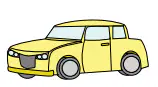
What is the best estimate of mass of the car?
15 grams
2000 kilograms
6000 grams
2 kilograms
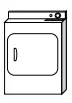
What is the best estimate of mass of the clothes dryer?
60 grams
3 grams
60 kilograms
3 kilograms
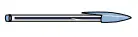
What is the best estimate of mass of a pen?
500 grams
5000 grams
5 grams
5 kilograms

What is the best estimate of mass of an apple?
200 kilograms
200 grams
5 grams
5 kilograms
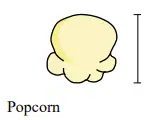
What represents the best estimate for the length of the popcorn?
3 centimeters
90 centimeters
2 kilometers
3 millimeters
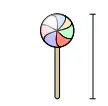
What represents the best estimate for the length of the lollipop?
10 centimeters
30 centimeters
2 kilometers
30 millimeters
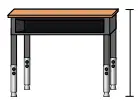
What represents the best estimate for the height of the desk?
70 centimeters
30 centimeters
15 centimeters
2 meters

What represents the best estimate for the height of the Ferris Wheel?
50 kilometers
30 centimeters
5 meters
23 meters

What represents the best estimate for the height of the soda can?
30 centimeters
10 centimeters
3 centimeters
1 meter
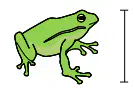
What represents the best estimate for the height of a frog?
60 centimeters
4 millimeters
8 centimeters
20 centimeters

Look at the ruler. What is the distance in centimeters (cm) from 0 to A?
(a)
Look at the ruler. What is the distance in millimeters (mm) from 0 to C?
(a)

What is the measurement given by the triple beam balance?
37581 g
37 g
37.5 g
37.9 g

What is the measurement given by the triple beam balance?
43.0 g
40 g
43 g
40.3 g


50 ml of water was added to the graduated cylinder. After we drop in the object, the new water level goes up to 60 ml. What is the volume of the blocks?
8 ml
10 ml
60 ml
5 ml

What is the volume of the ring?
64 ml
68 ml
8 ml
4 ml

Which object has the greatest volume?
The empty one
The button
The nail
The battery
The screw

What is the best estimate of the amount of liquid a spoon holds?
5 liters
500 milliliters
5 milliliters
1 liter

What is the best estimate of the volume of soda in a can?
2 liters
2 milliliters
350 liters
350 milliliters
Which tool do we use to find mass?


Match the term with the correct definition:
Mass
The amount of matter in an object
Volume
The amount of space an object takes up
Temperature
The average kinetic energy of an object
Length
The distance between two points
A study was done to find is different tire treads affect the braking distance of a car.
Manipulated Variable
type of tire treads
Responding Variable
braking distance
Constant
type of car
The time it takes to run a mile depends on the person's running speed.
Manipulated Variable
The person's running speed
Responding Variable
Time it takes the person to run a mile
Constant
The type of path the person runs on
The height of the bean plants depends on the amount of water they receive.
Manipulated Variable
Amount of water the bean plants receive
Responding Variable
The height of the bean plants
Constant
The type of plant
The height of the bean plants depends on the amount of water they receive.
Manipulated Variable
Amount of water the bean plants receive
Responding Variable
The height of the bean plants
Constant
The type of plant
The higher the temperature of air in the oven, the faster a cake will bake.
Manipulated Variable
The temperature of the air in the oven
Responding Variable
How fast the cake bakes
Constant
The type of cake
Lemon trees receiving the most water produced the most lemons
Manipulated variable
The amount of water
Responding variable
The number of lemons
Constant
The amount of sunlight
An investigation found that more bushels of potatoes were produced when the soil was fertilized more.
Manipulated variable
The amount of fertilizer
Responding variable
How many bushels of potatoes produced
Constant
The amount of water
The amount of pollution produced by cars was measure for cars using gasoline containing different amounts of lead
Manipulated variable
The amount of lead
Responding variable
The amount of pollution produced
Constant
The distance the car travelled
Another name for the manipulated variable is
Independent Variable
Dependent Variable
Responding Variable
Constant Variable
Another name for the responding variable is
Dependent variable
Independent Variable
Manipulated Variable
Constant Variable
A student correctly determined the density of two rocks. If the volumes of the two rocks are equal, the rock with the greater density has a
rounder shape
smoother surface
greater mass
smaller size
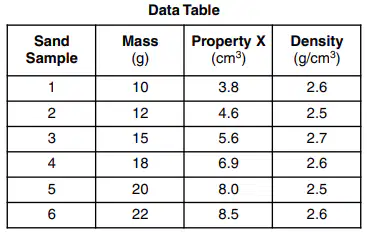
The data table shows three properties of six different-sized samples of quartz sand. One property of the samples is labeled X. A student used the data for mass and property X to calculate the density of each sand sample.
What property of the samples is represented by X?
weight
density
volume
temperature

The diagram below a rock suspended above an overflow container filled with water up to the overflow spout. A graduated cylinder is positioned next to the container to collect water that comes out of the overflow spout.
Which property of the rock can be directly determined when the rock is placed in the overflow container?
mass
density
volume
temperature
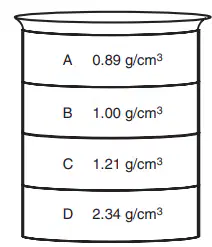
The diagram shows a tall beaker with four different liquids and their densities.
If a ball that has a density of 1.73 g/cm3 is placed in the beaker, where will the ball come to rest?
on top of liquid A
between liquids B and C
between liquids C and D
on the bottom of the beaker

What is the volume of the rock?

Both boxes have the same density
Label the correct units in the density formula.
Grams
mL
g/mL

Three liquids and two solids are placed in a graduated cylinder. The substances arrange themselves in the cylinder according to their densities. Use the information to identify the liquids and solids in the graduated cylinder. start with the top solid as substance 1, and the top liquid as substance 2, and so on
Gold
Mercury
water
Gasoline
Cork

Which object has the highest density in this picture?
A
B
C

In this image, the VOLUME of A is _____ the volume of B
equal to
greater than
less than

The diagram shows the steps necessary to produce the energy needed to run a hair dryer.
As it moves from location A to location D in the diagram, the energy stored in the coal
is converted to solar energy
reduces the friction in the hair dryer
is recycled
is transformed

The illustration shows an example of energy changing forms.
Which changes in energy form are illustrated in the diagram?
electrical → sound → light and mechanical
sound → mechanical → light and electrical
mechanical → light → sound and electrical
light → electrical → mechanical and sound

The pie chart compares the amounts of energy from different sources used in the United States each year.
Which two energy sources together provide more than 50% of the energy needs of the United States?
nuclear and natural gas
hydropower and oil
oil and coal
natural gas and coal
A television set changes electrical energy to sound and light energy. In this process, some energy is
created
destroyed
changed to matter
changed to heat

The diagram shows a boulder rolling down a hill into a valley and then up the opposite hill.
At which position does the boulder have the greatest kinetic energy?
A
B
C
D
The diagram shows a boulder rolling down a hill into a valley and then up the opposite hill.
At which position does the boulder have the greatest potential energy?
A
B
C
D
A ball flying through the air toward a soccer goal has what kind of energy?
Chemical
Kinetic
Heat
Light
Something moving has _________ energy.
gravitational
no
potential
kinetic
Which is the following is a result of the transfer of energy?
Gravity
Sound
Friction
Matter
What type of energy transformation occurs in a power plant where coal is burnt in order to be converted into electrical power?
potential to kinetic
electrical to sound
chemical to electrical
elastic potential to kinetic
When jumping on a trampoline, mechanical energy is constantly changing back and forth between kinetic and potential energy.
True
False
As the velocity of an object decreases, its KE will...
increase
decrease
stay the same
What two factors affect an object's kinetic energy?
area and volume
mass and weight
weight and height
mass and speed
Which is the best example that something has kinetic energy?
a car parked on a steep hill
a tennis ball rolling across the court
a picture hanging on the wall
a piece of coal before it's burned
As an object is dropped at a greater height, it will have ______ kinetic energy.
More
Less
The same

The soccer ball has more (a) energy than (b) energy.

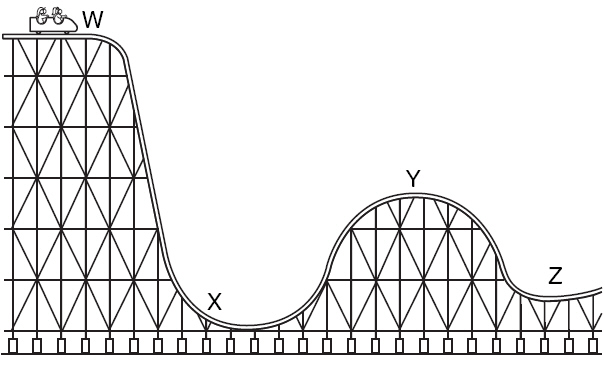
Label where the potential energy and the kinetic energy will be the highest.
Highest kinetic energy
Highest potential energy
The law of Conservation of Energy says________
energy is constantly created
energy can not be created or destroyed instead it changes from one form to another
energy can not change forms
Organize these pictures into the right categories

Running

Dancing

Hitting a baseball

Throwing a football

Sleeping

Standing

Sitting
If you want to decrease the kinetic energy, you can
decrease the mass
decrease potential energy
decrease the speed
All of the choices help to decrease kinetic energy

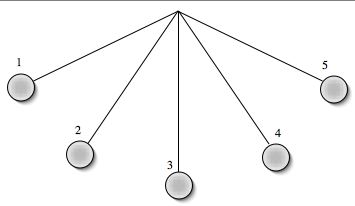
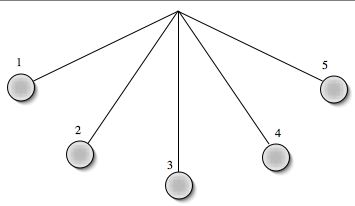
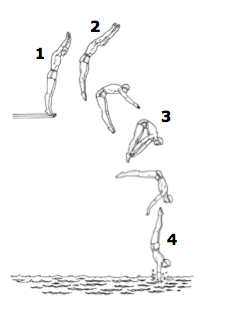
The unit of measurement measuring potential and kinetic energy...
Joules
Watts
Matter
Newton
An object falling from 50 m will have ______ potential than an object falling from 40 m.
greater
less
equal
lower
The amount of kinetic energy in an object is determined by...
Mass and Speed
Speed and height
Mass and Height
Speed and Velocity
An objects potential energy will increase with...
Mass and Velocity
Mass and Height
Mass and Speed
Speed and time
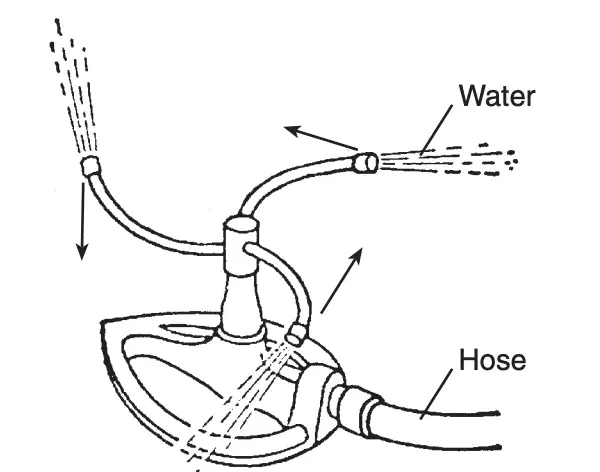
The diagram shows a spinning water sprinkler. Water comes through a hose and is sprayed by the sprinkler.
Which principle best explains why the sprinkler spins?
Every action has an equal and opposite reaction.
Solid substances are usually more dense than liquid substances.
Energy is released when water condenses.
Most substances expand when heated and contract when cooled.
Which device directly converts chemical energy into electrical energy?
solar-powered calculator
wood-burning stove
battery-powered flashlight
wind-powered sailboat
Which type of energy is transferred by vibrational waves?
nuclear
electromagnetic
chemical
sound
According to Newton's first law of motion, what will happen to the motion of an object when acted upon by an unbalanced force?
The motion of the object changes
The speed and direction of the object change after the unbalanced force becomes balanced
The motion of the object remains unchanged
The speed and direction of the object do not change
While riding a skateboard, Nina ran into a rough patch of pavement, but she thought she could ride right over it. Instead, the skateboard stopped but Nina didn't. Nina kept moving forward due to
inertia
friction
velocity
speed
When a soccer ball is rolling along a grassy field, it does not continue moving forever. What force is acting upon it to change its state?
velocity
inertia
friction
gravity
Newton's first law of motion states that an object at rest stays at rest and an object in motion stays in motion unless acted on by an unbalanced force. This law is also known as the law of
gravity
inertia
momentum
friction
What is the tendency of an object to resist a change in its motion?
gravity
inertia
speed
friction
What force opposes motion whenever two surfaces come into contact?
gravity
inertia
speed
friction
According to Newton's first law of motion, what changes motion?
a balanced force
direction
an unbalanced force
speed
According to Newton's second law, what is the acceleration of an object with a mass of 10 kg and a net force of 30 N?
3 m/s2
20 m/s2
10 m/s2
30 m/s2
The greater the force that is applied to an object of a given mass, the more the object will accelerate.
True
False
Which equation correctly represents Newton's second law of motion?
net force x acceleration = mass
acceleration = net force/mass
velocity = distance/time
net force = acceleration/mass
Tony has a mass of 50 kg and his friend Sam has a mass of 45 kg. If both friends push off on their roller skates with the same force, then which friend will experience greater acceleration?
Tony will have greater acceleration for a given amount of force
Sam will have greater acceleration for a given amount of force
Sam will have greater acceleration due to greater mass
They will have the same acceleration due to the same applied force.
If a net force of 55 N is applied to an object with a mass of 11 kg, then what is its acceleration according to Newton's second law of motion?
44 m/s2
55 m/s2
11 m/s2
5 m/s2
When a bat strikes a ball, the force exerted can send the bat backwards. This is an example of which law of motion?
Newton's First Law
Newton's Second Law
Newton's Third Law
Law of Conservation of Energy
Newton's Third Law refers tot he same type of force acting on different objects.
True
False
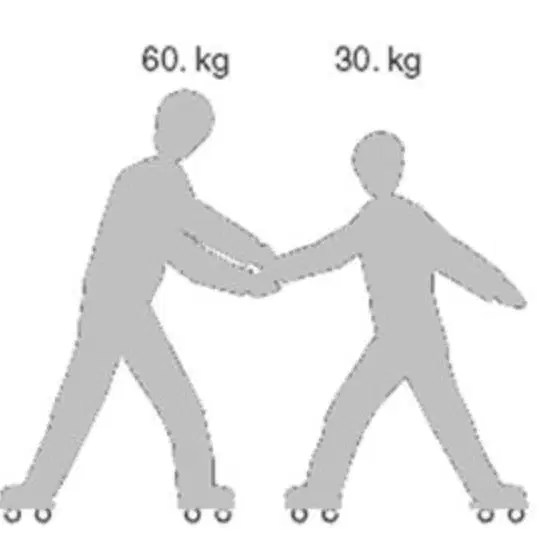
If a 60 kg roller skater pushes a 30 kg roller skater with a force of 5 N towards the right, then what would be the amount of force and direction of the force exerted by the 30 kg roller skater?
5 N to the right
0 N
5 N to the left
10 to the left
When you paddle a boat in the water, the force of your paddle will push the water which will apply an equal force back on you.
True
False
The reaction to an action is always
stronger in strength and in the opposite direction to the action
equal in strength and in the same direction as the action
weaker in strength and in the opposite direction to the action
equal in strength and in the opposite direction to the action
According to Newton's Third Law, which of the following correctly completes the statement below?
The reaction to an action is always __________________.
stronger in strength and in the opposite direction
equal in strength and in the same direction
weaker in strength and in the opposite direction
equal in strength and in the opposite direction
N
Newton

Newton's 1st Law

Newton's 2nd Law

Newton's 3rd Law
Which of Newton's Laws explains the principle of action and reaction?
First Law
Second Law
Third Law
Two identical bikes have riders of different masses. Which statement below is true?
The rider with the great mass will need to use more force to equal the acceleration of the other rider.
The rider with less mass will accelerate slower
The rider with more mass will accelerate faster
Acceleration will not be affected for either rider
What causes objects to move?
Balanced forces
Unbalanced forces
Zero Gravity
Inertia
A person pushes a bowling ball 10 meters and then pushes a tennis ball 10 meters. Which push requires more force and why?
The bowling ball because it has less acceleration
The tennis ball because it has a greater acceleration
The bowling ball because it has a greater mass
The tennis ball because it has less mass
Speed is how fast an object is moving while velocity is
speed with acceleration
speed with a direction
speed of an object plus the mass
speed of an object plus the gravity


An object is in motion relative to the _________________________.
Mass
Reference Point
Gravity
Forces and Motion



Match the following
Describing the motion of an object is to describe how far it has moved.
Distance
The distance and direction of an objects change in position from the starting point.
Displacement
The speed of an object and its direction.
Velocity
The rate of change in velocity.
Acceleration
What is the speed of a rocket that travels 9000 meters in 12.12 seconds?
725 m/s
7,425 m/s
742.5 m/s
680 m/s

A student went on a walk, and kept track of their time and distance. The data is displayed in the graph. Which best describes the student’s walk?
The student went up a hill, and then down a hill.
The student walked very quickly at the beginning of the walk, but then slowed down at the end.
The student walked slowly at the beginning of the walk, and faster at the end.
The student walked at a steady pace, and then returned to the starting point.
Which graph represents an object that is decreasing in speed?


This graph shows the motion of a cheetah, a human, and a pig. Which statement describes their movement?
The pig is traveling at a faster speed because it reached 500 meters in a shorter amount of time.
The cheetah, human, and pig all traveled at the same speed because they all reached 500 meters.
The human is traveling at a faster speed because it reached 500 meters in a shorter amount of time.
The cheetah is traveling at a faster speed because it reached 500 meters in a shorter amount of time.

Which person in the diagram is moving the fastest?
A
B
C
D
According to the law of conservation of mass, which of the following is a TRUE statement about any chemical reaction?
The total mass of the reactants is greater than the total mass of the products.
The total mass of the reactants is less than the total mass of the products.
The total mass of the reactants equals the total mass of the products.
In a chemical reaction, matter can be created but not destroyed.

Match the following
Reactant
Element
2C2
Reactant
Compound
CH4
Product
Compound
CO2
Each substance written to the LEFT of the arrow in a chemical equation is a ____.
reactant
product
precipitate
catalyst
What is a group of atoms bonded together?
products
consumer
molecule
reactants

If this reaction occurs in a sealed container, will the mass of the container and everything in it increase, decrease, or stay the same and why?


What are the reactants in this word equation?
Carbon dioxide and oxygen
Carbon dioxide and water
Oxygen and glucose
Oxygen and water
In a chemical reaction...
New atoms are created
Atoms rearrange
Atoms are destroyed
Nothing Happens

In this chemical reaction zinc is a...
Product
Reactant
Neither

Is the compound in the pink box a Reactant or a Product?
Reactant
Product

What are the reactants in the picture?
2 sodium and 2 chlorine
1 sodium and 1 chlorine
1 sodium and 2 chlorine
How many reactants are in A + B ---> C ?
1
2
3
4
If reactants' mass is 18g , what is the mass of the reactants ?
15
36
81
18

Where are the reactants written in a chemical equation? (look at the picture)
before the arrow
on top of the arrow
after the arrow
both sides of the arrow
What are the two reactants shown in this chemical equation?


What are the two products shown in this chemical equation?
Where are the products written in a chemical equation? (look at the picture)
before the arrow
on top of the arrow
after the arrow
both sides of the arrow