
 Worksheets
7th grade content review
Total questions: 179
Worksheet time: 3hrs 47mins
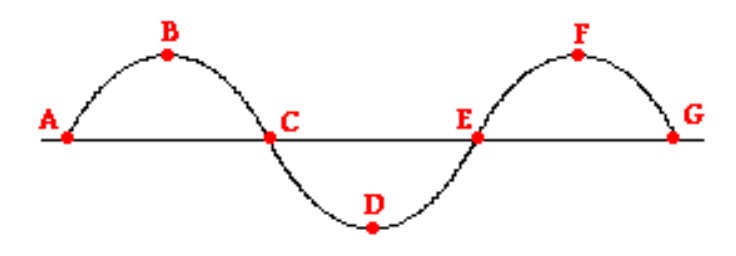
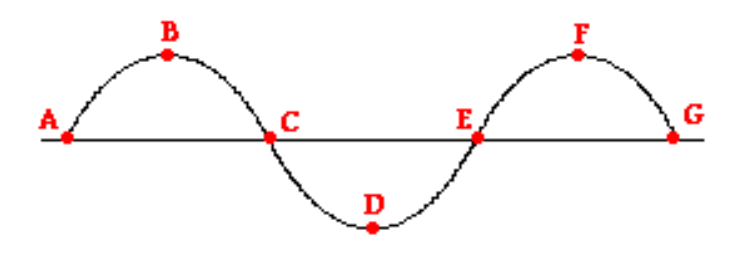

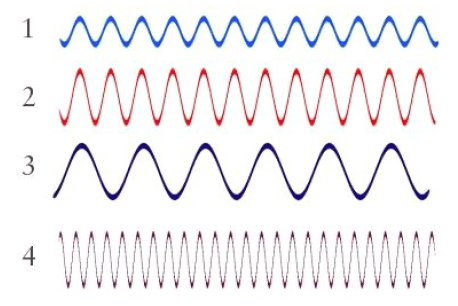


What do we call the part of a compressional wave that is when the waves are squeezed together?
compression
rarefaction
crest
trough
What do we call the part of a compressional wave that is spread a part?
compression
rarefaction
crest
trough
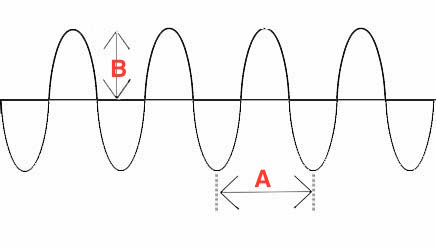
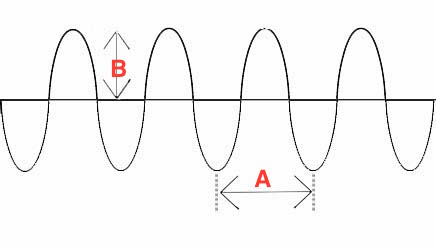
What property of this wave is represented by the letter "A"
amplitude
crest
trough
wavelength

Light is a type of electromagnetic radiation that is visible to the eye.
True
False
Light travels much faster than
(a)
Which of the following is an example of light traveling faster than sound?
Lightning
Fireworks
Thunder
None of the above

Why are we able to see things?
A ______ object is one that produces light.
luminous
non-luminous
transparent
A non-luminous object is one that ______ light.
produces
destroys
reflects
Which of the following is NOT a luminous object?
stars
flashlight
candle
moon
Which of the following options is a non-luminous object?
a flashlight
a planet
an electric bulb
the sun
A shadow is a _____ area on a bright surface.
light
dim
dark
A shadow is caused by something blocking the source of a light.
True
False
List one luminous object and one non-luminous object seen or used by people on a regular basis.
In a heliocentric system, Earth revolves around
Mars.
the stars.
the moon.
the sun.
Which is a correct list of the planets in order of increasing distance from the sun?
Mercury, Venus, Mars, Earth, Jupiter, Saturn, Uranus, Neptune
Neptune, Uranus, Saturn, Jupiter, Mars, Earth, Venus, Mercury
Mercury, Venus, Earth, Mars, Jupiter, Saturn, Uranus, Neptune
Neptune, Mars, Earth, Uranus, Saturn, Jupiter, Venus, Mercury
How are mass and weight different?
Mass depends on the location of an object; weight measures the effects of gravity.
Mass measures the effects of gravity; weight measures the amount of matter in an object.
Mass measures the amount of matter in an object; weight measures the effects of gravity.
Mass depends on the location of an object; weight measures the amount of matter in an object.
What is the tendency of an object to resist a change in motion?
Weight
Inertia
Gravity
Orbital velocity
What do the inner planets have in common?
They are small and rocky; none have an atmosphere.
They are small and rocky; most have atmospheres.
They are large and rocky; none have an atmosphere.
They are large and rocky; most have atmospheres.
Venus and Earth are much alike in terms of
their size and density.
their rates of rotation.
their atmospheres.
their direction of rotation.
What do the four outer planets have in common?
They are about the same size as Earth and are made mainly of hydrogen and helium.
They are much larger than Earth and are made mainly of iron.
They are about the same size as Earth and are made mainly of iron.
They are much larger than Earth and are made mainly of hydrogen and helium.
Uranus is different from most other planets because it
is the farthest from the sun.
is mostly nitrogen and helium.
rotates on its side.
has the most moons.
Neptune is very similar in size and color to
Jupiter.
Saturn.
Uranus.
Earth.
The Viking landers sent back pictures of the reddish-colored, barren, rocky surface of
Mercury
Jupiter
Uranus
Mars
Water is found as a solid, liquid, and gas on __________.
Mercury
Venus
Earth
Mars
_________ has the most complex ring system in the solar system.
Neptune
Saturn
Uranus
Jupiter
The density of ___________ is so low that the entire planet could float in water.
Jupiter
Saturn
Uranus
Neptune
Nicolaus Copernicus and Galileo Galilei were both astronomers that developed models of the solar system. How are the Copernican and Galilean models of the solar system alike?
Both have moons that orbit different planets.
Both have Earth at the center of the solar system.
Both have the sun at the center of the solar system.
Both have planets with orbits that are shaped like ellipses.
What is the relationship between a planet's distance from the sun and the length of its year?
The closer the planet is to the sun, the longer its year.
The farther the planet is from the sun, the longer its year.
A year on each inner planet is the same length; it is shorter than a year on an outer planet.
A year on each outer planet is the same length; it is shorter than a year on an inner planet.
Which two factors keep a planet in orbit around the sun?
Mass and distance
Gravity and weight
Inertia and gravity
Rotation and revolution
Which inner planet has the thickest atmosphere?
Earth
Mars
Mercury
Venus
Aside from Earth, which inner planet once had liquid water on its surface?
Mercury
Europa
Venus
Mars
Which is the smallest terrestrial planet?
Mars
Mercury
Venus
Earth
Saturn’s rings are made up mostly of
nitrogen and helium.
ice and water vapor.
volcanic dust particles.
chunks of ice and rock.
What is distinctive about Jupiter?
Its axis of rotation is tilted 90 degrees.
It is smaller and denser than the other outer planets.
It is the planet with the most spectacular rings.
It is the largest and most massive planet.
Solar energy trapped by gases in Venus’ atmosphere causes ___________.
clouds to form
its slow rotation
the greenhouse effect
a cooling effect
The Great Red Spot is a huge storm of swirling gas that is found on __________.
Neptune
Jupiter
Saturn
Uranus
________ has dark-colored storms in its atmosphere.
Neptune
Uranus
Jupiter
Saturn
How does the distance between a planet and the sun affect their gravitational pull on one another?
Planets closer to the sun experience less gravitational pull.
Planets closer to the sun experience more gravitational pull.
There is no difference in gravitational pull.
The gravitational pull changes from year to year.

What is located where it says "Area" in this picture?
comets
meteoroids
the asteroid belt
dwarf planets
As a part of the water cycle, water from Earth's surface enters the clouds and finally falls back to the ground in the form of rain. What is the correct sequence of processes water undergoes?
Evaporation, Condensation, Precipitation
Precipitation, Condensation, Evaporation
Condensation, Evaporation, Precipitation
Evaporation, Precipitation, Condensation
What would happen if the Sun is removed from the water cycle?
The water cycle would not include precipitation but would continue with groundwater flow.
The water cycle would no longer occur because the Sun provides the energy for evaporation and transpiration.
The water cycle would no longer occur because the Sun provides energy for the formation of clouds.
The water cycle would not include evaporation and transpiration but would continue with condensation.

What is another name or synonym for the water cycle?
Geologic cycle
Hydrologic cycle
Geosphere
Carbon cycle

What is the energy source that drives the water cycle?
The moon T
The heat from our home in the winter all around the world
The sun
he heat generated solely from the core of the earth

The movement caused within a fluid by the tendency of hotter and therefore less dense material to rise, and colder, denser material to sink under the influence of gravity, which consequently results in transfer of heat. ____________________
Evaporation
Convection
Precipitation
Transpiration


How does cellular respiration contribute to the process of evaporation?
When organisms perform cellular respiration, they exhale water vapor, which contributes to evaporation.
When organisms perform cellular respiration, they inhale water vapor, which contributes to evaporation.
When organisms perform cellular respiration, they exhale carbon dioxide, which contributes to evaporation.
When organisms perform cellular respiration, they inhale oxygen, which contributes to evaporation.

Precipitation might contribute to the addition of pollutants to rivers, lakes, and oceans because...
it carries pollutants from the atmosphere into bodies of water
it collects any pollutants that are in or on the ground in the water supply
Runoff might contribute to the addition of pollutants to rivers, lakes, and oceans because...
it carries pollutants from the atmosphere into bodies of water
it collects any pollutants that are in or on the ground in the water supply
Which of the processes associated with the water cycle might be responsible for helping to clean or filter the water? (Select TWO answers)
Infiltration (also called percolation)
Transpiration
Precipitation
Runoff


Which processes of the water cycle gain energy? Select all that apply.
condensation
sublimation
evaporation
deposition


What is the definition of a cold front?
Mass of cold air meets up with a mass of warm air
Mass of warm air meets up with a mass of cold air
Mass of cold air meets up with a mass of cold air
Cold weather
What is the definition of a warm front?
Mass of cold air meets up with a mass of warm air
Mass of warm air meets up with a mass of cold air
Mass of cold air meets up with a mass of cold air
Warm weather
What is the definition of an occluded front?
Mass of cold air meets up with a mass of warm air
Mass of warm air meets up with a mass of cold air
When a warm front is sandwiched between two cold masses of air
When a warm and cold front meet and move very little
What is the definition of a stationary front?
Mass of cold air meets up with a mass of warm air
Mass of warm air meets up with a mass of cold air
When a warm front is sandwiched between two cold masses of air
When a warm and cold front meet and move very little
What is the definition of prevailing winds?
Currents of wind that do not blow in a consistent pattern
Currents of wind that blow in a consistent pattern
When the Earth's rotation makes the wind change directions
Places where the wind never stops blowing
What is the Coriolis Effect?
Currents of wind that do not blow in a consistent pattern
Currents of wind that blow in a consistent pattern
When the Earth's rotation makes the wind change directions
Places where the wind never stops blowing
What is the definition of atmosphere?
All of the protective layers and gases surrounding the Earth
The condition of the air around the Earth
The pattern of weather in a specific place
The place where planes fly
What is a barometer used for?
Measure air temperature
Measure air pressure
Measure air moisture
Measure wind
What type of clouds are cirrus clouds?
Wispy clouds
Puffy clouds
Layered clouds
Thunderheads
What type of clouds are stratus clouds?
Wispy clouds
Puffy clouds
Layered clouds
Thunderheads
What type of clouds are cumulus clouds?
Wispy clouds
Puffy clouds
Layered clouds
Thunderheads
What is a front?
Boundary between two air temperatures or air pressures
The direction the weather moves
The consistent pattern of the winds around the Earth
The anterior of any building
Which climate gets the most precipitation?
Rainforest
Desert
Deciduous Forest
Savanna
Which climate gets the least precipitation?
Rainforest
Desert
Deciduous Forest
Savanna
What is the temperature in a desert climate?
Hot
Warm
Cool
Cold
What will happen when air pressure falls?
Stormier weather
Warmer weather
Temperate weather
Nothing
What will happen when air pressure rises?
Stormier weather
Warmer weather
Temperate weather
Nothing
What causes wind?
Differences in air temperature
Differences in air pressure
The Coriolis Effect
Constant high pressure
What type of weather is expected at a cold front?
Sharp changes in weather- storms likey
Warmer temperatures-less precipitation
light precipitation followed by heavy precipitation
Temperate/calm weather
What type of weather is expected at a warm front?
Sharp changes in weather- storms likey
Warmer temperatures-less precipitation
light precipitation followed by heavy precipitation
Temperate/calm weather
What type of weather is expected at an occluded front?
Sharp changes in weather- storms likey
Warmer temperatures-less precipitation
light precipitation followed by heavy precipitation
Temperate/calm weather
What type of weather is expected at a stationary front?
Sharp changes in weather- storms likey
Warmer temperatures-less precipitation
light precipitation followed by heavy precipitation
Temperate/calm weather
How do meteorologists predict weather?
Satellites
Doppler Radar
Computer Software
Magic
What is lightning?
The sound made from thunder
The thing Zeus throws
Flash of electricity through the atmosphere
Electrons in the atmosphere
Why do we hear thunder after lightning?
Light travels faster than sound
Sound travels faster than light
Light travels slower than sound
Sound travels at the same speed as light
The genotype for a yellow plant is...
b = blue eyes
What is true about these two brothers that have brown eyes?
One has genotype BB the other Bb.
What gender has an X and a Y chromosome?
male
female
both
none

G=green scales; g= white scales
What offspring do you get when you cross a 2 heterozygous parents?
GG, gg
GG, Gg, gg
Gg, GG
Gg
Gg, gg
G=green scales; g= white scales
What offspring do you get when you cross a 2 heterozygous parents?
2 green and 2 white
3 green and 1 white
1 green and 3 white
4 green
4 white
D= dimples, d=no dimples
What offspring do you get from crossing a heterozygous parent with a homozygous recessive parent?
25% dimples, 75% no dimples
75% dimples, 25% no dimples
50% dimples, 50% no dimples
100% dimples
Y= gray fur, y= red fur
What offspring do you get from crossing a heterozygous parent with a homozygous dominant parent?
25% gray, 75% red
75% gray, 25% red
50% gray, 50% red
100% gray
W=wings, w=no wings
What off spring would you get from mixing homozygous dominant with homozygous recessive?
WW & ww
WW, Ww, ww
Ww
Ww, ww
Ww, WW
W=wings, w=no wings
What off spring would you get from mixing homozygous dominant with homozygous recessive?
50% with wings, 50% no wings
100% with wings, 0% no wings
25% with wings, 75% no wings
75% with wings, 25% no wings
0% with wings, 100% no wings
The sum of all living matter on Earth.
Biosphere
Lithosphere
Atmosphere
Geosphere
recycle, ___________, and reuse.
recognize
reunion
reborn
reduce
The place where an organism naturally lives and grows.
House
Natural habitat
Population
Community
The process of a species disappearing forever.
Pollution
Resource
Contaminant
Extinction
A group of interacting individuals of the same species.
Population
Species
Per capita
Community
A group of living things that have similar genes capable of reproducing.
Population
Species
Ethnic group
Globe
Human activities can have a great impact, even causing ______________ of some marine life.
extinction
pollution
revival
decrease
Typically, as human populations ____________, the negative impacts on Earth increase.
increase
decrease
Natural fuel formed from the remains of living organisms.
Solar energy
Fossil fuels
Bio fuels
Clean energy
A gradual increase in temperature of the Earth’s atmosphere caused by gases and pollutants.
Global warning
Global warming
Global watching
Global waxing
A resource that can be replaced in a human lifetime.
Renewable
Nonrenewable
The burning of fossil fuels has increased certain gas ___________ over time.
absorption
emissions
When _______ are picked up by runoff, the effects can be harmful because of polluted water.
renewable things
organisms
contaminants
population
Resources that exist in the environment without human intervention.
National Resources
Natural Resources
Common Resources
Public Resources
The use of resources by specific populations (i.e.fuels, food, etc)
Pollution
Reduction
Consumption
Deforestation
All of the living and nonliving factors in an area.
Population
Earth
Government
Environment
Average per person
Per million
Per capital
Per capita
Per coffee
____________ is the number of different species of plants and animals in an area.
Per capita
Address
Biology
Biodiversity
Fossil fuels release _____________ into the atmosphere.
Oxygen
Methylmercury
Ozon
Carbon dioxide
A resource that cannot be replaced in a human lifetime.
Renewable
Nonrenewable
Management or care of Earth's resource.
Lordship
Fellowship
Friendship
Stewardship
Mercury is released as the coal is burned. And it changes into the highly toxic compound _____________.
Methylalchol
Methylmercury
Methylene
Methylparaben
recycle, reduce, and ____________.
retake
request
reuse
revive
Amount of greenhouse gases produced by human activities.
Gross National Product
Carbon footprint
Carbon family
Greenhouse effect

