wayground logo

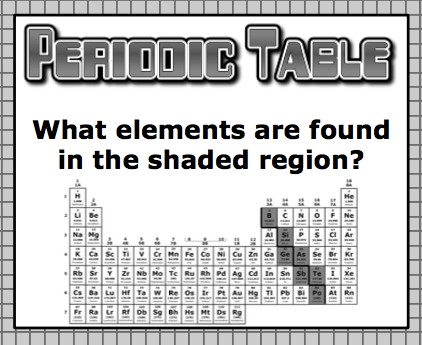
Free Printable Worksheets

Font size

S
M
L
XL
Worksheets

Midterm Test Review 22

Total questions: 181

Worksheet time: 4hrs 19mins

Name
Class
Date
1.

Which state of matter has both definite shape and definite volume?

a)

Gas

b)

Liquid

c)

Solid

2.

Which state of matter has no definite shape and no definite volume?

a)

Gas

b)

Liquid

c)

Solid

3.

Which state of matter has no definite shape but does have definite volume?

a)

Gas

b)

Solid

c)

Liquid

4.

Matter is _______________________________.

a)

The amount of matter in an object.

b)

The amount of space an object occupies.

c)

Anything that has mass and volume.

5.

Mass is ________________________________.

a)

The amount of matter in an object.

b)

Anything that has Mass and volume.

c)

The amount of space an object occupies.

6.

Volume is _______________________.

a)

the amount of matter an object has.

b)

the amount of space an object occupies.

c)

anything that mass and volume.

7.

A gas has _______________ . (Pick 3)

a)

A lot of space between particles

b)

Very little space between particles

c)

Particles with no definite pattern.

d)

Particles that hold a very definite pattern.

e)

Particle that bounce all over the place.

8.

A solid has _______________ . (Pick 3)

a)

A lot of space between particles

b)

Very little space between particles

c)

Particles with no definite pattern.

d)

Particles that hold a very definite pattern.

e)

Particles that only vibrate in place.

9.

A liquid has _______________ . (Pick 3)

a)

A lot of space between particles.

b)

Very little space between particles.

c)

Particles that have have no definite pattern.

d)

Particles hold that a very definite pattern.

e)

Particles that freely flow past each other.

10.

The total energy of all the particles in a sample of matter is called —————

a)

Total Energy

b)

Thermal Energy

c)

Kinetic Energy

d)

Particle Energy

11.

Molecules with more kinetic energy move ———- than molecules with less kinetic energy

a)

Lower

b)

Faster

c)

Higher

d)

Slower

12.

Phase change going from Liquid to Solid...

a)

Melting

b)

Freezing

c)

Condensation

d)

Sublimation

13.

Phase change going from a Solid to a Liquid...

a)

Freezing

b)

Condensation

c)

Melting

d)

Sublimation

14.
The phase change from water vapor to liquid water is known as...
a)
evaporation
b)
precipitation
c)
condensation
d)
sublimation
15.
What happens to particles when they are heated?
a)
They speed up and spread out
b)
They slow down and compress
c)
They stop moving
d)
They move closer together and speed up
16.
All changes in the state of matter of a substance requires
a)
vibration
b)
water
c)
permission
d)
energy
17.
How are solids different from liquids?
a)
particles in solids are moving freely around each other.
b)
particles in solids have no motion.
c)
particles in solids are vibrating in place.
d)
particles in solids have more motion than in liquids
18.
When the temperature of matter decreases the particles ...
a)
speed up and move farther apart
b)
speed up and move closer together
c)
slow down and move farther apart
d)
slow down and move closer together
19.

When thermal energy is added to solids they -

a)

Melt and change to a liquid

b)

Condense and change to a gas

c)

Vaporize and change to a gas

d)

Freeze and change to a liquid

20.

When the thermal energy of liquids decreases they -

a)

Melt and change to a solid

b)

Condense and change to a gas

c)

Vaporize and change to a gas

d)

Freeze and change to a solid

21.

When the thermal energy of gases decreases they -

a)

Melt and change to a solid

b)

Condense and change to a liquid

c)

Vaporize and change to a liquid

d)

Freeze and change to a solid

22.

When thermal energy is added to liquids they -

a)

Melt and change to a solid

b)

Condense and change to a gas

c)

Vaporize and change to a gas

d)

Freeze and change to a solid

23.

When the thermal energy of gases decreases they -

a)

Melt and change to a solid

b)

Condense and change to a liquid

c)

Vaporize and change to a liquid

d)

Freeze and change to a solid

24.

When liquid particles increase in kinetic energy they change into a -

a)

Solid

b)

Liquid

c)

Gas

25.

When solid particles increase in kinetic energy they change into a -

a)

Plasma

b)

Liquid

c)

Gas

26.

The relationship of which two variables are compared in Boyle's Law?

a)

pressure & volume

b)

volume & temperature

c)

temperature & pressure

d)

volume & moles (amount of gas)

27.
The relationship of which two variables are compared in Charles’s Law?
a)
pressure & volume
b)
volume & temperature
c)
temperature & pressure
d)
volume & moles (amount of gas)
28.
LeGarrette Blount decides to go scuba diving while on vacation in Mexico. As he swims deeper into the ocean, the pressure pushing on him increases. Based on the relationship in Boyle’s law, what would happen to the volume of a LeGarrette’s lungs with this increase in pressure?
a)
volume of the lungs would increase
b)
volume of the lungs would have no change
c)
volume of the lungs would double
d)
volume of the lungs would decrease
29.
If a balloon is cooled what will happen to the volume?
a)
Volume will increase
b)
Volume will decrease
c)
Volume will not change
30.

An _______________ is made up of one or more of the same kind of atom chemically combined.

a)

atom

b)

element

c)

molecule

d)

compound

31.

A _____________ contains a variety of elements and compounds that are not chemically combined with each other.

a)

compound

b)

element

c)

molecule

d)

mixture

32.

A __________________ is a substance that has definite physical and chemical properties such as appearance, melting point, and reactivity.

a)

mixture

b)

pure substance

c)

compound

d)

element

33.

A ______________ mixture is one that does not have a uniform composition.

a)

heterogeneous

b)

homogenous

c)

pure substance

34.

A _________________ mixture is one where the substances are evenly spread throughout.

a)

heterogeneous

b)

homogeneous

c)

pure substance

35.

Fruit Loops, pizza, and Skittles are examples of ____________________ mixtures.

a)

heterogeneous

b)

homogeneous

c)

pure

36.

Coffee, mouthwash, and vinegar are examples of __________________ mixtures.

a)

heterogeneous

b)

homogeneous

c)

pure

37.

Which of these is an element?

a)

Salt (NaCl)

b)

Water (H20)

c)

Oxygen (O)

d)

Carbon Dioxide (CO2)

38.

Which of these is a compound?

a)

Aluminium (Al)

b)

Carbon Dioxide (CO2)

c)

Nitrogen (N)

d)

Sand

39.

sharpening a pencil

a)

physical change

b)

physical property

c)

chemical change

d)

chemical property

40.

flammability of a substance

a)

physical change

b)

physical property

c)

chemical change

d)

chemical property

41.

size of an object

a)

physical change

b)

physical property

c)

chemical change

d)

chemical property

42.

inflating a tire

a)

physical change

b)

physical property

c)

chemical change

d)

chemical property

43.

freezing point

a)

physical change

b)

physical property

c)

chemical change

d)

chemical property

44.

drawing copper into a wire

a)

physical change

b)

physical property

c)

chemical change

d)

chemical property

45.

corrosion of a bicycle frame

a)

physical change

b)

physical property

c)

chemical change

d)

chemical property

46.

fragrance of a flower

a)

physical change

b)

physical property

c)

chemical change

d)

chemical property

47.

formation of water when hydrogen burns

a)

physical change

b)

physical property

c)

chemical change

d)

chemical property

48.

boiling water

a)

physical change

b)

physical property

c)

chemical change

d)

chemical property

49.

The mass of a rock is measured with a balance. The rock is then broken into many smaller pieces and the total mass of all the pieces is measured again. Which of the following sentences about the mass is TRUE?

a)

The mass of the rock will be greater than the total mass of the smaller pieces.

b)

The mass of the rock will be less than the total mass of the smaller pieces.

c)

The mass of the rock will be same as the total mass of the smaller pieces.

d)

The mass of the rock will not be the same as the total mass of the smaller pieces.

50.

A student was working with 50 mL of water in an experiment. Which of the following statements can be concluded from the picture?

a)

The volume of a liquid changes when the shape of its container changes.

b)

The mass of a liquid changes when the shape of its container changes.

c)

The volume of a liquid stays the same when poured from one container to another container.

d)

The temperature of the liquid changes as the shape of the container changes.

51.

The atomic number identifies the number of __________.

a)

electrons

b)

atoms

c)

protons

d)

neutrons

52.

Subatomic particles that have a negative charge

a)

electrons

b)

protons

c)

quarks

d)

neutrons

53.

The number 16 for the atomic element sulfur is the

a)

ionic number

b)

isotope

c)

atomic mass

d)

atomic number

54.

How many protons does sulfur have?

a)

32

b)

16

c)

48

d)

12

55.

How many electrons does sulfur have

a)

16

b)

32

c)

48

d)

12

56.

The name of this particle means indivisible and it is the building block of matter

a)

molecule

b)

compound

c)

atom

d)

isotope

57.

Subatomic particle that has a positive charge

a)

electron

b)

poitron

c)

neutron

d)

proton

58.

The center of an atom is called the ________________.

a)

electron cloud

b)

nucleus

c)

neutrion

d)

nuetron

59.

In what part of an atom can the protons and neutrons be found?

a)

nucleus

b)

neutrine

c)

electron cloud

d)

proton cloud

60.

Which parts of the atom move around the nucleus?

a)

electrons

b)

protons

c)

electrode particles

d)

neutrons

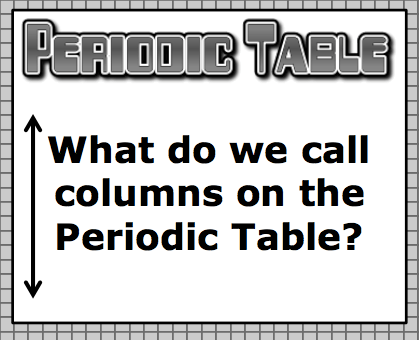
61.
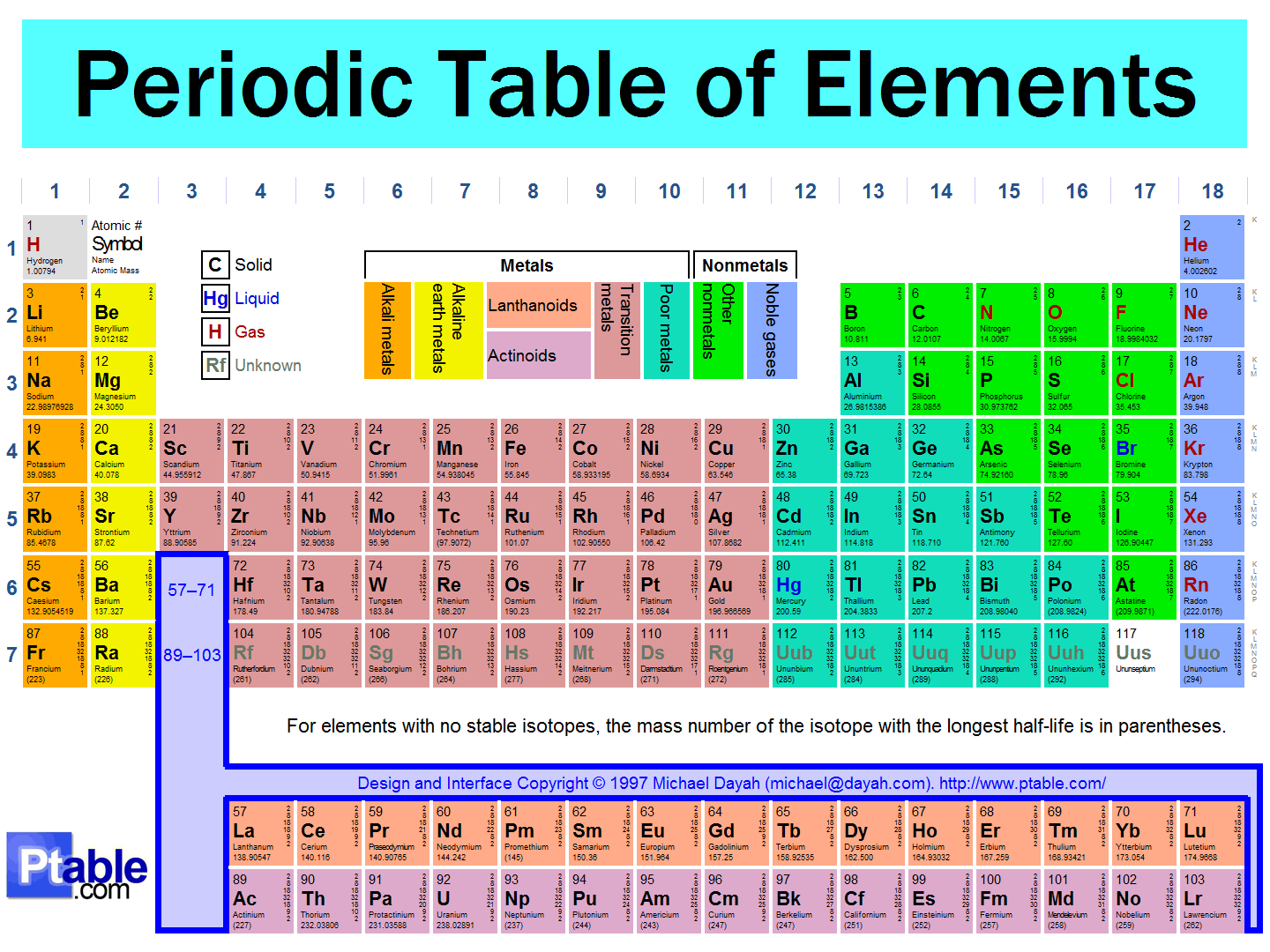
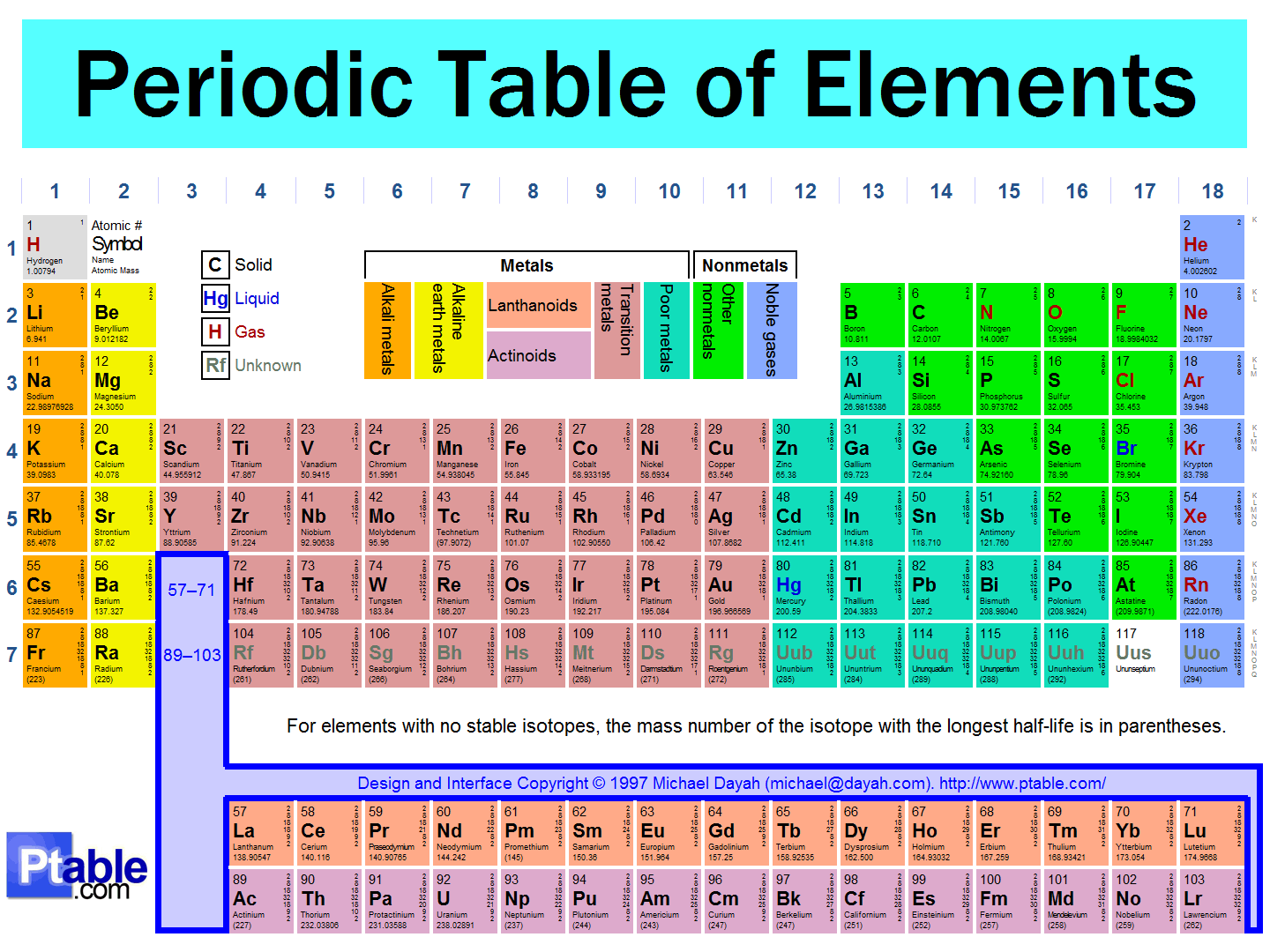
a)
Periods
b)
Groups
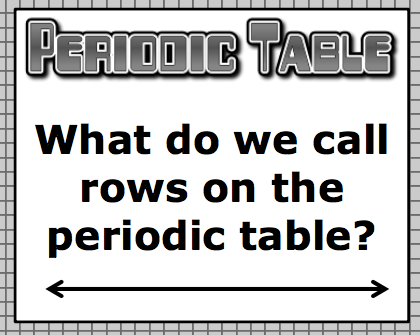
62.
a)
Periods
b)
Groups
63.
The horizontal row on the periodic table is called a
a)
group
b)
family
c)
period
d)
atomic number
64.
A vertical column is called...
a)
group
b)
tower
c)
period
d)
crew
65.
a)
energy levels
b)
valence electrons
c)
protons
d)
neutrons
66.
a)
energy levels
b)
valence electrons
c)
protons
d)
neutrons
67.
a)
Group 1
b)
Group 17
c)
Group 2
d)
Group 18
68.
a)
Group 1
b)
Group 17
c)
Group 18
d)
Group 2
69.
a)
Group 1
b)
Group 17
c)
Group 18
d)
Group 2
70.
a)
Metals
b)
Nonmetals
c)
Metalloids
71.
a)
Metals
b)
Nonmetals
c)
Metalloids
72.
a)
Metals
b)
Nonmetals
c)
Metalloids
73.
a)
Metals
b)
Nonmetals
c)
Metalloids
74.
a)
Metals
b)
Nonmetals
c)
Metalloids
75.
a)
Metals
b)
Nonmetals
c)
Metalloids
76.
a)
Metals
b)
Nonmetals
c)
Metalloids
77.
a)
Metals
b)
Nonmetals
c)
Metalloids
78.
Beryllium is in group number______.
a)
Group 2
b)
Group 3
c)
Group 4
d)
Group 7
79.
The period for Bromine is ___________.
a)
3
b)
2
c)
4
80.
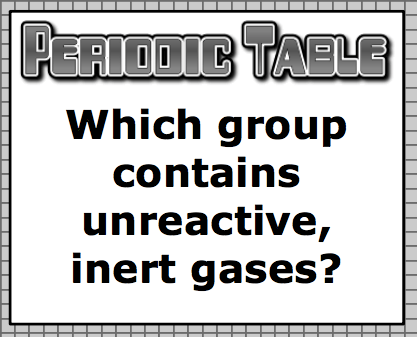
What is the name of the group that never reacts--ever ever they are stable with a full outermost ring!!!
a)
noble gases
b)
transition
c)
halogens
d)
borons
81.
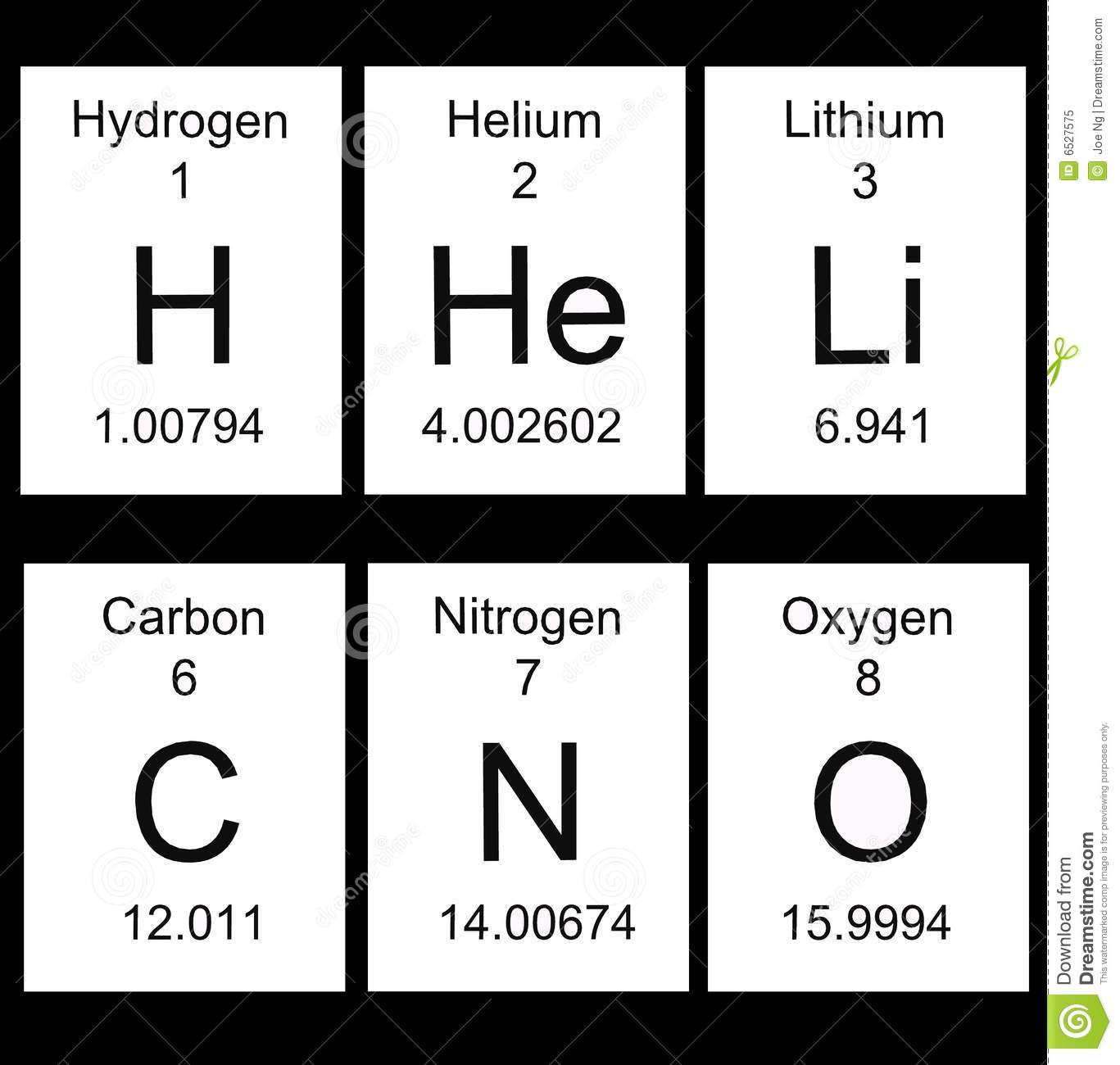
What is the chemical symbol for Lithium?
a)
H
b)
He
c)
Li
d)
N
82.
Which element is found in group 16 period 3?
a)
Sulfur (S)
b)
Selenium (Se)
c)
Chlorine (Cl)
d)
Carbon (C)
83.
Which element is found  in group 17 period 3?
a)
Chlorine
b)
Flourine
c)
Oxygen
d)
Phosphorous
84.
Which element is found in period 3 group 2?
a)
Sodium (Na)
b)
Magnesium (Mg)
c)
Yttrium (Y)
d)
Boron (B)
85.
Which element is found in group 18 period 4?
a)
Neon (Ne)
b)
Chlorine (Cl)
c)
Krypton (Kr)
d)
Xenon (Xe)
86.
Which element is found in group 1 period 2
a)
Lithium
b)
Magnesium
c)
Beryllium
d)
Potassium
87.
Which element is found in group 2 period 7?
a)
Radium (Ra) 
b)
Radon (Rn)
c)
Stontium (Sr)
d)
Lutetium (Lu)
88.

Which halogen is found in period 4?

a)

Krypton (Kr)

b)

Xenon (Xe)

c)

Bromine (Br)

d)

Iodine (I)

89.

Which element has similar chemical properties as sodium but has 7 energy levels?

a)

Francium (Fr)

b)

Cesium (Cs)

c)

Rubidium (Rb)

d)

Potassium (K)

90.

The positive ions tend to _____________ electrons.

a)

lose

b)

gain

91.

The negative ions tend to _____________ electrons.

a)

lose

b)

gain

92.

When an atom loses an electron, it becomes a

a)

positive ion

b)

negative ion

c)

neutral ion

d)

neutral atom

93.

Why do all bonds form?

a)

so the number of protons equals the number of electrons

b)

so an atom can become unstable

c)

to fill the outermost energy level

94.
Ionic bonds are between...
a)
Metal and Non-metal
b)
Non-metal and Non-metal
c)
Metal and Metal
95.

Anions

a)

Gain electrons, has an overall positive charge

b)

Lose electrons, has an overall positive charge

c)

Lose electrons, has an overall negative charge

d)

Gain electrons, has an overall negative charge

96.

Which of the following is the correct ionic formula for calcium sulfide?

a)

Ca2S2

b)

CaS

c)

S2Ca2

d)

SCa

97.

Name the compound from it's formula: BaI2

a)

Iodine barium

b)

Iodine bariumide

c)

Barium iodine

d)

Barium iodide

98.

When magnesium burns in oxygen it produces MgO. Use the ionic formula to name the compound produced.

a)

Magnesium oxygen

b)

Oxygen magnesium

c)

Magnesium oxide

d)

Oxygen magnesiumide

99.
What two types of atoms make a covalent bond?
a)
2 Nonmetals
b)
1 Nonmetal and 1 Metal
c)
2 Metals
d)
2 Noble Gases
100.
Which of the following is NOT formed by a covalent bond?
a)
K2S
b)
H2O
c)
I2
d)
CO2
101.

How many atoms are in this molecule? C6H12O6

a)

6

b)

12

c)

18

d)

24

102.
CH4 is a covalent compound, please select the proper name of that formula. 
a)
Carbon hydride
b)
Carbon tetrahydride
c)
Tetracarbon hydrogen
d)
Carbon tetrahydroxide
103.
Phosphorus trichloride is a covalent compound. What is the proper formula?
a)
PCl3
b)
P3Cl
c)
PCl
d)
PCl2
104.
CO2 is a covalent compound. The proper name for COis ________. 
a)
Carbon dioxide
b)
Carbon oxide
c)
Oxygen dicarbon
d)
Carbon oxidedi
105.

What is the correct chemical formula for phosphorus trihydride?

a)

P2H3

b)

P4H2

c)

PH3

d)

P3H3

106.

Which of the following is the chemical formula for sulfur hexachloride?

a)

SCl6

b)

S6Cl

c)

S6Cl6

d)

S1Cl6

107.

Which of the following names matches the chemical formula N2O3?

a)

Dinitrogen triople oxide

b)

Nitrogen oxide

c)

Dinitrogen trioxide

d)

Trioxide nitrogen

108.
What is the correct formula for Sodium Oxide?
a)
NaO
b)
NaO2
c)
Na2O
d)
Na2O2
109.
How do the following two elements bond together?
Cr3+  O2-         
a)
CrO
b)
Cr3O2
c)
Cr2O3
d)
CrO3
110.
Which of the following is NOT an ionic compound:
a)
CaO
b)
NaOH
c)
BaCl2
d)
Br2
111.
How do the following two elements bond together?
Al3+  O2-         
a)
AlO
b)
Al2O3
c)
Al3O6
d)
Al3O2
112.
What is the correct formula for the compound, lithium oxide?
a)
LiO
b)
Li2O
c)
LiO2
d)
Li2O2
113.

Balance this equation

_Al +_HCl --> _H2 +_AlCl3

a)

2,6,3,2

b)

it's already balanced

c)

4,12,3,4

d)

2,1,4,5

114.

The coefficient in 3H2O is

a)

6

b)

5

c)

2

d)

3

115.
How many atoms of carbon (C) are in C6H12O6?
a)
3
b)
6
c)
12
d)
24
116.
How many Sodium (Na) are in 6NaCl?
a)
1
b)
12
c)
6
117.
How many Hydrogen are in 4H2O?
a)
6
b)
8
c)
2
d)
4
118.

Which equation is balanced?

a)

PbO2 + 2H2

b)

SO2 + H20 --> H2SO4

c)

2Na + 2H2O --> 2NaOH + H2

119.
What coefficient should be used to make the following equation balanced?
N2+O2--> _NO 
a)
1
b)
2
c)
3
d)
4
120.
How many HCl molecules do you need to balance this equation? 
Mg +  __HCl --->  MgCl2 + H2
a)
1
b)
2
c)
3
d)
4
121.

Balance this equation

_Al +_HCl --> _H2 +_AlCl3

a)

2,6,3,2

b)

it's already balanced

c)

4,12,3,4

d)

2,1,4,5

122.

What are the coefficients that would properly balance this equation?

__AgNO3 + __H2S --> __Ag2S+ __HNO3

a)

2,1 --> 1,2

b)

1,2 --> 1,1

c)

1,2 --> 1,2

d)

1,2 --> 2,1

123.
Combining substances to form a new substance
a)
Displacement
b)
Synthesis
c)
Decomposition
d)
Oxidation
124.
Breaking down a substance into simpler substances
a)
Displacement
b)
Synthesis
c)
Decomposition
d)
Oxidation
125.
Combining a substance with oxygen
a)
Displacement
b)
Synthesis
c)
Decomposition
d)
Oxidation
126.
Switching one substance for another
a)
Displacement
b)
Synthesis
c)
Decomposition
d)
Oxidation
127.
What type of reaction is the equation 2NaCl →2Na +Cl2?
a)
Synthesis Reaction
b)
Decomposition Reaction
c)
Single Displacement Reaction
d)
Double Displacement Reaction
128.
Cu + 2Ag(NO3) → 2Ag + Cu(NO3)
a)
Synthesis Reaction
b)
Decomposition Reaction
c)
Single Displacement Reaction
d)
Double Displacement Reaction
129.
Ca3(PO4)2 + 3 H2SO4 + 3 CaSO4 + 2 H3(PO4)
a)
Synthesis Reaction
b)
Decomposition Reaction
c)
Single Displacement Reaction
d)
Double Displacement Reaction
130.
Which generalized equation represents a synthesis reaction?
a)
A + BC → AC+ B
b)
A + B → AB
c)
AB → A + B
131.
Which generalized equation represents a decomposition reaction?
a)
A + BC → AC+ B
b)
A + B → AB
c)
AB → A + B
132.
Which generalized equation represents a single displacement reaction?
a)
A + BC → AC+ B
b)
A + B → AB
c)
AB → A + B
133.
KOH + H3PO4 --> K3PO4 + H2O
a)
Synthesis (combination)
b)
Decomposition
c)
Single replacement
d)
Double replacement
134.
Si + S8 --> Si2S4
a)
Synthesis (combination)
b)
Decomposition
c)
Single replacement
d)
Double replacement
135.
Pb(NO3)2 --> PbO + NO2 + O2
a)
Synthesis (combination)
b)
Decomposition
c)
Single replacement
d)
Combustion
136.

3 Pb + 2 H3PO4 ----> 3 H2 + 1 Pb3(PO4)2

a)

Synthesis (or combination)

b)

Decomposition

c)

Single replacement

d)

Double replacement

137.

What reaction has the following general formula:
 CxHy + O2 >CO2 + H2OC_xH_y\ +\ O_2\ ->CO_{2\ }+\ H_2O  

a)

Combination

b)

Decomposition

c)

Single Replacement

d)

Double Replacement

e)

Combustion

138.

When calcium reacts with water, the temperature changes from 18°C to 39°C. Which statement is correct?

a)

The solution at the end is acidic

b)

The reaction is reversible

c)

The reaction is exothermic

d)

The reaction is endothermic

139.

What type of chemical reaction absorbs energy and requires energy for the reaction to occur?

a)

Endothermic

b)

Exotermic

c)

Exothermic

d)

Endotermic

140.
Baking bread and cooking an egg are examples of....?
a)
Endothermic processes
b)
Exothermic processess
c)
None of these 
141.

What does catalyst do to a reaction?

a)

Slows down the reaction

b)

Nothing changes

c)

Speeds up the reaction

142.
Increase in temperature of the reactants can do one of the following
a)
Slow collision frequency
b)
Allow less effective collision between the particles
c)
Cause particles to lose speed
d)
Increase collision between the particles thus increasing the rate.
143.
Grinding a seltzer tablet into powder increases the rate of reaction due to increased
a)
concentration
b)
surface area
c)
temperature
d)
reactants
144.
Which factors increase the rate of a reaction.
a)
increasing temperature
b)
increasing concentration
c)
increasing surface area
d)
all of these
145.
A ______________ is a substance that increases the rate of a reaction without being used up during the reaction. 
a)
catalyst
b)
product
c)
reactant
d)
solute
146.
Why does a higher temperature increase the rate of a reaction?
a)
it increases both the frequency and energy of particle collisions
b)
it only increases the frequency of particle collisions
c)
it only increases the energy of particle collisions
d)
it reduces the activation energy of the reaction
147.
Why does a higher concentration increase the rate of reaction?
a)
it increases the amount of reactants
b)
it lowers the activation energy
c)
it increases the energy of particle collisions
d)
it increases the frequency of particle collisions because there are more collision sites
148.
Products will form faster if____________
a)
the particle size of the reactants are larger.
b)
temperature is decreased.
c)
concentration of the reactants are increased.
d)
the reaction is not stirred.
149.
Exothermic reactions...
a)
Absorb energy
b)
Release energy
c)
Release Color
d)
Absorb Color
150.

In the equation, 146C --> 147N + 0-1B, the _______ decay of radioactive carbon-14 results in the creation of a new nitrogen-14 atom.

a)

Gamma

b)

Beta

c)

Alpha

151.
How is the alpha particle written in a nuclear equation?
a)
42He
b)
24He
152.
Uranium-238  decays into  Thorium-234  by emitting .........
a)
an alpha particle
b)
a beta particle
c)
gamma rays
d)
visible light
153.
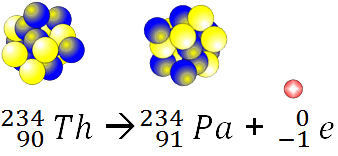
Which type of nuclear radiation is being emitted here?
a)
Alpha
b)
beta
c)
gamma 
d)
none
154.
Solve this equation for alpha decay.
85209At = ___ + 24He
a)
83205Bi
b)
86209Rn
c)
81207Tl
d)
85208At
155.
Balance the following equation:
146C --> 0-1e + ________
a)
145B
b)
146C
c)
147N
d)
42He
156.
Solve this equation for alpha decay.
85209At = ___ + 24He
a)
83205Bi
b)
86209Rn
c)
81207Tl
d)
85208At
157.

Solve this equation for beta decay.

614C = ___ + -10e

a)

410Be

b)

714N

c)

210He

d)

613C

158.
Takes two small nuclei and combines them into a larger nucleus
a)
fission
b)
fusion
159.
The splitting of a nucleus into smaller nuclei is
a)
fusion
b)
fission
c)
half-life
d)
gamma radiation
160.
How do nuclear power-plants work?
a)
Fusion
b)
Half-life
c)
Fission
d)
Fusion or fission
161.
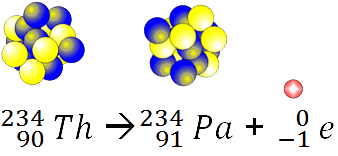
Which type of radioactive decay is occurring in this equation? 
a)
Alpha decay
b)
beta decay
c)
gamma decay
d)
positron emission
162.
Where does fusion occur naturally?
a)
Underwater
b)
All around us
c)
In the radioactive waste
d)
On the sun
163.
Pure water has a pH of 7. Pure water _______.
a)
is a base
b)
is a neutral substance
c)
could be either an acid or a base
d)
is an acid
164.
Many cleaning solutions are bases. Which of the following is a property of most bases?
a)
feels slippery
b)
white color
c)
can only be liquid
d)
tastes sour
165.
Human blood has a pH between 7.35 and 7.45. Which of the following best describes human blood?
a)
strongly acidic
b)
slightly acidic
c)
strongly basic
d)
slightly basic
166.
Which of the following statements is correct?
a)
Blue litmus paper turns red when placed in a base.
b)
Red litmus paper turns blue when placed in a base.
c)
Blue litmus paper stays blue when placed in an acid.
d)
Red litmus paper stays red when placed in a base.
167.
Which is the stronger acid?
a)
pH 1
b)
pH 4
c)
pH 8
d)
pH 13
168.
Turns litmus blue.
a)
Acids
b)
Bases
c)
Salts
d)
All
169.
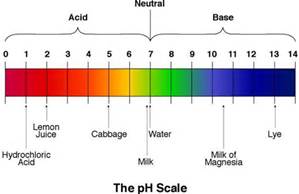
According to the pH range which substance is more acidic than lemon juice
a)
Hydrochloric acid
b)
cabbage
c)
milk
170.
Neutralization reactions
a)
formed from joining positive and negative ions 
b)
increases OH ions
c)
froms a salt and water
d)
increases H2O ions
171.

Acids are __________, which means they "eat away" at other materials.

a)

transitional metal

b)

alkaline

c)

flammable

d)

corrosive

172.

What range of values on the pH scale represent solutions with a higher ratio of hydroxide (OH-) ions?

a)

below 7

b)

7

c)

above 7

d)

0-14

173.

Do acids and bases conduct electricity?

a)

Only acids conduct electricity

b)

Only bases conduct electricity

c)

Bases and acids conduct electricity

d)

Neither conduct electricity

174.
The pH of a solution is tested, and it is found to be a basic solution. Of the following choices, what could the pH have been?
a)
3
b)
9
c)
7
d)
5
175.
A neutralization reaction will (almost) always produce...
a)
water & salt
b)
water
c)
salt
d)
water & carbon
176.

A type of chemical that forms solutions that taste sour, due to high concentrations of positive hydrogen ions

a)

acid

b)

base

c)

salt

d)

pH

177.
Identify the salt in the following equation:
Zn(OH)2 + HNO3   ---> H2O  + Zn(NO3)2
a)
Zn(OH)2
b)
HNO3
c)
H2O
d)
Zn(NO3)2
178.

Complete the following reaction:

HCl + Mg(OH)2 -->

a)

MgCl2 + H2O

b)

Mg +H2O

c)

MgCl2 + H2

d)

MgCl2 + H2O + CO2

179.

Complete the following reaction:

H3PO4 + NaOH -->

a)

Na3PO4 + H2O

b)

Na +H2O

c)

Na3PO4 + H2

d)

Na3PO4 + H2O + CO2

180.

Complete the following reaction:

HNO3 + Ca(OH)2 -->

a)

Ca(NO3)2 + H2O

b)

Ca +H2O

c)

Ca(NO3)2 + H2

d)

Ca(NO3)2 + H2O + CO2

181.
What type of reaction is displayed below?
HCl + NaOH → NaCl + H2O
a)
Neutralization
b)
Combustion
c)
Double Replacement
d)
Decomposition