
 Worksheets
sci sci - iyah
Total questions: 99
Worksheet time: 51mins
Most Earthquakes and Volcanoes can be found....
around the Pacific Ring of Fire
along the coast of Asia
along plate boundaries
in the Southern Hemisphere


What type of boundary is shown in the diagram?
Divergent
Convergent
Transform
Prodigent
The idea that Earth's crust is made up of separate plates that float on the upper mantle is the theory of what?
Plate Tectonics
Continental Drift
Pangaea
Transubstantiation

What type of boundary is shown in the diagram?
Divergent
Convergent
Transform

What type of boundary is shown in the diagram?
Divergent
Convergent
Transform

What is the definition of dormant?
sleeping and could erupt again
extinct and won't erupt
active and dangerous

What is magma called when it reaches the surface of Earth?
Lava
viscosity
toxic gas
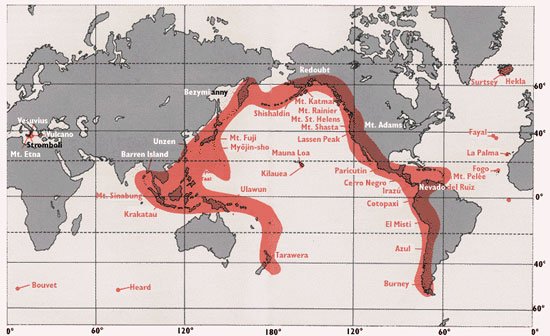
This is the name for the chain of volcanos around the edge of the Pacific Plate.
March Maddness
Earthquake Alley
Ring of Fire
Circle of Death
Smaller Vibrations that come after the initial earthquake is called
Primary wave
Secondary Wave
Surface Wave
Aftershock
A type of volcano that is erupting or will erupt in the near future is a(n) ________ volcano.
extinct
active
dormant
explosive
This device records the ground movements caused by seismic waves.
seismograph
seismophone
seismogram
seismometer
Volcanoes that form along mid-ocean ridges occur at __________________ plate boundaries.
convergent
divergent
transform
subduction
T or F? The Hawaiian Islands were formed as plates moved slowly over a hot spot.
true
false
The point beneath earth's surface where rock breaks under stress, triggering an earthquake is called ____________.
the focus
the focal point
the epicenter
the epic spot
This type of volcano is unlikely to erupt again.
active
dormant
extinct
explosive
Volcanoes are classified into __________ types.
2
4
3
1
The scale, which numbered 1-10, that measures the strength or magnitude of an earthquake.
pH scale
Richter Scale
Mercalli Scale
Hardness Scale
The Ring of Fire, where many earthquakes occur, is located around the rim of which ocean?
Atlantic
Artic
Indian
Pacific
the measure of damage done by an earthquake including its effect on people, structures, and the natural environment (measured by Modified Mercalli Scale)
magnitude
intensity
greatness
damage rate
What is a dormant volcano?
molten rock
the center of a volcano
will never erupt again
a volcano that is sleeping, but could erupt agian
What is lava?
Molten rocks inside a volcano
Molten rock outside a volcano
small rocks
magma
Once magma reaches the Earth's surface it is called.......
Silica
Lava
Rock
Molten

PHILVOCS
PAGASA
BFP
DRRM
It is a Philippine national institution dedicated to provide information on the activities of volcanoes, earthquakes, and tsunamis, as well as other specialized information and services primarily for the protection of life and property and in support of economic, productivity, and sustainable development.
Philippine Atmospheric, Geophysical and Astronomical Services Administration (PAGASA)
Philippine Institute of Volcanology and Seismology (PHILVOCS)
Advanced Science and Technology Institution (ASTI)
Philippine Council for Industry, Energy and Emerging Technology Research and Development (PCIEERD)
Earth is the center of the universe.
True
False
Earth revolves around the sun.
True
False
Earth is the only planet that can sustain life.
True
False
Earth tilts away and towards the Sun.
True
False
Earth is the first planet from the Sun.
True
False
Earth has a circular or elliptical orbit.
True
False
It take one day for the Earth to rotate on its axis.
True
False
Earth is not affected by the Sun.
True
False
Earth takes a year to revolve around the Sun.
True
False
Earth is continually tilted towards the South as its moves.
True
False
The sun rises in the
(a)
The earth is spinning on its axis every
24 hours
12 hours
48 hours
36 hours
Movement of the earth on its axis
(a)
The movements of the earth around the sun
(a)
How many days does the earth take to revolve?
365
365 1/2
365 1/4
365 1/3
True or False
One Earth revolution is equivalent to one year.
(a)
The Earth travels in an elliptical path called the
road
axis
milky way
orbit
The earth turns on its axis from
east to west
west to east
north to west
south to north
Leap year happens every _ years.
2
3
4
5
True or False
The earth spins like a top.
(a)

How long does the Earth take the complete its rotation?
1 year
24 weeks
24 days
1 day

In what direction does the Earth move?
North to West
South to North
East to West
West to East

Which is true about the sun?
The Earth rotates around it.
The Earth revolves around it.
It is the farthest star to Earth.
It rises in the West and sets in the East.

If Earth was not tilted, what statement would be correct?
There are no seasons.
The seasons are reversed.
The seasons are unaffected
None of the above

What do you call the movement of the Earth on its own axis?
revolution
circulation
rotation
direction
What happens to our day and night hours on December 22nd (Winter Solstice)?
Days are longer and nights are shorter.
Days and nights are 12 hours.
We probably have eclipses.
Days are shorter and nights are longer.
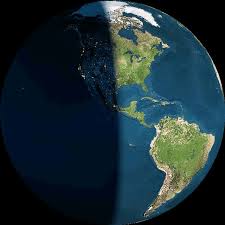

The seasons are...
Winter, summer, autumn and hotter
Summer, spring, tuna and snow
Spring, summer, autumn and winter

The Earth’s rotation and revolution happen at the same time.
True
False

What season is the Northern Hemisphere having?
Fall
Winter
Spring
Summer
What kind of calendar do we use at present?
Roman calendar
Lunar calendar
Solar calendar
Gregorian calendar
What causes day and night?
(a)
It takes the Earth (a) days to revolve completely around the Sun.
Revolution causes the change of season.
True
False
Seasons change because Earth is tilted while it revolves around the sun.
True
False
The earth spins around it's bit in a clockwise movement.
True
False
What is the striking similarity between Mercury and Venus when compared to all other planets?
Both are rocky planets.
Both have the shortest diameter.
Both have the longest day-night cycle
Both are not capable of supporting life.
Which of the following is a common characteristic of Venus and Uranus?
Both are terrestrial planets
Both are gas giants
Both rotate east to west
Both rotate west to east
In terms of average temperature, which is the correct order when ranked lowest to highest
Jupiter, Mars, Saturn, Earth
Neptune, Jupiter, Mars, Earth
Mars, Neptune, Earth, Venus
Venus, Mercury, Earth, Mars
Which pair of planets have the shortest and longest days?
Mercury, Saturn
Jupiter, Venus
Uranus, Earth
Mars, Neptune
How many “Jupiter days” have passed in one Earth week?
10
14
17
20
In terms of number of natural satellites, which is the correct order when ranked lowest to highest?
Mercury, Mars, Earth, Venus
Mercury, Mars, Earth, Saturn
Venus, Jupiter, Uranus, Mars
Venus, Earth, Neptune, Saturn
Which statement is NOT TRUE about the gas giants? All gas giants _________
have ring system.
have solid surface.
have multiple satellites.
are colder than inner planets
Which is NOT TRUE about terrestrial planets? All terrestrial planets __________
have solid surface.
are warmer than outer planets.
spin slower than outer planets.
have longer equatorial span than Jovians
How many planets are there in the solar system?
4
8
9
10
Which are the inner planets?
Mars, Jupiter, Saturn and Earth
Mercury, Venus, Earth and Mars
Mercury, Mars, Jupiter and Earth
Jupiter, Saturn, Uranus and Neptune
Which is the largest planet in our solar system?
Jupiter
Neptune
Saturn
Uranus
What is the other term for Jovian Planets?
Inner planets
Inside planets
Outer planets
Terrestrial planets
Which planet has almost the same size and density as the Earth?
Mars
Mercury
Neptune
Venus
Which is the nearest planet to the sun?
Earth
Jupiter
Mars
Mercury
Why does Neptune become the farthest planet?
The orbit of Neptune expands.
Neptune has the biggest orbit.
Neptune moves faster than all the planets.
The orbit of Uranus is bigger that Neptune’s.
Why Neptune has the lowest temperature compared to other planets? Because it is/has ____________________________.
far from the sun
longest period of revolution
ice and gases on its polar caps
Which is the brightest and hottest planet?
Mercury
Neptune
Saturn
Venus
Which planet does not have moon?
Mercury
Saturn
Uranus
Venus
Which is the sixth planet from the sun and completes one revolution around the sun in about 29 ½ Earth years?
Jupiter
Neptune
Uranus
Saturn
Which is true among the following statements?
Planets have their own light.
All planets in our solar system have moons and rings.
The planets in our solar system are divided into three groups.
Planets rotate on their own axis as they revolve around the sun.
What is the largest planet?
Saturn
Jupiter
Uranus
Which planet is the closest to the Sun?
Mars
Venus
Mercury
Which planet contains life?
Venus
Earth
Mars
Which planet has beautiful rings around it?
Venus
Saturn
Neptune
Which planet is also known as the Red planet?
Mercury
Venus
Mars
Which planet is the coldest?
Neptune
Saturn
Jupiter
The Earth's Natural Satellite.
Sun
Moon
Mars
What is the smallest planet?
Mercury
Earth
Mars
Which planet is the hottest?
Mercury
Venus
Earth
Which planet has 14 moons?
Jupiter
Mars
Neptune
Which planet is the furthest from the Sun?
Saturn
Uranus
Neptune
It is used to travel to the space.
Jetplane
Space Shuttle
Spaceship
The planet with the most moon.
Uranus
Jupiter
Saturn
The planets with no moon.
Mars and Jupiter
Mercury and Venus
Venus and Earth

