wayground logo

Free Printable Worksheets

Font size

S
M
L
XL
Worksheets

Earth in Space

Total questions: 100

Worksheet time: 2hrs 43mins

Name
Class
Date
1.

​Which​ ​motion​ ​of​ ​Earth​ ​could​ ​be​ ​best​ ​demonstrated​ ​by​ ​Lebron​ ​James​ ​spinning​ ​a​ ​basketball​ ​on​ ​his​ ​finger?

a)

rotation

b)

revolution

c)

tilting

d)

leap year

2.

How long does it take the Moon to rotate on its axis?

a)

24 hours

b)

23 days

c)

365.25 days

d)

28 days

3.

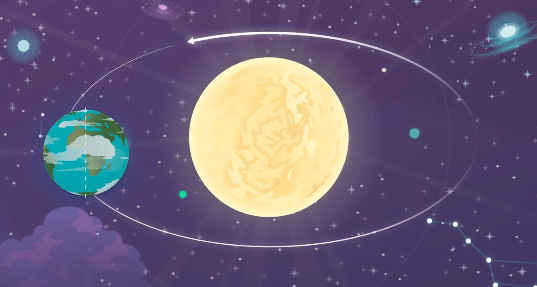
The shape of the Earth's orbit around the Sun:

a)

triangle

b)

circle

c)

semicircle

d)

ellipse

4.
A word used to describe a moon that is "getting larger"
a)
gibbous
b)
crescent
c)
waxing 
d)
waning
5.

As the Moon revolves around the Earth, we always see the same side of the Moon.

a)

true

b)

false

6.

Seasons on Earth are caused by how close the Earth is to the Sun

a)

true

b)

false

7.
The dark side of the moon is the side of the moon that never sees the sunlight.
a)
true
b)
false
8.
The moon is waning for about 14 days.
a)
true
b)
false
9.
How long does it take for the Earth to make one full orbit around the Sun?
a)
one day
b)
one week
c)
one month
d)
one year
10.
The Earth is rotating on its axis, creating _____
a)
the 12 months
b)
the years
c)
the seasons
d)
day and night
11.
What looks to be the motion of the Sun in the sky is really caused by the motion of _____
a)
the Earth
b)
the stars
c)
the planets
d)
the Earth's axis
12.
The spinning movement of the Earth about its axis is called the Earth's _____
a)
revolution
b)
rotation
c)
precession
d)
orbit
13.
When the part of the world that you're living in is leaning towards the Sun, its _____
a)
winter
b)
spring
c)
summer
d)
fall
14.
The invisible line that passes through the North Pole and the South Pole is called Earth's ____
a)
axis
b)
equator
c)
ecliptic
d)
prime meridian
15.

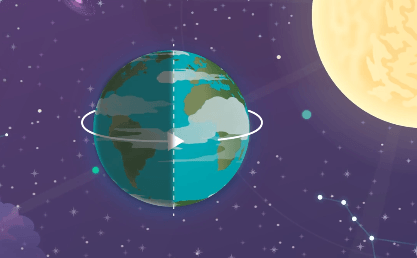
Which of the following correctly shows rotation?

a)
b)
c)
d)
16.

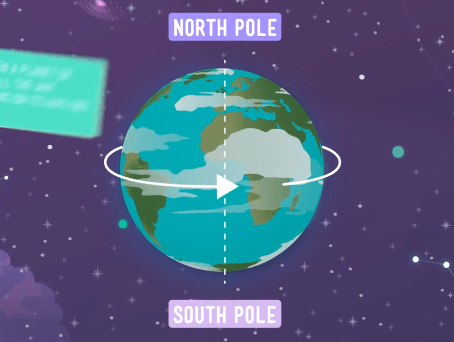
The illustration represents which of the following?

a)

Revolution of Earth

b)

Swimming Earth

c)

Bicycle wheel

d)

Roation of Earth

17.

How many days are in a calendar year?

a)

362.1

b)

356 1/5

c)

635

d)

365 1/4

18.

To complete one year’s time, the Earth makes one complete _____.

a)

Revolution around the Moon.

b)

Rotation around the Moon.

c)

Revolution around the Sun.

d)

Revolution around Mars.

19.

Which month has a day added because of a leap year?

a)

February

b)

January

c)

March

d)

April

20.

When the North Pole is tilted toward the Sun, it is —

a)

Winter in both hemispheres

b)

Summer in the Northern Hemisphere and winter in the Southern Hemisphere

c)

Winter in the Northern Hemisphere and summer in the Southern Hemisphere

d)

Fall in both hemisphers

21.

What season is being experienced in the Southern Hemisphere?

a)

Spring

b)

Fall

c)

Winter

d)

Summer

22.

When the Northern Hemisphere is tilting towards the sun, what season is the Southern Hemisphere?

a)

Winter

b)

Spring

c)

Fall

d)

Summer

23.
The study of the moon, stars, and other objects in space is called
a)
astrology
b)
biology
c)
geology
d)
astronomy
24.
 A cycle is something that happens over and over again, like the seasons and day & night. 
a)
True
b)
False
c)
Maybe
d)
Not sure
25.
There is less daylight in the winter.
a)
True
b)
False
26.
The reasons we have seasons is because the Earth is _______
a)
pie
b)
tilted
c)
melting
d)
water
27.

What degree is the Earth tilted?

a)

23

b)

25

c)

23.5

d)

25.5

28.

How long does Earth's rotation last?

a)

48 hours

b)

1 hour

c)

12 hours

d)

24 hours

29.
Name the planets in order from the one closet to the Sun
a)
Mercury, Venus, Earth, Mars, Jupiter, Saturn, Uranus, Neptune
b)
Neptune, Uranus, Saturn, Jupiter, Mars, Earth, Venus, Mercury
c)
Mercury, Earth, Mars, Venus, Saturn, Jupiter, Uranus, Neptune
d)
Mercury, Venus, Earth, Mars, Jupiter, Saturn, Uranus, Neptune, Pluto
30.
How many planets are in our solar system (not including pluto)
a)
9
b)
8
c)
10
d)
7
31.
Which planet is the largest planet in our solar system?
a)
Saturn
b)
Earth
c)
Mars
d)
Jupiter
32.
What are the rings of Saturn made of?
a)
Rocks and Dust
b)
Rock, Frozen gases, Ice crystals, and water
c)
Ice Crystals
d)
Stars
33.
Which planet is the only planets to spin on its side?
a)
Earth
b)
Neptune
c)
Jupiter
d)
Uranus
34.
A small, solid, rocky body that orbits the Sun. 
a)
Asteroid
b)
Comet
c)
Meteoroid
d)
Meteor
35.
A small, icy body that orbits the Sun. Is made of a main body and a tail.
a)
Asteroid
b)
Comet
c)
Meteor
d)
Meteoroid
36.
A chunk of rock that burns up upon entering a planet's atmosphere
a)
Comet
b)
Meteor
c)
Meteoroid
d)
Asteroid
37.
What six things make up our Solar System?
a)
Sun, Planets, Moons, Asteroids, Comets, Meteors
b)
Galaxies, Planets, Stars, Asteroids, Planets, Moons
c)
Sun, Planets, Moons, Stars, Asteroids, Comets
d)
Planets, Stars, Galaxies, Comets, Meteors, Sun
38.
What planet do we live on?
a)
Sun
b)
Earth
c)
Mars
d)
Jupiter
39.
What are the terrestrial planets?
a)
Jupiter, Saturn, Uranus, Neptune
b)
Mercury, Venus, Earth, Mars
c)
Mercury, Earth, Mars, Neptune
d)
Jupiter, Saturn, Earth, Neptune
40.
A planet with a rocky surface
a)
Gaseous Planet
b)
Earth
c)
Terrestrial Planet
d)
Rocky Planet
41.
What are the gaseous planets?
a)
Jupiter, Saturn, Uranus, Neptune
b)
Mercury, Venus, Earth, Mars
c)
Jupiter, Saturn, Uranus, Mars
d)
Mercury Venus, Earth Neptune
42.
A planet made of mostly gases, such as Hydrogen or Helium
a)
Terrestrial Planet
b)
Gaseous Planet
c)
Gas Planet
d)
Rocky Planet 
43.
Gaseous Planets are larger than Terrestrial Planets.
a)
True
b)
False
44.
What is the time it takes an object to go around the Sun?
a)
Rotation
b)
Revolution
c)
Spin
d)
Turn
45.
What is the time it takes for an object to spin (on its axis) in a circle
a)
Revolution
b)
Rotation
c)
Spin
d)
Turn
46.
How do moons move?
a)
Moons rotate around their planet and revolve on their axis
b)
Moon rotate around their planet and rotate on their axis
c)
Moons revolve around their planet and rotate on their axis
d)
Moons revolve around their planet and revolve on their axis
47.
Chunks of rock that move within the solar system before entering the atmosphere
a)
Comet
b)
Meteoroid
c)
Meteor
d)
Meteorite
48.
Chunk of rock that strikes the surface of a planet or moon
a)
Meteorite
b)
Meteor
c)
Meteoroid
d)
Comet
49.

What planet is the same size as earth?

a)

Pluto

b)

Mars

c)

Saturn

d)

Venus

50.

What planet is known as the red planet because of its red looking surface?

a)

Earth

b)

Saturn

c)

Uranus

d)

Mars

51.

_________ is the planet that takes the shortest time to revolve around the sun.

a)

Neptune

b)

Mars

c)

Earth

d)

Mercury

52.

Do each of the outer planets have at least one moon?

a)

Yes

b)

No

53.

What is the name of the storm on Jupiter?

a)

The Great Red Spot

b)

The Spot

c)

The Red

d)

The Storm

54.
What percentage of the mass of the entire solar system is due to the Sun?
a)
27%
b)
54%
c)
77%
d)
98%
55.
After the Sun, what is the next most massive object in the Solar System?
a)
the Earth
b)
Jupiter
c)
Saturn
d)
Uranus
56.
Where is the the asteroid belt located?
a)
between Earth and Mars
b)
between Mars and Jupiter
c)
between Jupiter and Saturn
d)
out beyond the orbit of Neptune
57.
When did the Solar System form?
a)
4.6 thousand years ago
b)
4.6 million years ago
c)
4.6 billion years ago
d)
4.6 trillion years ago
58.

Earth is the _____ planet from the sun?

a)

First

b)

Second

c)

Third

d)

Last

59.

Which is the hottest planet?

a)

Venus

b)

Mercury

c)

Uranus

d)

Neptune

60.

Which is the smallest planet?

a)

Neptune

b)

Earth

c)

Mercury

d)

Jupiter

61.

Which planet is made up of mostly liquid water?

a)

Neptune

b)

Uranus

c)

Earth

62.

What gas gives Uranus and Neptune its blue color?

a)

Carbon Dioxide

b)

Helium

c)

Methane

d)

Hydrogen

63.

Which is the coldest planet?

a)

Earth

b)

Uranus

c)

Neptune

d)

Venus

64.
Which planet is known for having an extreme tilt on its axis causing extreme seasons?
a)
Neptune
b)
Mercury
c)
Venus
d)
Uranus
65.
Which is the largest object in our solar system?
a)
Sun
b)
Jupiter
c)
Earth
d)
Pluto
66.
Which is the second closest planet to the sun?
a)
Earth
b)
Saturn
c)
Venus
d)
Mercury
67.
Which is the fourth planet from the sun?
a)
Mars
b)
Saturn
c)
Earth
d)
Jupiter
68.
Which planet is fifth from the sun?
a)
Saturn
b)
Jupiter
c)
Mars
d)
Earth
69.
Which is the sixth planet from the sun?
a)
Earth
b)
Uranus
c)
Saturn
d)
Neptune
70.
Which planet is seventh from the sun?
a)
Saturn
b)
Earth
c)
Venus
d)
Uranus
71.

What factor causes one planet to have more gravity than other planets

a)

The planets mass

b)

The planets size

c)

Terrestrial planets have more gravity

d)

Gas giants have more gravity

72.

Which planet has the most gravity?

a)

Earth

b)

Mars

c)

Neptune

d)

Jupiter

73.
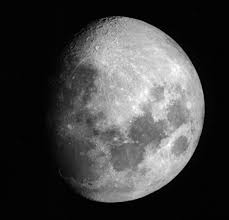
Name the moon phase
a)
waning crescent
b)
waxing crescent
c)
waning gibbous
d)
waxing gibbous
74.
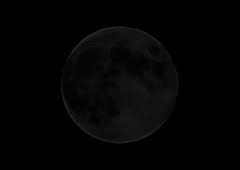
Name the moon phase
a)
First Quarter
b)
Last Quarter
c)
New Moon
d)
Full Moon
75.
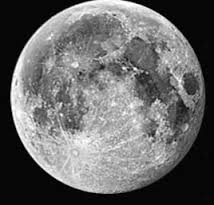
Name the moon phase
a)
First Quarter
b)
Last Quarter
c)
New Moon
d)
Full Moon
76.
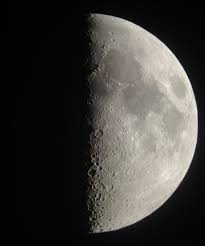
Name the moon phase
a)
First Quarter
b)
Last Quarter
c)
New Moon
d)
Full Moon
77.
Name the phase of the moon for letter a
a)
First Quarter
b)
Last Quarter
c)
Waxing Gibbous
d)
Waning Gibbous
78.
Name the phase of the moon for letter f
a)
Waning Gibbous
b)
Waxing Gibbous
c)
Waning Crescent
d)
Waxing Crescent
79.
What is illuminating the Moon?
a)
Nuclear Fusion
b)
Sunlight
c)
Mirrors
d)
Flood Lights
80.
Name the moon phase
a)
waning crescent
b)
waxing crescent
c)
waning gibbous
d)
waxing gibbous
81.
Which moon phase is when you can't see the moon at all?
a)
Waning crescent
b)
Full moon
c)
Waxing gibbous
d)
New moon
82.
The cycle of the moon lasts about a _.
a)
day
b)
year
c)
week
d)
month
83.
Name the moon phase
a)
Waning Crescent
b)
Waxing Crescent
c)
Waning Gibbous
d)
Waxing Gibbous
84.
The 1st Quarter moon is lit on the:
a)
Left Side
b)
Right Side
85.
Name the moon phase that would come AFTER this moon.
a)
waning crescent
b)
waxing crescent
c)
waning gibbous
d)
waxing gibbous
86.
What moon phase is this picture?
a)
This is the full moon phase.
b)
This is the waxing gibbous moon phase.
c)
This is the waning gibbous moon phase.
d)
This is the first quarter moon phase.
87.

This model is showing us a...

a)

lunar eclipse

b)

solar eclipse

c)

phases of the moon

d)

earth eclipse

88.

This image is showing us a.....

a)

solar eclipse

b)

lunar eclipse

c)

phases of the moon

d)

earth eclipse

89.

When the moon passes between the earth and the sun, this results in a.....

a)

Waxing moon

b)

lunar eclipse

c)

solar eclipse

d)

sun rise

90.

When the earth is between the sun and the moon, this results in a...

a)

waxing moon

b)

solar eclipse

c)

lunar eclipse

d)

sun rise

91.

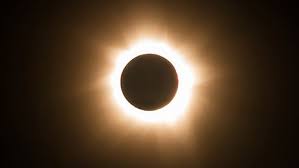
If you look up at the sky and see this, you are witnessing a....

a)

solar eclipse

b)

total eclipse

c)

lunar eclipse

d)

jupiter

92.

If you are looking up at the sky and see this, you are looking at a....

a)

solar eclipse

b)

total eclipse

c)

lunar eclipse

d)

jupiter

93.

Which of the following is not true about a total solar eclipse?

a)

It can be viewed once a year from every spot on earth

b)

It is dangerous to look at without the proper device

c)

When it happens, the moon blocks all of the sun except the corona

d)

You must be within the moon's umbra to see it

94.

In order to have an eclipse, the Moon, Sun and Earth have to be?

a)

Below each other

b)

Above each other

c)

In alignment

95.
A solar eclipse only happens during a ________ moon.
a)
New
b)
Cresent
c)
Gibbous
d)
Full
96.
A lunar eclipse only happens during a ________ moon.
a)
New
b)
Cresent
c)
Gibbous
d)
Full
97.
Where must you be to see a total solar eclipse?
a)
a corona
b)
an orbit
c)
the moon's shadow
d)
the earth's shadow
98.
During a solar eclipse...
a)
The sun is blocked by the moon
b)
The Earth is blocked moon
c)
The moon is blocked by the sun
d)
You are blocked
99.
A lunar eclipse occurs when the Moon casts a shadow on Earth.
a)
True
b)
False
100.
We do NOT have a solar or lunar eclipse each month because...
a)
The tilt of the moon's orbit is at 5 degrees
b)
The moon is too small
c)
The moon's orbital distance changes
d)
All choices