
 Worksheets
Cost of Capital
Total questions: 79
Worksheet time: 2hrs 31mins
A firm should use .............. when evaluating an investment
the least costly source of financing
the most costly source of financing
the weighted average cost of all financing sources
the current opportunity cost
A corporation has concluded that its financial risk premium is too high. In order to decrease this, the firm can
increase the proportion of long term debt to decrease the cost of capital
increase the proportion of short term debt to decrease the cost of capital
decrease the proportion of common stock equity to decrease financial risk
increase the proportion of common stock equity to decrease financial risk
Choose the right statement from the following:
Cost of debt is always higher than cost of equity
Cost of debt is always lower than cost of equity
Cost of debt can be higher or lower than cost of equity
When company doesn't pay dividend, the cost of equity is zero
A firm has common stock with a market price of $25 per share and an expected dividend of $2 per share at the end of the coming year. The growth rate in dividends has been 5%. The cost of the firm's commonstock equity is
5%
8%
10%
13%
The Capital Structure of a company means
the proportion between LT debt and equity
the proportion between liability and equity
the proportion between liability and total asset
the proportion between ST debt + LT debt and equity
Cost of capital can be divided into three item except;
Cost of debt
Cost of preferred share
Cost of investment
Cost of common share
Y Ltd. issues 14% prefernce shares of face value of Rs.100 each whch realizes Rs.92 per share for the company. The shares are repayable after 12 years at par. Calcualate the cost of preference shares.
(a)
The market price of equity shares of NG Ltd. is Rs.140. If annual dividend expected by the investors is Rs.30 per share, determine the cost of capital.
(a)
The market price of equity shares of a comapny is Rs.150. The comapny had paid a dividend of Rs.30 last year. The investors expect a growth of 5% in dividend every year. Clacualte the cost of equity capital.
(a)
What term is not related to cost of capital?
rate of return
market value of the firm
financial statements
investments/
projects
Choose the incorrect statement regarding cost of capital
It takes business risk and financial risk into consideration
Capital structure of a company consist of mixture between debt and equity
Cost of capital must be able to maintain the firm’s market value
Maximum required rate of return to offset the effect of risk associated with business
Choose the correct statement regarding bond
The interest rate paid to bondholders is higher than loan
Cost of bond is more expensive than cost of equity
Bond is paid when due and for agreed period of time
The company will repay the investors when the bonds reach its maturity date
In a capital structure of a company, equity consists of _____ (choose more than one answer)
common stocks
bond
retained earnings
preferred stocks
Two assumptions of dividen valuation model are _____ (choose two answers)
constant dividends
fluctuate dividends
dividends grow at constant rate semi annually
dividends grow at constant rate annually
Choose the incorrect statement
Borrowing money or issuing bonds to raise capital can change the capital structure unless the firm can increase the equity as well
Book value is the accounting value of assets less its liabilities
Breakpoints is the total financing that can be achieved before the firm is forced to sell new debt or equity capital
WACC reflects the expected average future cost of capital over the short run.
Assume that Jack Corporation maintains mix of 35 % debt, 15 % preferred stock and 50 % common stock. The firm pays tax of 40 %. The costs of various types of finance are as follows:
Bonds: 9.5 % (before tax)
Preferred stock: 15.8 %
Common stock: 23.0 %
Determine the firm’s WACC.
(a)
All of the following statements are correct regarding cost of debt EXCEPT
Before-tax cost of debt is often taken as the total interest on the loan
Cost of debt is also refer to the before-tax cost of debt
Cost of debt is also refer to the after-tax cost of debt
Payment of interest on loan is tax deductible
If the CAPM is used to estimate the cost of equity capital, the expected excess market return is equal to the
return on the stock minus the risk-free rate
difference between the return on the market and the risk-free rate.
beta times the market risk premium.
beta times the risk-free rate.
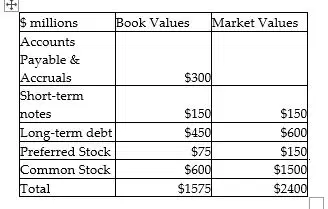
9) Berdasarkan data tentang Struktur modal Spencer Transgenics tersedia, berapakah persentase saham biasa dalam biaya modal rata-rata tertimbang Spencer ?
A) 60,5%
B) 61,5 %
C) 62,5%.
D)63,5%
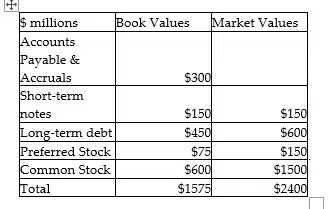
10) Berdasarkan data soal no. 9, berapakah total capital yang digunakan digunakan untuk menghitung bobot WACC Spencer ?
A) B) $2,300.
B) $2,400.
C) $2,500.
D) $2,600.
Biaya modal (Cost Of Capital) adalah
biaya yang harus dikeluarkan atau dibayar oleh perusahaan untuk mendapatkan modal yang digunakan untuk hutang perusahaan lain
biaya yang harus dikeluarkan atau dibayar oleh perusahaan untuk mendapatkan modal yang digunakan untuk investasi perusahaan
biaya yang harus dikeluarkan atau dibayar oleh perusahaan untuk mendapatkan hutang jangka pendek
biaya yang harus dikeluarkan atau dibayar oleh perusahaan untuk mendapatkan hutang jangka panjang
Perhitungan Biaya Penggunaan Modal sangat penting, dengan alasan, kecuali
Keputusan penganggaran modal (capital budgeting) memerlukan estimasi biaya modal
Memaksimalkan nilai perusahaan dengan meminimumkan biaya-biaya (termasuk biaya modal)
mendapatkan laba sebanyak-banyaknya dan dibagikan sebagai deviden untuk para pemegang saham
Keputusan-keputusan penting lain seperti leasing dan modal kerja juga memerlukan estimasi biaya modal
Biaya Modal memperhitungkan, kecuali
Modal Sendiri (Saham biasa)
Modal Pinjaman / Debt
Modal Patungan
Laba ditahan / Retained Earning
Hutang Jangka Pendek ialah
hutang yang jangka waktu pengembaliannya lebih dari satu tahun
hutang yang jangka waktu pengembaliannya kurang dari sepuluh tahun
hutang yang jangka waktu pengembaliannya kurang dari satu tahun
hutang yang jangka waktu pengembaliannya lebih dari sepuluh tahun
hutang jangka panjang merupakan
hutang yang jangka waktu pengembaliannya kurang dari satu tahun
hutang yang jangka waktu pengembaliannya lebih dari satu tahun
hutang yang jangka waktu pengembaliannya sama dengan dari satu tahun
hutang yang jangka waktu pengembaliannya kurang dari setengah tahun
Saham preferen merupakan
surat bukti kepemilikan saham yang memberikan penghasilan tetap berupa deviden yang besarnya telah ditentukan prosentasenya terhadap sahamnya.
surat bukti kepemilikan saham yang memberikan penghasilan tidak tetap berupa deviden yang besarnya belum ditentukan prosentasenya terhadap sahamnya.
surat bukti kepemilikan obligasi yang memberikan penghasilan tetap berupa deviden yang besarnya telah ditentukan prosentasenya terhadap sahamnya.
surat bukti kepemilikan hutang jangka panjang
perbedaan saham biasa dengan saham preferen adalah
tidak diberikan deviden
tidak diberikan bunga
tidak mempunyai mobil
tidak mempunyai hak-hak istimewa
Salah satu cara menghitung biaya modal yang berasal dari laba yang ditahan adalah
dengan pendekatan discounted cash flow atau dividend discount model
dengan memperhitungkan biaya underwriting
dengan metode ROA
dengan menghitung NPV
Biaya saham biasa (common stock) baru lebih tinggi dari biaya laba ditahan karena
penjualan saham baru memerlukan biaya emisi saham atau floatation cost
penjualan saham baru memerlukan biaya emisi gas buang
penjualan saham baru memerlukan floatation market
penjualan saham baru memerlukan biaya peralatan dan mesin
Dalam penghitungan WACC, Cost of Debt yang dihitung adalah ...
Cost of Debt setelah pajak
Cost of Debt sebelum pajak
Cost of Debt bebas pajak
Cost of Debt baru
Salah satu fungsi dari Cost of Capital adalah sebagai discount rate pada perhitungan
IRR
NPV
Pay Back Periode
BEP
Berikut ini yang bukan merupakan biaya floating dalam penerbitan saham atau obligasi baru adalah
Biaya underwriting
Biaya bunga
Biaya asuransi
biaya under pricing
Mengapa nilai cost of common stock lebih sulit dihitung ?
karena penghitungannya setelah pajak
karena nilainya tidak tetap
karena nilainya besar
karena nilainya terlalu kecil

Rumus diatas adalah rumus untuk menghitung
Cost of Debt
Cost of Preferred Stock
Cost of Common Stock
Biaya Saham baru
Perusahaan A memiliki kebijakan Porsi Laba ditahan adalah 30% dari Laba bersih. Perusahaan B memiliki kebijakan laba ditahan adalah 50% dari laba bersih.
Jika perusahaan A dan B memiliki laba bersih yang sama, perusahaan mana yang memiliki peluang pertumbuhan lebih besar ?
Perusahaan A
Perusahaan B
A dan B memiliki peluang pertumbuhan yang sama
A firm should use .............. when evaluating an investment
the least costly source of financing
the most costly source of financing
the weighted average cost of all financing sources
the current opportunity cost
The cost of common stock equity is
The cost of guarantedd stated dividend expected by the stockholders
The rate at which investor discount the expected dividends of the firm to determine its share value
the after tax cost of the interest obligations
the historical cost of floating the stock issue
The cost of common stock equity may be estimated by using the
yield curve
capital asset pricing model
break even analysis
Du-pont Analysis
A corporation has concluded that its financial risk premium is too high. In order to decrease this, the firm can
increase the proportion of long term debt to decrease the cost of capital
increase the proportion of short term debt to decrease the cost of capital
decrease the proportion of common stock equity to decrease financial risk
increase the proportion of common stock equity to decrease financial risk
A firm has a beta of 1.2. The market return equals 14% and the risk free rate of return equals 6%. The estimated cost of common stock equity is
6%
7.2%
14%
15.6%
A firm has common stock with a market price of $25 per share and an expected dividend of $2 per share at the end of the coming year. The growth rate in dividends has been 5%. The cost of the firm's commonstock equity is
5%
8%
10%
13%
Choose the right statement from the following:
Cost of debt is always higher than cost of equity
Cost of debt is always lower than cost of equity
Cost of debt can be higher or lower than cost of equity
When company doesn't pay dividend, the cost of equity is zero
The cost of debt can be estimated by
Calculating Yield to Maturity of the company's obligation
The interest company needs to pay for its equity
Using Capital Asset Pricing Model
Asking the CFO
The Capital Structure of a company means
the proportion between LT debt and equity
the proportion between liability and equity
the proportion between liability and total asset
the proportion between ST debt + LT debt and equity
What will be the condition that an investment is considered as feasible:
The Average Annual Investment Return should be higher than the cost of capital
The cost of capital should be higher than the average annual investment return
The internal Rate of Return (IRR) should lower than the cost of capital
The internal Rate of Return is higher than the Net Present Value
minimum rate of return that a project must earn to increase firm value
cost of capital
cost of opportunity
implicit cost
quality cost
A cost of capital component that must be reduced by tax rate before computing the WACC
Cost of Equity
cost of debt
cost of financing
cost of retained earnings
Which is an acceptable methods in computation of Cost of Retained Earnings
Coefficient of variation approach
Discounted Cash Flow
Approach
Discounted Dividend
Approach
Standard Deviation approach
Which of the following cost of capital component is affected by floatation cost?
Cost of Preferred Stock
Cost of Debt
Cost of Retained Earning
Cost of Issuance of new common Stocks
The amount of capital raised beyond which new common stock must be issued
Financial Break-even point
Break-even point
Retained Earnings Breakpoint
Inflection point
All of the following variables are used in computing the cost of debt EXCEPT
Risk free rate.
Number of years to maturity.
Market price of debt.
Maturity value of the debt.
The Weighted Average Cost of Capital is composed of a weighted average of ______.
the cost of common share and the cost of debt.
the cost of common share, the cost of preferred share and the cost of debt.
the cost of preferred share and the cost of debt
the cost of common share and the cost of preferred share
New York Deli’s preferred shares are paying RM2 dividend per share and shares sells for RM36 a share. What is the cost of preferred share?
4.50 percent.
4.75 percent
5.55 percent.
5.50 percent.
Sinar Corporation’s bonds have yield to maturity of 12 percent and the company’s corporate tax is 34 percent. Calculate the cost of debt after tax for the bonds.
7.50 percent.
5.28 percent
4.08 percent
7.92 percent.
The current market price of the common share is RM22.50 per share. The annual dividend just paid was RM1.70 per share last year and the dividend is expected to grow at a constant rate of 5 percent. Compute the cost of common share.
12.93%
12.55%
12.33%
11.59%
The company issue bond with RM1,000 par value, paying 7 percent coupon interest and mature in 7 years. The bond currently sold at RM1,020 and the corporate tax rate is 25 percent.
5.50%
5.25%
5.41%
7.21%
The target capital structure for QM industries is 40 percent in common share, 10 percent preferred shares and 50 percent debt. Given the cost of equity for the firm is 18 percent, cost of preferred share is 10 percent, cost of debt before tax is 8 percent and firm’s tax rate are 35 percent. Calculate the firms Weighted Average cost of capital.
10.80%
11.20%
10.71%
10.62%
The company common shares are currently selling at RM6. The flotation cost is RM0.50. The company pay dividend of RM0.40 last year and dividend will grow at 7 percent per annum for foreseeable future. Calculate cost of common share.
14.50%
14.27%
14.78%
14.13%

Explain capital structure of a firm.

Which is NOT discount rate?
Hurdle rate
Cost of Capital
Opportunity Cost
Beta

Capital structure refer to firm's mix of long-term debt and equity financing
TRUE
FALSE

A firm's WACC
is the proper discount rate for every project the firms undertakes
is used to value all of the firms's existing projects
is a benchmark discount rate that may be adjusted for the riskiness of each project
is for informational value only and should never be used as a discount rate

The WACC is the return the company needs to earn after tax in order to satisfy all its security holders.
TRUE
FALSE

When using the WACC as a discount rate, it is often adjusted upward for riskier projects and downward for safer projects
TRUE
FALSE

What is the debt ratio of a firm that has outstanding $15 million in bonds and equity with market value of $35 million?
15%
30%
35%
43%

The WACC for a firm with a 65/35 debt/equity split, pre-tax cost of debt, 15% cost of equity, and a 21% tax rate is:
9.36%
9.94%
10.45%
13.8%

What is the WACC for a firm with 50% debt that pays 12% on its debt, 20% on its equity and has a 21% tax rate?
9.6%
12%
14.7%
16%
What term is not related to cost of capital?
rate of return
market value of the firm
financial statements
investments/
projects
Choose the incorrect statement regarding cost of capital
It takes business risk and financial risk into consideration
Capital structure of a company consist of mixture between debt and equity
Cost of capital must be able to maintain the firm’s market value
Maximum required rate of return to offset the effect of risk associated with business
Choose the correct statements regarding bond
The interest rate paid to bondholders is higher than loan
Issuing bond give a company more freedom to operate as they see fit
Bond is paid when due and for agreed period of time
The company will repay the investors when the bonds reach its maturity date
In a capital structure of a company, equity consists of _____ (choose more than one answer)
common stocks
bond
retained earnings
preferred stocks
Two assumptions of dividen valuation model are _____ (choose two answers)
constant dividends
fluctuate dividends
dividends grow at constant rate semi annually
dividends grow at constant rate annually
Choose the incorrect statement
Borrowing money or issuing bonds to raise capital can change the capital structure unless the firm can increase the equity as well
Book value is the accounting value of assets less its liabilities
Breakpoints is the total financing that can be achieved before the firm is forced to sell new debt or equity capital
WACC reflects the expected average future cost of capital over the short run.
How does a lower weighted average cost of capital (WACC) potentially impact a firm's value?
It decreases the firm's value as it signifies higher risk to investors
It increases the firm's value by enabling more investment in positive NPV projects
It has not impact on a firm's value because WACC only relates to the firm's financial decisions
It decreases the firm's value as it implies lower return for investors
Why might an equity investor compare a firm's unlevered beta with its levered beta
To understand the firm's operational efficiency
To assess the level of financial risk the firm has assumed due to its use of debt
To determine the firm's profitability
To evaluate the firm's market share.
Jika WACC = 6%; IRR = 8%; MIRR = 5%, maka keputusan atas suatu proyek ….
Diterima
Ditolak
Ditunda
Biaya yang timbul ketika menerbitkan ekuitas baru disebut …
Fluctuation cost
Flotation cost
Sunk cost
Salah satu cara menghitung biaya modal yang berasal dari laba yang ditahan adalah
dengan pendekatan discounted cash flow atau dividend discount model
dengan pendekatan keuntungan marjinal
ROA
ROE
Biaya saham biasa (common stock) baru lebih tinggi dari biaya laba ditahan karena
penjualan saham baru memerlukan biaya emisi saham atau floatation cost
penjualan saham baru memerlukan biaya emisi gas buang
penjualan saham baru memerlukan floatation market
penjualan saham baru memerlukan biaya peralatan dan mesin

