
 Worksheets
B4MA
Total questions: 101
Worksheet time: 1hrs 29mins
a group of people work together to achieve some specific purpose
(a)
is defines as 1. the pursuit of organization goals efficiently and effectively by
2.integrating the work of people through
3. planning , organizing , leading , controlling the organization's resources
(a)
means of attaining the organization's goals . To be (a) means to use resources - people , money , raw materials , and the like - wisely and cost - effectively
the ends - achieve results , to make the right decisions and to successfully carry them out so that they achieve the organization's goals
(a)
- understanding how to deal with organization from the outside
- understanding how to relate to your supervisors
-understanding how to interact with co-worker
- understanding how to manage yourself in the workplace
(a)
-you and your employees can experience a sense of accomplishment
-you can stretch ( mo rong ) your abilities and magnify( khech dai) your range
- you can build a catalog of successful products or services
(a)
is the ability of an organization to produce goods or services more effectively than competitors do , thereby outperforming them
(a)
- competitive advantage
- diversity
- globalization
- information technology
-ethical standard
- sustainability - a business of green
-your own happiness & life goals
(a)
global network of independently operating but interconnected computers , linked hundred of thousands of smaller network around the world
(a)
the buying or selling goods or services over computer network
(a)
using the internet to facilitate every aspect of running a business
(a)
planning , organizing , leading and cotrolling
(a)
is defined as setting goals or deciding how to achieve them
(a)
is defined as arranging tasks m people and other resources to accomplish the work
(a)
is defined as motivations , directing or otherwise influencing people to work hard to achieve the organization's goals
(a)
is defined as monitoring performance , comparing it with goals , and taking corrective action as needed
(a)
make long-term decisions about the overall direction of the organization and establish the objectives , policies and strategies for it . They implement the strategic planning
(a)
implement the policies and plans of top managers above them and supervise and coordinate the activities of the first-line managers below them . They implement the tactical planning
(a)
make short-term operating decisions , directing the daily tasks of nonmanagerial personnel
(a)
is responsible for just one organizational activity
(a)
is responsible for several organization activities
(a)
1. ---- the organization's mission and vision
2.-- the grand strategy
3..---- the strategic plans , then tactical and operational plans
4. --- the strategic plans
5.----- the strategy
(a)
"- let's stick with what we do best , avoid other involvements.
- Expert at producing and selling narrowly defined products or services"
Defenders
Prospectors
analyzers
reactors
"- Let's create our own opportunities , not wait for them to happen
- Focus on developing new products or services and in seeking out new markets, rather than waiting for things to happen
- a company describes as 'aggressive' "
Defenders
Prospectors
analyzers
reactors
· Let other take the risks of innovating, & we'll imitate what works best".
Let other organizations take the risks of product development and marketing and then imitate what seems to work best
Defenders
Prospectors
analyzers
reactors
· "Let's wait until there's a crisis, then we'll react".
· Passive and reactive.
· Make adjustments only when finally forced to by environmental pressures.
Defenders
Prospectors
analyzers
reactors
First Line management determines how to accomplish specific tasks with available resources within the next 1-52 weeks
(a)
they determine what the organization’s long-term goals should be for the next 1–5 years with the resources they expect to have available
(a)
who implements the strategic planning
(a)
that is, they determine what contributions their departments or similar work units can make with their given resources during the next 6–24 months.
(a)
also known as an objective, is a specific commitment to achieve a measurable result within a stated period of time
(a)
are set by and for top management and focus on objectives for the organization as a whole
(a)
are set by and for middle managers and focus on the actions needed to achieve strategic goals
(a)
are set by and for first-line managers and are concerned with short-term matters associated with realizing tactical goals.
(a)
is one that is Specific, Measurable, Attainable, Results-oriented, and has Target dates.
(a)
which defines the course of action needed to achieve the stated goal, such as a marketing plan or sales plan
(a)
which is typically designed for a 1-year period, defines how you will conduct your business based on the action plan; it identifies clear targets such as revenues, cash flow, and market
(a)
are plans developed for activities that occur repeatedly over a period of time. Standing plans consist of policies, procedures, and rules.
(a)
a standing plan that outlines the general response to a designated problem or situation
policy
procedure
rule
(or standard operating procedure) is a standing plan that outlines the response to particular problems or circumstances.
policy
procedure
rule
is a standing plan that designates specific required action
policy
procedure
rule
are plans developed for activities that are not likely to be repeated in the future. Such plans can be programs or projects
(a)
is a four-step process in which (1) managers and employees jointly set objectives for the employee, (2) managers develop action plans, (3) managers and employees periodically review the employee’s performance, and (4) the manager makes a performance appraisal and rewards the employee according to results.
(a)
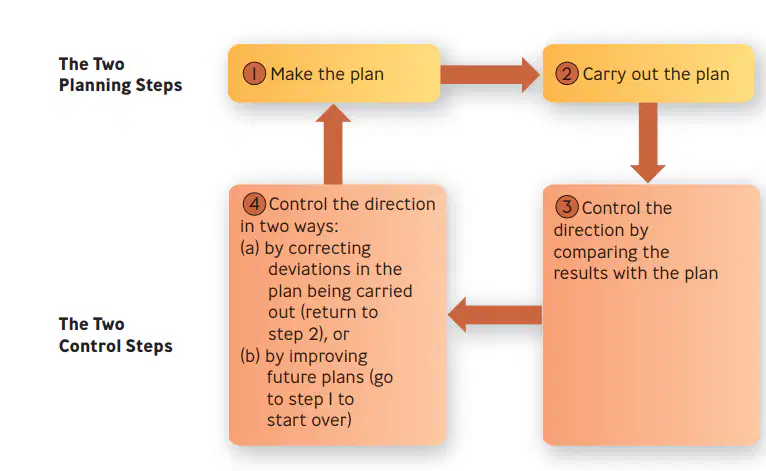
what process is it?
The planning/control cycle
THE PLANNING
the controlling process
· "a document that outlines a proposed firm’s goals, the strategy for achieving them, and the standards for measuring success?
business plan
control plan
analyzers
reactors
is a large-scale action plan that sets the direction for an organization
(a)
is a process that involves managers from all parts of the organization in the formulation and the implementation of strategies and strategic goals
(a)
attempts to achieve sustainable competitive advantage by preserving what is distinctive about a company.
(a)
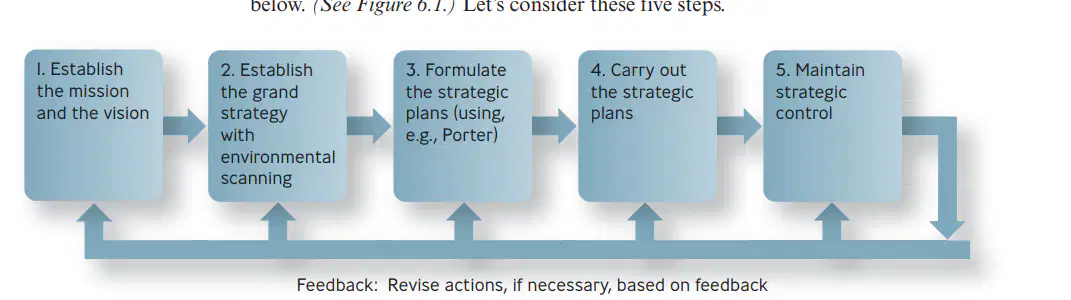
what process is it ?
(a)
, which, after an assessment of current organizational performance, then explains how the organization’s mission is to be accomplished.39 Three common grand strategies are growth, stability, and defensive
(a)
is a grand strategy that involves expansion—as in sales revenues, market share, number of employees, or number of customers or (for nonprofits) clients served
(a)
is a grand strategy that involves little or no significant change
(a)
or a retrenchment strategy, is a grand strategy that involves reduction in the organization’s efforts.
(a)
is the process of choosing among different strategies and altering them to best fit the organization's need
(a)
Putting strategic plans into effect is
(a)
consists of monitoring the execution of strategy and making adjustments, if necessary
(a)
means gaining information about one’s competitors’ activities so that you can anticipate their moves and react appropriately
(a)
careful monitoring of an organization’s internal and external environments to detect early signs of opportunities and threats that may influence the firm’s plans
(a)
—also known as a situational analysis—which is a search for the Strengths, Weaknesses, Opportunities, and Threats affecting the organization.
(a)
the skills and capabilities that give the organization special competencies and competitive advantages in executing strategies in pursuit of its mission
(a)
—the drawbacks that hinder an organization in executing strategies in pursuit of its mission.
(a)
environmental factors that the organization may exploit for competitive advantag
(a)
environmental factors that hinder an organization’s achieving a competitive advantage
(a)
is a hypothetical extension of a past series of events into the future
(a)
also known as scenario planning and scenario analysis —is the creation of alternative hypothetical but equally likely future conditions
Contingency planning
strategic planning
organization
that business-level strategies originate in five primary competitive forces in the firm’s environment: (1) threats of new entrants, (2) bargaining power of suppliers, (3) bargaining power of buyers, (4) threats of substitute products or services, and (5) rivalry among competitors.
Contingency planning
strategic planning
organization
Porter’s model for industry analysis
also called four generic strategies) are (1) cost-leadership, (2) differentiation, (3) cost-focus, and (4) focused-differentiation
Contingency planning
strategic planning
Porter’s four competitive strategies
Porter’s model for industry analysis
is to keep the costs, and hence prices, of a product or service below those of competitors and to target a wide market.
(a)
is to offer products or services that are of unique and superior value compared with those of competitors but to target a wide market
(a)
is to keep the costs, and hence prices, of a product or service below those of competitors and to target a narrow market
(a)
is to offer products or services that are of unique and superior value compared to those of competitors and to target a narrow market.
(a)
company makes and sells only one product within its market.
(a)
is a means of evaluating strategic business units on the basis of (1) their business growth rates and (2) their share of the market.
(a)
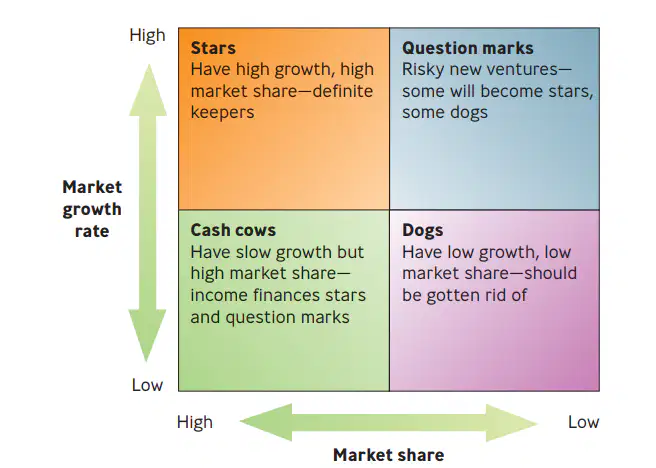
(a)
--is a choice made from among available alternatives. ------- is the process of identifying and choosing alternative courses of action.
(a)
, also called the classical model, explains how managers should make decisions; it assumes managers will make logical decisions that will be the optimum in furthering the organization’s best interests
(a)
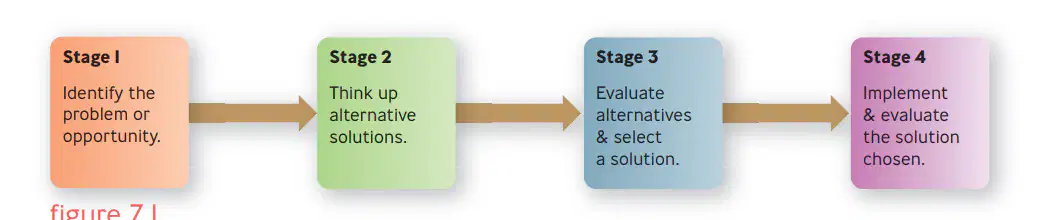
THE FOUR STEPS IN RATIONAL DECISION MAKING
the organization's process
the process of making decision
or difficulties that inhibit the achievement of goals
(a)
analyzing the underlying causes
(a)
1. The rational model is prescriptive, describing how managers ought to make decisions. It doesn't describe how managers actually make decisions
true
false
1. In this stage, you need to evaluate each alternative not only according to cost and quality but also according to the following questions:
(1) Is it ethical? (If it isn't, don't give it a second look.)
(2) Is it feasible? (If time is short, costs are high, technology unavailable, or customers resistant, for example, it is not.)
(3) Is it ultimately effective? (If the decision is merely "good enough" but not optimal in the long run, you might reconsider.)
(a)
1. Explain how managers make decisions; they assume that decision making is nearly always uncertain and risky, making it difficult for managers to make optimal decisions
(a)
the concept suggests that the ability of decision makers to be rational is limited by numerous constraints
(a)
that is, managers seek alternatives until they find one that is satisfactory, not optimal.
(a)
in which managers take small, short-term steps to alleviate a problem
(a)
is making a choice without the use of conscious thought or logical inference
(a)
Intuition that stems from expertise—a person’s explicit and tacit knowledge about a person, situation, object, or decision opportunity
(a)
Intuition based on feelings—the involuntary emotional response to those same matters
(a)
is the willingness to gamble or to undertake risk for the possibility of gaining an increased payoff
Risk propensity
decision-making style
reflects the combination of how an individual perceives and responds to information
Risk propensity
decision-making style
“There’s no point in doing anything; nothing bad’s going to happen.”
a manager decides to take no action in the belief that there will be no great negative consequences
relaxed avoidance
Relaxed Change
Defensive Avoidance
Panic
“Why not just take the easiest way out?”
, a manager realizes that complete inaction will have negative consequences but opts for the first available alternative that involves low risk
relaxed avoidance
Relaxed Change
Defensive Avoidance
Panic
“There’s no reason for me to explore other solution alternatives.
a manager can’t find a good solution and follows by (a) procrastinating, (b) passing the buck, or (c) denying the risk of any negative consequences
relaxed avoidance
Relaxed Change
Defensive Avoidance
Panic
—“This is so stressful, I’ve got to do something—anything—to get rid of the problem!”
a manager is so frantic to get rid of the problem that he or she can’t deal with the situation realistically.
relaxed avoidance
Relaxed Change
Defensive Avoidance
Panic
a manager agrees that he or she must decide what to do about a problem or opportunity and take effective decision-making steps
relaxed avoidance
Relaxed Change
Defensive Avoidance
deciding to decide
sometimes called corporate culture, is a system of shared beliefs and values that develops within an organization and guides the behavior of its members
organizational culture
Organizational structure
clan culture
adhocracy culture

is a formal system of task and reporting relationships that coordinate and motivates an organization’s members so that they can work together to achieve the organization’s goals
organizational culture
Organizational structure
clan culture
adhocracy culture
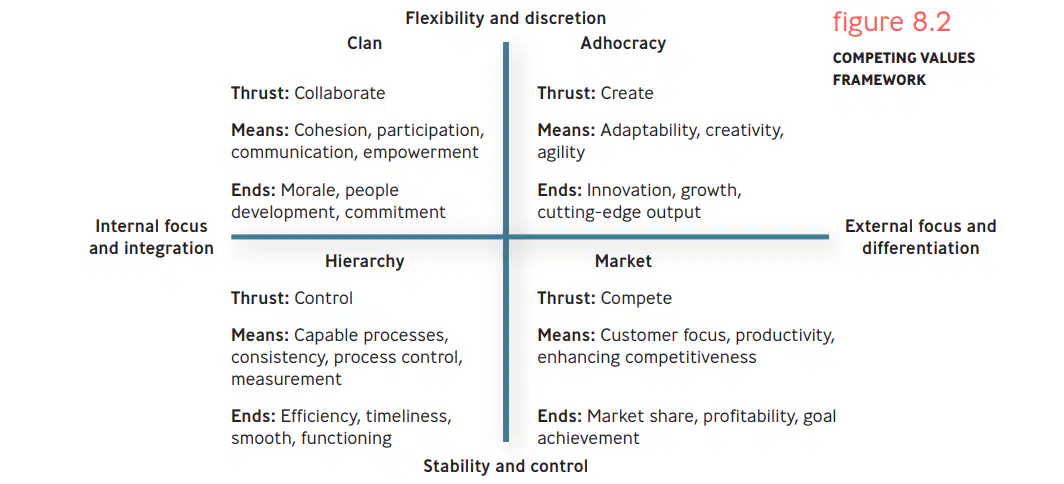
organizational culture
Organizational structure
Four Types of Organizational Culture
four types of organization
assumes that the strength of a corporate culture is related to a firm’s long-term financial performance
(a)
assumes that an organization’s culture must align, or fit, with its business or strategic context
(a)
assumes that the most effective cultures help organizations anticipate and adapt to environmental changes
(a)

