wayground logo

Free Printable Worksheets

NEW

Font size

S
M
L
XL
Worksheets

review of Atom(summer camp)

Total questions: 60

Worksheet time: 57mins

Name
Class
Date
1.
Which of the following is an ionic compound:
a)

CH4

b)

I2

c)

NaCl

d)
CO
2.
name the following ionic compound: NaF
a)
nitrogen fluorine
b)
sodium fluoride
c)
nitrogen fluoride
d)
sodium fluorine
3.
Which of these combinations is an ionic compound made of?
a)
Metal and Metal
b)
Nonmetal and Nonmetal
c)
Metal and Nonmetal
d)
Cation and Cation
4.

Name this compound: KF

a)
Potassium fluoride
b)
Potassium fluorite
c)
Fluorine potasside 
d)
Potassium fluorate
5.
What would be the proper chemical formula for combining Al3+ and Cl- :
a)
AlCl3
b)
Al3Cl
c)
AlCl
d)
Al3Cl3
6.

What formula results when Ca2+  and  Br- ions bond?

a)
Ca2Br2
b)
CaBr
c)
Ca(br)2
d)
CaBr2
7.

NaCl

a)

Sodium monochlorine

b)

Sodium chloride

c)

Sodium monochloride

d)

Sodium chlorine

8.

The name of FeCl₂ is

a)

iron chloride

b)

iron (II) chloride

c)

iron (I) chloride

d)

iron dichloride

9.

When naming a compound, which of these is written first?

a)

Metal

b)

Nonmetal

c)

Anion

d)

Cation

10.

What is the name of the following compound: K2SO4

a)

potassium sulfur

b)

potassium sulfate

c)

potassium(I) sulfate

d)

potassium(II) sulfide

11.

What is the charge of copper in the compound: CuBr2

a)

+1

b)

+2

c)

-1

d)

-2

12.

Which is the correct formula for the compound: Calcium Oxide

a)

CaO

b)

CaO2

c)

Ca2O

13.

Which is the correct formula for the compound: lead(II) fluoride

a)

Pb2F

b)

PbF2

c)

PbF

d)

PbF7

14.
Which of these compounds is ionic? 
a)
Carbon dioxide
b)
Dinitrogen Trioxide
c)
Silicon tetrachloride
d)
Lithium bromide
15.

When naming a compound, what must the last part be?

a)

the element with "ic" at the end

b)

the element with the ending "ite"

c)

the name of the element

d)

the element with "ide" at the end, unless its a polyatomic ion

16.

What is the name of the compound Na2SO4?

a)

Sodium sulfate

b)

Sodium sulfide

c)

Sodium sulfite

d)

Sodium sulfuroxide

17.
Nonmetals tend to 
a)
gain electrons
b)
lose electrons
18.
Metals tend to 
a)
gain electrons
b)
lose electrons
19.

In most cases, when naming the compounds, you change the ending of the second element to ________.

a)
-ate.
b)
-ite.
c)
-ide.
d)
-ine.
20.
MgS 
a)
Magnesium sulfide
b)
Monomagnesium monosulfide
c)
Magnesium monosulfide
21.

The first step in naming an ionic compound is always...

a)

Naming the anion (non-metal)

b)

Changing the ending to -ide

c)

Naming the cation (metal)

d)

Writing the cation charge

22.

What is the correct molecular formula for barium hydroxide?

a)

Ba(OH)2

b)

Ba2OH

c)

BaOH

d)

Ba2OH

23.
What is the formula for copper(I) sulfate?
a)
CuSO3
b)
CuSO4
c)
Cu2SO3
d)
Cu2SO4
24.
What is the name of N2O3
a)
Nitrogen trioxide
b)
Dinitrogen oxide
c)
Dinitrogen trioxide
d)
Nitrogen oxide
25.
What is the chemical formula for Tetrasulfur pentoxide?
a)
SO
b)
S4O
c)
S4O5
d)
S5O4
26.
What is the chemical formula for Nitrogen triiodide?
a)
NI
b)
N3I
c)
NI3
d)
None of these
27.
diphosphorus pentoxide
a)
P2O5
b)
PO5
c)
P5O2
d)
P2O6
28.
How do covalent bonds form?
a)
Donating & receiving valence e- between atoms.
b)
Opposite slight charges attract each other between compounds.
c)
Scientists are still not sure how they form.
d)

Sharing valence electron between atoms.

29.
What two types of atoms make a covalent bond?
a)
2 Nonmetals
b)
1 Nonmetal and 1 Metal
c)
2 Metals
d)
2 Noble Gases
30.
The chemical formula of sulfur hexabromide is
a)
SBr₆
b)
S₆Br
c)
S(VI)Br
d)
S6Br
31.
What's the formula for chlorine dioxide
a)
ClO2
b)
CLO
c)
ClO3
d)
HClO2
32.
Which of the following is NOT an ionic compound:
a)
CaO
b)
NaOH
c)
BaCl2
d)
Br2
33.

Which following is a covalent compound?

a)
SO2
b)
K2O
c)
CaO
d)
BeO
34.
Which of the following is NOT an ionic compound:
a)
CaO
b)
NaOH
c)
BaCl2
d)
CH4
35.
What is the chemical formula for tetraboron silicide?
a)
B4S
b)
B4Si
c)
BSi4
d)
BS4
36.

Identify the compound: NH3

a)

Ionic

b)

Covalent

c)

Metallic

d)

Synthetic

37.

Identify the compound: Ca3N2

a)

Ionic

b)

Covalent

c)

Metallic

d)

Synthetic

38.

Identify the compound: P2O5

a)

Ionic

b)

Covalent

c)

Metallic

d)

Synthetic

39.

1. An atom has an atomic number of 12 and a mass number of 25. The number of electrons in the atom is

a)

12

b)

13

c)

25

d)

37

40.

11. The atomic number of element X is 15. It has only one isotope with a mass number 31. Which of the following statements about X are correct?

(1) X is a non-metal.

(2) There are 5 electrons in the outermost shell of an atom of X

(3) There are 15 neutrons in the nucleus of an atom of X.

a)

(1) and (2) only

b)

(1) and (3) only

c)

(2) and (3) only

d)

(1), (2) and (3)

41.

What is the mass number

a)

Number of protons + Numbers of Neutrons

b)

Number of electrons

c)

Number of Protons

d)

Number of Neutrons

42.

What is the Atomic Number

a)

Number of protons + Numbers of Neutrons

b)

Number of Neutrons + Number of electrons

c)

Number of Protons

d)

Number of Neutrons

43.

What is the electronic arrangement of neon?

a)

10

b)

2, 1

c)

2, 8

d)

2, 8, 8

44.

What is the electronic arrangement of magnesium?

a)

12

b)

2,8,5

c)

2,8,2

d)

15

45.

Which group does silicon belong to?

a)

I

b)

II

c)

IV

d)

V

46.

Which group does calcium belong to?

a)

I

b)

II

c)

IV

d)

V

47.

Which of the followings carries positive charge?

a)

sodium ions

b)

chloride ions

c)

neutrons

d)

electrons

48.

Which of the followings carries negative charge?

a)

electron

b)

neutron

c)

nucleus

d)

helium atom

49.

An atom X contains 45 neutrons and 30 protons. What is the mass number of atom X?

a)

15

b)

30

c)

45

d)

75

50.

An atom Y contains 18 electrons and its mass number is 38. What is the number of protons of atom Y?

a)

18

b)

20

c)

38

d)

56

51.

Which one will determine what element an atom is?

a)
number of neutrons
b)

number of nucleus

c)
number of atoms 
d)
number of protons 
52.
An atom of the element with atomic number 6 always has _____.
a)
six protons in its nucleus
b)
an atomic mass of six
c)
more than six neutrons
d)

six neutrons in its nucleus

53.
In the modern periodic table elements are arranged by:
a)
atomic mass
b)
atomic number
c)
valence electrons
d)
number of isotopes
54.
How many neutrons in C-14?
a)
6
b)
7
c)
14
d)
8
55.
What quantities vary between isotopes of an element?
a)
protons, electrons, and atomic mass
b)
protons, electrons, and atomic number
c)
neutrons and electrons
d)
neutrons and atomic mass
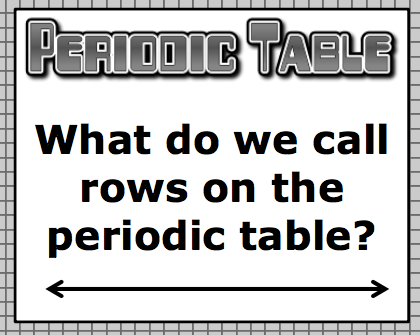
56.
a)
Periods
b)
Groups
57.
The following statements are true for ionic bonding EXCEPT
a)
bonding between metal and non metal
b)
electrostatic forces between opposite charges
c)
transferring of electrons
d)
sharing of electrons
58.

Is this compound ionic or covalent?

a)

ionic

b)

covalent

59.

What is the prefix for the number 8 ?

a)

hexa-

b)

hepta-

c)

octa-

d)

nona-

60.

In nitrogen molecule, the atoms share ............... pair of electrons

a)

1

b)

2

c)

3