
 Worksheets
Practice Test for Week 1
Total questions: 85
Worksheet time: 44mins
What do you call to the study of how body parts function?
Histology
Physiology
Metabolism
Homeostasis
Which of the stated relationships is correct?
The heart is superior to the large intestine
The shoulder is distal to the metacarpals
The phalanges are proximal to the carpals
The eye is medial to the nose
Which of the following best describes the “anatomical position”?
Standing vertically, arms held horizontally, legs apart so that the tips of the
head, hands and feet lie on an imaginary circle, drawn around the body.
Standing “to attention”, with hands held so that thumbs are ventral while the fifth digit is dorsal.
Standing “at ease” with hands clasped behind your back while adjacent and dorsal to the sacrum.
Standing vertically, arms parallel and lateral to the ribs with hands inferior to the elbows and supinated.
Which term describes the location of the adrenal glands with reference to the
kidneys?
Proximal
Distal
Superior
Inferior
Which of the following is the best definition of physiology?
The microscopic study of tissues and cells
The study of how the body works.
All the chemical processes that take place in the organelles of the body’s cells.
The body’s automatic tendency to maintain a relatively constant internal environment.
Which of the following terms is NOT used to identify a region of the abdomen?
left hypochondriac
hypogastric
epigastric
right sacral
What does the process known as anabolism refer to?
The use of energy for producing chemical substances.
The breaking down phase of metabolism.
All the chemical process that take place in the organelles of the cells.
The supply of nutrients to the body’s cells.
Which plane of the body divides it into dorsal and ventral regions?
Transverse
Axial
Coronal
Sagittal
What structure separates the thoracic cavity from the abdominal cavity?
The mediastinum
The diaphragm
The peritoneum
The pylorus
The dorsal body cavity contains which of the following organs?
The brain
The brain and spinal cord
The brain, spinal cord, and heart.
The brain, spinal cord, heart and kidneys.

The cavity surrounded by a box is?
Abdominal Cavity
Pelvic Cavity
Pleural Cavity
Cranial Cavity

Cranial Cavity
Pleural Cavity
Pericardial Cavity
Vertebral Canal

The cavity surrounded by a box is?
Thoracic Cavity
Abdominal Cavity
Pelvic Cavity
Vertebral Canal

What quadrant does number 3 Represent?
Right Upper
Left Upper
Right Lower
Left Lower

What is section 1?
Epigastric
Left Hypochondriac
Right Hypochondriac
Right iliac
What is section 2?
Epigastric
Left Hypochondriac
Right Hypochondriac
Right iliac
What is section 3?
Epigastric
Left Hypochondriac
Right Hypochondriac
Right iliac
What is section 7?
Epigastric
Left Hypochondriac
Right Hypochondriac
Right iliac
What is section 4?
Umbilical
Left lumbar
Right lumbar
Right iliac
What is section 5?
Umbilical
Left lumbar
Right lumbar
Right iliac
What is section 6?
Umbilical
Left lumbar
Right lumbar
Right iliac
What is section 8?
Hypogastric
Left iliac
Right iliac
Right lumbar
What is section 9?
Hypogastric
Left iliac
Right iliac
Right lumbar
List the cavities of the dorsal side of the human body.
Cranial, vertebral canal
Cranial, vertebral canal, thoracic, abdominopelvic
Cranial, vertebral canal, thoracic, diaphragm, abdominal, pelvic
None of these
Body cavity that contains the heart
abdominal
pericardial
pelvic
pleural

Number 3
pericardial cavity
pleural cavity
pelvic cavity
abdominal cavity

Number 4
abdominal cavity
pelvic cavity
spinal cavity
cranial cavity

What anatomical structure is labeled e?
lungs
heart
diaphragm
stomach
Which of the following cavities holds the heart AND lungs?
pleural
pericardial
thoracic
abdominal


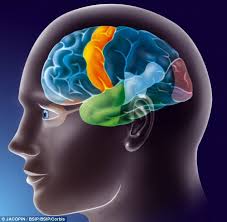
[The eyes are _______ to the brain].
Your feet are ________ to your knees.
caudal
cephalic
inferior
superior
The head is _____ to the shoulders.
proximal
caudal
superior
inferior

This plane divides the body into superior and inferior parts.
coronal plane
frontal plane
transverse plane
sagittal plane
This term refers to the shoulder region
brachial
acromial
unilateral
carpal
This term refers to the arm
Brachial
Carpal
Clavicular
Bilateral
This term refers to the region around the foot
pedal
femoral
pelvic
brachial
This term refers to the stomach region
acromial
abdominal
ocular
thoracic
This term also refers to the abdominal
celiac
brachial
crural
occipital
Correct order of smallest to largest?
atom, molecule, macro molecule, organelle, cell, tissue, organ, organ system, organism
organism, organ system, organ, tissue, cell, organelle, macro molecule, molecule, atom
cell, atom, molecule, macro molecule, organelle, cell, tissue, organ, organ system, organism
electron, cell, atom, molecule, macro molecule, organelle, tissue, organ, organ system, organism
which cuts the body into asymmetrical left and right sides?
transverse
frontal
parasagittal
coronal
which cuts the body into symmetrical left and right sides?
transverse
frontal
parasagittal
sagittal/ midsagittal
Toward the inside of a part, away from the surface
deep
cortical
medullary
superficial
Toward the surface of a part, away from the inside.
deep
ipsilateral
contralateral
superficial
tarsal: carpal as popliteal: ___________
coxal
crural
antebrachial
cubital
Which of the following specialties might focus on studying all of the structures of the ankle and foot?
regional anatomy
systemic anatomy
microscopic anatomy
muscle anatomy
A scientist wants to study how the body uses foods and fluids during a marathon run. This scientist is most likely a(n) ________.
exercise physiologist
regional physiologist
regional anatomist
systemic anatomist
The smallest independently functioning unit of an organism is a(n) ________.
cell
molecule
organ
tissue
A collection of similar tissues that performs a specific function is an ________.
organ
organelle
organ system
organism
The body system responsible for structural support and movement is the ________.
skeletal system
muscular system
endocrine system
cardiovascular system
Metabolism can be defined as the ________.
process whereby all unspecialized cells become
adjustment by an organism to external or internal changes
specialized to perform distinct functions
sum of all chemical reactions in an organism
Humans have the most urgent need for a continuous supply of ________.
food
nitrogen
oxygen
minerals
Which of the following statements about nutrients is true?
All classes of nutrients are essential to human survival.
Because the body cannot store any micronutrients, they need to be consumed nearly every day.
Carbohydrates, lipids, and proteins are micronutrients.
Macronutrients are vitamins and minerals.
After you eat lunch, nerve cells in your stomach respond to the distension (the stimulus) resulting from the food. They relay this information to ________
a control center
a set point
a sensor
an effector
Which of the following is an example of a normal physiologic process that uses a positive feedback loop?
blood pressure regulation
regulation of fluid balance
childbirth
temperature regulation
What is the position of the body when it is in the “normal anatomical position?”
The person is prone with upper limbs, including palms, touching sides and lower limbs touching at sides.
The person is standing facing the observer, with upper limbs extended out at a ninety-degree angle from the torso and lower limbs in a wide stance with feet pointing laterally
The person is supine with upper limbs, including palms, touching sides and lower limbs touching at sides.
None of the choices
To make a banana split, you halve a banana into two long, thin, right and left sides along the ________.
coronal plane
longitudinal plane
midsagittal plane
transverse plane
The heart is within the ________.
cranial cavity
mediastinum
abdominal cavity
pelvic cavity
The space in the mouth inside the teeth and gums and is filled with the tongue when it is relaxed
oral cavity
cranial cavity
thoracic cavity
orbital cavities
The groin or area in lower lateral regions of the abdomen
Inguinal
femoral
antecubital
brachial
The study of the structure and shape of the body and its parts and their relationships to one another is PHYSIOLOGY.
True
False
The study of how the body and its parts work or function is PHYSIOLOGY
True
False
cells→ ___→ organs→ organ systems→ organism
What can fit in the blank?
Macromolecules
Cell Products
Proteins
Tissues
The highest level of structural organization.
Cell
Organ System
Organism
This system is the external covering of the body.
Endocrine
Integumentary
Lymphatic
Stimulus, Efferent Pathway, Response, Input, Output, Afferent Pathway, Receptor, Control Center
What is the correct order?
Receptor, Stimulus, Input, Efferent Pathway, Control Center, Output, Afferent Pathway, Response
Stimulus, Receptor, Input, Efferent Pathway, Control Center, Output, Afferent Pathway, Response
Stimulus, Receptor, Input, Afferent Pathway, Control Center, Output, Efferent Pathway, Response
Receptor, Stimulus, Input, Afferent Pathway, Control Center, Output, Efferent Pathway, Response
The heart is located ____ to the diaphragm.
Superior
Inferior
Medial
Lateral
The muscles are ____ to the skin.
Superficial
Proximal
Distal
Deep
The shoulder JOINT is ____ to the elbow JOINT.
Proximal
Distal
Superior
Inferior
In ANATOMICAL POSITION, the thumb is ____ to the index finger.
Medial
Lateral
Superior
Inferior
The vertebral region is _______ to the scapular region.
Lateral
Medial
Superior
Inferior
The gluteal region is located on the _____ surface of the body.
Superior
Inferior
Anterior
Posterior
Anatomical terms that apply to the backside of the body when it is in anatomical position:
Ventral and Anterior
Back and Rear
Posterior and Dorsal
Cephalic and Lateral
A neurosurgeon orders a spinal tap for a patient. Into what body cavity would the need be inserted?
Ventral
Thoracic
Cranial
Dorsal
Which of the following groupings of the abdominopelvic regions is medial?
Hypochondriac, Hypogastric, Umbilical
Hypochondriac, Lumbar, Inguinal
Hypogastric, Umbilical, Epigastric
Lumbar, Umbilical, Iliac
Iliac, Umbilical, Hypochondriac

Is this an example of negative or positive feedback?
Negative
Positive
Which of these are ALL posterior regions of the body?
Sural, Crural, Scapular
Sural, Popliteal, Femoral
Femoral, Mental, Gluteal
Sacral, Vertebral, Crural
A sagittal section cuts the body into ____ and ____ parts.
Right and Left
Superior and Inferior
Anterior and Posterior
A frontal section divides the body into ____ and ____ parts.
Right and Left
Superior and Inferior
Anterior and Posterior
A transverse or cross section divides the body into _____ and ____ parts.
Right and Left
Superior and Inferior
Anterior and Posterior

