Wayground logo

Free Printable Worksheets

Font size

S
M
L
XL
Worksheets

Chemistry Unit 1 T

Total questions: 68

Worksheet time: 2hrs 55mins

Name
Class
Date
1.
Which is true in the lab?
a)
Eating and drinking are okay if kept away from chemicals
b)
Open toed shoes are best
c)
Loose clothing is best because it doesn't hinder movement
d)
Wear goggles to protect your eyes
2.
When you heat chemicals:
a)
Close the container so vapors don't escape
b)
look into the test tube so you can see if they are boililng yet
c)
tilt the test tube away from your face
d)
hold the tube with your hand so you can tell when it is warm
3.
If you swallow a chemical:
a)
Drink water immediately
b)
Tell the teacher immediately
c)
Try to vomit
d)
Don't tell because you'll get in trouble
4.
The way you smell a chemical is called:
a)
sniffing
b)
snorting
c)
wafting
d)
Trick question, you aren't allowed to ever smell them
5.
Which of these would come first when using the scientific method to solve a problem?
a)
Experiment
b)
Hypothesis
c)
Conclusion
d)
Data analysis
6.
When making a solution - you should add acid to water, not water to acid
a)
True
b)
False
c)
You can do either
7.
When graphing data that consists of all numbers:
a)
Make a bar graph
b)
Put the independent variable on the X-axis
c)
Put the dependent variable on the X-axis
d)
You don't need a title
8.
Based on this graph, what was the dependent variable in this experiment?
a)
Mass
b)
Volume
c)
Density
d)
grams
9.
It is a measure of how close measurements come to each other when they are made in the same way
a)
Accuracy
b)
Precision
c)
Error
d)
Extrapolation
10.

How close a measurement is to the accepted value is called..

a)

Accuracy

b)

Precision

c)

Significant

d)

Estimate

11.
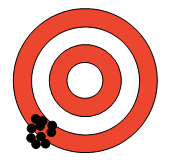
This bullseye demonstrates...
a)
High Accuracy & High Precision
b)
High Accuracy & Low Precision
c)
Low Accuracy & High Precision
d)
Low Accuracy & Low Precision
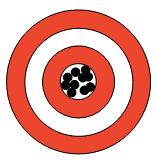
12.
?
a)
High Accuracy & High Precision
b)
High Accuracy & Low Precision
c)
Low Accuracy & High Precision
d)
Low Accuracy & Low Precision
13.
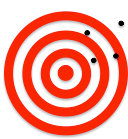
Describe the accuracy and precision of the image
a)
Accurate and Precise
b)
Accurate and not precise
c)
Not Accurate and Precise
d)
not accurate and not precise
14.
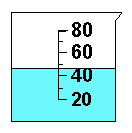
volume?
a)
48 mL
b)
48.2 mL
c)
48.25 mL
d)
4 mL
15.
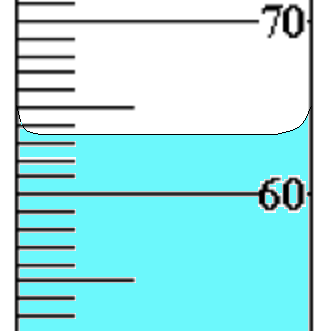
Volume?
a)
63.5 mL
b)
63 mL
c)
63.55 mL
d)
6 mL
16.
Which is NOT a step in the scientific method?
a)
Make observation
b)
Form a theory
c)
Collect data
d)
Form a hypothesis
17.
A testable explanation to a problem that has not yet been tested. 
a)
data
b)
theory
c)
hypothesis
d)
fact
18.
Testing a hypothesis often involves a(n):
a)
answer
b)
experiment
c)
problem
d)
safety check
19.

What is the first step in the scientific method?

a)

Data

b)

Conclusion

c)

No Horse Play

d)

Observe a problem

20.
1 meter = _______ cm
a)
1
b)
1,000
c)
100
d)
400
21.
4 cm = ___mm
a)
400
b)
40
c)
4
d)
4,000
22.
180m = ___dm
a)
8
b)
18,000
c)
1,800
d)
18
23.
___m = 17km
a)
17,000
b)
170
c)
1,700
d)
I will miss Mr. Campbell next year.  :(
24.
Convert 8 kilometers to meters
a)
800 m
b)
80,000 m
c)
8,000 m
d)
.008 m
25.
Which unit is the smallest?  
a)
km
b)
mm
c)
m
d)
cm 
26.
What is the length of the screw?
a)
5cm
b)
6cm
c)
5mm
d)
6m
27.
7.82 x 10⁻⁶ is an example of scientific notation. The exponent of -6 tells you your number will be very ________.
a)
Large
b)
Small
c)
Basic
28.
Change from standard form to scientific notation: 12,000,000
a)
12.0  x  107
b)
0.12  x  107
c)
1.2  x  106
d)
1.2  x  107
29.
Change from standard form to scientific notation:  450,000
a)
4.5  x  105
b)
45  x  105
c)
4.5  x  104
d)
4.5  x  106
30.
Change from standard form to scientific notation:  0.000398
a)
39.8  x  10-5
b)
3.98  x  10-5
c)
3.98  x  10-4
d)
39.8  x  10-6
31.
Change from standard form to scientific notation: 0.004078
a)
4.078  x  10-3
b)
4.078  x  103
c)
40.78  x  10-4
d)
.4078  x  10-2
32.
125,678,000: Change to scientific notation
a)
1.25678  x  1012
b)
.125678  x  10-9
c)
12.5678  x  108
d)
1.25678  x  108
33.
Try to change the number back to standard form:  6.79  x  104
a)
679,000
b)
6,790
c)
67,900
d)
6,790,000
34.
How many significant figures: 216 m
a)
1
b)
2
c)
3
d)
0
35.
How many significant figures: 2016 m
a)
1
b)
2
c)
3
d)
4
36.
How many significant figures: 153.0 mL
a)
1
b)
2
c)
3
d)
4
37.
How many significant figures: 0.012 km
a)
1
b)
2
c)
3
d)
4
38.
How many significant figures: 1000 mL
a)
1
b)
2
c)
3
d)
4
39.

How many significant figures: 450 m

a)

3

b)

2

c)

1

d)

0

40.

33 g - 2.1 g = ?

a)

31.9 g

b)

31 g

c)

30.9 g

d)

30 g

41.

0.495 g - 0.101 g = ?

a)

0.394 g

b)

0.3 g

c)

0.4 g

d)

0.494 g

42.

0.495 g - 0.1 g = ?

a)

0.395 g

b)

0.39 g

c)

0.4 g

d)

1 g

43.

67 seconds + 10.1 seconds = ?

a)

77.1

b)

77

c)

70

d)

80

44.
Solve & Round to Correct Sig Figs.
100 / 2.0 = 
a)
50
b)
50.
c)
50.0
d)
50.00
45.
Solve & Round to Correct Sig Figs.
4.5 x 2.34 = 
a)
11
b)
10.52
c)
10.5
d)
10
46.
1345.567 / 23.56 = ? (Use significant figures!)
a)
57.11
b)
58.11
c)
56.75
d)
83.49
47.
A change that alters the physical properties of a substance without changing its composition.
a)
Physical Change
b)
Chemical Change
48.
A change in matter that forms one or more new substances with new chemical properties is a/an...
a)
Physical Change
b)
Chemical Change
49.
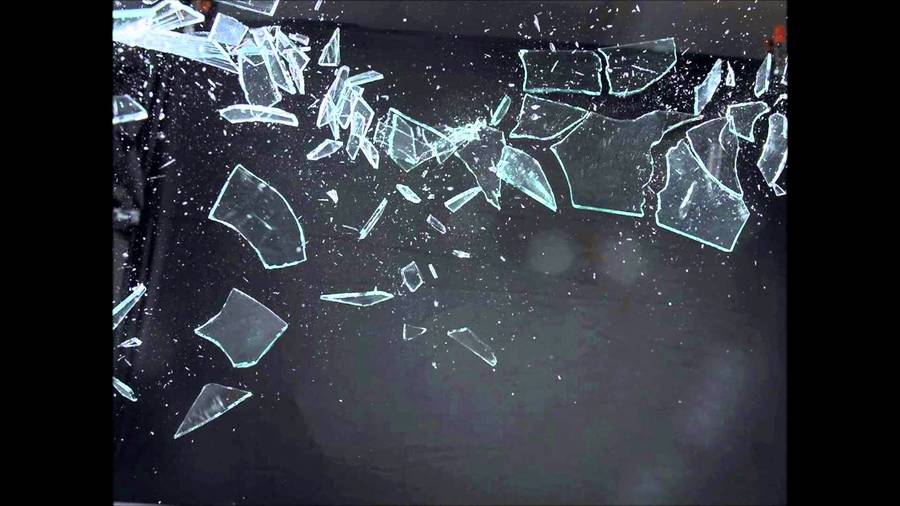
Chemical or Physical?  Glass breaking into tiny shards
a)
Chemical Change
b)
Physical Change
50.
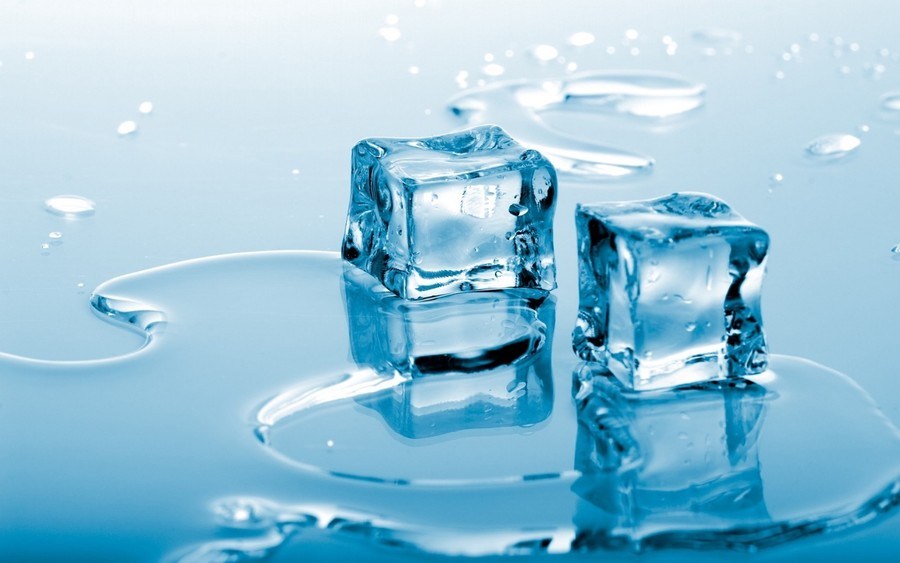
Water freezing into ice is an example of a...
a)
Physical Change
b)
Chemical Change
51.
Physical or Chemical Change?  Iron rusts
a)
Physical Change
b)
Chemical Change
52.
Physical or Chemical Change?  Sodium metal burning in water.
a)
Physical Change
b)
Chemical Change
53.
  1. What is always the first consideration in the lab?

a)

the experiment

b)

safety

c)

horse-playing

d)

the results

54.
  1. What are the correct steps of the scientific method?

a)

hypothesis, research, analysis, conclusion, experiment

b)

research, hypothesis, experiment, analysis, conclusion

c)

experiment, hypothesis, conclusion, analysis, research

d)

research, experiment, analysis, conclusion, hypothesis

55.
  1. Which of the following is quantitative data?

a)

odor

b)

mass

c)

shape

d)

texture

56.
  1. The diameter of earth is 12 756 km. What is this number in scientific notation?

a)

1.28 x 10⁴ km

b)

1.28 x 10⁻⁴ km

c)

12.8 x 10⁻³ km

d)

12.8 x 10³ km

57.
  1. Convert 0.15 grams into milligrams.

a)

0.0015 mg

b)

0.00015 mg

c)

15 mg

d)

150 mg

58.
  1. How many significant figures are in the measurement 40. kg?

a)

1

b)

2

c)

3

d)

4

59.

Match the following

a)

accuracy

1.
  1. The closeness of a true value.

b)

precision

2.
  1. The closeness of a true value.

c)

qualitative

3.
  1. An observation using the 5 senses.

d)

quantitative

4.
  1. An observation with numbers

60.

What is the independent variable?

a)

Trey

b)

Age in years

c)

Height in inches

d)

None of these

61.

Homer Simpson is trying to clean his bathroom. He hears that coconut milk will clean mold. He tries the coconut milk on half of the shower and water on the other half. After five days he comes back and nothing has changed. What is the dependent variable?

a)

water

b)

coconut water

c)

amount of time

d)

amount of mold

62.
  1. How many significant figures are in the measurement 100 mL?

a)

1

b)

2

c)

3

d)

4

63.
  1. How many significant figures are in the measurement 0.003 4 kg?

a)

1

b)

2

c)

4

d)

5

64.
  1. What is the result of added 2.5 x 10³ and 3.5 x 10³?

a)

6.0 x 10⁶

b)

6.0 x 10³

c)

6.0 x 10²

d)

6.0 x 10⁵

65.
  1. What is the result of multiplying 2.5 x 1010 by 3.5 x 10-7?

a)

8.8 x 10⁻³

b)

8.8 x 10¹⁷

c)

8.8 x 10³

d)

8.8 x 10⁻¹⁷

66.
  1. Convert 4.5 dm into m.

a)

45 m

b)

450 m

c)

0.45 m

d)

0.045 m

67.
  1. What is the number 7.9 x 10⁻³ g in standard notation?

a)

0.079 g

b)

0.0079 g

c)

790 g

d)

7900 g

68.
  1. The diameter of a carbon atom is 0.000 000 000 154 m. What is this number in scientific notation?

a)

154 x 1012 m

b)

154 x 10-12 m

c)

1.54 x 10¹⁰ m

d)

1.54 x 10⁻¹⁰ m