wayground logo

Free Printable Worksheets

Font size

S
M
L
XL
Worksheets

Topics 1 & 2 Review

Total questions: 58

Worksheet time: 44mins

Name
Class
Date
1.
Plants need ________from the air for photosynthesis
a)
oxygen
b)
soil
c)
carbon dioxide
d)
sugar
2.
How many carbon atoms are there in a methane molecule? 
a)
0
b)
1
c)
4
d)
5
3.
How many hydrogen atoms are there in a water molecule? 
a)
0
b)
1
c)
2
d)
3
4.

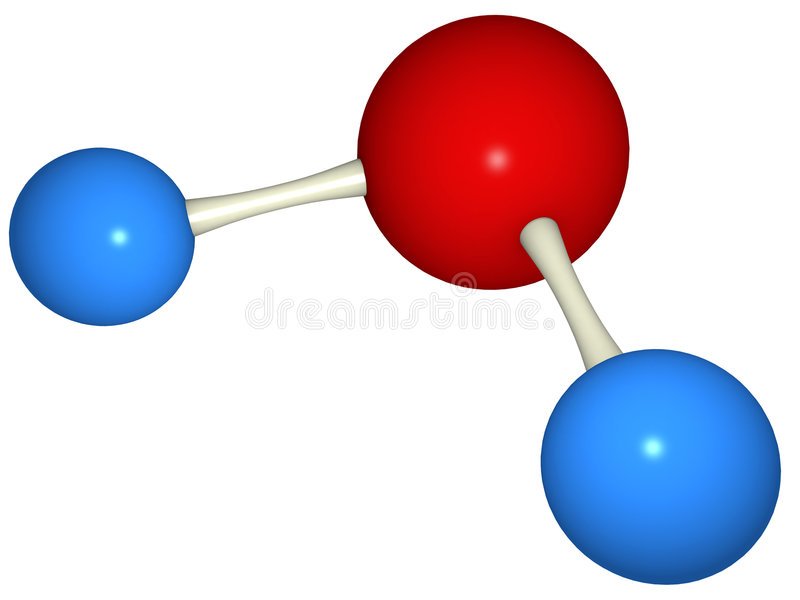
Look at the picture. This is a molecule of ammonia, which we use for cleaning. How many atoms are in it? (The total number, not how many types)

a)

One

b)

Two

c)

Three

d)

Four

5.
Explain the difference between an atom and a molecule.
a)
One molecule is made of one atom.
b)
One molecule is always made of different particles.
c)
One molecule is made of more than one atom.
d)
One molecule is made of more than two atoms.
6.
Elements are made of 
a)
many types of atoms 
b)
the periodic table
c)
one type of atom 
d)
molecules 
7.
What is the total number of atoms in an ammonia (NH3) molecule?
a)
1
b)
2
c)
3
d)
4
8.
Carbon dioxide (CO2) contains how many atoms of oxygen?
a)
0
b)
1
c)
2
d)
3
9.
What is the term for combining 2 or more atoms together?
a)
atoms
b)
elements
c)
molecules
d)
compounds
10.

When constructing a model of an atom, which two components' masses would you add together to get the atomic mass?

a)

Protons

b)

Neutrons

c)

Electrons

d)

Atom

e)

Electron Shells

11.
What are the 3 particles that make-up the atom?
a)
protons, neutrons, and isotopes
b)
neutrons, isotopes, and electrons
c)
positives, negatives, and electrons
d)
protons, neutrons, and electrons
12.
When there is no subscript after an element's symbol, it means there are how many atoms of that element?
a)
0
b)
1
c)
2
d)
unknown
13.
A subatomic particle that has a positive electric charge
a)
Proton
b)
Neutron
c)
Electron
d)
Isotope
14.
A subatomic particle that orbits an atom's nucleus, has a negative charge, and has very little mass
a)
Proton
b)
Neutron
c)
Electron
d)
Isotope
15.
The center of an atom, usually made of protons and neutrons
a)
Nucleus
b)
Proton
c)
Atomic Number
d)
Isotope
16.
A subatomic particle that has the same mass as a proton but no electric charge
a)
Neutron
b)
Nucleus
c)
Nuclear
d)
Jimmy Neutron
17.
The number of protons in an atom
a)
Atomic Number
b)
Atomic Proton
c)
Atomic Neutron
d)
Atomic Mass
18.

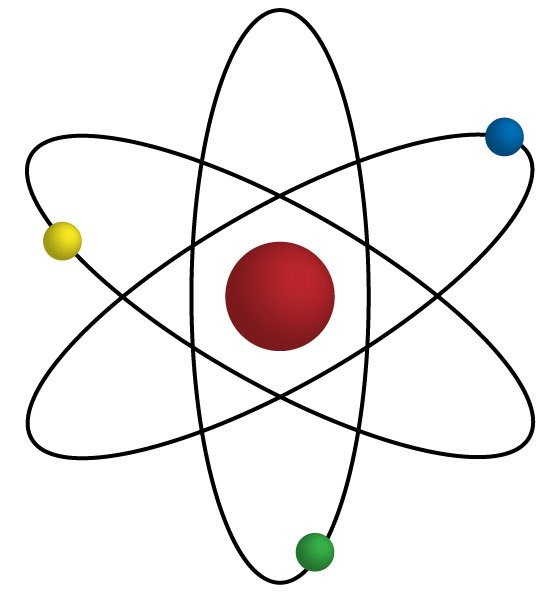
This is a picture of __________________

a)

molecules

b)

atoms

c)

electrons

d)

protons

19.

Atoms are mostly

a)

energy

b)

empty space

c)

a branch of chemistry

d)

carbon

20.
What holds atoms together to make a molecule?
a)
Glue
b)
Bonds
c)
Magnetism
d)
Cement
21.
What determines what element an atom is?
a)
The number of electrons
b)
The number of neutrons
c)
The number of protons
d)
The formula of the atom
22.

When different atoms bind together they become a different type of matter

a)

true

b)

false

c)

none

d)

both

23.

Elements can be deadly by themselves, when combined in a molecule some are edible, such as table salt

a)

true

b)

false

c)

none

d)

both

24.

The atomic mass is telling us how much the atom weighs

a)

true

b)

false

c)

none

d)

both

25.

He Helium is an element

a)

true

b)

false

c)

none

d)

both

26.

CO2 is an element

a)

true

b)

false

c)

both

d)

none

27.

Which of the following are molecules?

a)
b)
c)
d)
28.
These particles have a mass of 1 amu
a)
protons and neutrons
b)
protons and electrons
c)
neutrons and electrons
29.
Which letter represents a proton?
a)
A
b)
B
c)
C
d)
D
30.
Which letter represents a neutron?
a)
A
b)
B
c)
C
d)
D
31.
Which letter represents an electron?
a)
A
b)
B
c)
C
d)
D
32.
Which letter represents the nucleus?
a)
A
b)
B
c)
D
d)
E
33.

When an atom has an equal number of protons and electrons, it is considered __________.

a)

neutral

b)

ion

c)

charged

34.

No two elements are exactly the same. True or False?

a)

True

b)

False

35.

If an atom is composed of 7 protons, 8 neutrons, and 7 electrons, what is the atom's mass?

a)

7

b)

8

c)

1

d)

15

36.

Look at this Helium element square. What does the number 2 represent?

a)

atomic weight

b)

element name

c)

element symbol

d)

atomic number

37.
What molecule absorbs sunlight during photosynthesis?
a)
Epidermis
b)
thylakoid
c)
the leaf
d)
chlorophyll
38.
Which statement about photosynthesis is correct?
a)
Plants get the energy they need for photosynthesis from water.
b)
Plants get the energy they need for photosynthesis from soil.
c)
Plants get the energy they need for photosynthesis from sunlight.
d)
Plants do not require energy to perform photosynthesis.
39.
The products of photosynthesis are
a)
water and carbon dioxide
b)
oxygen and water
c)
sugar and cabon dioxide
d)
oxygen and sugar (glucose)
40.
In what part of the cell does photosynthesis occur?
a)
Nucleus
b)
Chloroplast
c)
Epidermis
d)
Vacuole
41.

How does most of the water needed by the plant get into its leaves?

a)

It enters through the stomata

b)

The roots absorb it and then it travels up the xylem

c)

It's made during a chemical reaction in the stem

d)

The flowers capture water and deliver it to the leaves

42.
What major energy transformation occurs during photosynthesis?
a)
Thermal --> Chemical
b)
Kinetic --> Radiant
c)
Chemical --> Radiant
d)
Radiant --> Chemical
43.
How does carbon dioxide get into the leaves of a plant?
a)
It's absorbed by the roots
b)
It's made in a chemical reaction in the stem
c)
It enters through the stomata
d)
It goes through the flowers
44.
Which choice correctly shows the gases that enter and exit plants during photosynthesis?
a)
Enter: Oxygen
Exit: Carbon dioxide
b)
Enter: Water vapor
Exit: Glucose
c)
Enter: Carbon dioxide
Exit: Oxygen
d)
Enter: Light
Exit: Water vapor
45.

What are the 3 reactants of photosynthesis? The reactants are the things needed for photosynthesis to occur.

a)

oxygen, glucose, sunlight

b)

sunlight, oxygen, water

c)

water, oxygen, carbon dioxide

d)

carbon dioxide, sunlight, water

46.

Which product is "waste" and mostly released by the producer (plant)?

a)

oxygen

b)

carbon dioxide

c)

sugar

d)

glucose

47.

What is the main purpose of photosynthesis?

a)

To make food

b)

To create energy

c)

To release oxygen

d)

To absorb sunlight

48.

What is an organism that makes their own food?

a)

consumer

b)

producer

c)

stomata

d)

vegetarian

49.

O2O_2  is the chemical formula for what?

a)

Water

b)

Carbon Dioxide

c)

Oxygen

d)

Hydrogen

50.

CO2CO_2  is the chemical formula for what?

a)

Water

b)

Carbon Dioxide

c)

Aluminum

d)

Hydrogen

51.

H2OH_2O  is the chemical formula for what?

a)

Water

b)

Salt

c)

Sand

d)

Gold

52.

Which of the following is the correct equation for PHOTOSYNTHESIS?

a)

Carbon Dioxide + Light + Water --> Oxygen + Sugar

b)

Carbon Dioxide + Sugar + Water --> Oxygen + light

c)

Oxygen + light + Water --> Carbon + Sugar

d)

Carbon + Oxygen + Water --> Light+ Sugar

53.

What type of organisms can perform photosynthesis?

a)

Plants

b)

Fungi

c)

Humans

d)

Insects

54.

C6H12O6 is the chemical formula for what product of photosynthesis?

a)

Cellulose

b)

Glucose

c)

Brown Sugar

d)

Syrup

55.

What gas is released from the plant during photosynthesis

a)
carbon dioxide
b)
oxygen
c)
nitrogen
d)
argon
56.

Chlorophyll is:

a)

The substance that makes plants green.

b)

Found inside the chloroplast cells.

c)

Used to absorb energy from the sun.

d)

All of the above.

57.

Why would a plant on the rainforest floor need large, wide, broad leaves? 

a)

To collect as much rain as possible.

b)

To collect as much carbon dioxide as possible.

c)

To collect as much oxygen as possible.

d)

To collect as much sunlight as possible.

58.

What kind of leaves do plants have in low sunlight areas?

a)

Wide, broad, large leaves

b)

Tiny, thin leaves

c)

Needle-like leaves

d)

Skinny, thin, small leaves