
NEW
Font size
 Worksheets
World History II - Unit 2: Renaissance and Reformation
Total questions: 66
Worksheet time: 33mins
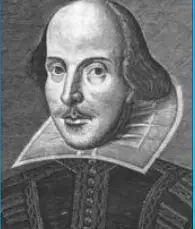
Which English author and playwright wrote numerous sonnets, plays, and essays?
WIlliam Shakespeare
Niccolo Machiavelli
Sir Thomas More
Michelangelo
Niccolo Machiavelli wrote about which of the following:
"It is better to be feared than loved"
"The end justify the means"
"A ruler must be a lion and a fox"
All of the above
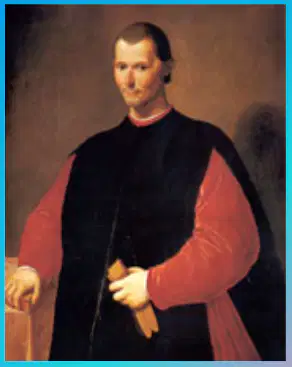
What was the name of the Niccolo Machiavelli's book that includes advice about how to maintain power?
The Prince
Utopia
Gutenberg Bible
Sistine Chapel
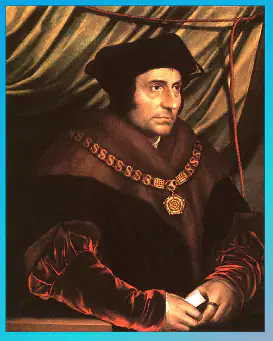
What book did Sir Thomas More write that portrayed a perfect society?
Utopia
Sistine Chapel
The Prince
Gutenberg Bible

Which Italian Renaissance writer is responsible for writing 14 line poems known as "sonnets"?
Francesco Petrarch
William Shakespeare
Michangelo
Leonardo da Vinci
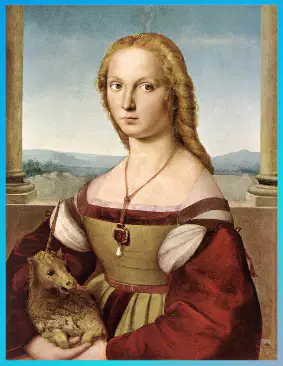
Which Italian Renaissance painter and sculptor painted the Vatican under the Pope and was a huge rival of Michelangelo?
Raphael
Leonardo da Vinci
William Shakespeare
Medici Family
Which Renaissance artist is responsible for painting the ceiling of the Sistine Chapel?
Michelangelo
Leonardo da Vinci
William Shakespeare
Medici Family

Which Renaissance artist was considered an architect and scientist?
Leonardo da Vinci
Michelangelo
William Shakespeare
Medici Family
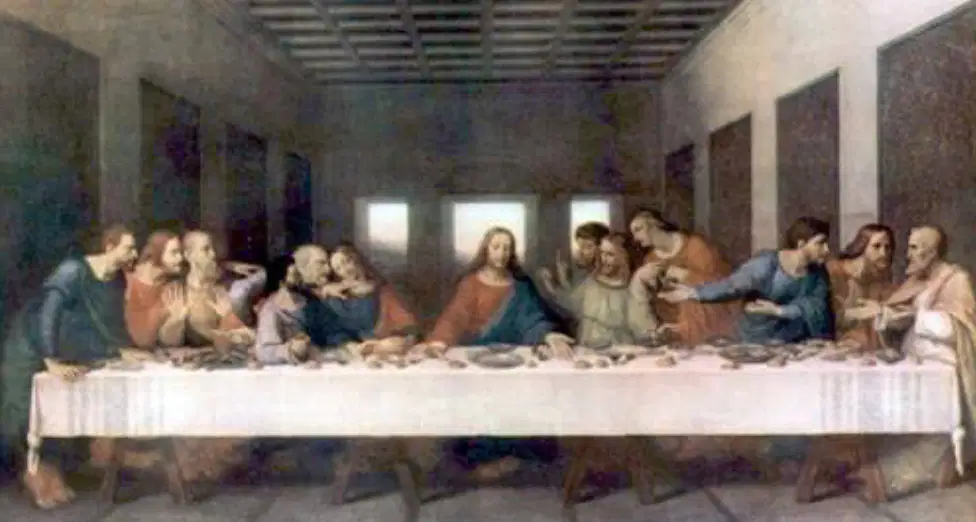
What is the name of the painting above?
The Last Supper
David
Mona Lisa
Medici Family
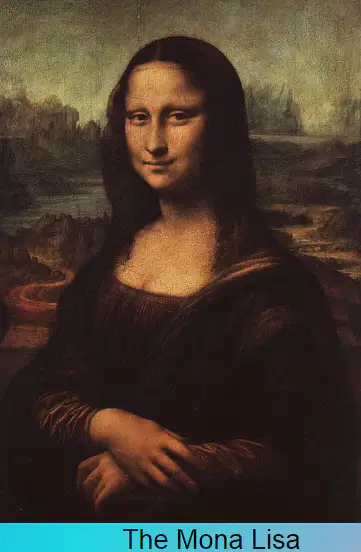
Which famous Renaissance artist is responsible for painting the Mona Lisa?
Leonardo da Vinci
Michelangelo
William Shakespeare
Rafael
What was the first widely printed book from the Printing Press?
The Bible
The Almanac
Dictionary
Compass

Who invented the Printing Press?
Johann Gutenberg
Michelangelo
Leonardo da Vinci
Julius Caesar
The Renaissance emphasized which of the following:
Reason
Revival of classical culture
Celebration of the human body and man's ability
All of the above

Why was Italy instrumental in the start of the Renaissance?
Their geographic location for trade on the Mediterranean Sea
Survived the Medieval Time Period
Home to many artists, philosophers, and artisans
All of the above
What was the cause of the Renaissance?
The Crusades
The Printing Press
Humanism
All of the above
Which direction did the Renaissance spread from Italy?
North
South
East
West
Which Italian family controlled the majority of the finances of the Renaissance artists?
Medici Family
Rockefellers
Trumps
Michelangelo

Which Italian city-state is considered the "Birthplace of the Renaissance"?
Florence
Venice
Rome
Sicily

What was the name of the literary movement that defined the Renaissance?
Humanism
Reformation
Revolution
Imperialism

The Medieval Times focused on what religion?
Catholic
Protestant
Baptist
Lutheran
The Renaissance challenged which time period in World History?
Medieval Times
Reformation
Scientific Revolution
Revolutionary Period
What is another name for the Middle Ages time period?
Medieval Times
Renaissance
Reformation
Revolutionary Period
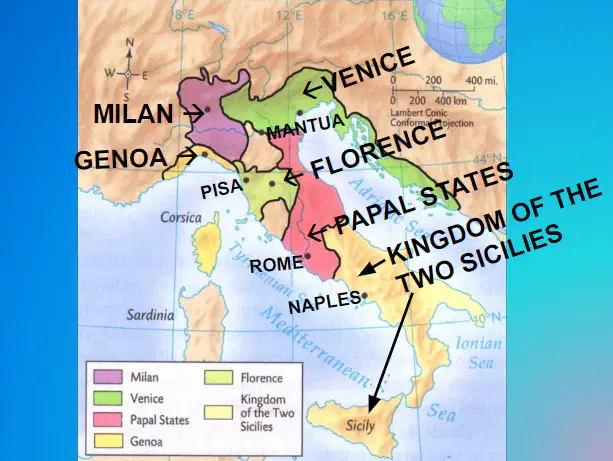
Which country shown in the map is the birthplace of the Renaissance?
Italy
Spain
England
Germany
What years was the Renaissance?
1350s - 1600
1600s - 1700
1800s - 2000
1000s - 1350
What is a "rebirth of interest in classical ideas and culture (ancient Greeks and Romans)"?
Renaissance
Reformation
Revolution
Recovery
Humanists studied _____________.
Poetry
Philosophy
History
All of the above
The Renaissance lasted from the 1300s until the ____________.
1350s
1500s
1600s
1700s
Many famous works of literature were written during the Renaissance.
True
False
Geoffrey Chaucer painted the Mona Lisa during the Renaissance?
True
False
Before the development of the printing press in Europe, books were inexpensive and easy to make.
True
False
During the Renaissance, people looked up to those who could do well in many areas.
True
False
The Renaissance began in Italy.
True
False
Before the development of the printing press in Europe, books were _______________.
easy to make
inexpensive
available to everyone
difficult to make
One of the most important writers of the Renaissance was________________.
Michelangelo
Shakespeare
da Vinci
Gutenberg
The new ideas of the Renaissance influenced_____________.
Politics
Art
Literature
All of the above
The Renaissance began in________________.
Italy
England
Germany
France

Who was responsible for the Protestant Reformation?
Martin Luther
John Calvin
Henry VIII
Louis IV
What was the result of the Counter-Reformation?
Eliminated abuses (indulgences, simony, etc.)
Clarified theology (teachings)
Reestablished the Pope's authority
All of the above

Society of Jesus (The Jesuits) were given the job to spread Catholic doctrine (laws) around the world.
True
False
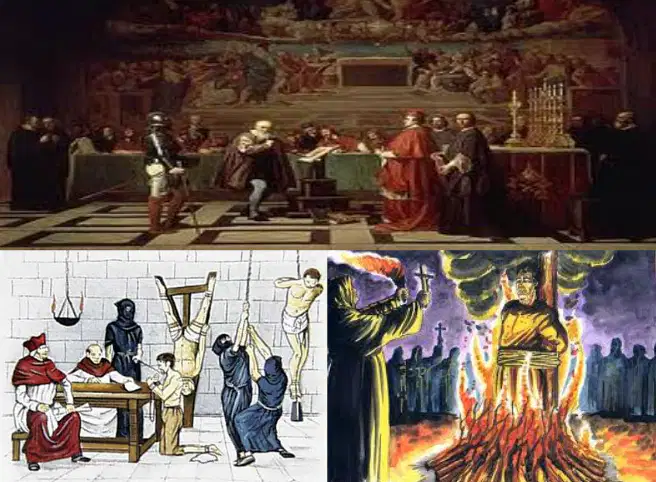
The Spanish Inquisition was infamous for the use of ___________.
Torture
Compassion
Fair treatment
Leniency
What was the name given to a series of Catholic Church Courts designed to judge and convict heretics (people who go against the teachings of the Roman Catholic Church)?
The Inquisition
Congress
Supreme Court
House of Commons
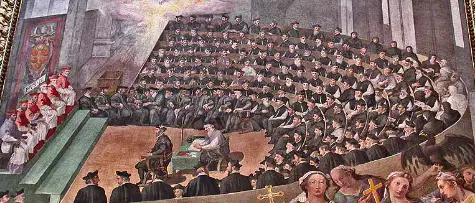
What was a series of meeting held over 20 years to address the growing Protestant threat and corruption within the Catholic Church called?
Council of Trent
Congress
Supreme Court
House of Commons
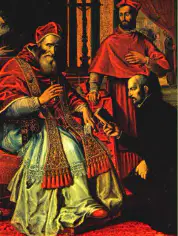
What was the name of the Roman Catholic Church's response to the Protestant Reformation?
Counter-Reformation
The Edict of Nantes
Emancipation Proclamation
Spanish Inquisition
The Catholics responded and fought back against the Protestant Reformation?
True
False

Based on the above map, the Reformation changed the boundaries and religions of the nations in Europe.
True
False
What was the overall impact of the Reformation?
Humanism was reinforced
Growth of Secularism
Growth of Individual
Growth of Religious Tolerance
All of the above

Which French ruler revoked The Edict of Nantes which created a mass exodus of French Protestants and increased the hostility of Protestant nations bordering France?
Louis XIV
Henry VII
Queen Elizabeth
Mary
The Edict of Nantes was a huge success and France enjoyed much peace and prosperity.
True
False
What was the significance of the Edict of Nantes?
Gave religious freedom to the Huguenots
Marked the end of the religious wars in France, restoring peace and internal unity in France
King Henry IV, raised Protestant converted to Catholicism to take the French throne
All of the above
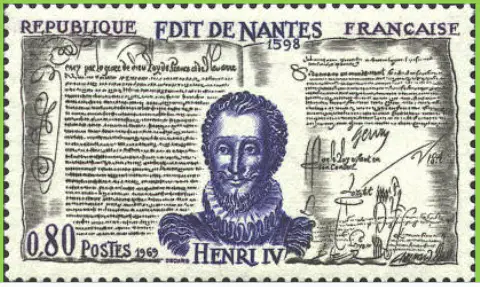
Who issued The Edict of Nantes in 1598 which granted Calvinist Protestants of France religious freedom and civil rights?
Henry IV
Henry VIII
Mary
Queen Elizabeth
What is another name for a French Protestant?
Huguenots
Catholics
Baptists
Lutherans
One of the major accomplishments of the Peace of Augsburg was it...........................
It gave indulgences to everyone
Granted Limited Religious Freedom
The Pope stayed in power over all of Germany
Forced the Catholic Church to share its wealth
What document made King Henry VIII the head of the Church of England?
Edict of Nantes
Protestant Reformation
Act of Supremacy
Which of Henry VIII's daughters turned the Church of England into the Anglican Church?
Elizabeth
Mary
Anne Boleyn
King Henry VIII had multiple children including two sons that ruled after him?
True
False
King Henry VIII started the Church of____________
England
Henry
British Empire
Huguenots
An indulgence is a what_________________?
Eating too much of your favorite food
Certificate that is bought to forgive someone's sin
Buying a position within the church
Anglicans and Puritans broke away from the Roman Catholic Church and settled in what country?
England
France
Germany
Switzerland
Huguenots broke away from the Roman Catholic Church and settled in what country?
France
England
Germany
Switzerland
John Calvin's followers, known as Calvinists, gathered in which country?
Switzerland
England
France
Germany
What was John Calvin's MAIN theological philosophy?
Faith alone
Forgiveness of sin
Predestination
Salvation of babies
John Calvin started a theocracy in Switzerland. A theocracy is government based on religions rules and guidelines.
True
False
To be excommunicated is to be_______________
Removed from your house
Removed from membership of the church
To have your fingers cut off
To not be allowed to communicate with anyone
Which of the following did Martin Luther believe_______________
One receives salvation by faith alone
The Bible is the ultimate authority on Christianity
All humans are of equal value before God
All of the above
It was his actions, posting the 95 Theses on the Wittenberg church door that served as the "SPARK" that started the_____________
Industrial Revolution
Protestant Reformation
Renaissance
Martin Luther was a monk who lived in Wittenberg, Germany
True
False

