
 Worksheets
UNTITLED
Total questions: 62
Worksheet time: 25mins
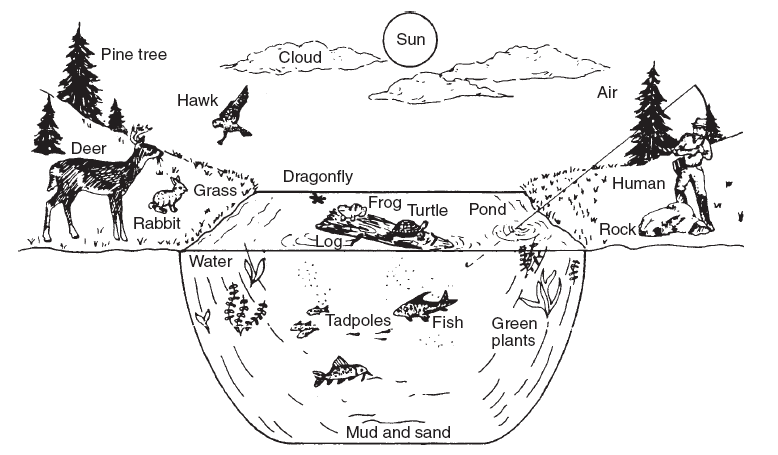
What is the primary source of energy for the ecosystem pictured above?
Grass and Green plants
Hawks and Deer
Tadpoles and Fish
Sun

How much energy is available to be passed on to the next level in a food web?
100%
10%
50%
75%


A network or web of feeding interactions, through which both energy and matter move is known as
a biomass pyramid
a food chain
a food web
a numbers pyramid
What happens to the solar energy absorbed by plants during photosynthesis?
It is transformed into chemical energy.
It is recycled by plants and returned to the atmosphere.
It is converted into oxygen and glucose.
Which type of energy is formed during the process of photosynthesis?
Chemical
Thermal
Electric
During photosynthesis, energy is stored in the chemical bonds of —
Glucose
Water
Oxygen

Which organisms in the desert food web shown above represent the producers?
Cacti and sagebrush
Rats and snakes
Hawks and coyotes

Analyze the energy pyramid above. Which arrow best represents the flow of energy through living systems?


Analyze the positions of the eagle and the snake in the food web pictured above. Which of the following statements is correct?
The eagle eats the same types of organisms as the snake does.
The eagle eats more types of organisms in the food web than the snake does.
The snake is eaten by the same types of organisms as the eagle is.

What do the arrows represent in the diagram of a food chain?
The order of size of organisms in the ecosystem
The importance of organisms in the chain
The direction of energy flow through organisms

What is the correct arrangement of the above organisms on an energy pyramid?


Animals are consumers, meaning they need to eat food for energy because they cannot make their own. Which energy transformation is taking place when an animal eats food so it can keep warm?
Mechanical to radiant
Chemical to thermal
Radiant to chemical
When a person eats too much food, they store the extra energy as fat. Which type of energy transformation is occurring in the body as energy from food is turned into fat?
A
Chemical to chemical
Mechanical to thermal
Which of the following energy transformations occur when humans use energy from food to exercise?
Thermal electrical mechanical
Chemical mechanical thermal
Radiant mechanical thermal
What energy transformation takes place when a rabbit digests a carrot?
Chemical energy is transformed into thermal energy.
Radiant energy is transformed into chemical energy.
Thermal energy is transformed into mechanical energy.
A student prepares for a five-mile run so she eats a nutritious meal three hours before the run. Which correctly illustrates the transformation of energy from eating the meal to the five-mile run?
Chemical Mechanical Thermal
Chemical Thermal
Thermal Mechanical
A mountain biker is pedaling along a trail. What energy transformation is occurring during the bike ride?
Chemical mechanical
Radiant thermal
Electrical chemical
A lizard eats a cricket which eats grass.
What trophic level is the lizard?
Primary Producer
Primary Consumer
Secondary Consumer
Tertiary Consumer
Earthworms are considered
a primary consumer
an apex predator
a primary producer
A decomposer

What trophic level is positioned at the bottom of the pyramid?
decomposers
primary consumers
primary producer
Sunlight
Which can be considered primary producers?
Stone
Algae
Trees
Grass
Mark all the organisms that are considered producers


Giraffes have long necks that help them reach leaves high up in trees. They get all the energy they need from plants such as this. What type of consumer are giraffes.
carnivore
omnivore
herbivore
decomposer
The proper order (bottom to top) of food web relationships is
carnivore-producer-herbivore
producer-herbivore-carnivore
herbivore-producer-carnivore
herbivore-carnivore-producer
Which of the following are the main producers of marine ecosystems?
phytoplankton
plants
bacteria
zooplankton
Why are mushrooms important to the food chain?
They recycle nutrients into the ecosystem.
They produce food energy for other living things.
They recycle oxygen into the atmosphere.
They consume excess herbivores in the ecosystem.
In the food chain below, which is the producer?
grass --> mouse --> snake --> hawk
grass
mouse
snake
hawk

Which is the primary consumer in this food chain?
rabbit
grass
snake
hawk
Which of the following describes an interconnection of food chains in an ecosystem?
Food chain
Food web
Energy pyramid
Producer web

What is this an example of?
Food chain
Food web
Energy pyramid
Energy web

If a disease were to affect the snakes in the food chain, what will be the initial (beginning) effect on the populations of hawks and rabbits?
The populations of hawks and rabbits will decrease.
The populations of hawks and rabbits will increase.
The population of hawks will increase. The population of rabbits will decrease.
The population of hawks will decrease. The population of rabbits will increase.
As you work your way up the energy pyramid, what happens to the energy?
It increases
It decreases
It stays the same
Nothing

If you constructed a food chain, what role does the heron (bird) play?
Producer
Primary Consumer
Secondary Consumer
Tertiary Consumer
Quaternary Consumer (Top Predator)


In the food web shown, who is the secondary consumer?
grass
mouse
rabbit
fox

Which organism is the producer of this ecosystem?
phytoplankton
krill
fish
leopard seal

Which organism is the apex predator?
phytoplankton
krill
fish
leopard seal


In an ecological pyramid, which type of organism always has the least amount of energy available?
Producers
Herbivores
Carnivores
Apex Predator

If there are 100 Kcal of energy available in the producers, how much energy would be available in the primary consumers?
10 Kcal
1 Kcal
100 Kcal
1000 Kcal

Which organism is the carnivore?


Which organism is the omnivore?


Based on the image, which organism recieves the least amount of energy from the producer?
Owl
Grasshopper
Lilypad
Mouse


How are primary consumers different from secondary consumers?
Primary consumers eat only plants; secondary consumers eat other consumers.
Primary consumers eat other consumers; secondary consumers eat only plants.
Primary consumers eat plants and other consumers; secondary consumers eat plants and decompose matter.
Primary consumers eat plants and decompose matter; secondary consumers eat plants and other consumers.

