
 Worksheets
Atmosphere pt 2
Total questions: 45
Worksheet time: 30mins

Land heats up _______ than water
faster
slower

If greenhouse gases increase and build up in our atmosphere, what happens?
They trap more heat and global temperatures rise.
They trap more heat and global temperatures decrease.
They trap less heat and global temperatures rise.
They trap less heat and global temperatures decrease.

The energy coming in to from the sun minus the energy being radiated out is known as
the greenhouse effect
global warming
Earth's energy budget
the electromagnetic spectrum

Heat is radiated back to space from earth as
visible light
ultraviolet radiation
gamma radiation
infrared radiation


The rotation of the Earth causes winds to bend due to the...
coriolis effect
doldrums
trade winds
prevailing westerlies

Winds that blow from 300 latitude to the equator are called...
prevailing westerlies
polar easterlies
trade winds
horse latitudes

Cooler air sinks at 300 latitude causing a windless area known as...
doldrums
horse latitudes
polar easterlies
prevailing westerlies
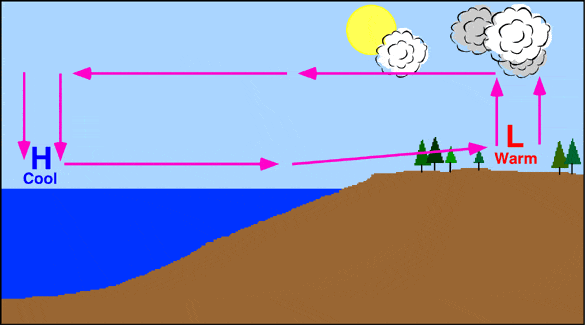

Which of the following are greenhouse gases?
Carbon dioxide
Methane
Water vapor
All answers are correct
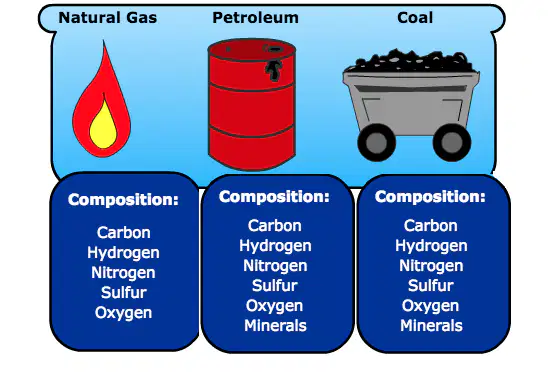
What is the main cause of air pollution?
plowing fields and releasing dust
using solar power
burning fossil fuels
using water power


Identify the wind belt between 30o North and 60o North:
NE Trade winds
SE Trade winds
Westerlies
Polar Easterlies

The ENSO is a fluctuation in tropical ocean temperatures off the Pacific coast of South America. The warm phase is called ______.
La Niña.
El Caballero
El Niño
La Dama
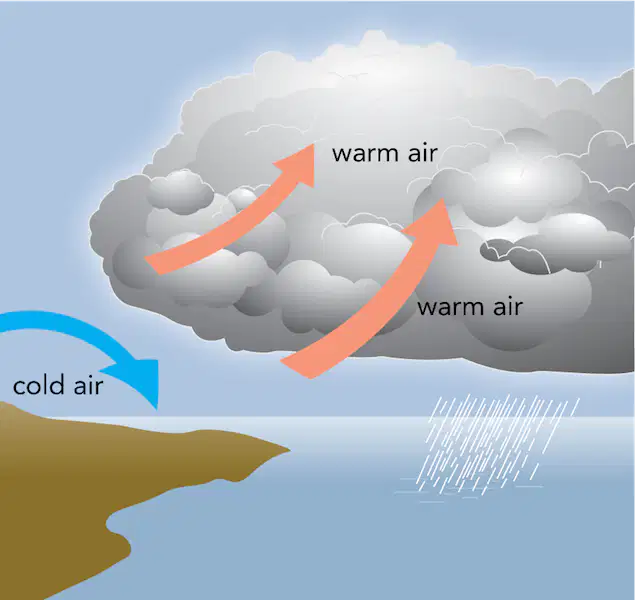
Which air is less dense? (Which air will rise)
Warm Air
Cool Air

Which best describes why winds at the beach change direction between day and night?
because the temperatures over land and water change
because warm air over land sinks and stays in place over land
because cool air rises and is replaced by warm air from the ocean
because cool air sinks and stays in place over land
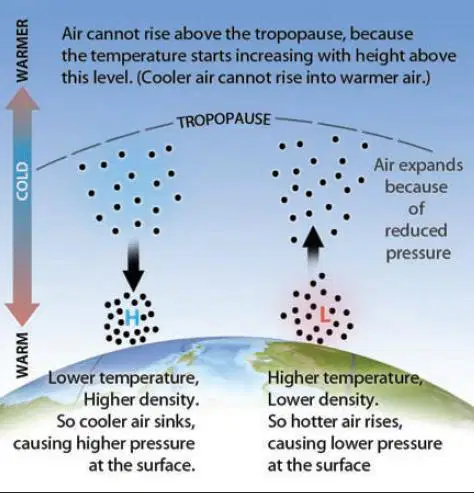
Cold air sinks.
True
False
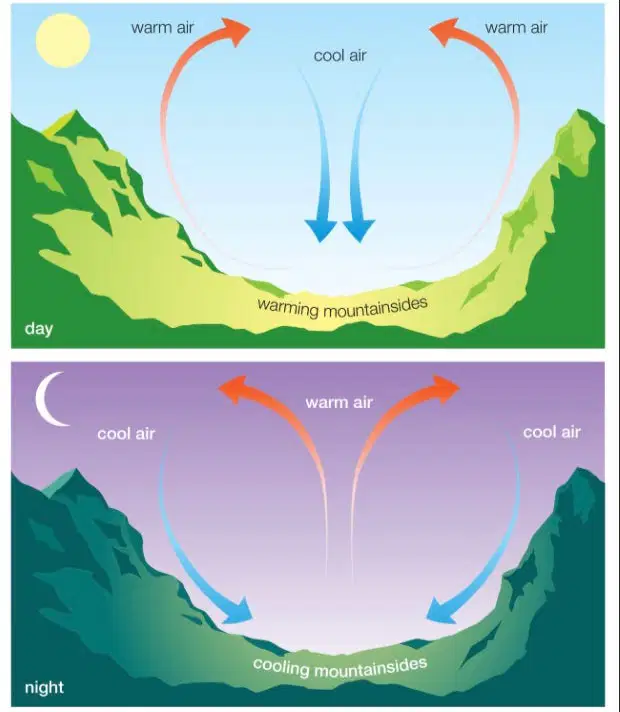
These two types of local winds are found in areas with differences in elevation:
Mountain and Valley Breezes
East and West Breezes
Sea and Land Breezes
Trade and Polar Breezes


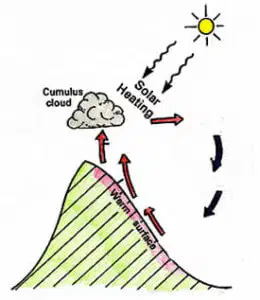
Local winds blow over short distances.
true
false


A rainshadow occurs
on the leeward size of a mountain.
where moist air sinks to the ground
in a low-pressure zone.
all of the above
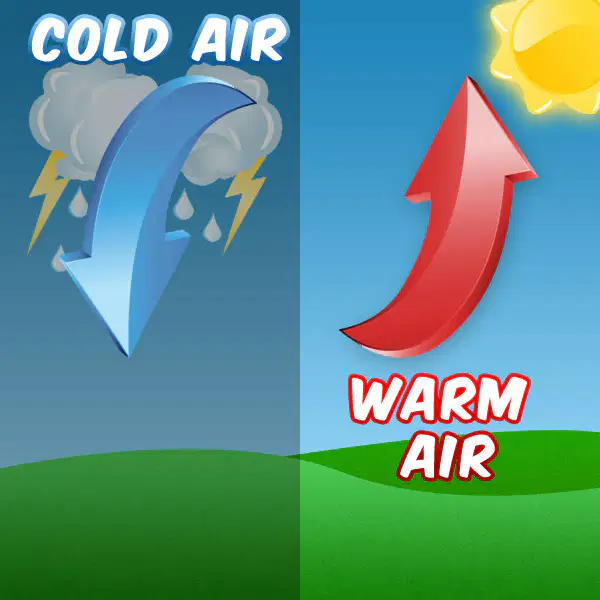
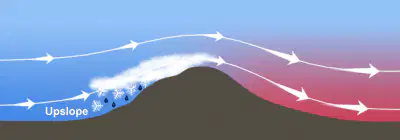
Warm wind descending down the east side of the Rocky Mountains.
Santa Ana
Doldrums
Chinook
Katabatic
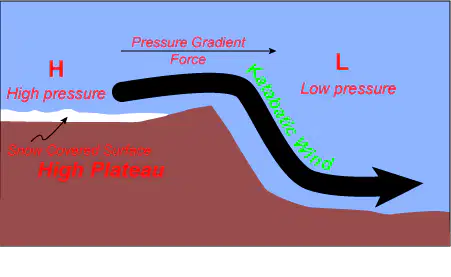
Fast downslope wind found in high elevations like Mt Everest.
Haboob
Foehn
Santa Ana
Katabatic
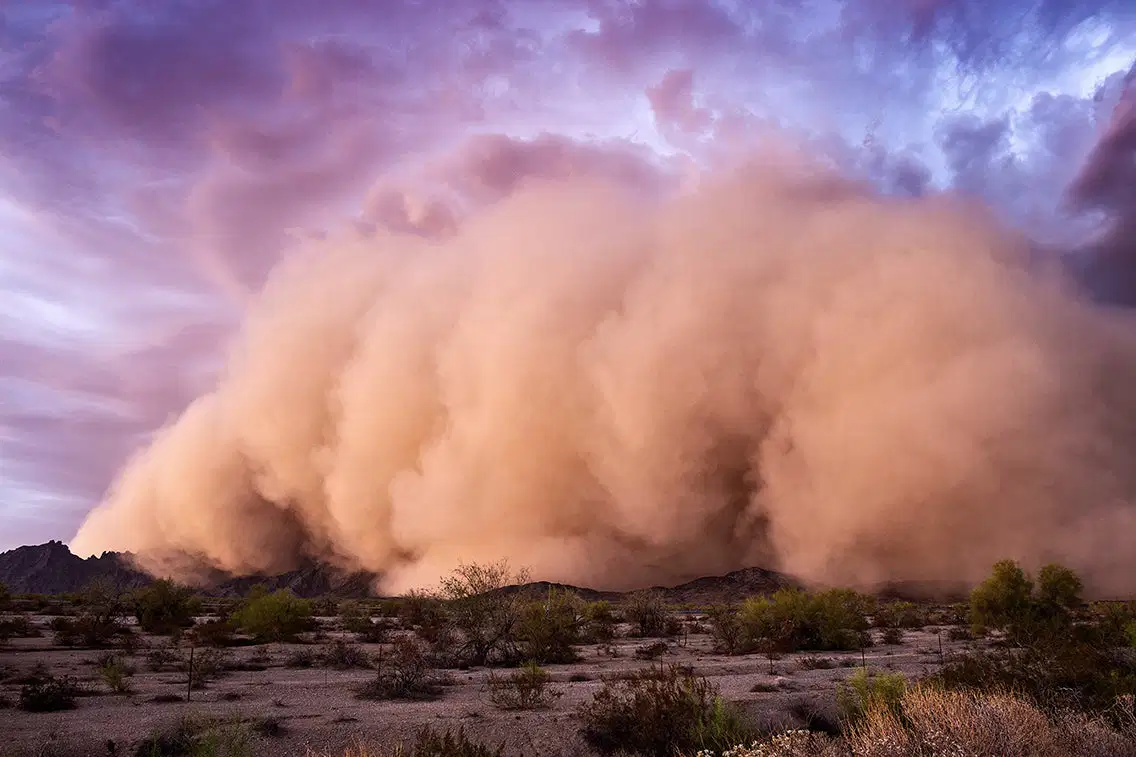
Sandstorm associated with thunderstorms in desert areas.
Katabatic
Santa Ana
Haboob
Doldrums
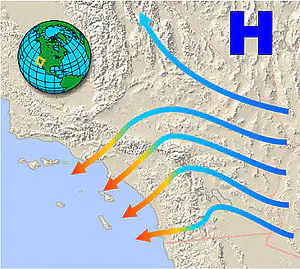
Winds common to Southern California and associated with wild fires.
Foehn
Katabatic
Land Breeze
Santa Ana
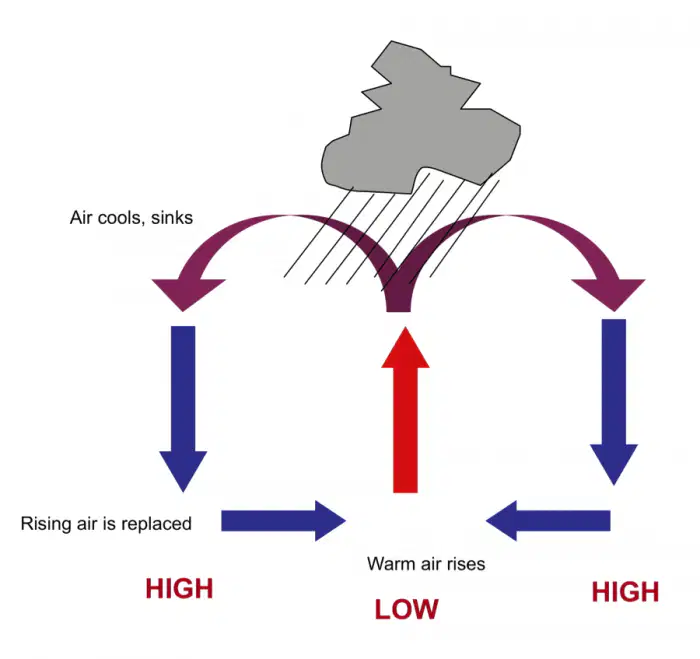
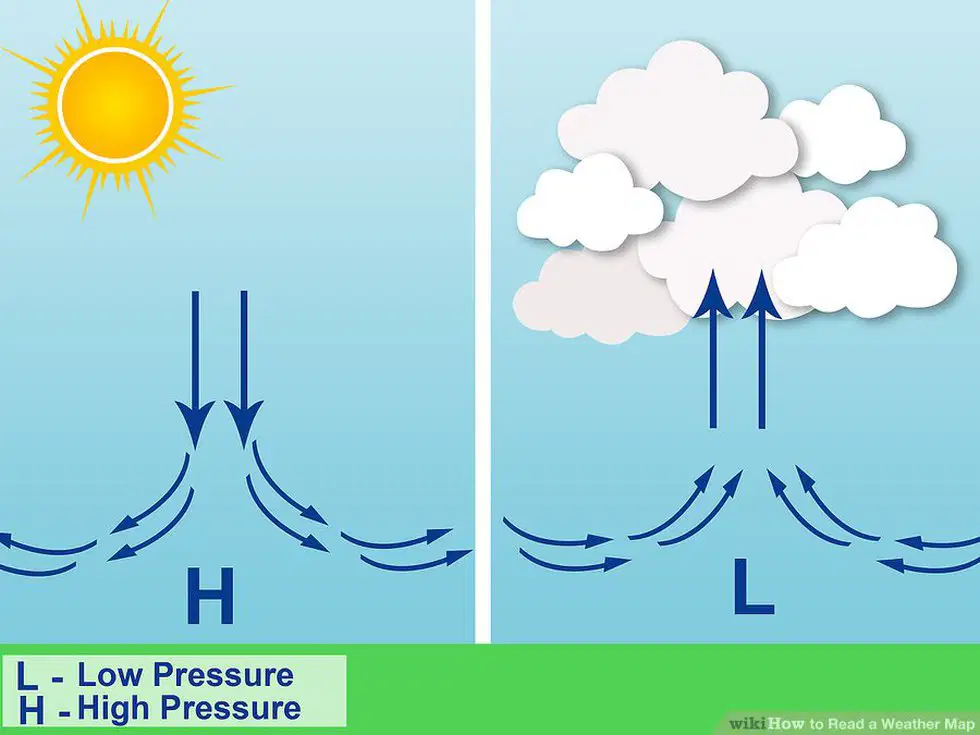
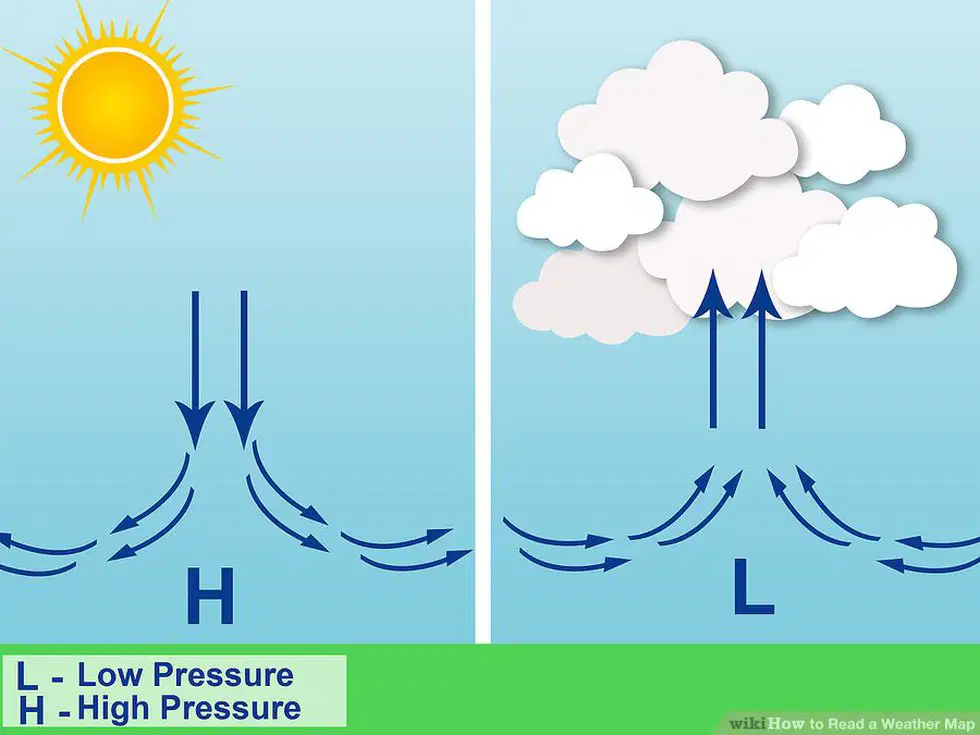
Warm rising air causes___________ pressure, resulting in ___________.
high, rain
high, clear skies
low, rain
low, clear skies
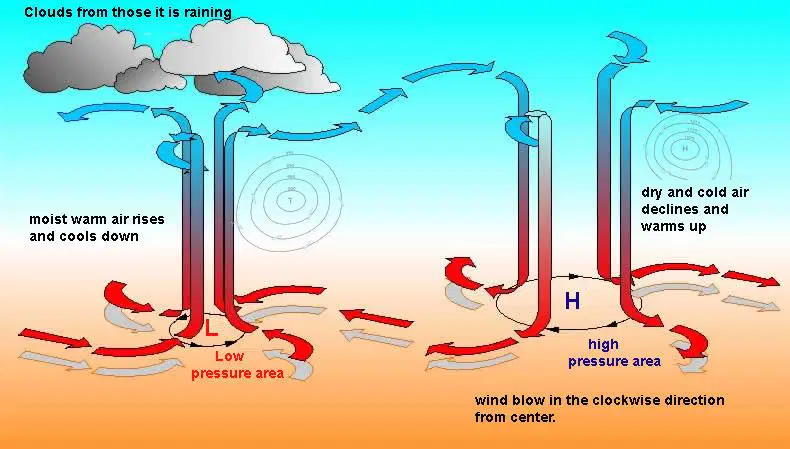
Cool sinking air causes___________ pressure, resulting in ___________.
high, rain
high, clear skies
low, rain
low, clear skies
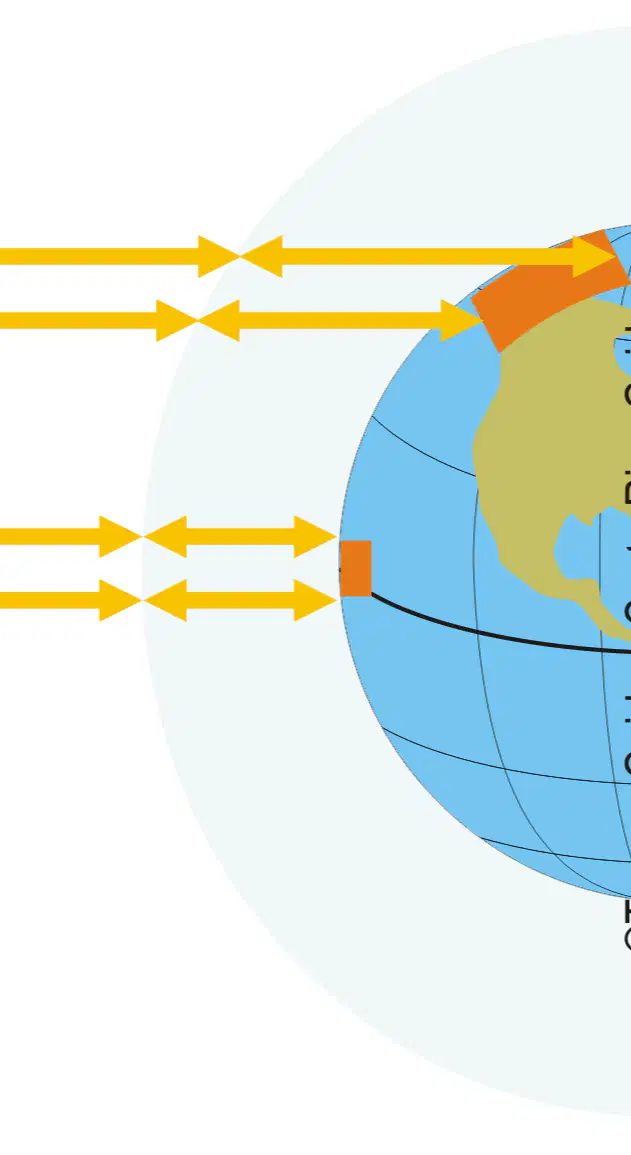
Where does the initial source of energy come from that creates winds?
the moon
the sun
the rotation of the Earth

What is a fast-moving ribbon of wind that moves from the west to the east in the and shifts up (carrying warm fronts up from the equator) and shifts down (carrying cold fronts down from the poles)?
California Current
Gulf Stream
Jet Stream
Atlantic Ocean

sea breezes

What is the initial source for global winds and convection in the atmosphere?
heat from the Earth's core
the rotation of the Earth
Moon's gravity
unequal heating of the Earth by the sun
Match the following winds to their latitude ranges:
trade winds
30° to 0°
westerlies
30° to 60°
polar easterlies
90° to 60°

Which is the best explanation for how air masses move across the United States?
The trade winds move air masses from west to east across the United States.
The polar easteriles move air masses from west to east across the United States.
The prevailing westerlies move air masses from west to east across the United States but may be deflected by the jet stream.
The warm air of the Gulf Stream causes air masses to move from the Atlantic Ocean to the Pacific Ocean.
What two factors cause wind?
The sun's uneven heating of the earth & the earth's rotation
Cool air moving from the poles & the earth's rotation
Warm air moving from the equator & the earth's rotation
Elephants passing gas at the equator & the earth's rotation
Air always moves from areas of (a) to (b) pressure.

Match the Global Winds to their correct letter:
Label A
Trade Wind
Label B
Westerlies
Label C
Polar Easterlies

What is the effect of global circulation on temperatures around the Earth?
global atmospheric circulation does not affect temperature
global atmospheric circulation makes hot places hotter and cold places colder
global circulation moderates temperatures, warming the poles and cooling the equator
temperatures change in a random fashion

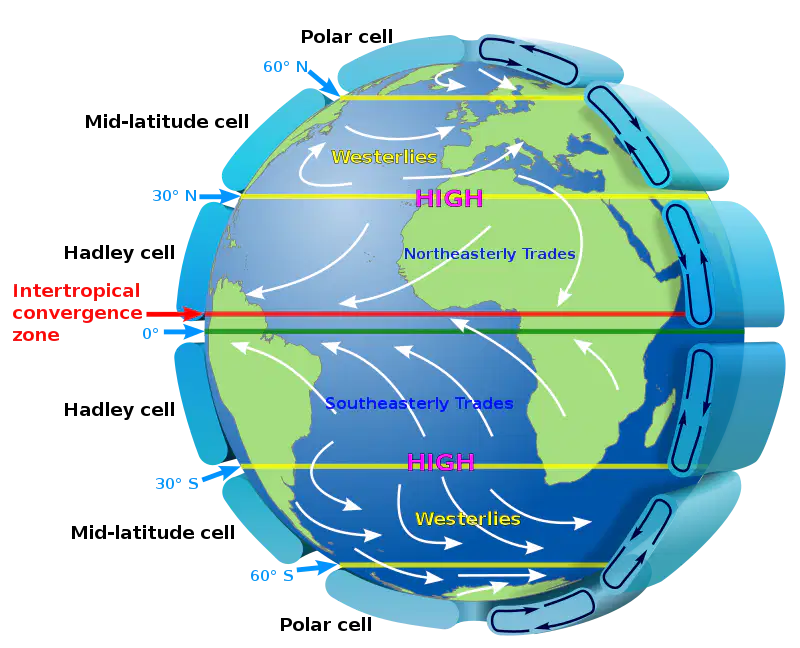
Which answer choice correctly describes convection cells?
There are 2 major convection cells, one in the northern hemisphere and one in the southern hemisphere.
There are 4 major convection cells due to the Coriolis effect.
There are 5 major convection cells due to the Coriolis effect.
There are 6 major convection cells, three above the equator, and three below the equator.

