wayground logo

Free Printable Worksheets

Font size

S
M
L
XL
Worksheets

American History Unit 1

Total questions: 86

Worksheet time: 1hrs 16mins

Name
Class
Date
1.

The Battle of Little Bighorn resulted in which of the following?

a)

the destruction of a large force of American cavalry.

b)

increased support from the American public for the wars against the Native Americans.

c)

George Armstrong Custer’s reputation to suffer.

d)

All of these are correct

2.

Americans who believed in Manifest Destiny generally believed that

a)

Native Americans shared a right to American land with the citizens of the United States.

b)

the lands of the American West should not be divided up and owned by American citizens.

c)

westward expansion was inspired by God.

d)

slavery should continue to be legal in the United States.

3.
The Bill of Rights was added to the US Constitution primarily to-
a)
provide the President with power in times of emergency
b)
establish fair and impartial elections
c)
protect individual liberties
d)
guarantee voting privileges to minorities
4.
Which guarantees freedom of the press, freedom of speech, and freedom of religion to individuals in the United States?
a)
the Treaty of Paris of 1783
b)
the Articles of Confederation
c)
the First Amendment to the US Constitution
d)
the Fifth Amendment to the US Constitution
5.
The US Constitution replaced which plan of government for the United States?
a)
Articles of Confederation
b)
Declaration of Independence
c)
Federalist Papers
d)
Northwest Ordinance
6.
The phrase "No Taxation without Representation" was shouted by colonist who felt what?
a)
They needed a tax collector
b)
That they had no voice in Parliment
c)
That they wanted their tax check
d)
That Parliament had heard them
7.
We hold these truths to be self-evident, that all men are created equal, that they are endowed by their Creator with certain _______, that among these are Life, Liberty and the pursuit of Happiness. — The Declaration of Independence, July 4, 1776
Which of the following best completes this excerpt?
a)
unalienable rights
b)
equalities of opportunity
c)
duties and responsibilities
d)
repeated injuries and abuses
8.
What was the purpose of the Declaration?
a)
to declare independence from France.
b)
to declare independence from Germany.
c)
to declare independence from Cuba.
d)
to declare independence from England
9.
Who was the main writer of the Declaration of Independence?
a)
George Washington
b)
Thomas Jefferson
c)
John Adams
d)
Benjamin Franklin
10.
What are the three inalienable rights that all people have?
a)
Food, Shelter, and Clothing
b)
Life, Liberty and Death
c)
Life, Liberty and the Pursuit of Happiness
11.

In 1607, the first permanent English settlement was founded as a business venture and was called what?

a)

New England

b)

Jamestown

c)

Plymouth

d)

Charlestown

12.

A major outcome from the Treaty of Paris settling the French & Indian War were what?

a)

English colonists had to move to Canada

b)

French traders had to move into Mississippi

c)

England gave up all land west of the Mississippi

d)

France had to give up its land claims in North America

13.

The Sugar Act, then the Stamp Act, followed by the Quartering Act were all attempts by Parliament to do what?

a)

Get colonists jobs

b)

Raise money using taxes

c)

Regulate trade in the colonies

d)

All of the above

14.

British troops marched out of Boston to search for weapons being stored by revolutionaries in nearby towns, the "shots heard 'round the world" would be fired where?

a)

Philadelphia and Baltimore

b)

New York and Saratoga

c)

Montreal and Ft. Stanwix

d)

Lexington and Concord

15.

The Continental Congress had no trouble deciding which man should lead the Continental Army during the American Revolution and his name was what?

a)

Benedict Arnold

b)

George Washington

c)

William Gates

d)

Ethan Allen

16.

What was the most important outcome of the American Revolution?

a)

Fishing rights off the Grand Banks

b)

Control of the fur trade in North America

c)

All war debts would be paid by the Tories

d)

United States independence from Great Britain

17.

The most serious weaknesses of the Articles of Confederation were what?

a)

No power to enforce laws, collect taxes, or control trade

b)

No power to create jobs, pay troops, or regulate crops

c)

No power to control fur trade, select a president, or control currency

d)

No power to select governors, control trade, or declare war

18.

Within the Constitution, what is the Bill of Rights?

a)

A list of rule to follow to make amendments

b)

An explanation of the Electoral College

c)

Seven articles explaining the structure of the government

d)

First ten amendments

19.
What was the name of the fight that broke out on the streets among the Redcoats and the colonists that led to 5 colonists being killed?
a)
The Boston Massacre
b)
The Boston Tea Party
c)
American Revolution
d)
The French and Indian War
20.
The refusal to buy items is...
a)
boycott
b)
rebellion
c)
violated
d)
repealed
21.
open defiance of authority is....
a)
boycott
b)
encounter
c)
rebellion
d)
violated
22.
to prevent or forbid is...
a)
boycott
b)
prohibited
c)
occupy
d)
repealed
23.
information designed to influence opinion
a)
prohibit
b)
propaganda
c)
revenue
d)
resolution
24.
to cancel an act or law
a)
repealed
b)
encounter
c)
prohibited
d)
violated
25.
incoming money from taxes or sources
a)
effigies
b)
boycott
c)
propaganda
d)
revenue
26.
to move into or take control of by force
a)
occupy
b)
rebellion
c)
repealed
d)
boycott
27.
Who was the first commander of the Continental Army?
a)
George Washington
b)
Benjamin Franklin
c)
John Adams
d)
Thomas Jefferson
28.
Boomtowns were
a)
towns that developed quickly around mines
b)
cities that had the first skyscrapers
c)
the name for towns and cities along the Pacific Ocean
d)
Towns in Utah and Nevada that were based on gambling
29.
What breed of livestock did most farmers make a living raising?
a)
sheep
b)
goats
c)
cattle
d)
chickens
30.
How did railroads help ranchers make a profit?
a)
they could move cattle faster and easier
b)
they could build railroads during the slow season
c)
they could bring in workers in from other towns
d)
none of the above
31.
Native Americans were forced off their land and relocated onto: 
a)
homesteads
b)
plots
c)
reservations
d)
residencies
32.
What was the result of the Battle of Wounded Knee
a)
Native Americans had a large victory
b)
American settlers reached a compromise with Native Americans over land disputes
c)
Native Americans established a tribal counsel to represent their demands
d)
The Native American practice of the ghost dance ends. 
33.
As the buffalo population on the plains declined, what happened to the Native American population?
a)
The population also declined
b)
The population increased
c)
The population remained the same
d)
The two factors are not related
34.
What was the effect of the fencing of the open range?
a)
more gold miners moving west
b)
increased sheep herding
c)
lower demand for beef
d)
the end of long cattle drives
35.
Which of the following was a nickname for the Great Plains?
a)
Americas backyard
b)
Bread Basket
c)
Railroad's Grand Central
d)
homeland
36.
The American government encouraged Native Americans to maintain their way of life.
a)
True
b)
False
37.

To add territory to a country

a)

Annex

b)

Acquire

c)

Manifest Destiny

d)

Territories

38.

Several years after gaining its independence from Mexico, this area was admitted to the US.

a)

Florida

b)

Oregon Country

c)

Mexican Cession

d)

Texas

39.

Leaders of the Armies

Which event best completes this diagram?

a)

Civil War

b)

Manifest Destiny

c)

American Revolution

d)

Westward Expansion

40.

The Major Events of the War

What major battle of the war was fought in Pennsylvania, and was also the most northern battle?

a)

Manassas

b)

Fort Sumter

c)

Vicksburg

d)

Gettysburg

41.

The African American Regiments in the War

● Served in segregated units

● Fought for the right to enlist

● Received the Medal of Honor

This list best describes the contributions and achievements of ______________ during the Civil War.

a)

African Americans

b)

immigrants

c)

the Irish Brigade

d)

women

42.

Emancipation Proclamation

What was the Emancipation Proclamation?

a)

a celebration of victory

b)

a legal document

c)

a treaty

d)

an amendment

43.

The Emanicipation Proclamation

Who wrote and issued the Emancipation Proclamation?

a)

President Jefferson Davis

b)

General Ulysses S. Grant

c)

General Robert E. Lee

d)

President Abraham Lincoln

44.

What was the primary cause of the American Civil War?

a)

Cotton

b)

Immigration

c)

Slavery

d)

Native Americans

45.

What is the name of the compromise that allowed Maine to join the United States as a "free" state?

a)

3/5ths Compromise

b)

Missouri Compromise

c)

The Compromise of 1850

d)

The Kansas Nebraska Act

46.

What statement best describes the "border states"?

a)

Border states are the states that stayed loyal to the Union even though they allowed slavery to exist.

b)

Border states are the states that stayed loyal to the Confederacy even though they did not allow slavery to exist.

c)

Border states are the states that connect with Mexico.

d)

Border states are the states that connect with Canada.

47.

Who was the president of the United States during the Civil War?

a)

Ulysses S. Grant

b)

Robert E. Lee

c)

Abraham Lincoln

d)

Jefferson Davis

48.

What year did the American Civil War begin?

a)

1860

b)

1861

c)

1863

d)

1865

49.

The Emancipation Proclamation

a)

made slavery legal

b)

began slavery

c)

ended slavery in the Confederate states

d)

ended slavery only in the North

50.

Who won the Civil War?

a)

The Union

b)

The Confederacy

c)

Mexico

d)

Europe

51.
What is the name for people who wanted to put an end to slavery?
a)
Underground Railroaders 
b)
Suffragists
c)
Bushwackers
d)
Abolitionists
52.
Which amendment officially ended slavery in the United States?
a)
12th
b)
13th
c)
14th 
d)
15th
53.
The name given to the southern army.
a)
Confederates
b)
Union
c)
Americans
d)
Military
54.
This is where the Civil War Ended
a)
Yorktown
b)
Richmond
c)
Gettysburg
d)
Appomattox Courthouse
55.
What was the name of the British king during the American Revolution?
a)
Charles III
b)
George III
c)
William III
d)
James III
56.
This member of the Continental Congress helped gain French support for American independence.
a)
Thomas Jefferson
b)
Benjamin Franklin
c)
Patrick Henry
d)
John Adams
57.
Of the following events, which happened first? 
a)
Saratoga
b)
Yorktown
c)
Declaration of Independence
d)
Treaty of Paris of 1783
58.
The U.S. was founded on July 4, 1776, by the approval of this document.
a)
the Treaty of Paris
b)
the Constitution
c)
the Declaration of Independence
d)
the Virginia Charter
59.

Which group wanted independence from England?

a)

Loyalist

b)

Patriot

60.

Which group wanted independence from England?

a)

Loyalist

b)

Patriot

61.

The idea that the power to rule comes from the people is known as

a)

right to rebel

b)

natural rights

c)

popular sovereignty

62.

Who wrote the book Common Sense?

a)

Thomas Hobbes

b)

Ben Franklin

c)

Thomas Paine

d)

Thomas Jefferson

63.
Guarantees the right of citizens to bear arms (own guns)
a)
2nd Amendment
b)
4th Amendment
c)
6th Amendment
d)
8th Amendment
64.
What do the stripes on the flag represent?
a)
13 original colonies
b)
15 original colonies
c)
13 signers of the constitution
d)
15 signers of the constitution
65.
1.  What kind of government does the United States have?
a)
Republic
b)
Democracy
c)
Socialism
d)
Communist
66.
1.  How many senators are in Congress?
a)
50
b)
100
c)
435
d)
200
67.
1.  What do the stars on the flag represent?
a)
Number of states
b)
Number of presidents
c)
Number that looked nice
d)
original colonies
68.
What is the date of Independence Day?
a)
July 4
b)
May 25
c)
October 31
d)
December 25
69.
Who is the commander in chief of the U.S. military?
a)
president
b)
vice president
c)
supreme court chief
d)
army general
70.
1.  What do we call a change to the Constitution?
a)
amendment
b)
bill
c)
law
d)
alteration
71.

a person who is a legal member of the nation and pledges his or her loyalty to that country

a)

immigrant

b)

alien

c)

citizen

d)

resident

72.

In 1857, the Supreme Court ruled in the _______ case that African-Americans were never intended to be citizens.

a)

Plessy vs. Ferguson

b)

Brown vs. Board of Education

c)

Dred Scott vs. Sandford

d)

African-Americans vs. U.S. Government

73.

Which Amendment explains citizens who are born and naturalized citizens?

a)

no Amendment explains citizenship

b)

13th Amendment

c)

14th Amendment

d)

15th Amendment

74.
Which one of the following slave states did not remain in the Union?
a)
Kentucky
b)
Missouri
c)
Virginia
d)
Maryland
75.

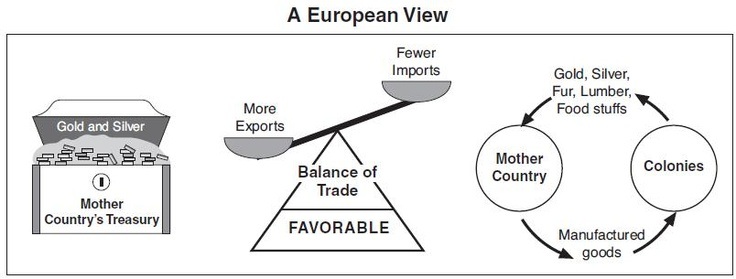
What is mercantilism?

a)

A system where a mother countries gains money and power from natural resources that come from its colonies.

b)

where colonies trade gold and silver with each other.

c)

Wars that start over money.

d)

Plantation colonies trading slaves for money.

76.
Who do historians believe was the first European to reach North America?
a)
Christopher Columbus
b)
Leif Eriksson
c)
Robert LaSalle
d)
Ferdinand Magellan
77.

What did the Colonists do after the Stamp Act?

a)

Boycott British goods

b)

Made their own goods

c)

Decided they didn't need goods

d)

Stopped paying all of their taxes

78.

What was it called when the Cherokee were forced to leave their homeland by soldiers, and at least 4,000 died due to harsh weather?

a)

Jackson's Journey

b)

March to the Sea

c)

Trail of Tears

79.
The United States purchased the Louisiana Territory from what country?
a)
Great Britain
b)
France
c)
Russia
d)
Spain
80.
In the Missouri Compromise, what state was allowed to enter as a slave state?
a)
Missouri
b)
Maine
c)
Kentucky
d)
Ohio
81.
The Treaty of Guadalupe-Hidalgo made the _______________ river the boundary between 
a)
Nueces River
b)
Sabine River
c)
Colorado River
d)
Rio Grande River
82.

Which of the following was NOT a cause of the Mexican American War?

a)

A border dispute between Mexico and the USA

b)

The Annexation of Texas

c)

James K. Polk putting 3000 US troops on the disputed border

d)

The rivalry between USA and Canada

83.

Which of the following was NOT gained by the United States after the Mexican American War?

a)

California

b)

New Mexico

c)

Nevada

d)

New York

84.

Which of the following best illustrates the border dispute between the USA and Mexico?

a)
b)
c)
d)
85.

Which image best illustrates what the USA gained after the Mexican American War

a)
b)
c)
d)
86.

Which of the following best describes Manifest Destiny?

a)

That the USA should have all the land stretching from "sea to shining sea"

b)

Giving healthcare to everyone

c)

IT doesnt means anything

d)

That the USA should give land back to the Native Americans