
 Worksheets
Unit 2: The Enlightenment & Revolution
Total questions: 90
Worksheet time: 3620secs
Why does the Enlightenment matter now?
It led to the Scientific Revolution
It changed Europeans' view of government and society
It resulted in the Age of Reason
It brought great change to Western civilization
According to Thomas Hobbes, why did people need a strong ruler?
To protect their natural rights
To maintain law and order
To ensure equality among citizens
To promote self-government
What were John Locke's natural rights?
Life, liberty, and property
Equality, justice, and freedom
Order, stability, and obedience
Wealth, power, and privilege
Which philosopher believed in the power of reason?
Voltaire
Montesquieu
Rousseau
Mary Wollstonecraft
What were the core beliefs of the philosophes?
Faith, tradition, and superstition
Reason, nature, happiness, progress, and liberty
Authority, obedience, and hierarchy
Ignorance, fear, and oppression
Which writer used satire to criticize the clergy, aristocracy, and government?
Isaac Newton
François Marie Arouet (Voltaire)
Baron de Montesquieu
Jean Jacques Rousseau
What concept did Montesquieu propose to prevent any individual or group from gaining total control of the government?
Separation of powers
Divine right of kings
Absolute monarchy
Dictatorship
Which philosopher's ideas about separation of powers and checks and balances influenced the United States Constitution?
Isaac Newton
François Marie Arouet (Voltaire)
Baron de Montesquieu
Jean Jacques Rousseau
Which philosopher was passionately committed to individual freedom?
Isaac Newton
François Marie Arouet (Voltaire)
Baron de Montesquieu
Jean Jacques Rousseau
According to Rousseau, why should citizens be the authors of society's laws?
Because citizens have the power to enforce the laws
Because citizens have the knowledge to create fair laws
Because citizens have the authority to punish lawbreakers
Because citizens have the resources to implement the laws
Why does Montesquieu believe that disobeying laws leads to a loss of liberty?
Because it leads to anarchy and mob rule
Because it allows abusive rulers to take control
Because it undermines the authority of the government
Because it prevents the establishment of fair and just laws
Which Enlightenment thinker believed in the idea of a direct democracy guided by the 'general will' of society?
Jean Jacques Rousseau
Baron de Montesquieu
John Locke
Cesare Beccaria
According to Beccaria, what should be the basis for determining the degree of punishment for a crime?
The social status of the accused
The severity of the punishment
The personal beliefs of the judge
The seriousness of the crime
Which Enlightenment thinker argued for the abolishment of capital punishment?
Jean Jacques Rousseau
Baron de Montesquieu
John Locke
Cesare Beccaria
Which Enlightenment thinker believed in the separation of powers and influenced the U.S. Declaration of Independence?
Montesquieu
Voltaire
Beccaria
Wollstonecraft
Which Enlightenment thinker's ideas influenced the guarantee of freedom of speech and reduction of censorship in Europe?
Montesquieu
Voltaire
Beccaria
Wollstonecraft
Which Enlightenment thinker advocated for the abolition of torture and influenced criminal law reform?
Montesquieu
Voltaire
Beccaria
Wollstonecraft
Which Enlightenment thinker's ideas influenced the reduction of persecution and the guarantee of religious freedom?
Montesquieu
Voltaire
Beccaria
Wollstonecraft
Which Enlightenment writer argued for women's education and equality in marriage?
Mary Astell
Mary Wollstonecraft
Emilie du Châtelet
Rousseau
Which of the following is NOT considered a natural right according to John Locke?
Life
Liberty
Property
Pursuit of Happiness
Enlightenment thinkers believed decisions made by the government should be based on
Religious beliefs
Divine right of kings
Natural law and reason
Traditional conservative values
Voltaire strongly believed in
The right to a fair trial
Freedom of speech and religion
The right to peacefully assemble
The importance of women
Locke and Rousseau would be most likely to support
A return to feudalism in Europe
A society ruled by the Catholic church
A society in which the people choose their leaders
The acceptance of divine right
Thomas Hobbes believed that people were naturally cruel and selfish, and therefore needed which kind of government to keep them in check?
Absolute monarchy
Constitutional Monarchy
Democracy
Plutocracy
Montesquieu believed that the purpose of the concept of Separation of Powers was to
Make the government less efficient
Weaken the monarchy
Ensure that no branch of government was too strong
Promote social reform
Locke claimed that if the government was not doing what was best for its citizens, then the citizens had the right to
Refuse to pay taxes
Start a revolution and overthrow it
Move to another country
Go on strike and refuse to work
Which of the following is NOT a key Enlightenment idea?
Humans have natural rights
We can solve problems by reasoning
The church should have more power
The government exists to serve the people
Natural rights are best defined as
An exchange between the citizens and the government
The economic interests of each individual person
An individual's duty to his fellow man
Rights that belong to all people because they are human beings
According to Voltaire, the separation of which 2 groups was essential?
Catholics and Protestants
Upper class and lower class
Church and State
Men and women
Adam Smith's most important contributions to the Enlightenment revolved around which discipline?
Science
Government
Politics
Economics
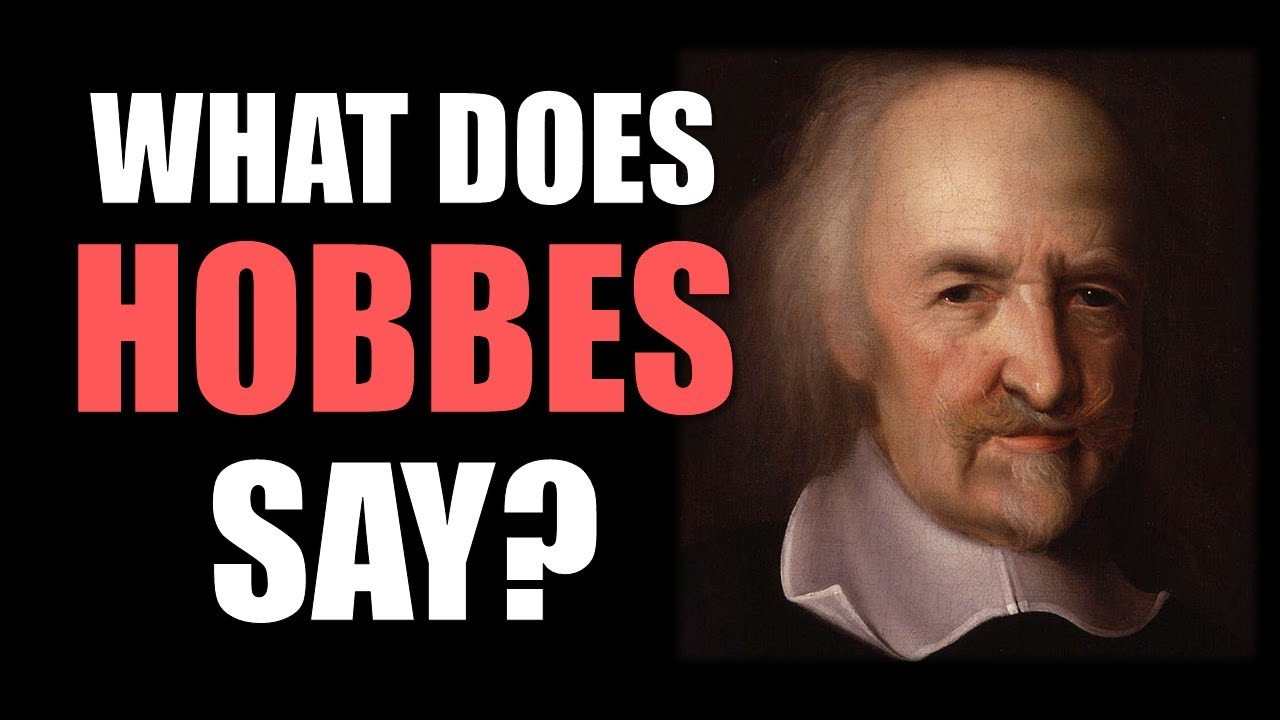
How did Hobbes view human nature?
We are inquisitive and industrious.
We are naturally selfish and quick to fight.
We are naturally ignorant
We are naturally kind and helpful to others
What did Jean-Jacques Rousseau believe about government?
some government control is necessary, but it should be kept to a minimum
the government should control all aspects of our lives
the government should be led by an absolute monarch
Which Enlightenment philosopher believed that governments should be based on majority rule?
Rousseau
Voltaire
Locke
Hobbes
Which Enlightenment philosopher argued that power comes from the "Consent of the Governed?"
Hobbes
Locke
Voltaire
Rousseau

The division of power between a central government and state governments is called
The United States
the Supremacy Clause
the Necessary and Proper Clause
federalism
In every government there are three sorts of power; the legislative; the executive, in respect to things dependent on the law of nations; and the executive, in regard to things that depend on the civil law.
—The Spirit of Laws, Baron de Montesquieu, 1748
Which principle of the U.S. Constitution was most influenced by the concepts expressed in this excerpt?


The European Enlightenment influenced the writing of:
the Declaration of Independence
the Bible
the Manga Carta
Baron De Montesquieu said the best way to protect liberty was to
make governments all powerful
give one person complete power
divide the powers of government
have no government
He argued that people accused of crimes had certain rights, and he advocated abolishing torture.
Locke
Voltaire
Wollstonecraft
Beccaria
Who advocated for equal education for women?
Wollstonecraft
Hobbes
Locke
Voltaire
What is a Salon?
a place to have your hair styled
A gathering of people primarily to discuss ideas of the philosophes
place where people gathered to share paintings of animals in tiny hats
place where people gathered to worship
Before the scientific revolution the people believed kings got their power to rule
from Congress / Parliament
from the people (democratic elections)
from the worldwide web
from God (divine right)

who was an inventor of one of the first telescopes?
Ptolemy
Nicolaus
Galileo
Abraham Lincon
Which statement about the Scientific Revolution in Europe is accurate?
The existence of natural laws was rejected.
Scientists questioned traditional beliefs about the universe.
New ideas supported the geocentric theory of Ptolemy.
The Bible was used to justify new scientific findings.
Which pair of ideas were central to the Scientific Revolution?
social stability and economic self-sufficiency
observation and experimentation
technology and military expansion
scarcity and interdependence
One way in which the Scientific Revolution and
the Enlightenment were similar is that they:
encouraged the spread of new ideas
strengthened traditional institutions
led to the Protestant Reformation
rejected Renaissance individualism
Seventeenth-century scholars Galileo Galilei and René Descartes faced serious challenges to their scientific theories because their ideas
were based on the Bible
contradicted traditional medieval European beliefs
relied only on teachings from non-Christian cultures
were not supported by scientific investigations
What influence did the Scientific Revolution have on the Enlightenment in Europe?
Natural laws were used to explain human affairs.
Economic growth was slowed by the lack of useable technology.
Scientific truths were used to justify absolute monarchies.
The emphasis on religious doctrine led to the rejection of scientific ideas.
The ideas of Enlightenment philosophers were based on:
efforts to achieve salvation
faith in human reason
traditional practices
the inevitability of poverty
Why is the Enlightenment considered a turning point in world history?
The factory system was used to mass-produce goods.
Martin Luther broke away from the Roman Catholic Church.
Europeans changed their thinking about the role of government.
The Columbian exchange occurred.
Which step did Catherine the Great take that is consistent with Enlightenment ideas?
ordering the burning of books
strengthening the institution of serfdom
expanding Russian territory into Ukraine
considering a law code that would treat all citizens equally
Enlightenment thinkers encouraged the improvement of society through the:
teachings of the church
use of reason
development of absolutism
establishment of a rigid social hierarchy
According to John Locke, the purpose of government is to:
protect the natural rights of individuals
serve the monarch
create overseas settlements
stimulate the economy

Idea that God created the universe and let it run on its own
geocentric
tilt-a-whirl
methodism
deism

Philosopher, scientist proving one kind of blood circulates through the heart
Harvey
Wesley
Boyle
Galileo

What was Voltaire implying when he stated, “I disagree with what you say, but will defend to the death your right to say it.”
citizens should have the freedom of speech
citizens should always agree with leaders
absolute rulers should limit negative speech
one might use free speech but could be killed for doing so

Which of the following is one of Kepler's Laws of Planetary Motion
planets move in elliptical orbits around the Sun
gravitational force between two objects decreases as the distance squared
an object in motion remains in motion
inner planets orbit in a different direction than outer ones

Rooms used for gathering upper class members of society to share ideas of the Enlightenment were known as
Libraries
Salons
Stations
Parlors
"Secular" means ...
separate
secluded
not based on religion
seconded
The theories of the Enlightenment Thinkers eventually influenced the _____________ revolution(s)
French
American
Russian
Iranian
The Effects of the Scientific Revolution include ...
it Inspired the Enlightenment
New understandings about how the world works
Changes in how people relied on the teachings of their church
A focus on reason and common sense
All of these
Causes of the Scientific Revolution include...
Travel and Exploration of the world
New Technologies (Like Telescope)
A natural human desire to challenge old ways of thinking
Curiosity
all of these are correct

