
 Worksheets
Ecology Test 2
Total questions: 71
Worksheet time: 58mins
A rabbit is an example of a
secondary consumer
primary consumer
producer

Which biome is best represented by this climatograph?
Tundra
Desert
Tropical rainforest
Boreal Forest
Which biome is hot all year with wet and dry seasons?
tropical rainforest
arctic tundra
temperate grassland
desert

Which month has the coldest temperature?
January
April
September
March

In which month do they get the most rain in this biome?
January
May
August
November
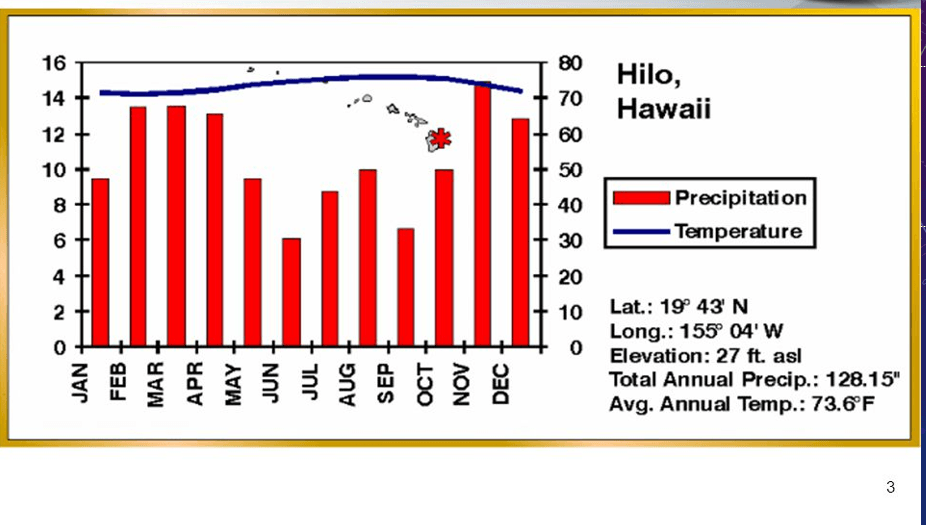
When does the least precipitation occur?
February - March
April - May
June - July
November - December

Which months have the warmest temperatures?
December, January, February
March, April, May
June, July, August
September, October, November

When is there the most precipitation & highest temperatures?
February
July
September
December

How can you tell this is a tundra?
Temperatures are below zero most of the year
Temperatures go up and down
There is lots of precipitation (snow)
There is a wet season and dry season

A
B
C
D
This type of interaction occurs when 2 organisms live closely together for survival.
Symbiosis
Competition
Predation
Cymbalosis
_______ occurs when two organisms are trying to acquire or get the same resources.
Symbiosis
Competition
Predation
Collaboration
_______ occurs when 1 organisms kills and eats another for food.
Symbiosis
Competition
Predation
Collaboration
A lion kills and eats a zebra. This is an example of
Symbiosis
Competition
Predation
Two male deer fight over a female. This is an example of
Symbiosis
competition
predation
The Gobi fish and shrimp live closely together. The nearly blind shrimp keeps a burrow for it and the Gobi fish to live. The Gobi warns the shrimp of predators. The shrimp lets the fish live in the burrow. This is an example of
mutualism
commensalism
parasitism
Hermit crabs use the shells of dead snails for homes. What type of interaction is this?
mutualism
commensalism
parasitism
Tapeworms enter the body of their host. They live by taking nutrients from the host organism. This is an example of
mutualism
commensalism
parasitism
A type of symbiosis in which both species benefit is called...
mutualism
commensalism
parasitism
A type of symbiosis in which one species benefits and the other is not affected is...
mutualism
commensalism
parasitism

Predator population lags behind prey population because......
Increase in predators leads to decrease in prey
Increase in predators leads to increase in prey
Increase in predators leads to decrease in producers
Increase in producers leads to increase in prey

According to the graph, what is causing the deer population to decrease
They got sick
The wolf population is decreasing
The wolf population increased
They ran out of food

What is a Producer?
An animal that eat plants
An animal that eats meat
is a plant that produces their own food
An animal that grows really tall
What are Herbivores?
Animals that eat plants
Animals that eat meat
Plants that make their own food
Plants that eat meat
What is a Carnivore?
An animal that eats plants
An animal that eats meat
An animal that makes it own food
An animal that doesn't eat animals or plants
What is a Decomposer?
it an animal that eats everything
A fungus, bacteria, or invertebrate that consumes dead animals and plants
it a human
it the sun
which one is a Producer?


What is a decomposer?


Which one is an Herbivore?


Which one is a Carnivore?


Due to the fact that plants can make their own food using photosynthesis, what are plants considered in food chains?
omnivores
consumbers
producers
carnivores
What would a rabbit be considered in a food chain if it ONLY EATS PLANTS?
herbivore
omnivore
carnivore
producer
What would a lion be considered in a food chain if they ONLY EAT MEAT?
producer
herbivore
carnivore
omnivore
What would a human that eats BOTH PLANTS AND ANIMALS be considered in a food chain?
herbivore
carnivore
producer
omnivore
What is the process called when a plant uses the sun to make its own food (glucose)?
photosynthesis
respiration
transpiration
In a food chain, what breaks down dead material and helps turn it into nutrients in the soil?
producers
decomposers
animals
water

The original source of energy for a food web is...
plants
sun
producers
decomposers

Decomposers get energy from...
the sun
eating plants
eating animals
dead things and waste

An organism that gets energy from eating other organisms is a ______________
producer
consumer
decomposer

A connection of food chains with many food energy paths in an ecosystem is a ____________
ecosystem
food web
environment

Which of the following is NOT a consumer
grass
dog
shark
fish
All herbivores are _____.
producers
primary consumers
secondary consumers
tertiary consumers
An owl who eats snakes is a _________.
tertiary consumers
primary consumer
producer
secondary consumer
A rat that eats seeds ins an example of a _________.
primary consumer
producer
secondary consumer
tertiary consumers
A diagram that shows one possibility of energy flow in an ecosystem.
food web
energy pyramid
food chain
secondary consumer
As energy makes its way up the food pyramid only ______ of energy from one organism gets passed on to the next organism.
10%
20%
30%
40%

What would happen to the bird if the green fish died out?
the bird population would grow
the bird population would die out
the smaller fish will die out
What is the bottom layer of the an energy pyramid?
producer
tertiary consumer
Secondary consumer
primary consumer
the top layer of an energy pyramid a primary consumer?
true
false
Which relationship represents an example of mutualism?
a lynx hunting a snowshoe hare
an owl and a snake feeding on rats
a tapeworm absorbing nutrition from the intestines of a host organism
an ant colony living on an acacia tree and not allowing vines to grow on the bark
When honeybees land on dandelion flowers to drink nectar, pollen sticks to their bodies. The pollen is transferred when the honeybees visit other dandelion flowers. What type of ecological relationship is demonstrated by honeybees and dandelions?
competition
commensalism
mutualism
parasitism

The graph shows the population densities of two species over time.
Based on the graph, what is the best description of the relationship between the two species?
Species 1 is a competitor of species 2.
Species 1 is a parasite to species 2.
Species 1 is the prey of species 2.
Species 1 is the predator of species 2.
Which example identifies organisms that display a parasitic relationship?
Acacia ants live in acacia trees eating a nectar secreted by the trees, and they aggressively defend the tree from animals that try to eat it.
Cattle egrets fly in behind cows in fields to eat insects stirred up by the cows as they walk which does not help nor harm the cows.
Working alone, cheetahs stealthily approach gazelles in the tall grass, then chase them at high speeds trying to catch and eat them.
Ticks bite humans to consume their blood for food, and ticks can also pass on illnesses such as Lyme disease to humans.

Mushrooms and other fungi play an important role as decomposers in ecosystems. What is the primary purpose of decomposers?
They provide food for desert consumers.
They serve as the only site of nitrogen fixation.
They use energy from the Sun to make food.
They break down waste and return nutrients to the soil.
How is commensalism different from mutualism?
In commensalism, one species benefits while the other is unharmed; in mutualism, both species benefit
In commensalism, one species is harmed while the other benefits; in mutualism, both species benefit
In commensalism, neither species is harmed; in mutualism, one species is harmed
In commensalism, both species benefit; in mutualism, one species is harmed


What symbiotic relationship is this:
When a Burmese python fights with an American alligator over food and land, but they're not trying to eat one another.
Mutualism
Commensalism
Parasitism
Predation
Competition
What is the difference between a food chain and food web?
A food web is simple
A food chain is complex
Both food chains and food webs show complex feeding relationships
A food web shows complex feeding relationships but a food chain shows simple relationships
Carnivores and omnivores...
Make their own food
Must eat other things to survive
Only eat meat
Eat both plants and animals
A heterotrophic organism (consumer)...
Can make its own food
Cannot make its own food
Needs sunlight to survive
Is always an omnivore
An autotrophic organisms (producer)...
Can make its own food
Cannot make its own food
Needs to eat other organisms
Can also be called an omnivore
In an Energy Pyramid, where is there the LEAST amount of energy?
Top
Middle
Bottom
There is the same amount of energy throughout the energy pyramid

