wayground logo

Free Printable Worksheets

Font size

S
M
L
XL
Worksheets

ES Unit 1 Review

Total questions: 96

Worksheet time: 2hrs 0mins

Name
Class
Date
1.
Why is the increase of Greenhouse gasses a big issue?
a)
It causes climate change and increase in the global temerature 
b)
It can lead to a major increase in Greenhouses 
c)
It leads to more factories
d)
It causes a major decrease in people
2.
The gradual increase in the temperature of the atmosphere is known as ________________.
a)
Greenhouse Effect
b)
Global Warming
c)
Carbon Dioxide Gases
d)
Methane
3.
How can global warming cause sea levels to rise? Choose the best answer.
a)
by causing it to rain more often
b)
by melting glaciers and ice caps
c)
by increasing the number of undersea volcanic eruptions
d)
by creating bigger and more powerful hurricanes
4.
Why does cutting down trees increase global warming?
a)
trees soak up carbon dioxide
b)
trees provide shade which counteracts global warming
c)
trees absorbs the sun's energy without radiating back into the atmosphere
d)
trees drain greenhouse gases like methane from soil
5.
Global warming and the greenhouse effect are exactly the same.
a)
True
b)
False
6.
Things you can do to help decrease global warming include:
a)
Eat more ice cream.
b)
Keep your freezer door open.
c)
Keep your air conditioner on high.
d)
Turn off your lights when you’re not using them.
7.

How is the greenhouse effect produced?

a)

When solar energy trespasses the atmosphere.

b)

When some energy is reflected back to earth.

c)

When the green house is burned.

d)

When the sun doesn't emit radiation.

8.

Green House gases

a)

absorb the sun's radiation and trap heat

b)

are good for our health

c)

absorb gravity and keep us attached to Earth

d)

expulse radiation to the sun and prevent us from getting to warm

9.

What would be Earth's temperature without green house gases?

a)

Earth's temperatures would be cold, oceans would freeze

b)

The same, green house gases do not affect Earth's temperature

c)

Earth's temperature would be 90 Fahrenheit

10.
True or False: All of the radiation from the Sun is absorbed by the Earth
a)
True
b)
False
11.
Without the Greenhouse Effect the Earth would be
a)
warm 
b)
cold
c)
dead
12.

How would Earth be different without greenhouse gases in its atmosphere?

a)

More heat from solar radiation would escape into space

b)

More solar radiation would be reflected back into space

c)

More solar radiatio would penetrate Earth's crust and mantle

d)

More heat from solar radiation would be stored in Earth's crust

13.

What gas is known for increasing the amount of "trapped" heat in the atmosphere?

a)

Oxygen

b)

Nitrogen

c)

Methane

d)

Carbon Dioxide

14.
This is an image demonstrating...
a)
Tornado Formation
b)
The Greenhouse Effect
c)
Hurricane Formation
15.
 Which of the following activities contributes the most to carbon emissions globally?
a)
Deforestation
b)
Agriculture
c)
Burning fossil fuels
d)
Respiration
16.

the usual weather

a)

climate

b)

global climate

c)

global warming

d)

hot

17.
Worldwide, temperatures have been increasing for more than 100 years.  Is this evidence of global warming?
a)
yes
b)
no
18.
As global warming continues, the intensity of what type of storm that hits coastlines is predicted to increase?
a)
Tornadoes
b)
Hurricanes 
c)
Tsunamis
d)
Earthquakes
19.

Which gas makes up 78% of our atmosphere?

a)

oxygen

b)

Carbon dioxide

c)

nitrogen

d)

argon

20.

Which layer of the atmosphere does all weather occur?

a)

exosphere

b)

troposphere

c)

mesosphere

d)

thermosphere

21.

Which layer of the atmosphere helps us by burning up incoming meteors?

a)

exosphere

b)

troposphere

c)

mesosphere

d)

thermosphere

22.

Which layer of the atmosphere contains the ozone layer?

a)

troposphere

b)

thermosphere

c)

methosphere

d)

stratosphere

23.

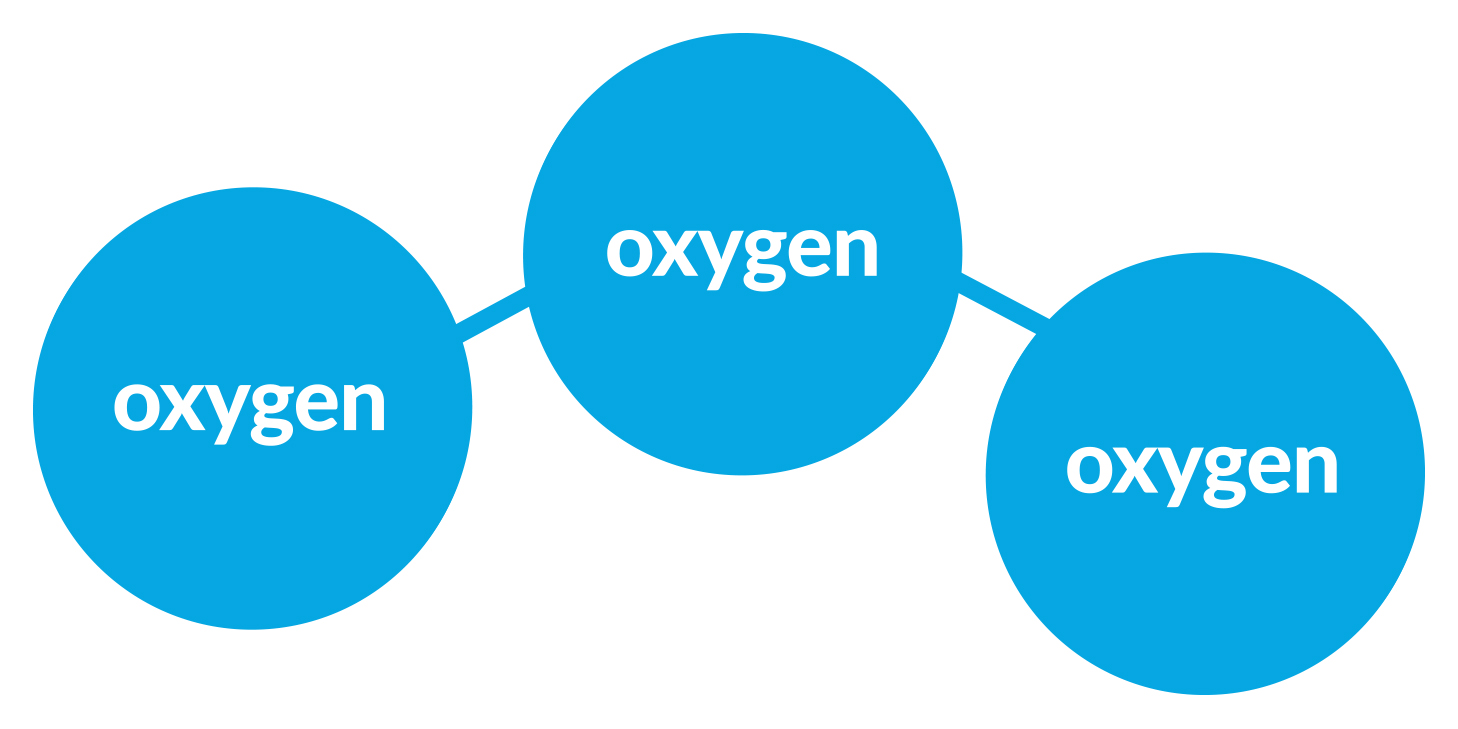
A compound made of three oxygen atoms is called

a)

acid rain

b)

smog

c)

ozone

d)

carbon dioxide

24.

Which layer of the atmosphere, as identified by the chart, is MOST likely the troposphere?

a)

A

b)

B

c)

C

d)

D

25.

Which layer of the atmosphere do we live in?

a)

tropsophere

b)

stratosphere

c)

mesosphere

d)

thermosphere

26.
What is the function of the ozone layer?
a)
to allow UV rays to get to Earth
b)
to block UV rays from getting to Earth
c)
To keep oxygen in
d)
to allow meteors to get to Earth
27.
Where I find clouds.
a)
thermosphere
b)
stratosphere
c)
troposphere
d)
ionosphere
28.
Which layer is the outermost layer?
a)
troposphere
b)
thermosphere
c)
exosphere
d)
mesosphere
29.

How did scientists determine where the layers of the atmosphere are divided?

a)

a change in elements

b)

a change in compounds

c)

a change in temperature

d)

a change in ozone

30.

Which of the following can change climate in the atmosphere

a)

CFC's

b)

Volcanic Eruptions

c)

Sulfur

d)

Meteorite Impacts

31.
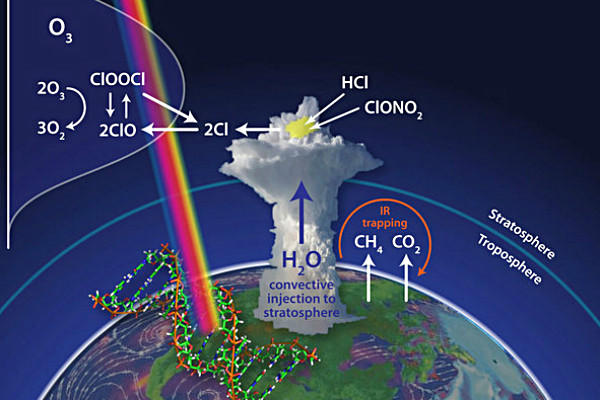
When oxygen gas in the lower stratosphere is struck by this, it splits, leading to the formation of a ozone molecule.
a)
visible light
b)
ultraviolet radiation
c)
infrared
d)
gamma rays
32.
The ozone layer protects us from
a)
UV rays
b)
CFCs
c)
Increased atmospheric heat
d)
Decreased atmospheric heat
33.
The ozone layer is damaged by
a)
CFCs
b)
Increase in greenhouse gases
c)
Increased global temperatures
d)
Sulfuric and nitric acids
34.
Increase in which gas is primarily responsible for increased global warming?
a)
Carbon dioxide
b)
Water vapor
c)
Methane
d)
Nitric oxides
35.
What absorbs ultraviolet rays in the atmosphere?
a)
troposphere
b)
stratosphere
c)
ozone layer
d)
greenhouse gases
36.
The gas that is most abundant in the atmosphere is
a)
oxygen
b)
nitrogen
c)
carbon dioxide
d)
argon
37.
CFCs alter the natural formation of ozone by: 
a)
breaking up ozone and reducing the amount of O2 needed to form ozone
b)
bonding with O3 
c)
preventing UV radiation to strike ozone 
38.
Choose the correct order of the layers of the atmosphere (from closest to farthest from earth’s surface). 
a)
a)Troposphere, mesosphere, stratosphere, thermosphere 
b)
a)Thermosphere, mesosphere, stratosphere, thermosphere 
c)
a)Troposphere, stratosphere, mesosphere, thermosphere 
d)
a)Stratosphere, troposphere, mesosphere, thermosphere 
39.
Which of these sets of three items produce CFCs
a)
cars, factories, and cardboard
b)
spray cans, cardboard, insulation
c)
spray cans, refrigerant, cardboard
d)
spray cans, refrigerant, insulation
40.
Those who sign this document understand the consequences they face as they continue burning coal and oil.
a)
Kyoto Protocol
b)
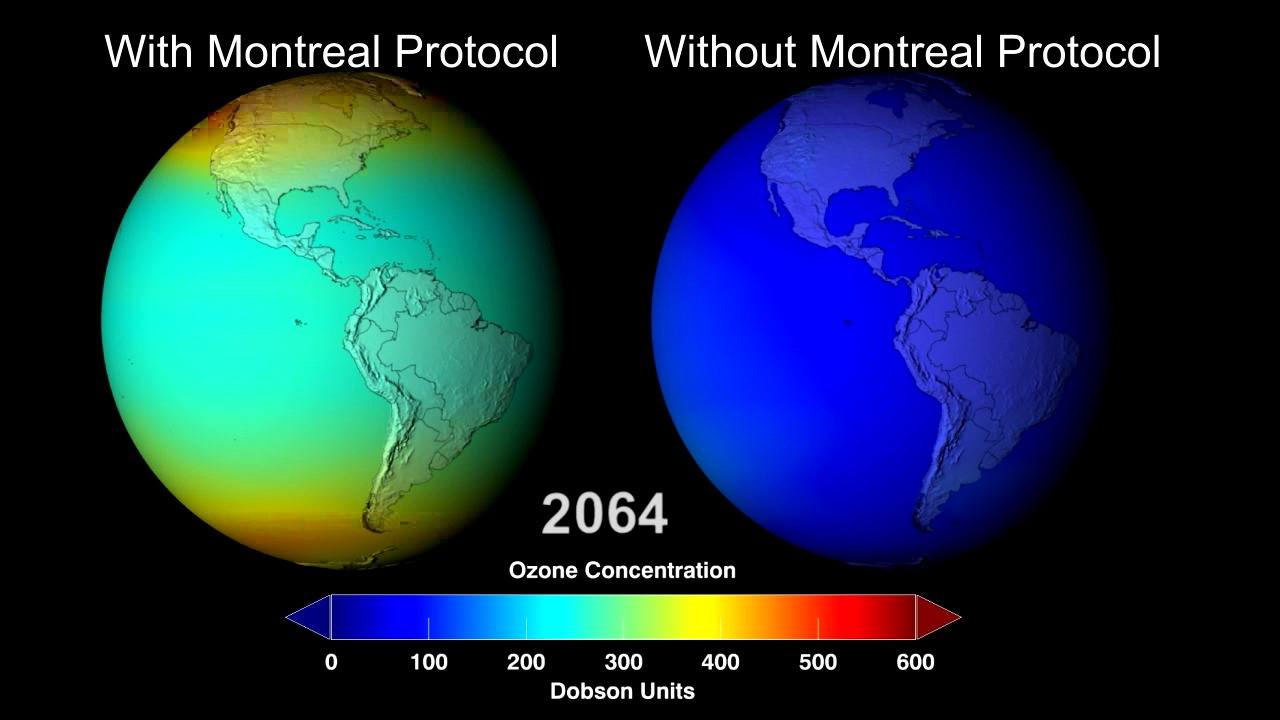
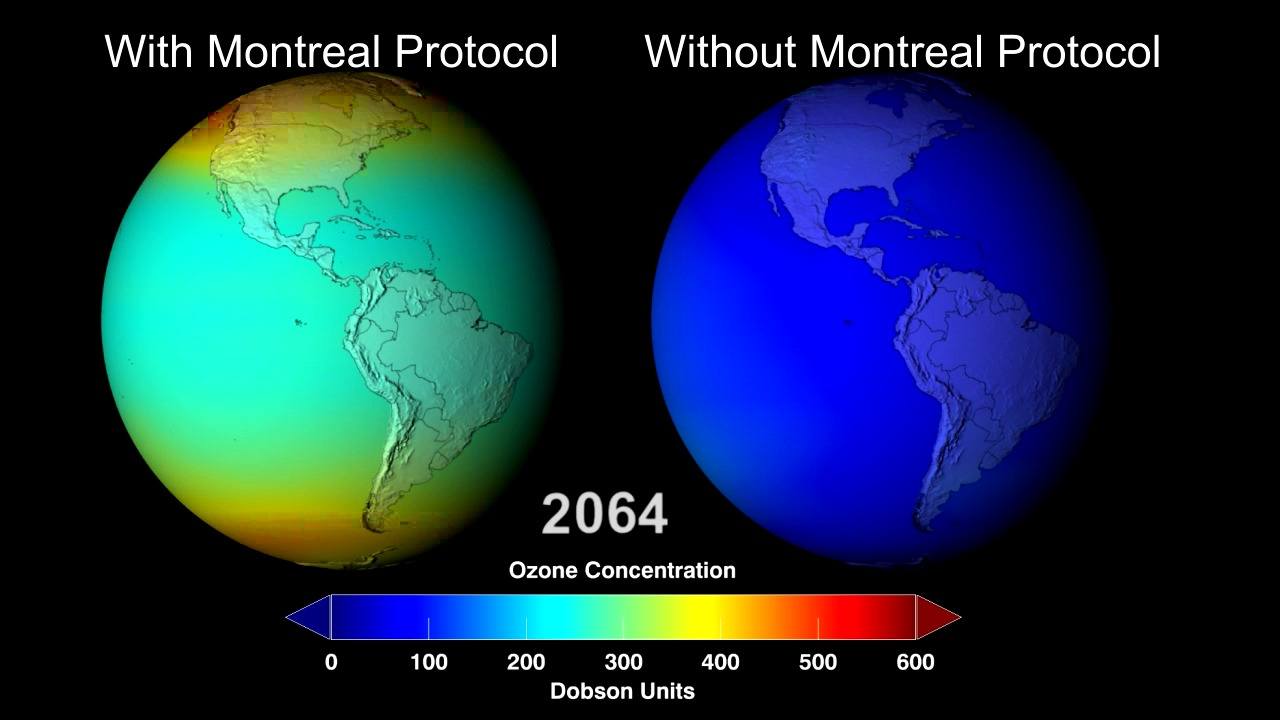
Montreal Protocol
c)
Dallas Protocol
d)
Climate Change Law
41.
These can be any gas in the atmosphere that absorbs and emits radiation. 
a)
Greenhouse gases
b)
Fertilizers
c)
Pollutants
d)
Filtrators 
42.
international limits on CFC production toprotect the ozone layer
a)
Montreal Protocol
b)
New York Protocol
c)
Paris Protocol
d)
Tokyo Protocol
43.
Though CFC production has been curtailed, the threat to upper atmosphericozone continues because CFCs
a)
become harmless quickly.
b)
destroy ozone for only a short time.
c)
persist but stop destroying ozone.
d)
persist and continue to destroy ozone for decades.
44.
A continuous record of annual average atmospheric CO2 concentrationsfrom Mauna Loa, Hawaii, reveals
a)
a steady increase since 1988.
b)
no change since 1958.
c)
a steady decrease since 1958.
d)
a steady increase since 1958.
45.
Which of the following greenhouse gases does NOT occur naturally?
a)
Methane
b)
Carbon Dioxide
c)
Water Vapor
d)
HFCs
46.
Second layer of the atmosphere, extending about 17-48 kilometers above the earth’s surface. It contains a layer of gaseous ozone, which filters out about 95% of the incoming harmful ultraviolet radiation emitted by the sun
a)
Mesosphere
b)
Troposphere
c)
Stratosphere
d)
Ozone
47.
Layer of gaseous ozone in the stratosphere that protects life on earth by filtering out most harmful ultraviolet radiation from the sun
a)
Greenhouse Gases
b)
Troposphere
c)
Stratosphere
d)
Ozone Layer
48.
The breakdown of stratospheric ozone
I. can originate from the emission of chlorofluorocarbons (CFCs).
II. is catalyzed through a free chlorine (Cl) atom.
III. prevents UV rays from reaching the earth’s surface.
a)
I only
b)
III only
c)
I,&II
d)
I,II,& III
49.
Which agreement allowed for a reduction, and eventual elimination, of CFC production and use?
a)
Montreal Protoccol
b)
Kyoto Protoccol
c)
Paris Agreement
d)
Yo MaMa
50.
How do CFCs affect ozone production?
a)
UV radiation frees a chlorine atom, which breaks down ozone.
b)
Infrared radiation frees a chlorine atom, which breaks down ozone.
c)
UV radiation frees a fluorine atom, which breaks down ozone.
d)
Infrared radiation frees a chlorine atom, which breaks down ozone.
51.
Depletion of ozone layer is a concern because it normally absorbs ____% of the sun's UV radiation. 
a)
50
b)
75
c)
89
d)
99
52.
The formation of ozone begins when and O2 molecule is split by
a)
UV-A radiation
b)
UV-B radiation
c)
UV-C radiation
d)
UV-A or UV-B radiation
53.
How many ozone atoms can a single chlorine atom break down?
a)
5,000
b)
10,000
c)
50,000
d)
100,000
54.

Which is NOT a result of the reduction in stratospheric ozone?

a)

reduced photosynthetic activity

b)

increased skin cancer

c)

increased likelihood of cataracts

d)

increased birth defects

55.

When is the ozone hole largest?

a)

early Antarctic spring

b)

late Antarctic summer

c)

early Antarctic winter

d)

late Antarctic fall

56.

Which chemical that replaced CFCs in refrigerants is now a concern as a major greenhouse gas?

a)

CFCs

b)

HFCs

c)

DDT

d)

CFCl2

57.

Which is not an example of an ecological consequence of reduced stratospheric ozone?

a)

loss of biodiversity from reduced photosynthesis in plants

b)

collapse of marine food webs

c)

reduced crop yield

d)

reduced terrestrial biome productivity

58.

UV rays can cause obvious short term damage, such as sunburn, as well as long term damage that accumulates with each exposure to the sun.

a)

True

b)

False

59.

Which statement regarding the decreased level of stratospheric ozone is correct?

a)

Increased photosynthetic activity has been measured in the phytoplankton around Antarctica

b)

The largest decrease in the level of stratospheric ozone over the Arctic region occurs between January and April

c)

Although the Montreal Protocol led to a reduction in the use of CFCs, it will have little effect on stratospheric ozone levels in the long term

d)

There is no correlation between the incidence of cataracts and skin cancers and the lower level so stratospheric ozone

e)

The global crop yields of wheat, rice, and corn have increased since the reduction in CFC use
60.

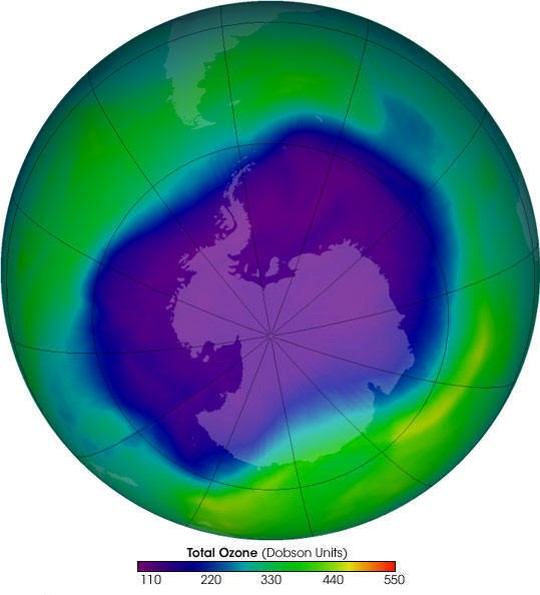
Location of the large whole in the ozone.

a)

Antarctica

b)

Artic

c)

Iceland

d)

Africa

61.

UV light can be broken down into

a)

weak, medium, and strong

b)

UVX, UVY, UVZ

c)

UVA, UVB, UVC

d)

light, medium, dark

62.

The atmosphere filters out some UV rays. Which are NOT filtered out?

a)

strong UV

b)

dark UV

c)

UVA

d)

UVC

63.

What part of the atomosphere is being depleted by human chemicals, therefore allowing more UV exposure to humans?

a)

top layer

b)

bottom layer

c)

stratosphere

d)

ozone layer

64.

Which UV light is most damaging?

a)

A

b)

B

c)

C

d)

X

e)

Z

65.

Which has the shortest wavelength?

a)

UVA

b)

UVB

c)

UVC

d)

UVX

e)

UVZ

66.

Which type of UV promotes skin cancer?

a)

UVA

b)

UVB

c)

UVC

d)

UVX

e)

UVZ

67.

Which type of UV is responsible for immediate tanning affect?

a)

UVA

b)

UVB

c)

UVC

d)

UVX

e)

UVZ

68.

Time of day can affect amount of UV exposure.

a)

true

b)

false

69.

Altitude can affect amount of UV exposure.

a)

True

b)

False

70.

More cloud cover will result in less UV exposure.

a)

true

b)

false

71.

What is the definition of the tragedy of the commons

a)

When humans overuse natural resources

b)

When the short-term, positive effects go to the individual, while the long-term, negative effects are spread out to the group

c)

When humans act selfishly, thinking of their own self-interest

d)

When plants and animals compete for space, resources, and/or food

72.

What are considered "the commons"

a)

Common house hold items like knifes, spoons, and forks.

b)

A renewable resource owned by no one and available for use by anyone at little or no charge

c)

A field where college students can sit outside in between classes

73.

What is the definition of the tragedy of the commons

a)

When humans overuse natural resources

b)

When the short-term, positive effects go to the individual, while the long-term, negative effects are spread out to the group

c)

When humans act selfishly, thinking of their own self-interest

d)

When plants and animals compete for space, resources, and/or food

74.

Which of these is not an example of a commons?

a)

The air

b)

The ocean

c)

Privately owned farms

75.

The "Tragedy of The Commons" is...

a)

An economic issue where people do not have enough money to buy basic needs so they resort to stealing and breaking the law.

b)

A type of play where someone tragically dies or gets killed.

c)

Economic issue where individuals tend to take advantage of the natural resource and it becomes unavailable for everyone.

76.

Sustainability

a)

The process of maintaining resources so they are not depleted or permanently damaged.

b)

The ability to read minds

c)

The ability to save resources for years and years

77.

Unsustainable

a)

When resources can never be replenished again.

b)

When resources are used or depleted faster than they can be replenished.

c)

When you are not mentally stable.

78.

What is "law of unintended consequences"?

a)

Bad outcomes that people do on purpose

b)

A law that states you are innocent until proven guilty

c)

Outcomes that are not the ones foreseen and intended by a person's original actions.

79.

What is overgrazing?

a)

When cows eat so much they get sick and throw up

b)

When a section of land is used for extended periods of time, or without sufficient recovery periods.

c)

When horses eat too much grass

80.

What is a negative consequence of overgrazing?

a)

vegetation or grass is damaged and the ground can no longer be used for feeding or agriculture.

b)

your animals cannot graze for one day

c)

your animals get sick

81.

What is overfishing?

a)

The removal of bad fish from a environment

b)

The removal of fish/ species of fish from a body of water at a rate that the species can not replenish in time.

c)

The removal of dead fish from a body of water

82.

What is one negative consequence oversfishing can lead to?

a)

Fish can grow two heads

b)

Fish species can adapt in order to escape fishermen

c)

Fish species can either become depleted or very underpopulated in that given area.

83.

What are greenhouse gasses?

a)

A gas that absorbs and traps heat.

b)

A gas that will catch on fire if near a flame

c)

A gas that you can see but not smell

84.

What is the greenhouse gas effect?

a)

Cooling of Earth's surface and and the air above it, caused by gases in the air

b)

Warming of Earth’s surface and the air above it caused by gases in the air that trap heat/energy from the sun.

c)

When you pass out because you have been working in a greenhouse for too long

85.

What are the main greenhouse gasses?

a)

carbon dioxide, methane, and nitrous oxide.

b)

H20, methane, and floroxide

c)

Carbon dioxide, floroxide, and citrusoxide

86.

Some negative consequences of the greenhouse effect are?

a)

Severe weather problems, global cooling, and sea levels lowering

b)

Lack of rainfall, global cooling, and icecaps melting.

c)

Global warming, sea levels rising, icecaps melting.

87.
How much of the CO2 in the atmosphere will be absorbed by the oceans?
a)
all of it
b)
1/2
c)
1/4
d)
none of it
88.
Man made carbon dioxide comes from the burning of fossil fuels.  An example of a fossil fuel is
a)
wood
b)
oil
c)
shale
89.
Ocean acidification begins with 
a)
pollution from ships
b)
carbon dioxide released from combustion
c)
dumping of waste from cities into the ocean
90.
Carbon dioxide and seawater combine to form
a)
calcium carbonate
b)
carbon monoxide
c)
carbonic acid 
91.
The H+ ion is a(n)
a)
acid
b)
base
c)
neutral
92.
Marine organisms make their shells from calcium and
a)
chloride
b)
carbonate
c)
seawater
93.
An example of a marine organism that needs calcium carbonate 
a)
a crab
b)
a shark
c)
an octopus
94.
Very slight increases in the acidity of seawater __________  marine organisms that make shells.
a)
doesn't bother
b)
has no effect on 
c)
is unhealthy and stresses
95.
Which of the following are greenhouse gases?
a)
Carbon dioxide
b)
Methane
c)
Water vapour
d)
All answers are correct
96.

When carbon dioxide ions react with water, what molecules do they release?

a)

Hydrogen Ions

b)

Carbonate Ions