wayground logo

Free Printable Worksheets

Font size

S
M
L
XL
Worksheets

BIO exam review - Part 01 - the cell question pool

Total questions: 227

Worksheet time: 4hrs 43mins

Name
Class
Date
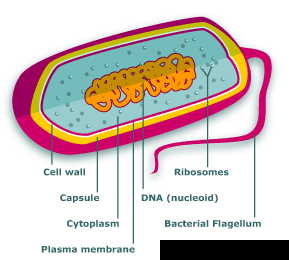
1.
The ___ is the basic unit of structure and function of organisms
a)
Atom
b)
Cell
c)
Matter
d)
All of these
2.
Which statement is a part of the cell theory?
a)
All cells come from preexisting cells
b)
Bacteria are prokaryotic cells
c)
Eukaryotic cells are complex
d)
Humans are multicellular
3.
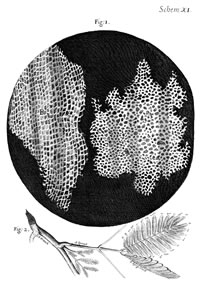
Who looked at cork and named the cell?
a)
Robert Hooke
b)
Van Leeuwenhoek
c)
Robert Brown
d)
Francesco Redi
4.
The Cell Theory states...
a)
Atoms create all matter
b)
Living things evolve
c)
The cell is the backbone of all matter
d)
Cells are the basic unit of structure and organization of organisms
5.
Which of the following is NOT one of the three parts of Cell Theory?
a)
All living things are made of cells.
b)
The cell is the smallest living thing that can perform all the functions of life.
c)
Cells are too small to see without a microscope.  
d)
All cells must come from pre-existing cells.
6.
Which of the following IS a major principle of the Cell Theory?
a)
All cells form through binary fission
b)
All cells contain a nucleus
c)
All cells arise from pre-existing cells
d)
All cells contain DNA
7.
This scientist was the first to identify cells and name them:
a)
Hooke
b)
Leeunwenhoek
c)
Schleiden
d)
Virchow
8.

In the mid-nineteenth century, the discoveries of many scientists were combined to develop the modern cell theory. Which of the following statements is NOT part of the cell theory?

a)

All living things are made of one or many cells.

b)

Cells are produced from existing cells.

c)

All cells have the same internal structure

d)

Cells are the basic units of structure in living things.

9.
What of the following is a prokaryote?
a)
animal cell
b)
bacteria
c)
virus
d)
plant cell
10.

What type of cell has a nucleus?

a)

eukaryotic only

b)

prokaryotic only

c)

both prokaryotic and eukaryotic cells

11.
Eukarytoes have Many membrane-bound organelles? True or False
a)
True 
b)
False
12.
Bacteria are prokaryotes.
a)
True
b)
False
13.
Who named the "cell" after looking at a cork slice using an early compound microscope?
a)
Robert Hooke
b)
Marcello Malpighi
c)
Francisco Redi
d)
Theodore Schwann
14.
The image shows a cell which LACKS a nucleus and other membrane bound organelles. This is known as a ______________ cell.
a)
Prokaryotic Cell
b)
Eukaryotic Cell
15.
Which type of cell?
a)
Prokaryote
b)
Eukaryote
16.
Which type of cell?
a)
Prokaryote
b)
Eukaryote
17.
Anton van Leeuwenhoek made his own version of the microscope and discovered something very odd when he looked a the gunk on his teeth. What did he discover?
a)
Cells
b)
Bacteria
c)
Cavities
d)
Influenza
18.
Which is true of prokaryotic and eukaryotic cells?
a)
Prokaryotic cells are larger than eukaryotic cells.
b)
Eukaryotic cells do not have nuclei, and prokaryotic cells do have nuclei.
c)
Prokaryotic cells lack membrane-bound organelles, and eukaryotic cells contain membrane-bound organelles.
d)
Eukaryotic cells are simpler than prokaryotic cells.
19.

Which do BOTH prokaryotes and eukaryotes contain?

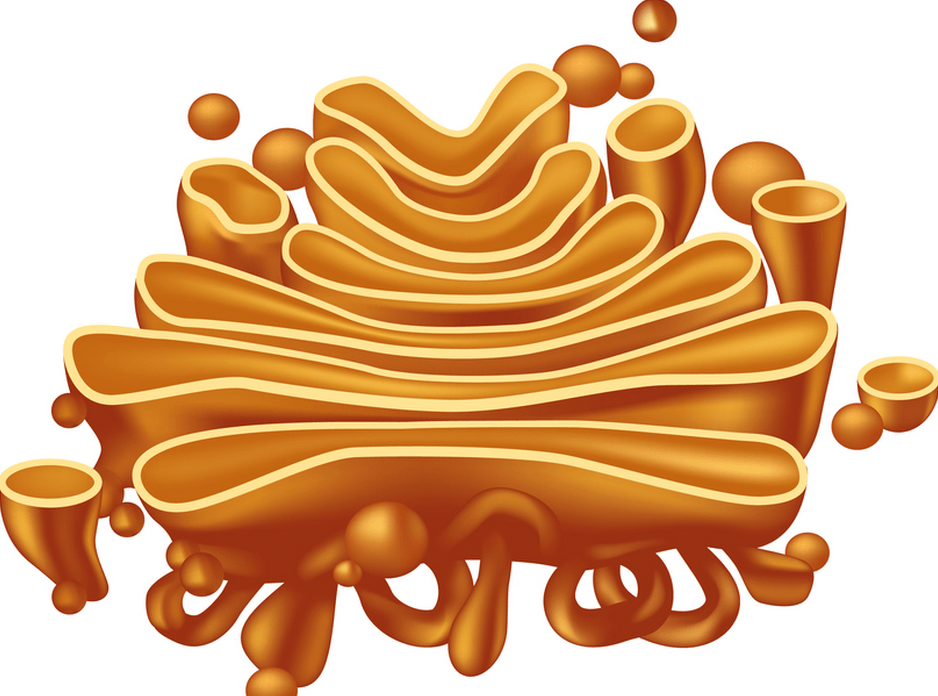
a)

nucleus

b)

mitochondria

c)

ribosomes

d)

cell wall

20.

Which does only eukaryotic cells contain?

a)

nucleus

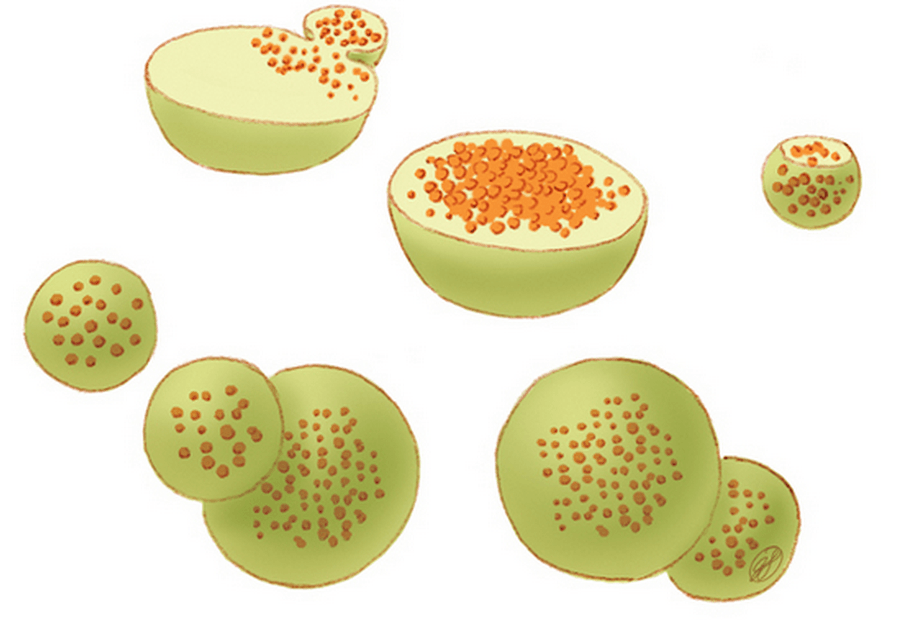
b)

DNA

c)

cell membrane

d)

ribosomes

21.
All cells come from___________ cells.
a)
pregnant
b)
pre-existing
c)
paternal
d)
pin size
22.

Prokaryotes lack ________.

a)

genetic material

b)

cell membrane

c)

cytoplasm

d)

nucleus

23.
Plants and animal cells are examples of ___ cells 
a)
prokaryotic cells 
b)
eukaryotic cells 
24.

Which of the following are parts of the ORIGINAL cell theory?

a)

Cells are the basic structure and function of living things

b)

Cells come from preexisting cells

c)

All living things are made up of one or more cells

d)

Cells arise through spontaneous generation

25.

Which type of biological macromolecule is the main component of the plasma membrane?

a)

carbohydrate

b)

lipid

c)

protein

d)

nucleic acid

26.

Where can PROTEINS be found when part of a plasma membrane?

a)

On the outside of the membrane

b)

On the inside of the membrane

c)

Embedded the whole way through the membrane

d)

All of the above

27.
A storage structure- in an animal cell there are many small ones, but in a plant cell there is just one large one.
a)
vacuole
b)
ribosomes
c)
golgi body
d)
chloroplast
28.
Provides extra support for the plant cell and gives in shape
a)
chlorophyll
b)
chloroplast
c)
cell wall
d)
vacuole
29.
Which one of the following organelles is not found in a an animal cell?
a)
cell membrane
b)
nucleus
c)
chloroplast
d)
endoplasmic reticulum
30.
"powerhouse of the cell" breaks down sugar molecules to release energy
a)
Mitochondria
b)
Chloroplast
c)
Cell Wall
d)
Vesicle
31.
Captures energy from the sunlight and uses it to produce food in a plant cell
a)
Chloroplast
b)
Ribosomes
c)
Nucleus
d)
Cell Wall
32.
What is the difference between a plant and animal cell?
a)
Animal cells are eukaryotic and plant cell are not
b)
Plant cells are eukaryotic and animal cells are not
c)
plant cells have a larger vacuole, chloroplast, and a cell wall
d)
animal cells have a larger vacuole, chloroplast, and a cell wall
33.
What kind of cell is this?
a)
Eukaryotic
b)
Prokaryotic
34.
What type of cell has a nucleus? 
a)
eukaryotic
b)
prokaryotic 
35.
What type of cell does not have a nucleus?
a)
eukaryotic 
b)
prokaryotic 
36.
Prokaryotic and eukaryotic cells have many differences, but they also share some common features.  Which of the following may be found in either type of cell?
a)
Golgi bodies
b)
ribosomes
c)
mitochondria
d)
nucleus
37.
Type of cell shown?
a)
Bacterial
b)
Prokaryotic
c)
Eukaryotic
d)
Red blood 
38.
What organelle helps with cell digestion?
a)
Lysosomes
b)
Ribosomes
c)
Golgi Complex
d)
ER
39.
In what organelle is the genetic material found inside?
 
a)
Endoplasmic Reticulum
b)
Golgi Complex
c)
Nucleolus
d)
Nucleus
40.
I make proteins for the cell. What am I?
a)
ribosome
b)
mitochondria
c)
chloroplast
d)
lysosome
41.
This is a rigid structure that give plant cell protection support and shape; it is made of cellulose
a)
Cell membrane
b)
Cell wall
c)
Vacuole
d)
Endoplasmic reticulum
42.

What are the main differences between plant and animal cells?

a)

Animal cells are eukaryotes and plant cells are not.

b)

Plant cells are eukaryotes and animal cells are not.

c)

Animal cells have cell walls and chloroplasts; plant cells do not.

d)

Plant cells have cell walls and chloroplasts; animal cells do not.

43.

Which organelle is the storehouse for most of a cell’s genetic information?

a)

mitochondrion

b)

chloroplast

c)

centriole

d)

nucleus

44.

Which organelles supply energy to the cell?

a)

ribosomes

b)

centrosomes

c)

mitochondria

d)

vacuoles

45.

Which organelles are unique to plant cells?

a)

ribosomes

b)

chloroplasts

c)

vacuoles

d)

centrosomes

46.

Identify the type of cell shown

a)

prokaryotic

b)

eukaryotic

c)

bacterial

d)

animal

47.
Which of these is part of the cell theory
a)
Cells are the basic unit of life
b)
Only plant cells have a Chloroplast
c)
All cells have a nucleus
d)
Animal cells are round and blob like
48.
Which of these is part of the cell theory
a)
Every living thing is made of cells
b)
Everything with cells will die
c)
All cells have a nucleus
d)
Plant cells and Animal cells have some differences
49.

What is the difference between a prokaryotic cell and a eukaryotic cell?

a)

Prokaryotes do not have a nucleus or organelles, but a eukaryotic cell does

b)

Eukaryotic cells do not have a nucleus or organelles, but prokaryotes do

50.

All cells come from...

a)

nothing

b)

existing cells

c)

a nucleus

d)

animal cells

51.

The city limits... controls what goes in and out of the cell/city!

a)

nucleus

b)

cell membrane

c)

ER

d)

Golgi

52.

Nucleus would be represented by (a)  

(copy directly from the underlined terms)

53.

Ribosomes would be represented by (a)  

(copy directly from the underlined terms)

54.

Mitochondria would be represented by (a)  

(copy directly from the underlined terms)

55.

Golgi apparatus would be represented by (a)  

(copy directly from the underlined terms)

56.

Endoplasmic reticulum would be represented by (a)  

(copy directly from the underlined terms)

57.

Cell membrane would be represented by (a)  

(copy directly from the underlined terms)

58.

Lysosomes would be represented by (a)  

(copy directly from the underlined terms)

59.
Which organelle is like the recipe book for the cell?
a)
Ribosome
b)
Nucleus
c)
Endoplasmic Reticulum
d)
Lysosome
60.
Which organelle is like a protective wall for the cell?
a)
Plasma Membrane
b)
Nucleus
c)
Cell wall
d)
Mitochondria
61.
Which organelle is like a solar panel for plant cells?
a)
Chloroplast
b)
Mitochondria
c)
Ribosome
d)
Nucleus
62.
Which organelle is like the battery for the cell?
a)
Chloroplast
b)
mitochondria
c)
Nucleus
d)
Endoplasmic Reticulum
63.
Which organelle is like the conveyer belt of the cell?
a)
Ribosome
b)
Mitochondria
c)
Endoplasmic Reticulum
d)
nucleus
64.
Which organelle is like the chef of the cell that reads the recipe and makes it?
a)
nucleus
b)
Endoplasmic Reticulum
c)
Cell wall
d)
Ribosome
65.
Which organelle is like the toll booth that lets things in and out of the cell?
a)
Cell wall
b)
Plasma Membrane
c)
Nucleus
d)
Centrioles
66.
Which organelle is like the recycler for the cell?
a)
Mitochondria
b)
Golgi Aparatus
c)
Endoplasmic Reticulum
d)
Lysosome
67.
A Nucleus is most like...
a)
City Hall
b)
A Post Office
c)
Highways
d)
Powerplant
68.
Which organelle is like the broth in your soup!
a)
Cell wall
b)
Mitochondria
c)
Cytoplasm
d)
Golgi Aparatus
69.

This is a larger cell and has a nucleus.

a)

Prokaryotic

b)

Eukaryotic

c)

Both

70.

This cell has DNA.

a)

Prokaryotic

b)

Eukaryotic

c)

Both

71.

This cell is a bacterial cell.

a)

Prokaryotic

b)

Eukaryotic

c)

Both

72.

This cell can be a protist, fungi, plant, or animal cell.

a)

Prokaryotic

b)

Eukaryotic

c)

Both

73.

This cell has circular DNA floating in the cytoplasm.

a)

Prokaryotic

b)

Eukaryotic

c)

Both

74.

This cell has linear DNA found in the nucleus.

a)

Prokaryotic

b)

Eukaryotic

c)

Both

75.

This cell is smaller and does NOT have a nucleus.

a)

Prokaryotic

b)

Eukaryotic

c)

Both

76.

Check all that apply. The three parts of the cell theory are:

a)

All living things are made from one or more cells.

b)

Cells are the basic unit of structure and function of living things.

c)

Cells are the largest living organism.

d)

All cells come only from other living cells.

77.

Which scientist created the second microscope?

a)

Hooke

b)

Leeuwenhoek

c)

Schleiden

78.

Which organelle is like a chain-link fence? It's a flexible, protective barrier and filters what enters or leaves a cell.

a)

Cell membrane

b)

Cell wall

c)

Cytoplasm

d)

Nucleus

79.

Which organelle is like a factory worker? It builds molecules called proteins, which do work inside of cells.

a)

Endoplasmic reticulum

b)

Golgi apparatus

c)

Mitochondria

d)

Ribosome

80.

Which organelle is like the factory's power generator? It's often called the "powerhouse" and provides energy for the cell.

a)

Endoplasmic reticulum

b)

Mitochondria

c)

Nucleus

d)

Ribosome

81.

Which organelle is like an assembly line? It builds lipids and modifies (edits) proteins.

a)

Endoplasmic reticulum

b)

Golgi apparatus

c)

Mitochondria

d)

Ribosome

82.

Which organelle is like a post office? It packages proteins and lipids into vesicles (trucks) and sends them to other places in the cell.

a)

Endoplasmic reticulum

b)

Golgi apparatus

c)

Mitochondria

d)

Ribosome

83.

Which organelle is like a factory manager? It provides the instructions for how the factory is supposed to function.

a)

Cytoplasm

b)

DNA

c)

Protein

d)

Ribosome

84.

Which organelle is like the factory manager's office? It's the 'room' that the manager is inside of.

a)

Lysosome

b)

Mitochondria

c)

Nucleus

d)

Ribosome

85.

Which organelle is like the factory's garbage dock? It's where waste is broken down and recycled.

a)

Golgi apparatus

b)

Lysosome

c)

Vacuole

d)

Vesicle

86.

Which organelle is like a factory's water storage tanks? It's where water and nutrients are stored.

a)

Centrosome / Centrioles

b)

Lysosome

c)

Vacuole

d)

Vesicle

87.

Which organelle are like the factory's trucks? They carry molecules around the cell and out of the cell to other places in the body.

a)

Centrosome / Centrioles

b)

Lysosome

c)

Vacuole

d)

Vesicle

88.

Which organelles are like a company's CEOs? They help the cell divide during mitosis.

a)

Centrosome / Centrioles

b)

Cell membrane

c)

Nucleus

d)

DNA

89.

Which cell types have a cytoplasm?

a)

Bacteria

b)

Animal

c)

Plant

d)

ALL cells

90.

Which cell types have a cell membrane?

a)

Bacteria

b)

Animal

c)

Plant

d)

ALL cells

91.

Which cell types have DNA?

a)

Bacteria

b)

Animal

c)

Plant

d)

ALL cells

92.

Which cell types have a nucleus? (2 answers are correct)

a)

Bacteria

b)

Animal

c)

Plant

d)

ALL cells

93.

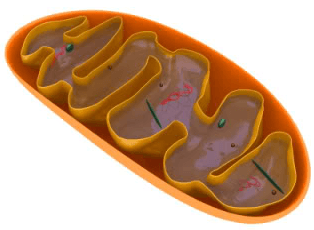
This organelle pictured is responsible for providing energy to the cell for cellular respiration; known as the POWER HOUSE

a)

Lysosome

b)

Mitochondria

c)

Nucleus

d)

Golgi Body

94.

What organelle is pictured here?

a)

Lysosome

b)

Ribosome

c)

Nucleolus

d)

Nucleus

95.
This cell is simple. Only genetic material, cytoplasm and ribosomes inside.
a)
Eukaryotic
b)
Prokaryotic
c)
Plant
d)
Animal
96.
Complex cell. Can be plant or animal. Contains membrane bound organelles. 
a)
Eukaryotic Cell
b)
Prokaryotic Cell
c)
Bacteria
d)
Blood cell
97.
This organelle protects/holds the DNA
a)
Mitochondria
b)
Chloroplasts
c)
Nucleolus
d)
Nucleus
98.
Organelles inside nucleus function is to make ribosomes
a)
Golgi Body
b)
Lysosome
c)
Rough E.R.
d)
Nucleolus
99.
This organelle's function is to make protein.
a)
Rough E.R.
b)
Smooth E.R.
c)
Ribosome
d)
Nucleus
100.
This organelle makes/transports fats or lipids. 
a)
Rough E.R.
b)
Smooth E.R.
c)
Golgi Bodies
d)
Lysosomes
101.
This organelle helps transport proteins.
a)
Ribosomes
b)
Rough E.R.
c)
Golgi Body
d)
Smooth E.R.
102.
This organelle function is to package, modify and transport materials in/out of cell.
a)
Rough E.R.
b)
Smooth E.R.
c)
MItochondria
d)
Golgi Body
103.
The function of this organelle is to break down food, worn out cell/cell organelles.
a)
Nucleus
b)
Vacuole
c)
Ribosome
d)
Lysosome
104.
This function of this organelle is to break down glucose to make cell energy.
a)
Chloroplasts
b)
Mitochondria
c)
Nucleus
d)
ATP
105.
The function of this organelle is to store water. Large ones are found in plants. 
a)
Lysosome
b)
Golgi Body
c)
Cytoplasm
d)
Vacuole
106.
This organelle traps sunlight and uses that energy to convert it to food.
a)
Mitochondria
b)
Chloroplasts
c)
Lysosomes
d)
Chlorophyll
107.
This is a green pigment found in plants. 
a)
Chloroplasts
b)
Chlorophyll
c)
Cytoplasm
d)
MItochondria
108.
What is the structure labeled #10?
a)
Cell membrane
b)
Cell wall
c)
Cytoplasm
d)
Centriole
109.
What is the structure labeled #13?
a)
Centrioles
b)
Cytoplasm
c)
Lysosome
d)
Mitochondria
110.
Name structure #5.
a)
rough ER
b)
nucleus
c)
vesicle
d)
cytoplasm
111.
Name structure #6.
a)
rough ER
b)
Golgi body
c)
Smooth ER
d)
cytoplasm
112.
What is the structure labeled #5?
a)
Vacuole
b)
Chloroplast
c)
Mitochondria
d)
Lysosome
113.
What is the structure labeled #9?
a)
Cell Wall
b)
Cytoplasm
c)
Chloroplast
d)
Mitochondria
114.
What is the structure labeled #8?
a)
Vacuole
b)
Golgi body
c)
Nucleus
d)
Lysosome
115.
What is the structure labeled #4?
a)
Vacuole
b)
Cell wall
c)
Cytoplasm
d)
Cell membrane
116.
What is the structure labeled #7?
a)
Rough ER
b)
Smooth ER
c)
Golgi body
d)
Flagella
117.
What is the structure labeled #2?
a)
Lysosome
b)
Vesicle
c)
Ribosome
d)
Mitochondria
118.
Label B
a)
plasma membrane
b)
ribosome
c)
lysosome
d)
mitochondria
119.
Label D
a)
mitochondria
b)
ribosome
c)
vacuole
d)
endoplasmic reticulum
120.
Label F
a)
rough endoplasmic reticulum
b)
smooth endoplasmic reticulum
c)
mitochondria
d)
golgi apparatus
121.
Label H
a)
rough endoplasmic reticulum
b)
smooth endoplasmic reticulum
c)
mitochondria
d)
golgi apparatus
122.
Label I
a)
nucleolus
b)
lysosome
c)
cytoskeleton
d)
nucleus
123.
Label K
a)
nucleolus
b)
lysosome
c)
ribosome
d)
golgi apparatus
124.
Label G
a)
rough endoplasmic reticulum
b)
smooth endoplasmic reticulum
c)
mitochondria
d)
golgi apparatus
125.

Which type of cell is represented here?

a)

Plant Cell

b)

Animal Cell

c)

Blood Cell

d)

Prokaryotic Cell

126.

Which structure is labeled as number 5 here?

a)

Endoplasmic Reticulum

b)

Cytoplasm

c)

Cell Wall

d)

Golgi Body

127.

Which structure is represented by label number 9 here?

a)

Mitochondria

b)

Chloroplast

c)

Chlorophyll

d)

Ribosomes

128.

Which structure is represented by label number 3 here? This structure sits on the endoplasmic reticulum making it the rough endoplasmic reticulum.

a)

Ribosome

b)

Lysosome

c)

Protein

d)

Vacuole

129.

What structure is labeled as number 14 here?

a)

Cell Wall

b)

Cytoplasm

c)

Cell Membrane

d)

Nucleus

130.

What type of cell is this?

a)

Plant Cell

b)

Animal Cell

c)

Prokaryotic Cell

d)

Blood Cell

131.

What three cell organelle structures can be found in plant cells but not in animal cells? Check all that apply!

a)

Cell Wall

b)

Chloroplasts

c)

Vacuole

d)

Mitochondria

132.

True or False. The cells of animals are prokaryotic.

a)

True

b)

False

133.

One difference between prokaryotic cells and eukaryotic cells is that prokaryotes do NOT have

a)

DNA.

b)

a cell membrane.

c)

a cytoplasm.

d)

a nucleus.

134.

What are the three main principles associated with the cell theory? Check all that apply!

a)

All organisms are made of cells.

b)

All existing cells are produced by other living cells.

c)

Cell is the most basic unit of life.

d)

All cells live as long as their host lives.

135.

Which label indicates the mitochondria?

a)

A

b)

B

c)

C

d)

D

136.

Which label indicates the smooth ER?

a)

A

b)

B

c)

C

d)

D

137.

Which label indicates the rough ER?

a)

A

b)

B

c)

C

d)

D

138.

Which label indicates the ribosome on the rough ER?

a)

A

b)

B

c)

C

d)

D

139.

Which label indicates the vacuole?

a)

A

b)

B

c)

C

d)

D

140.

Which label indicates the nucleus?

a)

A

b)

B

c)

C

d)

D

141.

Which label indicates the cell wall?

a)

A

b)

B

c)

C

d)

D

142.

Which label indicates the chloroplast?

a)

A

b)

B

c)

C

d)

D

143.

Which cell part controls what enters and exits the cell and is made of phospholipids?

a)

Cell wall

b)

Cell membrane

c)

Nucleus

d)

Cytoplasm

144.

Which cell part is the fluid like substance the other organelles float around in?

a)

Cytoplasm

b)

Cell membrane

c)

Cytoskeleton

d)

Golgi body

145.

Which cell part is the powerhouse of the cell and provides energy?

a)

Cytoplasm

b)

Mitochondria

c)

Cytoskeleton

d)

Golgi body

146.

Which cell part is the control center of the cell and contains DNA?

a)

Cytoplasm

b)

Mitochondria

c)

Cytoskeleton

d)

Nucleus

147.

Which cell part stores water and minerals?

a)

Vacuole

b)

Mitochondria

c)

Cytoskeleton

d)

Nucleus

148.

Which label indicates an organelle that makes proteins?

a)

A

b)

B

c)

C

d)

D

149.

Which label indicates an organelle that is the rigid layer outside of the cell membrane?

a)

A

b)

B

c)

C

d)

D

150.

Which label indicates the organelle that houses DNA?

a)

A

b)

B

c)

C

d)

D

151.

Which label indicates the organelle that modifies, sorts, and packages items for transport ?

a)

A

b)

B

c)

C

d)

D

152.

Which label indicates the organelle transports items into and out of the cell ?

a)

A

b)

B

c)

C

d)

D

153.

This is the brain/ control center for the cell

a)

cell membrane

b)

cell wall

c)

nucleus

d)

nucleolus

154.

protects the inside of the cell from the outside of the cell

a)

nucleus

b)

lysosomes

c)

golgi

d)

cell membrane

155.

this is where photosynthesis takes place

a)

cytoplasm

b)

nucleus

c)

DNA

d)

chloroplast

156.

produces/ provides proteins

a)

lysosomes

b)

vacuole

c)

ribosomes

d)

nucleus

157.

fluid part of the cell, helps keep organelles in place

a)

cytoplasm

b)

chlorophyll

c)

chloroplast

d)

lysosomes

158.

powerhouse of the cell. provides cell energy

a)

lysosome

b)

ribosome

c)

nucleus

d)

mitochondria

159.

digests & removes cell waste

a)

lysosome

b)

nucleus

c)

vacuole

d)

ribosome

160.
What type of cells have a cell wall and chloroplasts?
a)
Plant cells
b)
Animal cells
c)
Plant and animal cells
d)
Neither plant NOR animal cells
161.
Controls what enters and exits the cell, like a fence
a)
Cell membrane
b)
Cytoplasm
c)
Nucleus
d)
Ribosome
162.
Controls all cell activities and contains DNA
a)
Ribosome
b)
Chloroplast
c)
Endoplasmic reticulum
d)
Nucleus
163.
“Powerhouse” of the cell, breaks food down into energy for the cell
a)
Vacuole
b)
Chloroplast
c)
Nucleus
d)
Mitochondria
164.

The _______________ is responsible for conducting photosynthesis. (found only in plants)

a)

nucleus

b)

chloroplast

c)

cell wall

165.
Animal cells DO NOT have ...
a)
mitochondria
b)
lysosomes
c)
vacuoles
d)
chloroplasts
166.
This structure packages and distributes proteins throughout the cell. 
a)
Golgi Body
b)
Lysosome
c)
Ribosome
d)
Mitochondria
167.
What directs all the activities of the cell?
a)
cell wall
b)
cytoplasm
c)
nucleus
d)
cell wall
168.
The two kinds of cells are prokaryotes and eukaryotes. How are they different?
a)
Prokaryotes have a nucleus.
b)
Eukaryotes have a nucleus.
c)
Prokaryotes are plant cells.
d)
All bacteria are eukaryotes.
169.
You are made up of...
a)
eukaryotic cells
b)
prokaryotic cells
c)
plant cells
d)
bacterial cells
170.

This is a rigid structure that gives plant cells protection and support.

a)

cell membrane

b)

cell wall

c)

vacuole

d)

endoplasmic reticulum

171.
This organelle controls what comes in or out of the cell (selectively permeability).
a)
nucleus
b)
cell wall
c)
cell membrane
d)
vacuole
172.

Function of this organelle?

a)

transport proteins

b)

package and ship proteins

c)

synthesize proteins

d)

digests food and worn-out organelles

173.
Function of this organelle?
a)
protein synthesis
b)
transport proteins
c)
modify, package, and ship proteins
d)
storage of water, food or wastes
174.
Which organelle is shown?
a)
chloroplast
b)
mitochondrion
c)
endoplasmic reticulum
d)
Golgi body
175.

Large balloon-shaped organelle?

a)

nucleus

b)

vacuole

c)

chloroplast

d)

lysosome

176.
What compound is produced in this organelle?
a)
glucose
b)
oxygen
c)
DNA
d)
ATP
177.
I am a protein packaging and shipping machine! Who am I?
a)
vacuole
b)
ribosome
c)
mitochondrion
d)
golgi apparatus
178.
You might think of me as the trash collector, but recycler is maybe more accurate. What am I?
a)
mitochondria
b)
lysosome
c)
vacuole
d)
ribosome
179.
What is the name of the genetic material that is inside the nucleus?
a)
ER
b)
ATP
c)
YOLO
d)
DNA
180.
What is found in both plant and animal cells but is much larger in plant cells?
a)
Nucleus
b)
Mitochondria
c)
Chloroplast
d)
Vacuole
181.
This organelle takes food and turns it into ENERGY for plant and animal cells.
a)
Chloroplast
b)
Mitochondria
c)
Lysosome
d)
Ribosome
182.
The site of photosynthesis
a)
ribosome
b)
mitochondria
c)
chloroplast
d)
nucleus
183.
What are tiny organelles that convert glucose into ATP?
a)
Ribosomes
b)
Vesicles
c)
Cytoskeleton
d)
Mitochondria
184.
A rigid layer that lies outside the cell's  membrane is...
a)
Cytoskeleton
b)
Cilia
c)
Cell Wall
d)
Flagella
185.

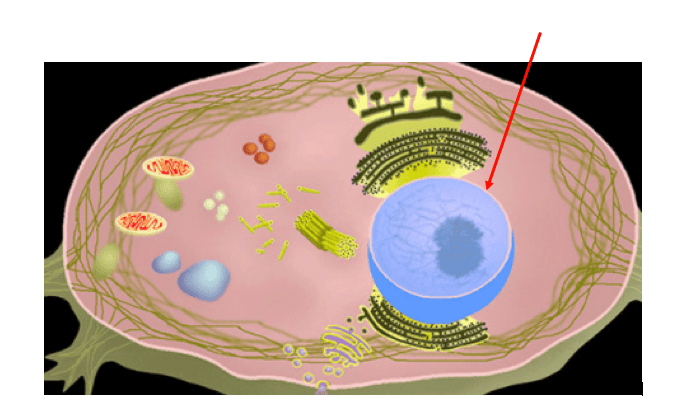
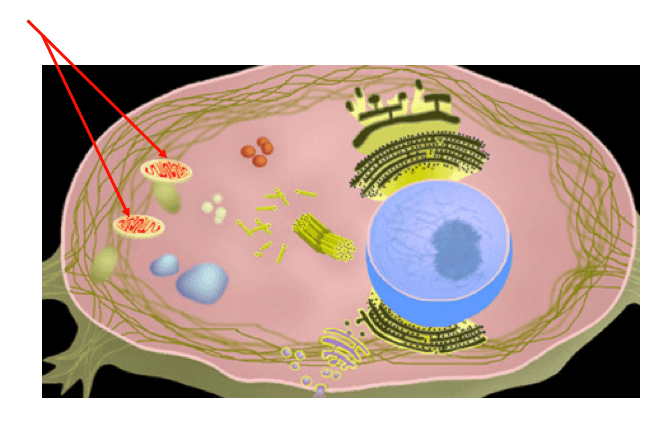
Identify the structure at the end of the arrow.

a)

Mitochondria

b)

Nucleus

c)

Ribosome

d)

Endoplasmic Reticulum

186.

Identify the structures at the bottom of the arrows.

a)

Ribosomes

b)

Golgi Bodies

c)

Mitochondria

d)

Chloroplasts

187.

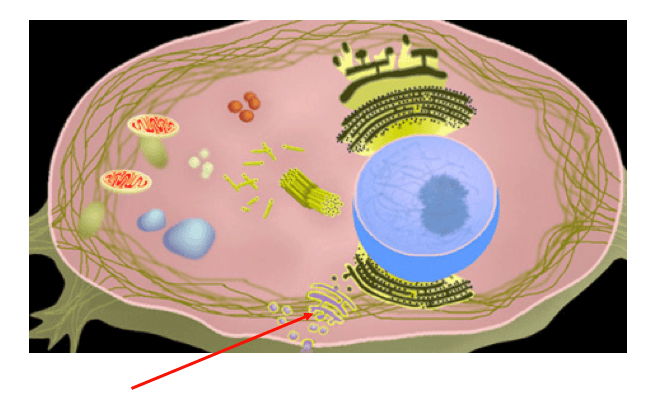
Identify the structure that the arrow is pointing to.

a)

Endoplasmic Reticulum

b)

Golgi Body

c)

Ribosome

d)

Mitochondria

188.
What is the name and function of the organelle displayed above?
a)
Mitochondria: breakdown glucose and produce ATP
b)
Chloroplast: converts solar energy into chemical energy
c)
Vacuole: Stores H2O, salt, food
d)
Nucleus: stores genetic information
189.
The two kinds of cells are Prokaryotes and Eukaryotes. How are they different?
a)
Prokaryotes have a nucleus.
b)
Eukaryotes have a nucleus.
c)
Prokaryotes are plant cells.
d)
There is no difference.
190.
Which part of the cell is often called "the brain of the cell"?
a)
nuclear membrane
b)
endoplasmic reticulum
c)
nucleus
d)
mitochondria
191.
What is the structure labeled #2?
a)
Lysosome
b)
Vesicle
c)
Ribosome
d)
Mitochondria
192.

What is the name of the starred organelle?

(a)  

193.
The picture illustrates a
a)
Prokaryotic Plant Cell
b)
Prokaryotic Animal Cell
c)
Eukaryotic Plant Cell
d)
Eukaryotic Animal Cell
194.
packages proteins for delivery
a)
Endoplasmic reticulum
b)
ribosomes
c)
golgi apparatus
d)
lysosomes
195.
break down (digest) worn out cell parts, mostly in animal cells
a)
cytoplasm
b)
lysosomes
c)
mitochondria
d)
vacuoles
196.
hold/store water, mainly found in plant cells
a)
nuclolus
b)
ribosomes
c)
golgi bodies
d)
vacuoles
197.
What am I?
a)
mitochondria
b)
lysosomes
c)
chloroplast
d)
endoplasmic reticulum
198.
What am I?
a)
vacuole
b)
ribosome
c)
endoplasmic reticulum
d)
golgi apparatus
199.
What am I?
a)
Nucleus
b)
Golgi Body
c)
Mitochondrion
d)
Plasma Membrane
200.

Looking in a microscope, you see cells that have rectangular shapes and a green color. What type of cells are you probably viewing?

a)

plant cells

b)

animals cells

c)

muscle cells

d)

blood cells

201.

Protective outermost layer of animal cells:

a)

Cell Membrane

b)

Nucleus

c)

Chromatin

d)

Microtubules

202.

Protective outermost layer of animal cells:

a)

Cell Membrane

b)

Nucleus

c)

Chromatin

d)

Microtubules

203.
What is number 5 pointing to?
a)
nucleus
b)
cell membrane
c)
gogli apparatus
d)
lysosome
204.
What is number 3 pointing to?
a)
nucleus
b)
chloroplast
c)
mitochondria
d)
golgi apparatus
205.
What is number 7 pointing to?
a)
nucleus
b)
cell membrane
c)
vacuole
d)
centrioles
206.
What structure is 1 pointing to?
a)
nucleus
b)
ribosome
c)
cell membrane
d)
golgi apparatus
207.
What is number 10 pointing to?
a)
nucleus
b)
ribosome
c)
cell wall
d)
cell membrane
208.

The organelle that acts as a strong supportive wall that shapes and protects the cell:

a)

Cell Membrane

b)

Cell Wall

c)

Cytoskeleton

d)

Centrioles

209.

The organelle that regulates materials entering and leaving the cell, as well as supporting and protecting it:

a)

Cell Wall

b)

Cell Membrane

c)

Centrioles

d)

Cytoskeleton

210.
What type of cell has a nucleus? 
a)
eukaryotic
b)
prokaryotic 
211.

Under a microscope, what kind of cells lack (do not have) membrane-bound organelles?

a)

Prokaryotes

b)

Eukaryotes

c)

Plants

d)

Animals

212.

control, read, and direct the cell using DNA instructions

a)

nucleus

b)

mitochondria

c)

endoplasmic reticulum

d)

lysosome

213.

stiff, protective outer layer of plant cells

a)

cell membrane

b)

nuclear membrane

c)

cell wall

d)

cytoplasm

214.

packages proteins for delivery

a)

Endoplasmic reticulum

b)

ribosomes

c)

golgi apparatus

d)

lysosomes

215.
collect sunlight which it converts to sugars
a)
chloroplasts
b)
cytoplasm
c)
cell wall
d)
mitochondria
216.

The outer part of the cell that is in both plants and animal cells.

"The fence"

a)

cell membrane

b)

cell wall

c)

nucleus

d)

cytoplasm

217.

This organelle make PROTEINS for the cell

a)

chloroplast

b)

ribosome

c)

lysosome

d)

cell wall

218.

Only found in plant cells

"solar panels"

a)

cell wall

b)

cell membrane

c)

chloroplast

d)

cytoplasm

219.

Protein packing and shipping machine

"post office"

a)

ribosome

b)

vacuole

c)

golgi apparatus

d)

cytoplasm

220.

Which structure controls the activities of the cell?

a)

Brain

b)

Nucleus

c)

Mitochondria

d)

Plasma membrane

221.

The organelle that takes in proteins and modifies them and delivers them to their destination is the

a)

endoplasmic reticulum

b)

lysosome

c)

Golgi apparatus

d)

secretory vesicle

222.

An important structure in human cells that separates the internal environment from the external environment

a)

cytoskeleton

b)

cell wall

c)

plasma membrane

d)

centrioles

223.

A transportation system within the cell that some of the channels have ribosomes attached and some of the channels do not.

a)

Endoplasmic reticulum

b)

Golgi apparatus

c)

ribosomes

d)

nucleus

224.
___________ form the two layers of the cell membrane. 
a)
Carbohydrates 
b)
Proteins 
c)
Phospholipids 
d)
Cholesterol
225.
The majority of the cell membrane is made of which macromolecule?
a)
Lipids
b)
Carbs
c)
Proteins
d)
Nucleic acids
226.

True or False. Prokaryotes contain cytoplasm.

a)

True

b)

False

227.
The type of cellular transport that requires no energy.
a)
Active Transport
b)
Protein Pumps
c)
Passive Transport
d)
Endocytosis