
Font size
 Worksheets
23/24 Unit 1 Exam Review (L2-L3)
Total questions: 71
Worksheet time: 55mins
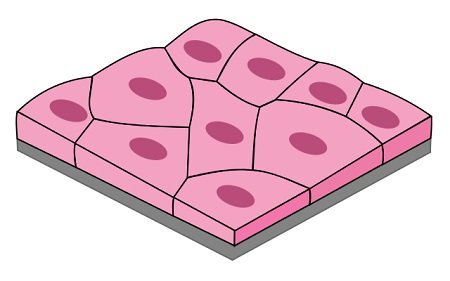
Name the type of epithelium
simple cuboidal
simple squamous
simple columnar
stratified squamous
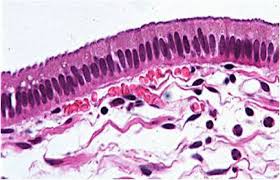
Name the type of epithelium
simple squamous
stratified squamous
simple cuboidal
simple columnar


What are the 3 basic shapes of Epithelial Cells? (Select all that apply)
Cuboidal
Columnar
Orbital
Squamous


Name the tissue
Skeletal
Cardiac
Smooth


What is the purpose of nervous tissue?
send electrical signals
strengthen muscle
make blood cells


Match the following

Stratified Cuboidal

Stratified Squamous

Simple Columnar

Simple Cuboidal

Stratified Columnar
I am a single layer of cube-like cells that are found in the tubules of the kidneys; my job includes excretion and absorption.
Simple columnar epithelium
Simple cuboidal epithelium
Stratified squamous epithelium
Stratified columnar epithelium
I am a single layer of tall cells with round or oval nuclei; I can be found in the linking of the digestive tract and my job includes absorption and secretion of enzymes
Simple Columnar Epithelium
Stratified Columnar Epithelium
Simple Squamous Epithelium
Pseudostratified Columnar Epithelium
I am made of many layers. The cells in my layers can be described as flat or squished. I can be found on your very arm as I am what makes up most of the epidermal layer of your skin!
Simple Columnar Epithelium
Stratified Columnar Epithelium
Simple Squamous Epithelium
Stratified Squamous Epithelium
I am arranged in several layers like stacks of cubes. I can be found in the sweat and salivary ducts of humans and my purpose is to protect!
Simple Cuboidal
Simple Columnar
Stratified Columnar
Stratified Cuboidal
Match the following

Loose connective tissue

adipose tissue

dense connective tissue

compact bone

blood
I am a gel-like matrix with all three fiber types. I also contain cells such as fibroblasts, macrophages, mast cells and white blood cells. I wrap and cushion organs as well as release immune cells when needed to fight pathogens. I play a huge role in inflammation responses as I hold the tissue fluid. I am found all throughout the body under the epithelial lining!
dense connective tissue
loose connective tissue
bone
blood
I am comprised of closely packed adipocytes. I provide reserve food fuel; insulate against heat loss, as well as acting as a padding to protect and support organs.
adipose tissue; loose connective
bone
blood
dense connective tisse
Parallel collagen fibers that are densely packed together. I am great for attaching muscles to bone. I also attach bone to bone. I can work under stressful conditions when pulling and pushing for movement.
Bone
loose connective tissue
dense connective tissue
blood
I am a solid calcified matrix containing many collagen fibers. I support and protect! I provide levers for the muscles to act on; I store calcium and other minerals and fat. I have marrow inside for blood formation.
blood
loose connective tissue
dense connective tissue; tendons
bone
Match the following

Skeletal muscle

Cardiac muscle

Smooth muscle

Neurons
Long, cylindrical multinucleated cells; obvious striations. Voluntary movement locomotion. I am attached to bones and occasionally skin
Smooth muscle
Skeletal muscle
Cardiac muscle
Neurons
Branching, striated, uninucleated cells that are specialized. As I contract I propel blood into the circulatory system.
Smooth muscle
Skeletal muscle
Cardiac muscle
Neurons
Spindle-shaped cells with central nuclei. There are no striations and the cells are closely arranged to form sheets. I am able to propel substances or objects along internal passageways and is controlled involuntarily. Found mainly in the walls of hallow organs.
Smooth muscle
Skeletal muscle
Cardiac muscle
Neurons
These are branching cells that send electrical impulses and signals from the brain to the rest of the body.
Smooth muscle
Skeletal muscle
Cardiac muscle
Neurons
In what order are the superficial to deep skin layers?
dermis, hypodermis, epidermis
epidermis, dermis, hypodermis
hypodermis, epidermis, dermis
Which of the following layers of the skin does not contain any blood vessels?
epidermis
dermis
hypodermis
Where are the sensory receptors located?
hair follicles
dermis
epidermis
hypodermis
Which sensory receptor senses light touch?
pacinian corpuscles
meissners corpuscles
Thermoreceptors (hot, cold)
Pain receptors
All layers of the skin are made up of primarily connective tissue EXCEPT for the
Epidermis
Dermis
Subcutaneous Layer
Which layer of the epidermis is filled with keratinized cells that are flattened, dead and often fall off?
Stratum corneum
Stratum lucidum
Stratum granulosum
Stratum spinosum
Stratum basale
Which layers of the epidermis is able to directly access nutrients and oxygen, has cells which are growing and reproducing, and houses melanocytes?
Stratum corneum
Stratum lucidum
Stratum granulosum
Stratum spinosum
Stratum basale
All cells of the epidermis (except those in the stratum basale) are considered...
keratinocytes
melanocytes
osteocytes
stratified cuboidal cells
The structures responsible for finger prints are the dermal (a)
The primary function of the subcutaneous layer is
protection
elasticity
sense of touch
insulation

Identify which layers of the skin contain keratinocytes. (Select all that apply)
A
B
C
D
E
Which of the following are functions of the integumentary system? (Select all that apply)
Synthesizes chemicals like Vitamin D
Serves as a protective covering
Houses the cutaneous sensory receptors
Excretes wastes
Regulates body temperature

Which letter is pointing to the stratum spinosum?
A
B
C
D
E

Which layer is only found in thick skin (like in the palms of your hand or soles of your feet)?
A
B
C
E

Identify structure number 2.
hypodermis
dermis
dermal papillae
epidermis

Identify structure 17
hyperdermis
hypodermis
epidermis
dermis

Identify structure number 9.
Pacinian corpuscle
freen nerve endings
Meissner's corpuscle
sebaceous gland

Identify structure number 10 (hint: touch receptors)
Pacinian corpuscles
nerve endings
dermis
Meissner's corpuscles

Identify structure number 4.
sebaceous glands
adipose tissue
Meissner's corpuscles
sweat glands

Identify structure 8.
hypodermis
epidermis
hyperdermis
dermis
Match the following
Senses Heat or Cold
Thermoreceptors
Senses light touch
Meissner's corpuscle
Senses things like pin pricks
Nociceptor
Senses deep pressure
Pacinian corpuscle
Identify the Layers of the Epidermis
stratum granulosum
stratum corneum
stratum basale
stratum lucidum
stratum spinosum
Keratinized stratified squamous epithelium composes the
epidermis.
dermis.
hypodermis.
subcutaneous layer.
superficial fascia.
Choose the following statements that describe keratin.
1. Keratin is a tough, fibrous protein.
2. Keratin is used for pigmenting skin.
3. Keratin helps protect the skin.
4. Keratin participates in immune responses.
5. Keratin protects the skin from UV light.
1 and 3
1, 3, 4, 5
2, 4, 5
1, 2, 3, 4, 5
3 and 5
Which pigment secreted by specialized cells in the skin is capable of absorbing ultraviolet light?
keratin
melanin
melatonin
carotene
hemoglobin

