Font size
 Worksheets
G4 Energy
Total questions: 104
Worksheet time: 1hrs 19mins

When a whole cake is cut into pieces, what is the total mass of the pieces equal to?
the mass of the whole
much less than the mass of the whole
slightly less than the mass of the whole
more than the mass of the whole
Which state of matter has a definite shape and a definite volume?
gas
liquid
solid
vapor
What type of physical change takes place when water is frozen into ice cubes?
change of coarseness
change of state
change of odor
change of taste
What type of a physical change takes place when a whole pizza is cut into slices?
change in size
change in taste
change in state
change in texture
The total mass of a cookie is 60 grams. If the cookie is dropped on the floor and breaks into several pieces, what parts would equal the whole?
15 grams, 15 grams, 15 grams, and 30 grams
10 grams, 15 grams, 15 grams, and 20 grams
20 grams, 15 grams, 30 grams, and 10 grams
30 grams, 30 grams, 10 grams, and 10 grams
What is the physical property of odor?
how an object or material feels
the hardness of an object
how an object or material smells
the texture of an object
The mass of a whole object is the same as the sum of the masses of its parts is the law of
measure in newtons
mass in kilograms
gravity of mass
conservation of mass
What type of change happens to the ingredients of cookie dough when they are baked in an oven?
they are characteristically changed
they are chemically changed
they are physically changed
they are substantially changed

Observe the containers. Which of the following correctly compares the volume of the liquid in both containers?
both containers have equal volumes of liquid
the container on the left is smaller but has a larger volume of liquid
the container on the left is larger and has a larger volume of liquid
the container on the right has a larger volume of liquid

Observe and compare the physical properties of the objects shown in the images. Which sentence describes why the bed is better for sleeping than the chair?
the color of the bed is nicer than the chair
the size of the bed is smaller than the chair
the bed has softer texture than the chair
the texture of the chair is rough and hard

How is the object in the image chemically changing?
by cooking
through decaying
by burning
through molding

What type of a chemical change takes place when a log changes into ashes?
burning
heat
decaying
temperature

Which of the following correctly compares glass A and glass B?
glass A has the same mass as glass B
glass A has a greater mass than glass B
glass A has the same amount of liquid as glass B
the liquid in both glasses takes up the same space

Observe the objects in the picture. What can you predict about the volume of the objects?
The volume of the orange is greater than the watermelon
The volume of the orange is the same as the watermelon
the volume of the watermelon is smaller than the orange
the volume of the watermelon is greater than the orange

Looking at the scale in the image, what prediction would you make about the mass of the objects on the scale?
the mass of the objects is very different
the mass of the objects is about the same
the object on the left has much less mass
the object on the right has much more mass

Based on your observation of the image, what description would you use to describe the physical properties of taste and odor?
the banana will have a sweet taste but the French fries will have no taste or odor
the banana will have the same fragrance and taste as the French fries
the French fries will have a sour taste and the banana will have no taste or odor
the French fries will taste oily and salty while the banana will have a sweet taste

Observe the object in the picture, what physical properties best describe the object?
hard, brown, oval, and round
smooth, round, rectangular, and brown
soft, brown, round, and triangular
square, rectangular, brown, and hard

Which properties describe the state of the water in the image?
a definite shape and volume
no definite shape or volume
a definite texture, no definite volume
no definite texture or shape
Select the object with magnetic properties.


These physical properties were used to describe an object: blue, soft, and round. Select the image that matches the description.


What are the three states of matter?
solid, volume, mass
density, volume, mass
solid, liquid, gas, and plasma
density, gas, volume
Measurement of how gravity affects an object's mass
mass
matter
volume
weight
The amount of matter in an object
volume
weight
mass
matter
Anything that has mass and takes up space
matter
mass
weight
volume
Weight is the force of ______________ on the mass of the object.
Energy
Object
Gravity
Density
Some measurable properties of matter are mass, weight, volume, and density.
True
False
Units used to measure the mass of an object
Centimeters
Milliliters
Grams
Volume
Tool used to measure MASS
Metric Ruler
Balance
Graduated Cylinder
Thermometer
What does temperature measure?
the amount of stuff or matter in an object
the amount of space something takes up
the gravitational pull on an object
the measurement of how hot or cold something is
The tool to measure volume is
Balance
Ruler
Graduated Cylinder
Thermometer
Signs of a physical change:
Folding
Change of form/state of matter
Tearing
All of the above
Tool/instrument/device that measures temperature.
Balance
Thermometer
Ruler
Beaker
Metric unit of length, measures distance.
Inches
Pounds
Meter
Grams
Metric unit of capacity, measures volume.
Pint
Liter
Spoon
Kilogram
Metric unit of temperature; 0 degrees (0°) for freezing and melting point of water and 100 degrees (100°) for boiling
Fahrenheit
Kelvin
Celsius
Hot or cold
Customary unit of temperature, 32 degrees (32°) as the freezing and melting point of water and 212 degrees (212°) for boiling.
Fahrenheit
Kelvin
Celsius
Hot or cold
Object that attracts iron and some other materials by having a magnetic field around it.
Gold
Magnet
Thermometer
Graduated Cylinder
When two magnets with same poles, north/north or south/south, PULL AWAY from each other.
Come together
Attract
Repel
Nothing happens
When two magnets with opposite poles, north/south, come together, PULLING TOWARDS each other.
Repel
Attract
Fight each other
Nothing happens
All matter is made of _________.


Atoms are made up of ________________
energy
electrons
subatomic particles
gasses

The subatomic particles that make up an atom.
solid, liquid, gas
electrons, protons, nucleus
energy, protons, nucleus
electrons, protons, neutrons

__________ are negatively charged particles that are in the orbitals around the nucleus.
protons
nucleus
neutrons
electrons

A proton has a ___________ charge.
positive
negative
neutral
massive.
An electron has a _________ charge
positive
neutral
negative
massive
A neutron has _________ charge or is ________.
negative ... neutral
positive .... neutral
no .... negative
no ... neutral


The smallest part of any element. Made up of protons, neutrons and electrons.
Atom
AMU
Ion
Isotope

The negatively charged particles in an atom
Proton
Electron
Neutron
Electron Cloud
Which TWO of the following subatomic particles are inside the nucleus?
protons
electrons
neutrons
There are no subatomic particles in the nucleus of an atom.

How many atoms of Hydrogen are in H2O
1
2
3
more than 3
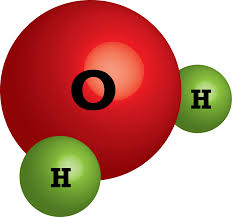
How many atoms of Hydrogen are in this compound?
1
2
3
4
All matter is made of _________.
The subatomic particles that make up an atom.
solid, liquid, gas
electrons, protons, nucleus
energy, protons, nucleus
electrons, protons, neutrons
What is the chemical symbol for Hydrogen
H
He
Hy
Hg
What is this subatomic particle that has positive charge?
Electron
Neutron
Proton
Megatron
What is energy?
a mixture of two substances
an object’s interaction with its surroundings
the ability to do work
Which type of energy is the energy of “motion”?
Potential
Kinetic
Which type of energy is “stored” energy?
Potential
Kinetic
What type of scientist studies force, motion, and energy?
Biologist
Geologist
Physicist
Zoologist
Energy can be destroyed.
True
False
When a bike is sitting still at the top of the hill, it has what type of energy?
Potential
Kinetic
The slower an object moves, the more kinetic energy it has.
True
False
How does a bow and arrow use energy?
it has kinetic energy only when the bow string is pulled back
it has elastic potential energy when the bow is pulled back, and kinetic energy when it releases the arrow
it uses electric energy to shoot the arrow
it uses kinetic energy when the bow string is pulled back and the potential energy as the arrow flies
Where could you place a toy car to give it the most potential energy?
flat on the ground
on a 12 inch ramp
on a 3 inch ramp
at the bottom of a ramp
Which of these is NOT a type of potential energy?
gravitational
elastic
chemical
kinetic
What kind of potential energy do we get from food?
chemical
gravitational
electric
elastic
Beaker 1-sand and water
Beaker 2-sugar and water
Beaker 3-rocks and sand
Beaker 4-rocks and water


Like charges repel
A positively charged object has lost electrons
A negatively charged object has lost protons