
 Worksheets
Ecology Test Review
Total questions: 56
Worksheet time: 56mins
Sophia and Lily are studying the factors that can cause an increase in an organism's population. They concluded that population increase is caused by ____________ and _____________.
death rate and emigration
birth and death
birth rate and immigration
disease and parasitism
Population decrease is caused by ______ and ________.
deaths and emmigration
births and immigration
births and deaths
immigration and emigration
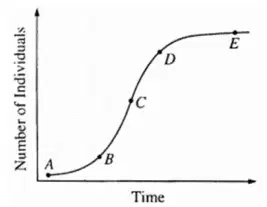
Luna, Anika, and Michael are studying the growth of a bacteria culture in their biology class. They notice that the growth of the bacteria follows a logistics curve. Between which two points on this logistics curve is exponential growth shown?
A-B
B-C
C-D
D-E
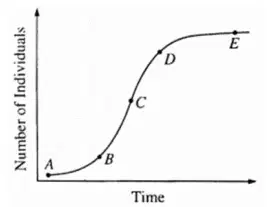
James, Noah, and Arjun are studying the concept of carrying capacity in their environmental science class. They learned that carrying capacity is the total population an environment can support with the amount of resources it has. They are given a graph showing the population of deer in a forest over time. Which letter on the graph indicates the point where the carrying capacity of the forest has been reached?
A
B
D
E
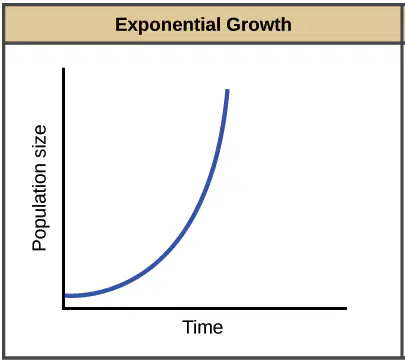
Mia, Arjun, and Abigail are studying the growth of a bacteria culture in their biology class. They notice that the bacteria population can't continue to grow exponentially forever. What could be the reason for this?
The bacteria have developed advanced technology.
The bacteria have decreased their birth rates.
The bacteria have increased their death rates.
The bacteria have limited resources to survive and reproduce.
Mason, James, and Abigail are studying the impact of population density on certain factors in their local park. They noticed that some factors increase when more organisms are in an area. Which of the following factors that they observed are density-dependent?
Birth rate, death rate, immigration
Natural disasters, weather, climate
Competition for resources, predation, disease, and parasitism
Migration, climate change, pollution
Hannah, Benjamin, and Avery are studying different factors affecting the population of organisms in an area. They are particularly interested in density-independent factors, which do not change regardless of the number of organisms present. Which of the following would be examples of such factors?
Competition for resources
Natural disasters, temperature, sunlight, precipitation
Predation
Migration
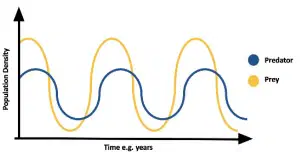
Aria, Anika, and Ethan are studying the impact of removing wolves (predators) from a forest ecosystem. What would happen to the deer population (prey) if we removed the wolves?
The deer population would decrease.
The deer population would become extinct.
The deer population would remain the same.
The deer population would increase.
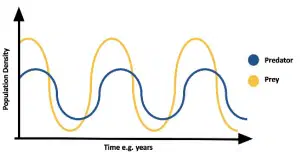
Nora, Charlotte, and Samuel are studying the population graphs of lions and gazelles in the African savannah. Why do the lion (predator) populations mirror the gazelle (prey) populations in the graph?
They keep each other's population in check.
One hibernates while the other is active.
One migrates while the other is present.
They eat at different times
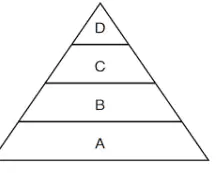
Maya, Benjamin, and Elijah are studying the food chain. They learned that the first level of the food chain is called the trophic level 1. If the trophic levels were represented by letters, what letter would represent trophic level 1?
D
C
B
A
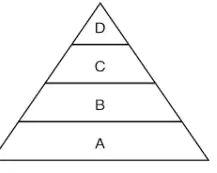
Oliver, Sophia, and Emma went on a field trip to a forest. They observed the food chain and noticed that some animals eat plants, some eat other animals, and some eat both. If we consider plants as the first trophic level, which trophic level would the animals that eat other animals (secondary consumers) belong to?
A. First level
B. Second level
C. Third level
D. Fourth level
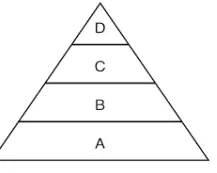
Zoe, Olivia, and Ethan are studying the energy flow in an ecosystem. They noticed that energy decreases as it moves up the food chain. Which trophic level do you think has the LEAST amount of energy?
Producers
Primary Consumers
Secondary Consumers
Tertiary Consumers

Aria, Evelyn, and Benjamin are studying energy flow in an ecosystem for their science project. They found that the plants (trophic level A) in their model ecosystem have 458.1 J of energy. If this is the case, how much energy would the secondary consumers (trophic level C) in their model have?
.4581 J
4.581 J
4581 J
45.81 J
Mason, Abigail, and Evelyn are studying the energy flow in an ecosystem. They learned that when energy is transferred from one trophic level to the next, only a certain percentage is passed on. How much energy is typically transferred from one trophic level to the next?
(a)

Emma, Abigail, and William are studying the energy flow in a food chain for their science project. They observed that only 10% of energy is passed to the next trophic level. What happens to the 90% of energy not passed to the next trophic level?
It is lost as heat or used for metabolic processes.
It is released as waste products.
It is stored as potential energy.
It is converted into biomass for the next trophic level.
Anika, Rohan, and Elijah are studying about food chains in their science class. Their teacher explained that food chains can't be longer than 4-6 organisms. Rohan is curious and asks, 'Why can't food chains be longer than 4-6 organisms?'
Competition for resources
No more energy to gain
Limited availability of space
Predator-prey relationships

Luna and Arjun went on a field trip to a local park. They were asked to identify the two producers in the ecosystem they observed. What did they identify?
wildflowers and grass
a rabbit and a mouse
a hawk and a snake
they said there is only 1 producer - grass
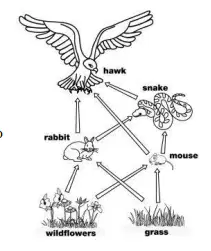
Scarlett and Nora went on a field trip to a forest. They saw various organisms in their natural habitat. According to what they observed, which two organisms can be considered as primary consumers?
wildflowers and grass
rabbit and mouse
mouse and snake
snake and hawk
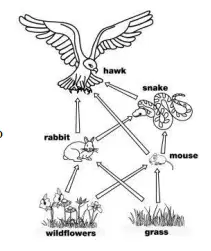
Isla, Nora, and Kai are observing a hawk in their backyard. They are trying to figure out which two consumer levels the hawk fills in the food chain. Can you help them?
primary and secondary
secondary and tertiary
tertiary and quaternary
primary and tertiary
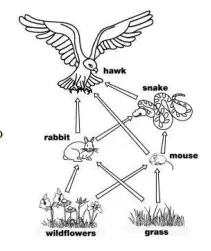
Hannah, Charlotte, and Mia are studying a food web in their biology class. They notice that bacteria is missing in the food web they are studying. Which organisms should have an arrow pointing to the bacteria?
Both producers
All consumers
None in this food web
Every organism recycles nutrients back to the soil
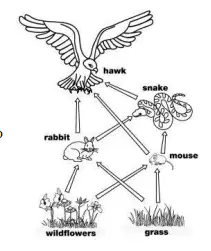
James, Aiden, and Luna are studying about the food chain. They learned that snakes often eat mice. What would happen to the snake population in their local park if the mouse population were eradicated?
The snake population in the park would increase.
The snake population in the park would become extinct.
The snake population in the park would remain the same.
The snake population in the park would decrease.
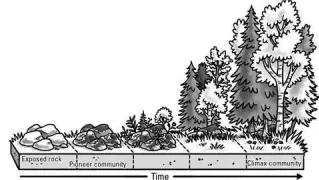
Liam, Oliver, and Emma went on a field trip to a nearby mountain. They noticed that the mountain was covered with plants, even though it was just bare rock a few years ago. What type of ecological succession is this? How do you know?
Primary succession because it starts with bare rock.
Primary succession because it starts with soil.
Secondary succession because it starts with soil.
Secondary succession because it starts with bare rock.
Noah, Aiden, and Maya are studying about primary succession in their biology class. They learned that certain species are the first to colonize previously disrupted or damaged ecosystems, beginning a chain of ecological succession that ultimately leads to a more biodiverse steady-state ecosystem. Can you help them identify these pioneer species in primary succession?
Ferns, fungi, and algae
Grass, shrubs, and trees
Insects, birds, and mammals
Lichens, mosses, and certain types of bacteria

Aiden, Daniel, and Kai are studying the process of secondary succession in their biology class. They are particularly interested in understanding the pioneer species involved in this process. Can you help them identify the pioneer species in secondary succession?
Ferns, shrubs, and trees.
Insects, birds, and mammals.
Algae, fungi, and bacteria.
Flowers, weeds, grasses
Emma, Evelyn, and Isla started a gardening project in a barren land. What happens to the amount of soil over time in this primary succession scenario?
It increases.
It decreases.
There is no soil during primary succession.
Nothing

Which of the following cause primary succession?
Forest fires and abandoned farmlands
Hurricanes and tornadoes
Flooding and High Winds
Volcanic eruptions involving lava, glacial retreating
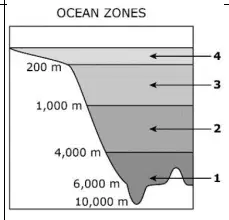
Liam, Grace, and Aria are on a field trip to the ocean. Where would they find phytoplankton and why?
They would find phytoplankton in Zone 4 because that is where light penetrates.
They would find phytoplankton in Zone 1 because that is where the nutrients are.
They would find phytoplankton in Zone 2 because that is where they like to hide.
They would find phytoplankton in Zone 3 because they need colder water.
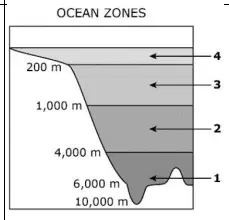
In a science class experiment, Liam, Aiden, and Abigail are observing a large aquarium divided into four zones. Where would they find the highest oxygen concentration and why?
Zone 1 because it's where the dead fish are, and they produce oxygen.
Zone 2 because it's where all the fish reside.
Zone 3 because it's the darkest part of the aquarium.
Zone 4 because it's where the plants are, and oxygen is a product of photosynthesis.
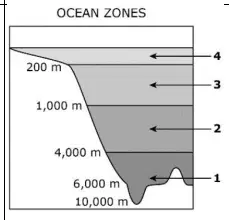
Rohan, Lily, and Elijah are studying different zones of the ocean. Which zone would have the most nutrients and why?
Zone 3 because that is where sharks, like the ones Rohan is studying, eat.
Zone 1 because dead matter in the ocean, like the one Lily is researching, sinks and accumulates on the bottom.
Zone 4 because all dead organisms, like the ones Elijah is observing, float to the top.
Zone 2 because of gravity.
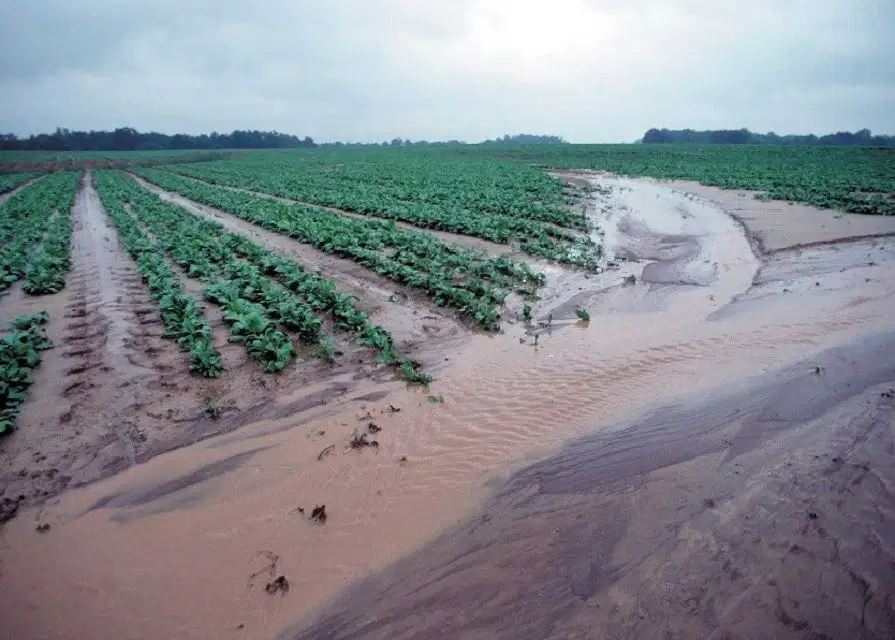
Soil and sediment running off into water causing it to be more cloudy is called
run-off.
sedimentation pollution.
soil contamination.
water purification.
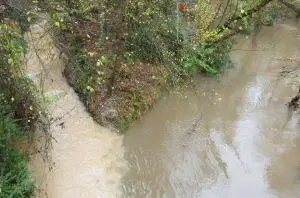
Which of the following causes sedimentation pollution
competition, abundance of predators
temperature change, space limitations, predators
global warming, invasive species, disease
construction, deforestation, mining
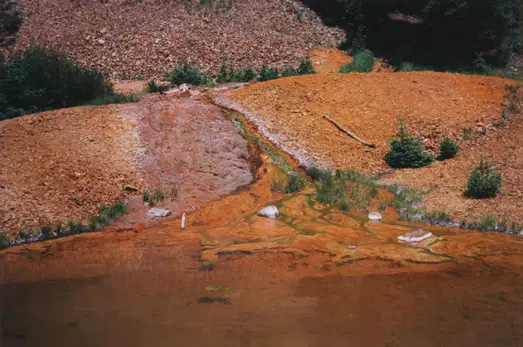
How can sedimentation pollution be fixed?
planting plants and trees
creating more lakes and streams
building more communities
create more roadways

What does eutrophication mean?
Excess (too many) nutrients causing a lack of oxygen in the water
Not enough nutrients causing too much oxygen in the water
The water wants to change color
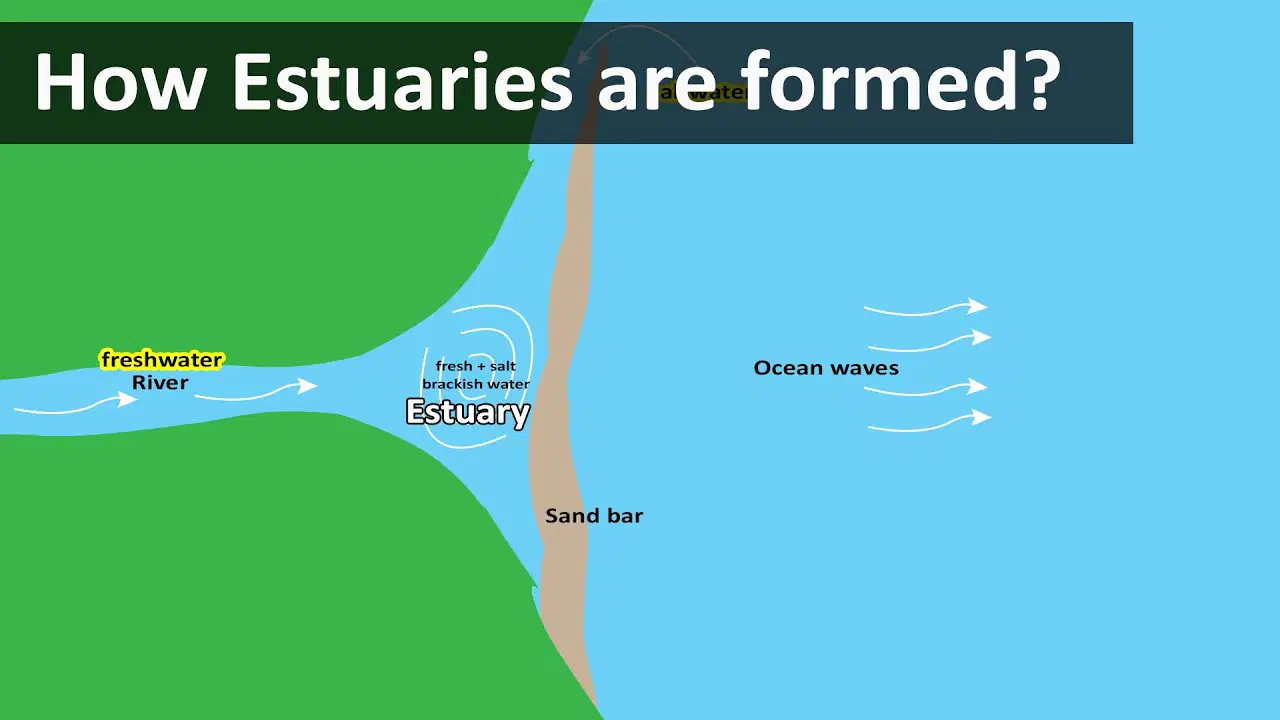
Why would fish in an estuary have a high range of tolerance?
They live in an area of varying salt levels.
They lack variability.

A semi-enclosed area where fresh water from a river meets salty water from the sea.
Watershed
Groundwater
Estuary
Ocean
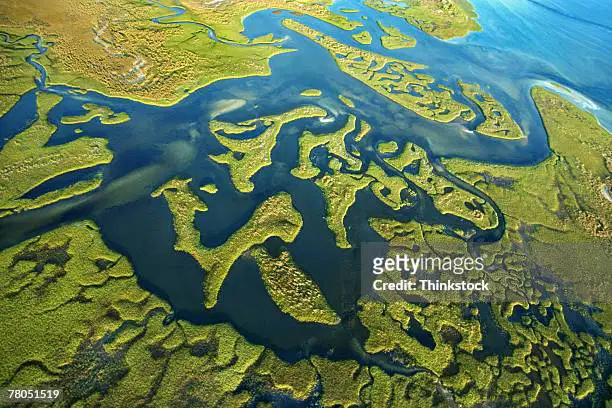
Which of the following acts as a fish nursery, helps buffer storms, acts as a sponge and filters water?
Estuary
What is causing our oceans to become more acidic?
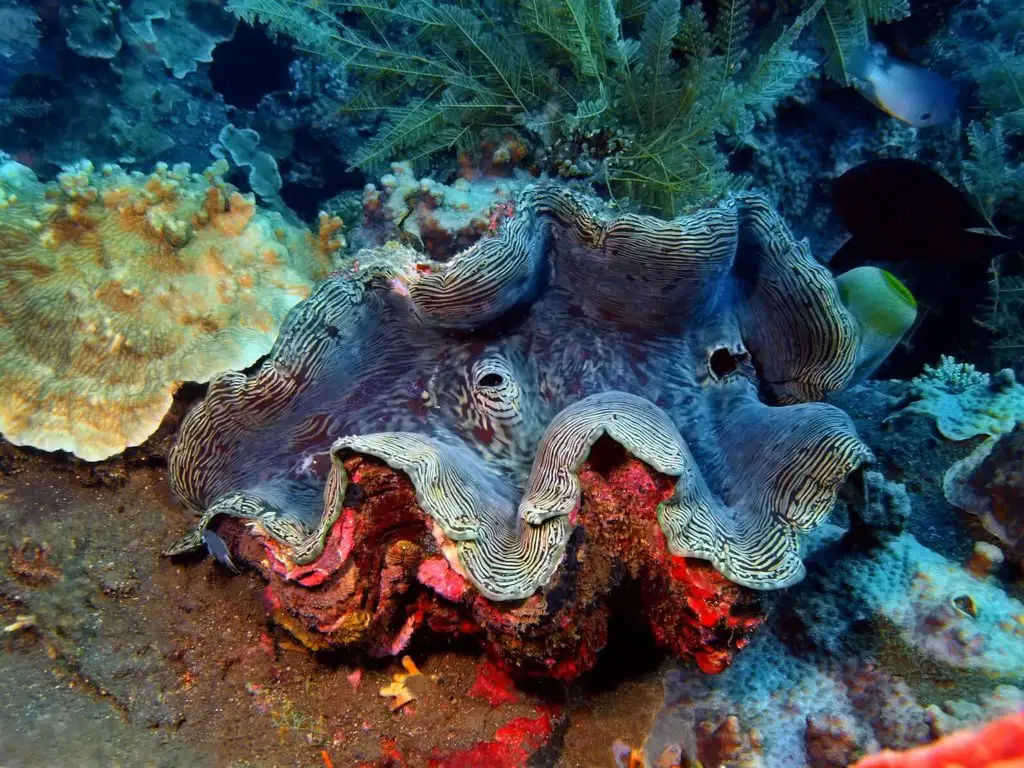
What effect does a lower pH (more acidic) have on our marine animals?
weaker shells
less oxygen available
less nutrients
it has no effect

What makes an invasive species different from a native species?
they have more predators and a low tolerance for change
they have fewer predators, and a higher range of tolerances
they have a higher birth and death rate
they are at higher risk for disease and competition
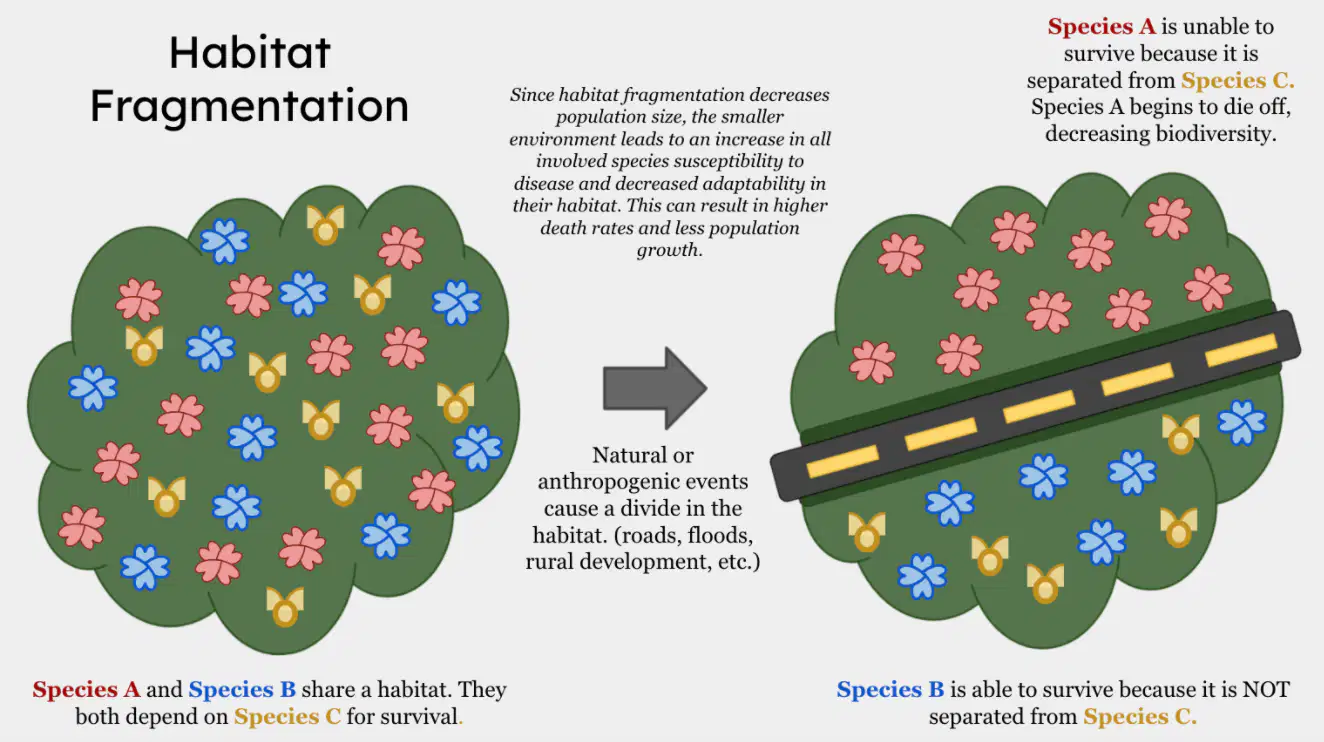
Why is habitat fragmentation bad for genetic diversity?
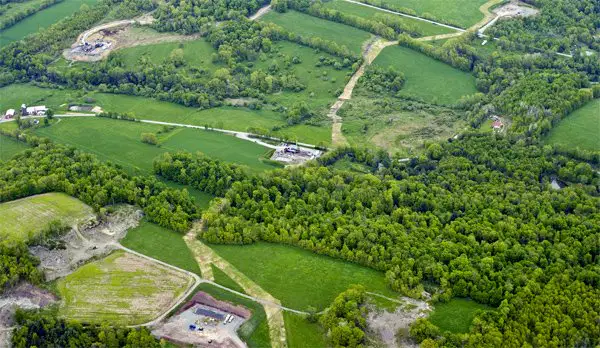
What is habitat fragmentation?

What is a wildlife corridor?

How is a wildlife corridor related to the concept of gene flow?
A wildlife corridor helps gene flow.
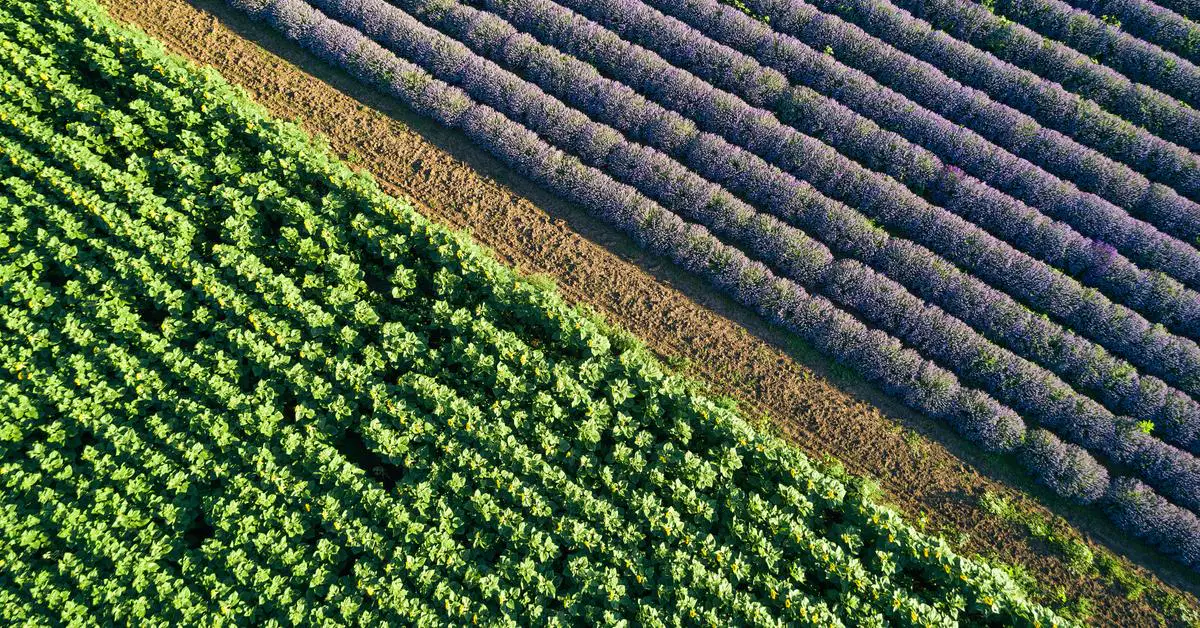
What is monocropping?

Why is monocropping considered bad?
It attracts a single predator to the area.
it reduces genetic diversity making the crop more susceptible to disease.
It creates a huge population of the same species of insect in an area.
It requires more water than the aquifer can replenish.
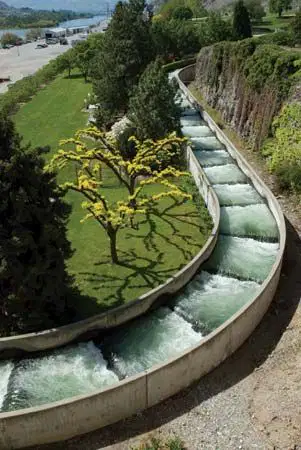
What can be built to help fish travel up a river where a dam has been installed?
Which of the following would be considered a carbon sink?
ocean
combustion of fossil fuels
photosynthesis
deforestation/burning trees
Which of the following would be considered a carbon source?
ocean
combustion of fossil fuels
photosynthesis
deforestation/burning trees

Which two carbon gases are leading to climate change?
nitrogen and phosphorus
carbon dioxide and methane
oxygen and hydrogen
carbon dioxide and nitrogen
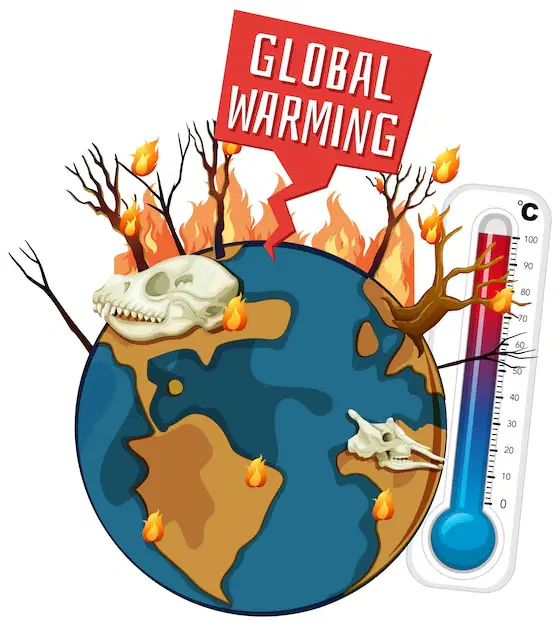
Consequences of global warming are
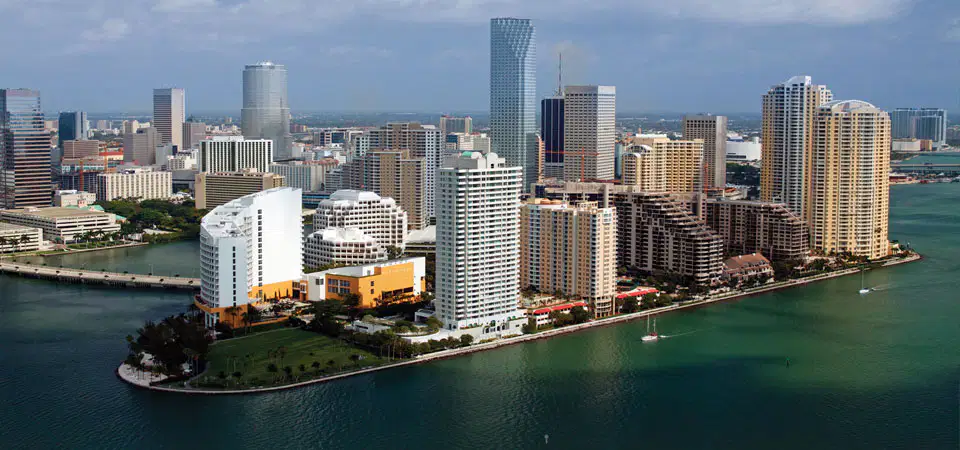
The sea is rising due to melting glaciers and __________.
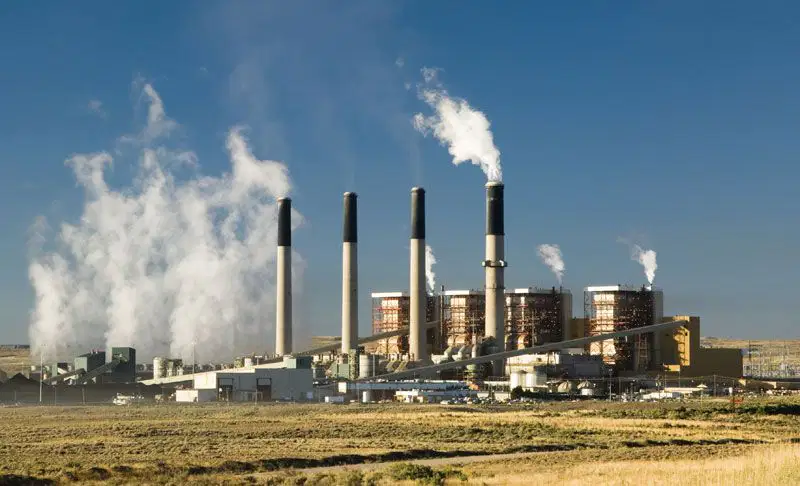
What are the 3 fossil fuels?
How do fossil fuels form?

Why is nuclear power considered non-renewable?
What is the main advantage of using nuclear power over fossil fuels?

Why are there not a ton of nuclear plants everywhere?

