wayground logo

Free Printable Worksheets

Font size

S
M
L
XL
Worksheets

Unit 2 Atmosphere Exam Review

Total questions: 84

Worksheet time: 43mins
Name
Class
Date
1.
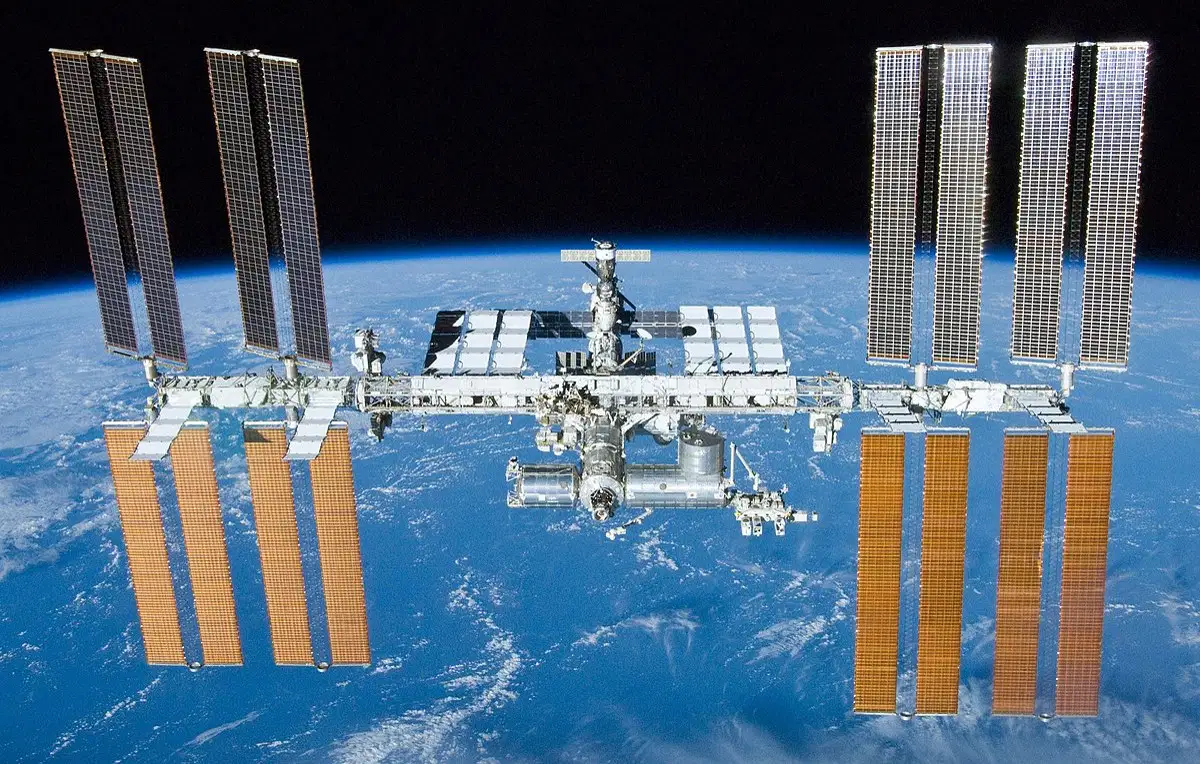
What layer of the atmosphere would you find the International Space Station?
a)
mesosphere
b)
troposphere
c)
thermosphere
d)
exosphere
e)
stratosphere
2.
What layer of the atmosphere would you find the following?
a)
mesosphere
b)
troposphere
c)
thermosphere
d)
exosphere
e)
stratosphere
3.
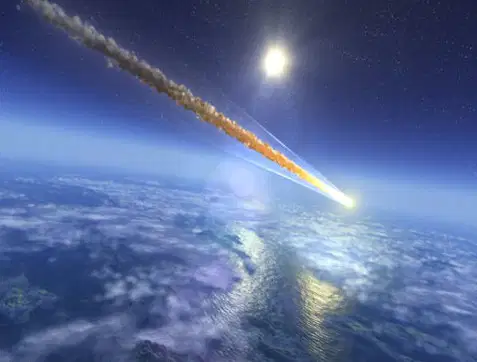
What layer of the atmosphere would the following occur?
a)
mesosphere
b)
troposphere
c)
thermosphere
d)
exosphere
e)
stratosphere
4.

What percentage of nitrogen gas is found in the atmosphere? Round to the nearest whole number.

(a)  

5.

What substance is found in the atmosphere at 21 %?

(a)  

6.

Ozone is naturally concentrated in which atmospheric layer?

(a)  
7.
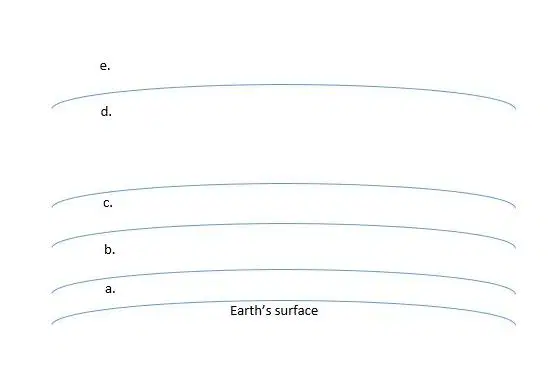
Which layer absorbs the largest amounts of high energy radiation?
a)
a
b)
b
c)
c
d)
d
e)
e
8.

What does the prefix tropo- mean?

(a)  

9.

What does the prefix strato- mean?

(a)  

10.

VOCs

(a)  

11.

O3

(a)  

12.

NOx

(a)  

13.

PM

(a)  

14.

Pb

(a)  

15.

CO

(a)  

16.

What does CFC stand for?

4 lines
17.

SO2

(a)  

18.
Which pollutants are the acids in acid rain?
a)
Nitrogen oxides and Sulfer dioxide (NOx and SO2)
b)
Sulfuric acid and Nitric acid (H2SO4 and HNO3)
c)
Hydrocholoric acid and Sulfuric acid (HCl and H2SO4)
d)
Acetic acid and Sulfuric acid (HCH3CO2 and H2SO4)
19.
Volcanic smoke is an example of what type of pollution?
a)
mobile
b)
stationary
c)
natural
d)
not an example of pollution
20.

The human population worldwide is ~8.1 billion, how many people die every year from air pollution related deaths?

(a)  

21.
Bicycle riding is an example of what type of pollution?
a)
mobile
b)
stationary
c)
natural
d)
not an example of pollution
22.
Burning a garbage pile is an example of what type of pollution?
a)
mobile
b)
stationary
c)
natural
d)
not an example of pollution
23.

Which are the top 3 health effects of air pollution?

a)
Lung Disease
b)
Heart Disease
c)
Cancer Risk
d)
Immune Disease
e)
Muscular Disease
24.

What 2 sustances react in the troposphere to form a secondary pollutant.

a)

primary pollutant

b)

secondary pollutant

c)

enviromental factors (water, UV radiation)

d)

fossil fuels

25.

Over what location on Earth does the annual ozone hole form?

(a)  

26.

Name TWO examples of types of products that contained CFCs.

(a)  

27.

Ozone in the __________ is bad. Name the atmospheric layer.

a)

mesosphere

b)

thermosphere

c)

stratosphere

d)

troposphere

28.

Ozone in the ________ is good. Name the atmospheric layer.

a)

mesosphere

b)

troposphere

c)

thermosphere

d)

stratosphere

29.

In what year is the hole in the ozone layers expected to be restored?

(a)  
30.

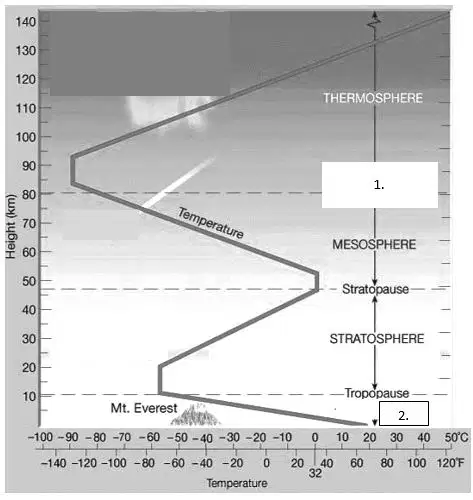
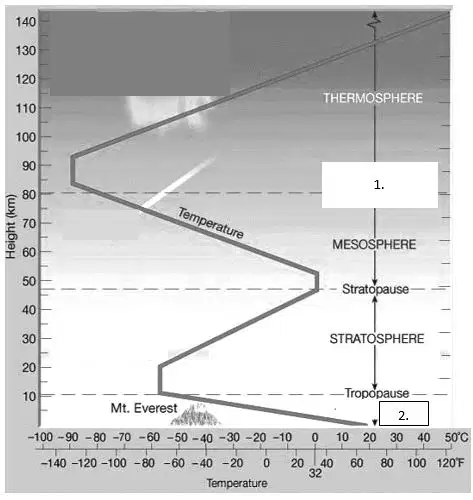
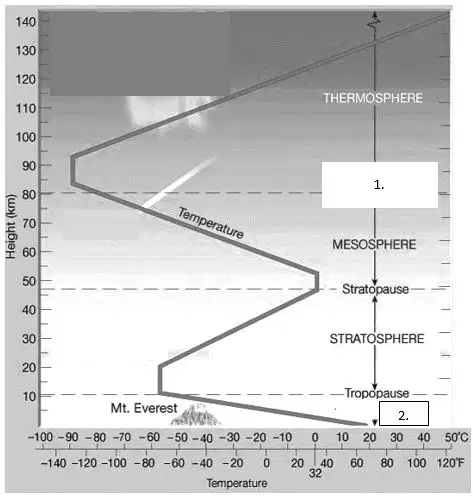
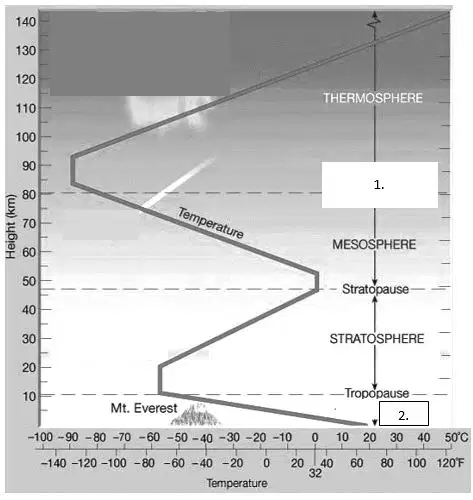
Study the graphic, then name the missing part of the atmosphere located at (1.) on the graphic.

(a)  
31.
What would be the expected temperature at 70 km above the earth’s surface?
a)
100 degrees Celsius
b)
-90 degrees Celsius
c)
-50 degrees Celsius
d)
50 degrees Celsius
32.

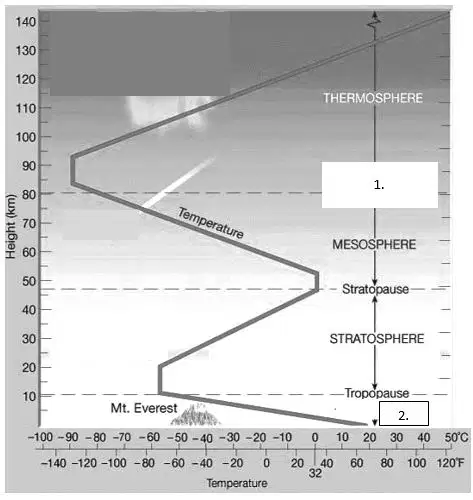
Study the graphic, then name the missing part of the atmosphere located at (2.) on the graphic

(a)  
33.

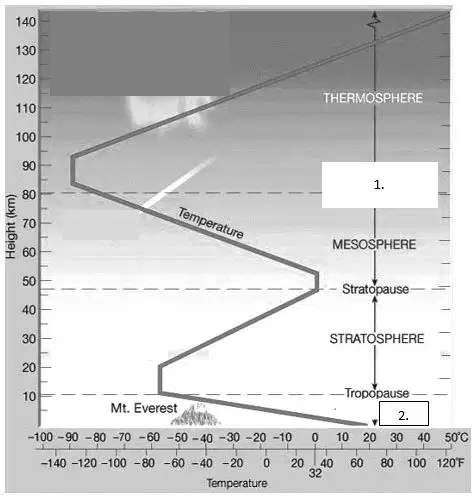
Name the highest layer of the atmosphere that is “outside” the layers shown; and therefore, not pictured in the graphic?

(a)  
34.
According to the graph, what is the approximate thickness of the Stratopause?
a)
11 km
b)
6 km
c)
47 km
d)
26
35.
What is the average temperature in Celsius of the surface of the Earth (sea level)
a)
63 C
b)
-63 C
c)
36 C
d)
18 C
36.

Which pollutant is an endocrine system disruptor and thus, causes changes to hormones?

(a)  

37.

Which pollutant causes neurological damage?

(a)  

38.
If the air does not have a smell is it always safe to breath. 0.5 pts
a)
true
b)
false
39.
What occurs in the thermosphere? Choose all that apply.
a)
x-ray radiation is absorbed
b)
gamma radiation is absorbed
c)
ultra violet (UV) radiation is absorbed
d)
infra red (IR) radiation is absorbed
40.
Identify the mechanism by which a celestial body such as Earth or a star generates a magnetic field.
a)
fluidity effect
b)
magneto effect
c)
rotational effect
d)
dynamo effect
41.
What occurs in the stratosphere? Choose all that apply.
a)
x-ray radiation is absorbed
b)
gamma radiation is absorbed
c)
ultra violet (UV) radiation is absorbed
d)
infra red (IR) radiation is absorbed
42.
At the three gradients or “pauses” in the atmosphere, what happens to the temperature?
a)
stays the same
b)
increases
c)
decreases
43.
What layers contain the ionosphere? Check as many answers as apply.
a)
stratosphere
b)
mesosphere
c)
exosphere
d)
troposphere
e)
thermosphere
44.
What environmental substance is needed to produce ozone?
a)
H2O
b)
CO2
c)
UV radiation
d)
N2
45.
What environmental substance is needed to produce acid deposition?
a)
H2O
b)
CO2
c)
UV radiation
d)
N2
46.
What is the basis for dividing the atmosphere into layers?
a)
density
b)
height
c)
temperature
d)
composition of gases
47.

These two primary pollutants lead to the production of ozone in the troposphere. Name them.

(a)  

48.
What is the major cause of air pollution?
a)
combustion of fossil fuels
b)
deforestation
c)
oil spills
d)
human garbage
49.

Air pollutant that is characterized by a yellow, to orange, to brown color depending on its concentration.

(a)  

50.
Which of the following are examples of VOCs, that demonstrate their telltale signature . Check all that apply.
a)
paints and markers
b)
perfume and deodorants
c)
house hold cleaners
d)
ozone
e)
dust
51.

Identify the two technologies that reduce air pollutants and that are mandated by the Clean Air Act.

a)

scrubbers on factory smoke stacks

b)

scrubbers on vehicles

c)

catalytic converters on factory smoke stacks

d)

catalytic converters on vehicles

52.

Identify ways to fix or eliminate pollution problems.

a)

Restrict what is produced
by making laws/regulations or give incintintives to do something else


b)

Capture pollution before released into the environment

c)

Clean up the pollution that has been released

d)

Produce new technology to do the same task without pollution

e)

Educate/make citizens aware of thier role in pollution

53.

Where is water found in the troposphere?

(a)  

54.
What elements do you find in water?
a)
oxygen
b)
hydrogen
c)
carbon
d)
nitrogen
e)
sulfer
55.

What type of lifeform are responsible for transpiration.

a)

decomposers

b)

autotrophs

c)

herbivores

d)

heterotrophs

56.

List two ways water returns to the atmosphere.

(a)  

57.

After precipitation, what two things could happen next to water?

(a)  

58.

What spin direction of wind is caused by the Coriolis Effect in the Northern hemisphere.

a)
clockwise
b)

counter clockwise

59.

Name the convection cells of the three cell model found between the equator and 30 N or 30 S.

(a)  

60.
Clouds form in the atmosphere from which process?
a)
evaporation
b)
condensation
c)
precipitation
d)
transpiration
61.
Cumulonimbus clouds are commonly known as____.
a)
dark piles
b)
destroyers
c)
dark curls
d)
thunderstorm clouds
62.

Identify the angle of incidence at the equator?

(a)  

63.
Which layer of the atmosphere is where all weather occurs?
a)
troposphere
b)
stratosphere
c)
mesosphere
d)
thermosphere
e)
exosphere
64.
If the molecules of an air mass are closely pack together, what is the temperature of the air mass?
a)
warm
b)
cold
c)
there is no relationship between molecule closeness and temperature
65.

How is humidity measured?

(a)  

66.
Which type of air mass moves more quickly, one that is warm or cool?
a)
warm
b)
cool
c)
they both move at the same rate
67.
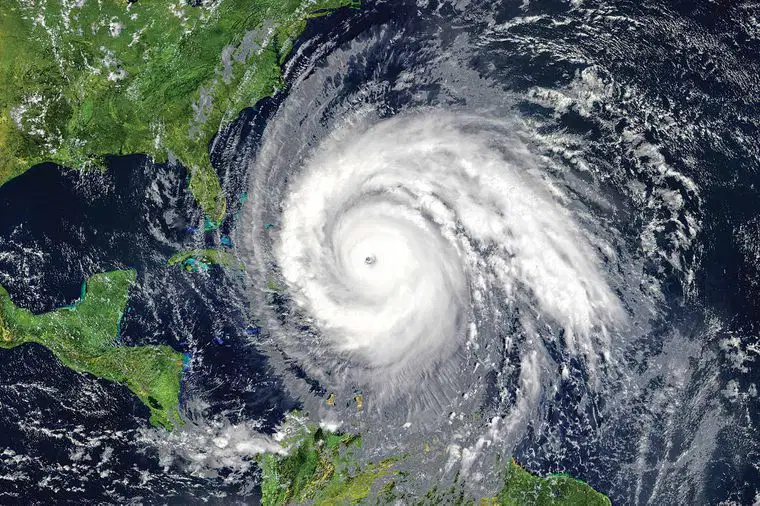
Identify the front from the picture.
a)
cold front
b)
warm front
c)
stationary front
68.
If you place a thermometer between two square of black paper and a thermometer between two squares of white square and place both set-ups outside in the sun for many hours, what would you expect to happen?
a)
the thermometer on black paper will have a higher temperature
b)
the thermometer on white paper will have a higher temperature
c)
the temperatures of the two thermometers will be the same
69.
What type of pressure prevents clouds from forming?
a)
high pressure
b)
low pressure
70.
Which temperature of air has a higher density?
a)
warm air
b)
cold air
c)
there is no relationship between air temperature and density
71.
Define wind.
4 lines
72.

What term form the hydrological cycle means to take in and integrate into a system.

(a)  

73.

Name the convection cell of the three cell model that rotates in the opposite direction due to the influence of the other two.

(a)  

74.
Substance passively move from areas of __a.__ concentration, to areas of __b.__ concentration. Identify a. and b.
4 lines
75.
Air molecules that have more heat energy do what?
a)
Stay near the Earth's surface
b)
Rise in the atmosphere
c)
Heat energy does not affect molecules
76.

Under average air pressure, if two opposing air masses meet, what always occurs?

(a)  

77.

What are the five factors that affect weather?
4 lines
78.
Name an example of a surface on Earth that has a high albedo.
4 lines
79.
What type of air pressure is associated with the shown front?
a)
high pressure
b)
low pressure
80.

In what direction does the Earth rotate on its axis as we revolve around the sun.

(a)  

81.

How is wind speed measured?

(a)  

82.
What is the difference between weather and climate?
4 lines
83.
Identify and Explain the primary phenomena that occurs that produce North and South wind currents.
4 lines
84.
Identify and Explain how the East and West wind currents are formed from North and South convection cells. (Focus on one hemisphere if it is helpful).
4 lines