
 Worksheets
1st Trimester EXAM
Total questions: 85
Worksheet time: 43mins
Name
Class
Date
1.
1. What do we mean when we say "momentum is conserved" during a collision?
4 lines
2.
2. What is Newton's 1st Law of Motion?
4 lines
3.
3. What is Newton's 2nd Law of Motion?
4 lines
4.
4. What is Newton's 3rd Law of Motion?
4 lines
5.
5. If a person standing on a skate board pushes off of a wall, what happens? How can this situation be explained in terms of Newton's Third Law?
4 lines
6.
6. Describe the relationship between the mass of an object and the force it takes to move the object:
4 lines
7.
7. What is the difference between mechanical and electromagnetic waves?
4 lines
8.
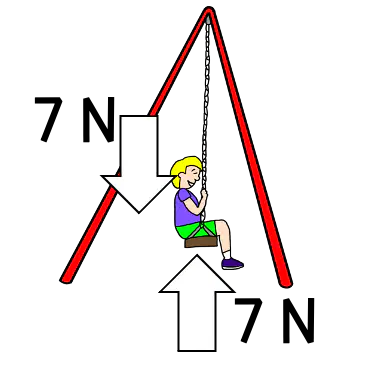
8. What is the net force acting on the kid?
(a)
9.
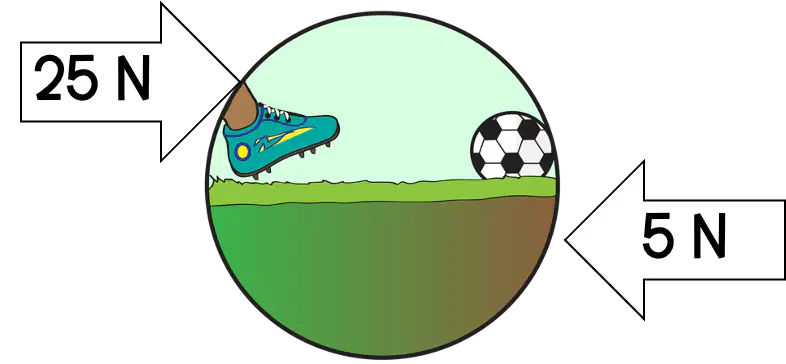
9. What is the net force acting on the ball?
(a)
10.
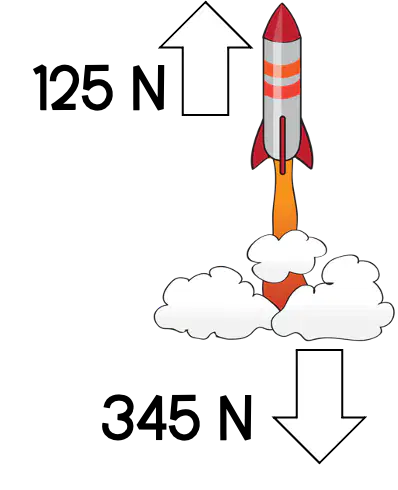
10. What is the net force acting on the rocket?
(a)
11.
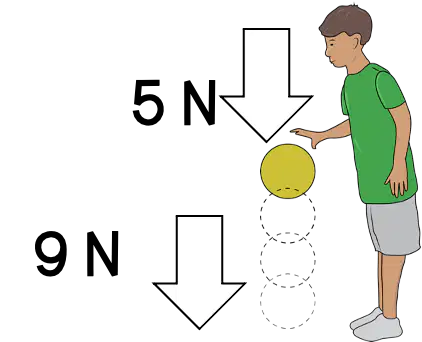
11. What is the net force acting on the ball?
(a)
12.
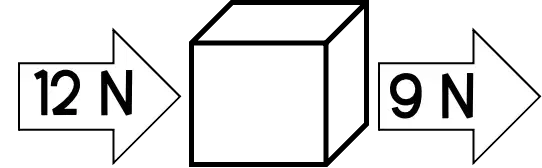
12. What is the net force acting on the box?
(a)
13.
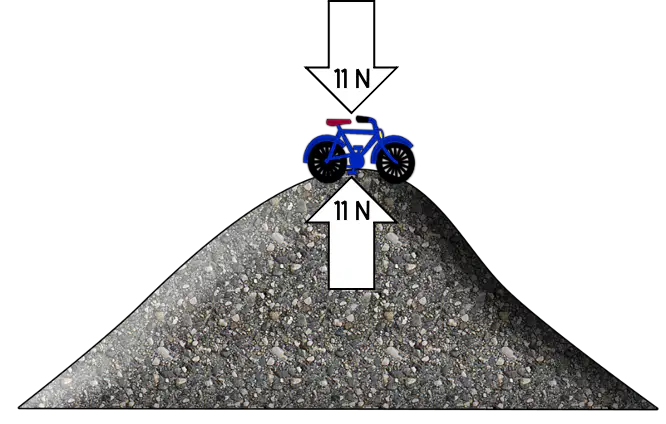
13. What is the net force acting on the bike?
(a)
14.
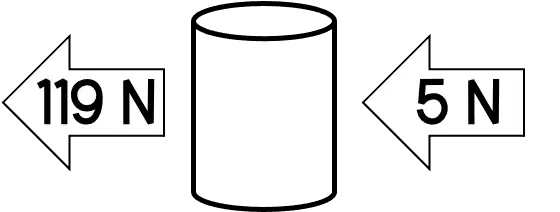
14. What is the net force acting on the cylinder?
(a)
15.
15. The set of steps that many scientists follow when performing investigations is called the ______________________.
a)
Design process
b)
Scientific method
c)
Variables
d)
Experiment
16.
16. The one factor that is purposely changed during an experiment is the ___________________.
a)
Independent variable
b)
Dependent variable
c)
Controlled variable
17.
17. All factors that must be kept the same during the experiment are called ___________________.
a)
Independent variables
b)
Dependent variables
c)
Controlled variables
18.
18. The factor that changes in response to changes in the independent variable; the factor that is measures is called the _____________________.
a)
Independent variable
b)
Dependent variable
c)
Controlled variable
19.
19. How many variables can you change in an experiment?
a)
One
b)
Two
c)
Unlimited- just stay organized
d)
You can't change anything
20.
20. The ____________________ identifies all of the materials required for the experiment.
a)
Procedure
b)
Data
c)
Experimental control
d)
Materials list
21.
21. The ___________________ describes the steps needed to conduce the experiment and collect data.
a)
Procedure
b)
Data
c)
Experimental control
d)
Materials list
22.
22. Which is the independent variable in the question, "does doing homework lead to higher test scores?"
a)
Test scores
b)
Homework completion
c)
Work ethic
d)
Grade
23.
23. Which is the dependent variable in the question, "does doing homework lead to higher test scores?"
a)
Test scores
b)
Homework completion
c)
Work ethic
d)
Grade
24.
24. Which is the independent variable in the experiment: Mrs. Schindel is studying how the growth of lavender plants is affected by sunlight exposure.
a)
Sunlight exposure
b)
Plant growth
c)
Type of soil
d)
Water
25.
25. Which is the dependent variable in the experiment: Mrs. Schindel is studying how the growth of lavender plants is affected by sunlight exposure.
a)
Sunlight exposure
b)
Plant growth
c)
Type of soil
d)
Water
26.
26. Determine if the data is quantitative or qualitative:
Average mass of 52 grams
a)
Quantitative
b)
Qualitative
27.
27. Determine if the data is quantitative or qualitative:
Inconsistent speed
a)
Quantitative
b)
Qualitative
28.
28. Determine if the data is quantitative or qualitative:
Moving slow
a)
Quantitative
b)
Qualitative
29.
29. Determine if the data is quantitative or qualitative:
Three grams
a)
Quantitative
b)
Qualitative
30.
30. Determine if the data is quantitative or qualitative:
Has a rough texture
a)
Quantitative
b)
Qualitative
31.
32. What is a force?
a)
A collision
b)
Energy acting on an object
c)
Matter in an object
d)
A push or a pull
32.
33. What happens to momentum during a collision?
a)
It increases
b)
It decreases
c)
It is conserved
d)
It goes away
33.
34. You push on a box with a force of 30 N to the right. What force does the box exert on you?
a)
30 N to the right
b)
30 N to the left
c)
300 N to the right
d)
300 N to the left
34.
35. Why is Newton's 3rd Law of Motion important to collisions?
a)
This law explains why the motion of objects resist change to their motion during the collision
b)
This law explains why the force exerted by objects that collide with each other exert forces that are equal and opposite to each other
c)
This law explains why the acceleration of an object changes
d)
This law you calculate the force exerted by objects involved in a collision
35.
36. Explain how jumping on a trampoline is an example of Newton's 3rd law of Motion?
a)
The force of the trampoline is greater and pushes you up
b)
You push down on the trampoline and the trampoline pushes up on you with an equal and opposite force
c)
Your force is greater than the force of the trampoline
d)
The force of the trampoline is less than your force
36.
37. A force is measured in ________________
a)
Grams
b)
M/S
c)
Kilograms
d)
Newtons
37.
38. Arrows are used to show force. They represent _____________ and ______________.
a)
strength and speed
b)
strength and velocity
c)
strength and direction
d)
direction and velocity
38.
39. Forces in nature always act _______________.
a)
in pairs
b)
through energy
c)
independently
d)
on objects
39.
40. If you push on a wall with a force of 25 N, what is the magnitude of the force acting on you?
a)
250 N
b)
2.5 N
c)
52 N
d)
25 N
40.
41. Which TWO factors does momentum depend on?
a)
Velocity
b)
Mass
c)
Energy
d)
Direction
e)
Force
41.
42. ________________ is the amount of motion an object has.
a)
Collision
b)
Momentum
c)
Force
d)
Velocity
42.
43. What causes the change in motion when objects collide?
a)
The energy decreases
b)
The direction changes
c)
The energy increases
d)
The energy is transferred
43.
44. What causes the change in shape when objects collide?
a)
A force is exerted on the object
b)
The energy changes
c)
The direction changes
d)
The mass increases
44.
45. The speed of an object in a given direction is the object's __________________.
a)
Velocity
b)
Mass
c)
Energy
d)
Weight
45.
46. All objects change shape when a force is exerted on them during a collision.
a)
True
b)
False
46.
47. Momentum is lost in a collision when two objects are moving at the same time.
a)
True
b)
False
47.
48. When any two objects make contact, each object applies a force on the other surface they touch. The strength of those forces are...
a)
The same but in opposite directions
b)
The same but in the same direction
c)
Different but in the same direction
d)
Different but in opposite directions
48.
49. A baseball player swings his bat and makes contact with a baseball. Which experiences a greater force?
a)
The bat applies a greater force on the ball.
b)
Neither. They experience the same force.
c)
The ball applies a greater force on the bat.
49.
50. What is a collision?
a)
An accident between automobiles
b)
An interaction between objects that physically come in contact with each other
c)
An interaction between objects that do not physically come in contact with each other
d)
A type of force
50.
51. What is momentum?
a)
The speed and direction an object is going
b)
The force an object has
c)
The amount of energy an object has
d)
The amount of motion an object has
51.
52. The total momentum before a collision is _________________________ as the total momentum after the collision.
a)
More
b)
Less
c)
The same
d)
Opposite
52.
53. What is Newton's 3rd Law of Motion?
a)
For every action there is an equal and opposite reaction
b)
Law of inertia
c)
F = MA
d)
An object in motion remains in motion, and an object at rest remains at rest, unless acted on by an unbalanced force
53.
54. Newton's 3rd Law of Motion is also known as the law of _______________.
a)
collisions
b)
inertia
c)
momentum
d)
action-reaction
54.
55. Why is Newton's 3rd Law of Motion important to collisions?
a)
This law explains why the motion of objects resist change to their motion during the collision
b)
This law explains why the force exerted by objects that collide with each other exert forces that are equal and opposite to each other
c)
This law explains why the acceleration of an object changes
d)
This law you calculate the force exerted by objects involved in a collision
55.
56. A spinning top is an example of Newton's 3rd Law of Motion
a)
True
b)
False
56.
57. The action force on an object is equal to what?
a)
the reaction inertia on an object
b)
the action inertia on an object
c)
the reaction force on an object
57.
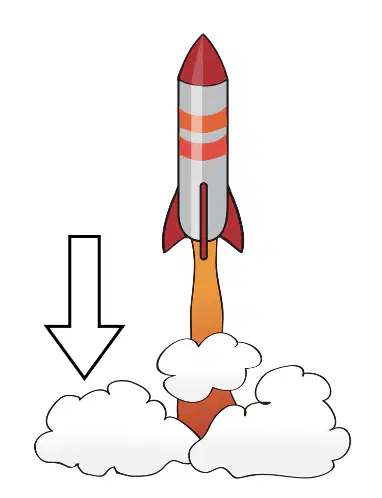
58. ACTION FORCE: The rocket gas pushing down.
a)
REACTION FORCE: The rocket moving up.
b)
REACTION FORCE: The rockets inertia stays the same.
c)
REACTION FORCE: The gas is only pushing on the ground.
d)
REACTION FORCE: The ground shakes.
58.
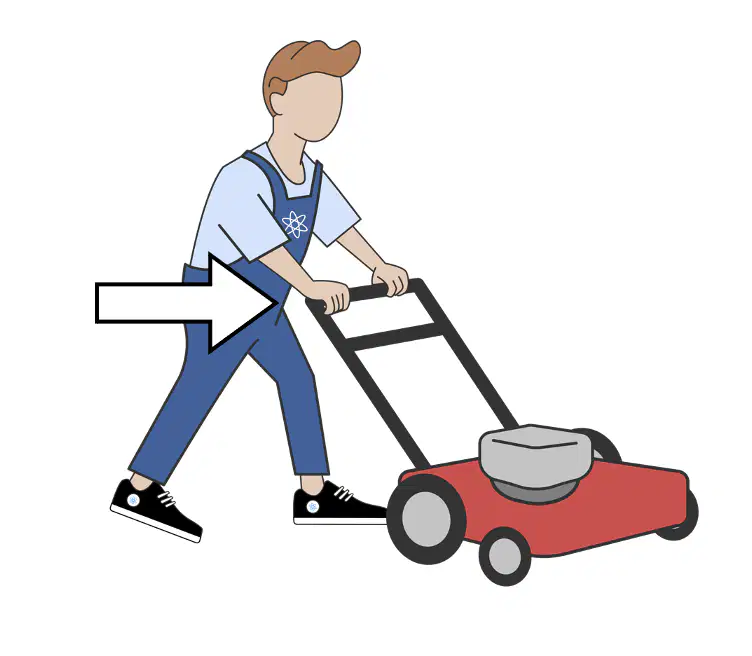
59. ACTION FORCE: The hands pushing the law mower.
a)
REACTION FORCE: The inertia of the lawn mower moving forward.
b)
REACTION FORCE: The grass being cut.
c)
REACTION FORCE: The lawn mower pushing on the hands
d)
REACTION FORCE: The hands are only pushing the lawn mower.
59.
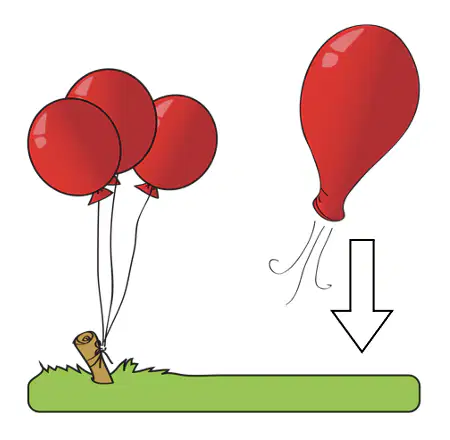
60. ACTION FORCE: The balloon pushes air down.
a)
REACTION FORCE: The air pushes the balloon up.
b)
REACTION FORCE: The inertia of the balloon moves.
c)
REACTION FORCE: The air is only pushing out of the balloon.
d)
REACTION FORCE: The air moves out of the balloon.
60.
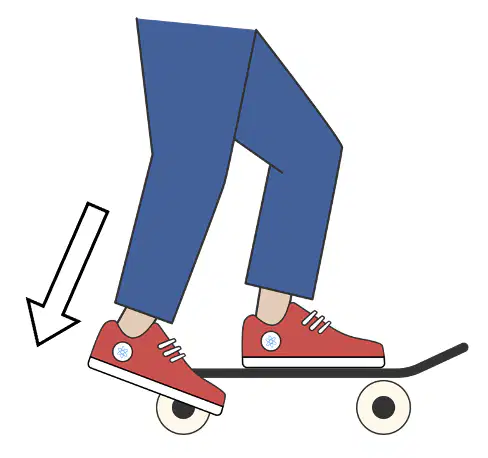
61. ACTION FORCE: The foot pushing on the ground.
a)
REACTION FORCE: The ground pushing on the foot.
b)
REACTION FORCE: The skateboard moving forward
c)
REACTION FORCE: The inertia of the skateboard moves.
d)
REACTION FORCE: The foot is only pushing on the ground.
61.
62. What is Newton's 1st Law of Motion?
a)
For every action there is an equal and opposite reaction
b)
Law of action/reaction
c)
F = MA
d)
An object in motion remains in motion, and an object at rest remains at rest, unless acted on by an unbalanced force
62.
63. Newton's 1st Law of Motion is also known as the Law of ________________________.
a)
Action-Reaction
b)
Inertia
c)
Collision
d)
Net Force
63.
64. _________________________ is the resistance of change in motion, including changes to speed, direction, OR state of rest.
a)
Unbalanced Force
b)
Balanced Force
c)
Inertia
d)
Velocity
64.
65. The overall force exerted on an object is the ____________________.
a)
Overall Force
b)
Balanced Force
c)
Unbalanced Force
d)
Net Force
65.
66. Equal forces that do not cause a change in motion are called ______________________.
a)
Overall forces
b)
Balanced forces
c)
Unbalanced forces
d)
Net forces
66.
67. Examples of balanced forces are (check all that apply):
a)
A pencil resting on a table
b)
A car turning left at 40mph
c)
A runner running at a constant speed
d)
A picture hanging on a wall
e)
A car coming to a stop
67.
68. Unequal forces that cause a change in an object's motion are called ______________________.
a)
Overall forces
b)
Balanced forces
c)
Unbalanced forces
d)
Net forces
68.
69. Examples of unbalanced forces are (check all that apply):
a)
A car speeding up to beat a red light
b)
A runner running at a constant speed
c)
A bicycle making a left turn
d)
A person being knocked over by a zombie
e)
A textbook resting on a table
69.
70. What is force measured in?
a)
m/s2
b)
kg
c)
newtons
d)
grams
70.
71. What is the formula to find force?
a)
F = A/M
b)
M = F/A
c)
A = F/M
d)
F = MA
71.
72. An object with a mass of 6 kg accelerates 2 m/s2 when an unknown force is applies to it. What is the amount of force used?
a)
12 N
b)
3 N
c)
12 kg
d)
3 kg
72.
73. An object with a mass of 20 kg would require what force to to accelerate 5 m/s2?
a)
4 N
b)
80 N
c)
100 N
d)
25 N
73.
74. What is the mass of a car that if it produces 80 N while accelerating at a rate of 5 m/s2?
a)
16 N
b)
85 N
c)
4 kg
d)
16 kg
74.
75. What is acceleration measured in when understanding Newton's 2nd law of Motion?
a)
Kilograms
b)
Newtons
c)
Grams
d)
Meters per seconds squared
75.
76. A small child has a wagon with a mass of 10 kilograms. The child pulls on the wagon with a force of 2 Newtons. What is the acceleration of the wagon?
a)
5 m/s2
b)
20 m/s2
c)
0.2 m/s2
d)
12 m/s2
76.
77. Force: 15 N
Acceleration: 3 m/s2
What is the mass?
a)
12 kg
b)
10 kg
c)
45 kg
d)
5 kg
77.
78. Mass: 5 kg
Force: 35 N
What is the acceleration?
a)
7 m/s2
b)
175 m/s2
c)
0.14 m/s2
d)
5 m/s2
78.
79. Mass: 12 kg
Acceleration: 2 m/s2
What is the force?
a)
6 N
b)
24 N
c)
10 N
d)
0.16 N
79.
80. More massive objects require more force to accelerate at the same speed as less massive objects. (Newton’s Second Law)
a)
True
b)
False
80.
81. Waves transfer _______________.
a)
Matter
b)
Volume
c)
Light
d)
Energy
81.
82. How are electromagnetic waves different than mechanical waves?
a)
They transfer energy
b)
They have to move through matter
c)
They can move through a vacuum
d)
They are stronger
82.
83. Sound waves are an example of ______________ waves.
a)
Electromagnetic
b)
Transverse
c)
Energy
d)
Mechanical
83.
84. Visible light is an example of ______________ waves.
a)
Electromagnetic
b)
Transverse
c)
Energy
d)
Mechanical
84.
85. A type of mechanical wave that vibrates in the direction of propagation is a(n) ___________________ wave.
a)
Electromagnetic
b)
Mechanical
c)
Transverse
d)
Longitudinal
85.
86. A type of mechanical wave that vibrates at right angles to the direction of its propagation is a(n) ______________ wave.
a)
Electromagnetic
b)
Mechanical
c)
Transverse
d)
Longtidudinal
100 %

