
 Worksheets
2023 Bio Test Review
Total questions: 70
Worksheet time: 59mins
Determine the characteristic of life
Living things are made of one or more (a)
Living things all share a (b) made of DNA
When the environment changes but the internal of an organism is stable this is known as (c)
When organism eat and grow or for energy this is known as (d)
Organisms can make more of itself, they can (e)
Living things can grow bigger and develop into mature adult, this chracteristics of life is (a)
Organisms can sense and respond to their (b) (anything outside the body)
Living things with a beneficial trait can pass it on to future generations, allowing them to adapt. This allow populations to (c) or change or time.
Determine the following as cell theory or not
Made up of one or more cell
Cell comes from preexisting cell
Cells are the basic structure and function of living things
Cell contain organelles
Atom is the basic unit of matter
Cells are made of matter
All cells require energy
These cells have DNA surrounded by a nuclear membrane...
Eukaryotic
Prokaryotic
Neither
Both prokaryotic and eukaryotic
All cell have which 4 cellular structures?
These cell type have membrane bound organelles like endoplasmic reticulum and mitochondria
What three structures are only found in plant cells?
chloroplasts, cell walls, and large central vacuoles
Label the three components of a plant cell
Large Central Vacuole
Cell wall
Chloroplast
Nora, William, and Olivia are in a biology class, studying cells under a microscope. Their teacher has given them a sample and told them it's either a tomato cell or a bacterial cell. The teacher wants them to identify the type of cell they are observing.
The teacher asks them to figure out what type of cell they are viewing. What cell structure should they be looking for to determine whether this cell came from a eukaryotic tomato plant or a prokaryotic bacterium?
mitochondria
nucleus
chloroplast
cell membrane
When looking at eukaryotic or prokaryotic cells, what is a crucial clue to determine if it is prokaryotic or eukaryotic?
Why is the cell membrane essential for homeostasis?
You are looking at a cell and determining it is a prokaryotic cell. What did you look at that helped you come to this conclusion?
Abigail and Lily are working on a science project about cells. They are particularly interested in the organelles that are responsible for obtaining and using energy. Which two organelles should they focus on?
vacuoles and ribosomes
endoplasmic reticulum and lysosomes
mitochondria and chloroplasts
nucleus and Golgi apparatus
What process do chloroplasts use, and what function do mitochondria use?
Photosynthesis and cellular respiration
What organelle allows the plant to stay upright when full (turgid)?

This is a picture of:
Prokaryote
Eukaryote
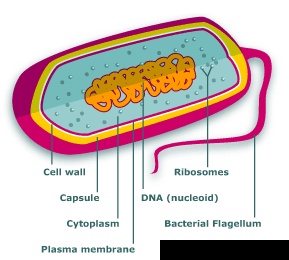
What organelle am I?
City Hall
I am like the central control center of the cell, responsible for making important decisions and storing genetic information.
What organelle am I?
Power Plants
I function as the cell's power plant, generating energy (ATP).
What organelle am I?
Factories
I am a network of factories where proteins are synthesized.
rough endoplasmic reticulum
What organelle am I?
Packaging and Shipping Department
I modify, sort, and package proteins and other molecules for transport within or outside the cell.
What organelle am I?
Recycling Centers
I act as recycling centers, breaking down waste materials and cellular debris.
What organelle am I?
Vacuoles
I am a large storage container for various substances, including water, nutrients, and waste.
What organelle am I?
Construction Workers
I work like construction workers, building proteins based on instructions from the nucleus.
What organelle am I?
The Streets
I am the space where organelles move and interact, allowing communication and transportation within the cell.
What organelle am I?
Border Control
I act as a border control checkpoint, regulating what goes in and out of the cell.
What organelle am I?
Solar Panels
In plant cells, I capture sunlight and convert it into energy through photosynthesis.
What organelle am I?
I am a network of factories where lipids are synthesized (such as the ones that make up the plasma membrane)
Smooth Endoplasmic reticulum
Which 3 organelle work together to make and process protein?
nucleus, ribosomes, and rough endoplasmic reticulum
Cell Transport:
Match the following
Selective permeability
Choosing what comes in and out
Passive transport
No energy used to move molecules
Active transport
Uses energy to move molecules

Picture of active transport

Picture of passive transport
The cell membrane is _______________ permeable.
selectively
somewhat
physically
ionically
The cell membrane is mostly made of what?
Membrane-spanning Proteins
Surface Proteins
Phospholipids
Carbohydrates
An embedded protein in the cell membrane, providing a hydrophilic passageway for small, polar ions.
carrier protein
channel protein
receptor protein
Which type of passive transport uses transport proteins to transport items such as glucose through the membrane?
Facilitated diffusion
Osmosis
Diffusion

The arrow is pointing to the
hydrophobic head
hydrophilic head
hydrophobic tail
hydrophilic tail

The arrow is pointing to the
hydrophilic head
hydrophobic head
hydrophilic tail
hydrophobic tail

The _______________ of the phospholipids in a cell membrane face inward towards each other.
heads
tails
stems
sticks
Click on the polar hydrophilic head of this phospholipid
Click on the non-polar hydrophobic tails of this phospholipid
Determine if the following discrption is active or passive transport
Requires Energy (ATPs)
No Energy
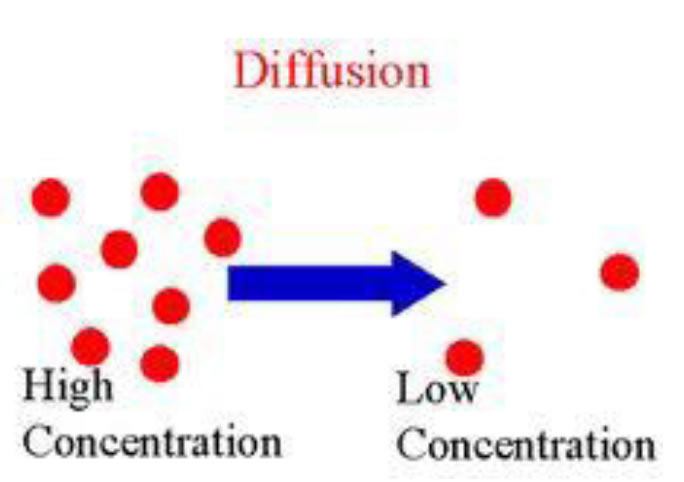
Goes against the concentration gradient (Low concentration to high concentration)
Go with the concentration gradient High concentration to low concentration)


Simple / Facilitated diffusion


When a cell forms a vesicle around unwanted particles and expels it OUT of the cell.
Pinocytosis
Endocytosis
Receptor-mediated
Exocytosis


Which type of active transport is displayed?
Endocytosis
Exocytosis

Simple Diffusion
When molecules passively cross the plasma membrane through the phospholipid bilayer
Facilitated Diffusion
When molecules passively cross the plasma membrane through a channel protein
Osmosis
The movement of water across the cell membrane
Endocytosis
Bringing in large materials through the cell membrane into a vacuole.
Exocytosis
Moving larger amounts or large quantities of materials through the cell membrane
Hypertonic
The solution contains a high concentration of solute an and low concentration of water
Hypotonic
The solution contains a low concentration of solute an and high concentration of water
Isotonic
The solution has an equal concentration of solute and water compared to the inside of the cell
Identify the correct regions of a phospholipid
Carbohydrates tails
Protein head
Phosphate head
Fatty Acid (lipid) tails
Identify the hydrophobic / hydrophilic reigon of this phospholipid
Hydrological
Hydrocephalus
Hydrophobic (Repelled by water)
Hydrophilic (attracted to water)
Match the following cellular transport

Diffusion

Facilitated diffusion

Active Transport

Osmosis
Match the following with the two examples of active transport
Determine if the following is endocytosis or exocyctosis


cellular process in which substances are brought into the cell.
A form of active transport in which a cell transports molecules out of the ce
Into cell
Out of cell
Imagine you are a scientist studying the cells of a plant in a changing environment. The plant cell maintains a constant internal state despite these changes. What is the term for this process?
Homeostasis
Active Transport
Mitosis
Photosynthesis
Determine the tonicity



