
 Worksheets
Histology Unit Test
Total questions: 75
Worksheet time: 2hrs 53mins
A single layer of epithelial tissue is classified as
stratified
singular
simple
squamous
Which of the four major types of tissues is the most abundant and widely distributed?
Epithelial
Muscle
Connective
Nervous
What is a tissue?
A group of cells with similar shape and size
A group of tissues with similar structure and function
A group of organs with similar shape and size
A group of cells with similar structure and function
Which of the following is not an example of connective tissue?
Blood
Bone
Cartilage
Skin
What type of epithelial tissue has many layers of tightly compacted cubed-like cells that aid in protection?
Simple cuboidal
Simple columnar
stratified cuboidal
stratified squamous
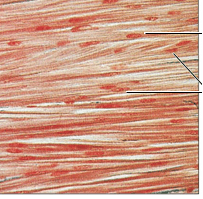
Cardiac muscle tissue
smooth muscle tissue
skeletal muscle tissue
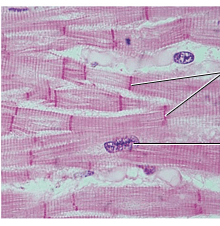
Cardiac muscle tissue
smooth muscle tissue
skeletal muscle tissue

cardiac muscle tissue
smooth muscle tissue
skeletal muscle tissue
involuntary, intercalated disks, one nucleus, striated, found in the heart
cardiac muscle tissue
smooth muscle tissue
skeletal muscle tissue
voluntary, multi-nucleated, striated, found attached to bone
cardiac muscle tissue
smooth muscle tissue
skeletal muscle tissue
involuntary, intercalated disks, one nucleus, striated, found in the heart
cardiac muscle tissue
smooth muscle tissue
skeletal muscle tissue
involuntary, not striated, one nucleus, found in hollow organs
cardiac muscle tissue
smooth muscle tissue
skeletal muscle tissue
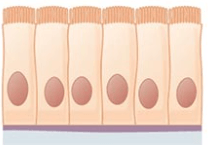
Simple columnar
simple cuboidal
stratified columnar
stratified squamous

simple columnar
stratified cuboidal
simple squamous
stratified columnar

simple columnar
stratified columnar
psedostratified columnar
simple longitudinal

simple columnar
stratified columnar
psedostratified columnar
simple squamous

simple squamous
simple cuboidal
stratified cuboidal
stratified squamous
Tissue that is used for protection, secretion, absorption, and secretion
Epithelial
Connective
Muscle
Nervous
Tissue that binds, supports, fills spaces, stores fat, and produces blood cells
Epithelial
Connective
Muscle
Nervous
This tissue transmits impulses for coordination and regulation.
Epithelial
Connective
Muscle
Nervous
This tissue is able to contract in response to stimuli causing movement.
Epithelial
Connective
Muscle
Nervous
Which type of fiber is the thickest and has the highest tensile strength?
collagen
elastin
reticular
Which type of fiber is long and thin and allows for stretch and recoil?
collagen
elastin
reticular
Which type of tissue provides insulation and a storage of fuel?
areolar
elastic connective
adipose
hyaline cartilage
Which type of tissue is the most widely distributed, supports and binds other tissues, the universal packing material?
adipose
bone
reticular
areolar
Which type of tissue is found in tendons and ligaments?
dense fibrous
areolar
reticular
blood
Which type of cartilage is found in your ear and epiglottis?
elastic cartilage
hyaline cartilage
fibrocartilage
Which type of cartilage is found in between vertebrate and knees, provides cushion?
elastic cartilage
hyaline cartilage
fibrocartilage
Which type of cartilage is found in your trachea, nose, larynx and cartilage of ribs?
elastic cartilage
hyaline cartilage
fibrocartilage
Which type of tissue supports and protects body structures as well as contains inorganic calcium salts?
areolar
hyaline cartilage
bone
dense irregular

Which type of tissue is shown?
blood
adipose
reticular
bone

Which type of tissue is shown?
areolar
elastic cartilage
reticular
blood

Which type of tissue is shown?
elastic cartilage
fibrocartilage
hyaline cartilage
dense irregular
Which of the following is NOT a function of connective tissue?
protects
supports
binds
covers & lines
Which of the following are the 2 main elements of the extracellular matrix?
ground substance, fibers
ground substance, cells
fibers, cells
Which type of tissue has a delicate network of woven fibers and is found in lymph nodes, the spleen and bone marrow?
dense fibrous
adipose
reticular
elastic cartilage
Which type of tissue has a delicate network of woven fibers and is found in lymph nodes, the spleen and bone marrow?
dense fibrous
adipose
reticular
elastic cartilage

Which type of tissue is shown?
reticular
hyaline cartilage
bone
adipose

Which type of tissue is shown?
reticular
areolar
blood
elastic cartilage
What type of tissue consists of neurons and supporting cells?
Skeletal Muscle
Smooth Muscle
cardiac Muscle
nervous
What type of tissue contains spindle-shaped cells?
Skeletal Muscle
Smooth Muscle
cardiac Muscle
nervous
What type of tissue is found attached to bones?
Skeletal Muscle
Smooth Muscle
cardiac Muscle
nervous

What tissue is shown in the picture?
Skeletal Muscle
Smooth Muscle
Cardiac Muscle
Nervous
This type of tissue is located in the brain and spinal column
smooth muscle
skeletal muscle
cardiac muscle
nervous


Adipose
Reticular
Elastic
Hyaline

What type of connective tissue has a fluid-like ground substance?
bone
cartilage
blood
ligaments
Columnar cells are _______________
taller than they are wide
cube shaped
squished
Cuboidal cells are _______________
taller than they are wide
cube shaped
squished
Squamous cells are _______________
taller than they are wide
cube shaped
squished
The heart contains which type of muscular tissue?
skeletal
cardiac
smooth
Epithelial tissue with one layer is called _____________.
stratified
simple
What is a characteristic of muscle tissue?
electrical impulses
voluntary control of the body
extensible and able to contract
connects bones
What are the four types of tissues in the human body? (Select all that apply)
Epithelial
Connective
Muscle
Nervous
How do we classify epithelial tissue?
Shape
Shape and number of layers
Counting the number of individual cells
Squamous

Identify the type of epithelial tissue from the picture above.
Simple squamous
Simple cuboidal
Stratified columnar
Stratified cuboidal
What is histology?
Study of organs
Study of different types of tissue
Study of histamines
Study of skin
What does pseudostratified mean?
Many layers of cells
Single layer that looks like many layers of cells
Single layer of cells
No layer of cells

Identify the type of connective tissue from the picture above.
Spongy Bone
bone (osseous)
reticular
dense irregular
Striations can be seen in which type of muscle tissues?
Smooth and cardiac
smooth and skeletal
skeletal and cardiac
Cardiac only

What type of tissue is this?
Muscle - Cardiac
Epithelial - Columnar Cilliated
Connective - Adipose
Muscle - Skeletal
Epithelial - PsuedoStratified Columnar
Which of the four major types of tissues is the most abundant and widely distributed?
Epithelial
Muscle
Connective
Nervous
Which of the following is not an example of connective tissue?
Blood
Bone
Cartilage
Skin

