
 Worksheets
Biology EOC Review Part 2
Total questions: 65
Worksheet time: 49mins
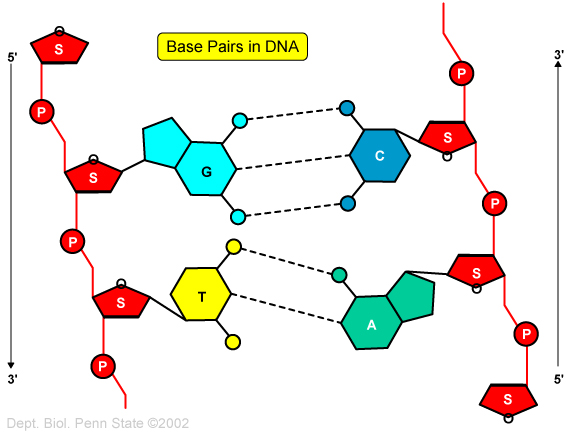
Which type of RNA takes the instructions from the nucleus to the cytoplasm (transcription)?


During what stage does the G1, S and G2 phases happen? Cells spend most of its life in this stage.


In the following structure, the circled item is a
chromosome
chromatid
centromere
chromatin
In eukaryotes, which organelle is DNA usually found in?
cell membrane
vacuole
chloroplast
nucleus
CAT TCA CTG

The picture below shows the steps of DNA replication beginning with step one and ending with step three.
Because you are reusing the old, or parent, DNA strand DNA replication is said to be
Semi- Conservative
Semi-discontinuous
Continuous
Fully-Conserveative

The diagram shows the process of crossing over. Which claim about crossing over in chromosomes is best supported by the diagram?
Crossing over increases genetic diversity through deletion.
Crossing over decreases genetic diversity through mutation.
Crossing over increases genetic diversity by creating new combinations of genes.
Crossing over decreases genetic diversity by inserting nucleotides into gene sequences.


Which term refers to the process by which individuals that are better suited to the environment survive and reproduce, therefore passing down their genes to their offspring?
Evolution
Variation
Adaptation
Natural Selection

The white feathers of a snowy owl allow it to blend in with its environment during the winter months. This is an example of a(n) ________________.
species
environmental change
adaptation
variation
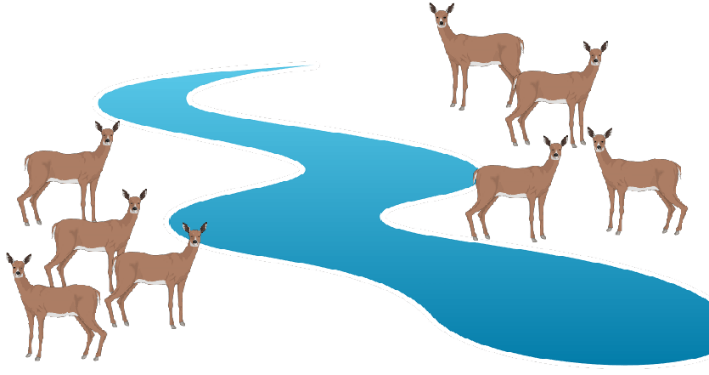
Two populations of the same species are separated by land barriers like rivers or mountains.
geographical isolation
temporal isolation
adaptive ratiation
behavioral isolaton

After a long time in isolation, Island fruit flies and mainland fruit flies meet. They do not produce viable eggs due to genetic differences. The flies have resulted in two seperate lineages due to:
Gene Pool
Genetic Drift
Gene Frequency
Speciation

According to the theory of natural selection, why are some individuals more likely than others to survive and reproduce?
Some individuals pass on to their offspring new characteristics they have acquired during their lifetimes.
Some individuals are better adapted to exist in their environment than others are.
Some individuals do not pass on to their offspring new characteristics they have acquired during their lifetimes.
Some individuals tend to produce fewer offspring than others in the same environment.

Mutations are important because they bring about
death of the organism in which they develop
genetic variation needed for a population to evolve
benefits for the individual, not for the population
Hardey-Weinberg equilibrium within a population

Why has antibiotic resistance evolved in bacteria?
Bacteria reproduce quickly
Bacteria with a resistance to the antibiotic, passed that trait to offspring
Bacteria that are resistant reproduce faster than non resistant strains
Bacteria exposed to antibiotics develop a resistance to them

Genetic drift is change in the allele frequency of a population due to...
random chance
natural selection
non-random mating (sexual selection)
artificial selection


Scientists have found evidence that about 2.4 million years ago a gene regulating jaw muscles mutated and may have led to the more graceful human jaw we see today. The diagram below shows the skulls of 3 hominid species. Which statement below most closely explains the link between jaw size and hominid evolution?
The jaws of hominids evolved to be smaller and less protruding over time as did the skull.
The jaws of hominids evolved to be larger and more protruding over time.
There appears to be no change in the jaws of hominids over time.
The jaws of hominids changed over time due to a change in brain size

Based on the illustration to the right, what do the similarities between human and chimpanzee hands and feet suggest about the different organisms?
Chimpanzees and humans both have hands and feet adapted for walking upright, showing they have identical DNA.
Chimpanzees and humans both have similar hands for grasping, proving they make and use complex tools.
Humans and chimpanzees both developed five digits on their hands and feet, suggesting they have a common ancestor.
Humans and chimpanzees both have thumbs, proving they eat similar foods like meat, nuts, and vegetation.
How is the scientific theory of evolution supported by the comparison of the skulls and skeletons of modern humans and extinct hominids?
By making the hip, spine, and skull comparisons, the age of different hominid specimens can be determined.
Comparison of skull and skeletons provides evidence that humans and different hominid species interacted.
Similarity in skull shapes, hands, and hips between extinct hominids and humans supports a common ancestry.
Skull and skeleton comparisons can explain why hominids were inferior and became extinct while humans evolved.
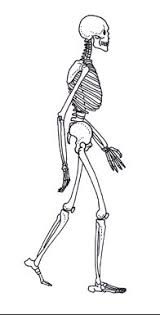
The ability to walk upright on two legs is called:
bipedalism
quadropedalism
bicyclepedalism
tripedalism


The genotype for a yellow plant is...


The first word in a scientific name is the
species
phylum
genus
class
The scientist who came up with the current classification system
Darwin
Newton
Mendel
Linnaeus
The science of grouping and naming organisms
Phylogeny
Dichotomy
Taxonomy
Genetics
What characteristics are used to divide organisms into kingdoms?
number of cells, nucleus, obtaining energy
number of legs, mammal, reptile
obtaining energy, habitat, nucleus
number of cells, eggs or live birth, aquatic or terrestial


A dichotomous key for trees is provided. Hikers found a tree that has large brown cones and single sharp needles. What species of tree have the hikers found?
Juniper
Pine
Spruce
Fir

