
Font size
 Worksheets
physics paper 1 gcse
Total questions: 155
Worksheet time: 3hrs 48mins
What is the name for energy stored in a hot object?
Thermal
Potential
Electrical
Fire
Food and fuel has energy stored in...
Calorie energy store
Thermal energy store
Chemical energy store
Potential energy store
When an object is moved to a higher position what is the name of the energy it then stores
Elastic potential energy
Gravitational potential energy
Height potential energy
Kinetic energy
When a spring is compressed energy is stored in its...
Thermal potential energy store
Gravitational potential energy store
Kinetic potential energy store
Elastic potential energy store
An object stores energy in its kinetic energy store when it is...
Getting ready to move
Stationary (not moving)
Moving
Heated up
An object at rest on top of a shelf is likely to have:
No energy
Hydroelectric power
Friction
Gravitational potential energy
Batteries are stores of:
Chemical energy
Electrical energy
Light energy
Thermal energy
Energy is usually transferred from an iPod through:
Kinetic
Thermal
Sound
Light
What type of energy is stored in a wind up toy?
Kinetic energy
Elastic potential energy
Thermal energy
Friction
What is the main useful energy transfer that happens in cars?
Kinetic to heat
Chemical to kinetic
Kinetic to chemical
Heat to chemical
What energy transfer happens when someone plays the drums?
Sound to kinetic
Electrical to kinetic
Electrical to chemical
Kinetic to sound
What is the main type of energy transfer in a catapult?
Elastic potential to kinetic
Elastic potential to heat
Elastic potential to sound
Elastic potential to electrical
1 hp is equivalent to ____.
746 watts
764 watts
756 watts
The formula for computing power is _____.
w x t
w / t
w + t
F = __
m / a
m x a
m x d
m / d
W = ___
f x d
f / t
f / a
f x a
W = 500 J
T = 25 seconds
P = ?
12500 W
20 W
525 W
A horse performs 15000 joules of work pulling a wagon for 20 seconds. What is the horse's power?
300 000 W
750 W
15020 W
A box is pushed across the floor for a distance of 5 meters with a force of 50 Newtons in 5 seconds. How much work and power is done?
(a)
A student who weighs 500 Newtons climbed the stairs from the first floor to the third floor, 15 meters above, in 20 seconds. How much work did she do? What was her power?
(a)
Power is _____
the push or pull of an object
the application of energy when an object moved
is the rate of doing work
The standard metric unit of power is _____.
Joules
Newtons
Watt
There are four main processes in changing of phase, and they are
Melting
Boiling
Condensation
All the above
Latent heat is
the heat absorbed or released at a boiling process during a change of phase
the heat absorbed or released at a constant temperature during a change of phase
the heat absorbed or released at a constant temperature during a change of phase of 1 kg object
the heat absorbed or released by an object to increase or decrease its temperature by 1 degree Celcius
the symbol for specific latent heat is
c
L
Q
m
Water molecules have the greatest kinetic energy in
Ice at 0 ⁰C
Water at 90 ⁰C
Water at 373 K
Steam at 150 ⁰C
How much energy is needed to raise the temperature of 5.0 grams of lead from 25°C to 35°C? [specific heat (c) = 0.129 J/(g•°C)]
6.45 J/(g•°C)
6.45 J
16.1 J/(g•°C)
d.16.1 J
Which of the following best explains why the sand at the beach is hotter than the water?
Sand has a higher specific heat than water.
Sand has a lower specific heat than water.
There is more water than sand at the beach.
There is more sand than water at the beach.


An object that is moving has
chemical energy
chemical energy
potential energy
kinetic energy
elastic energy
An object that is at rest on top of a bookshelf has
chemical energy
chemical energy
potential energy
kinetic energy
elastic energy
If you are rolling down a big hill you are (a) the kinetic energy.
If you are rolling down a big hill you are (a) the potential energy.

Which letter shows the ball when it has THE MOST potential energy?
A
B
C
F
G
Which letter shows the ball when it has NO potential energy?
B
C
D
E
F
Which letter shows the ball when it has THE MOST kinetic energy?
B
C
D
E
F
Which letter shows the ball when it has THE LEAST kinetic energy?
A
B
C
F
G
Which letter shows the ball when it is moving the fastest?
B
C
D
E
F

Which letters shows the ball when it has BOTH kinetic and potential energy?
The ball starts and ends AT REST. List all that apply in alphabetic order!
(a)
The example of non-renewable resources is ...
Water
Coal
Wind
Forest
formed in layers of sedimentary work from microscopic plants or animals
fossil fuels
renewable resources
non-renewable resources
renewable energy
What does burning fossil fuels release into the atmosphere?
oxygen
carbon
carbon dioxide
nitrogen
What is potable water?
pure water
Water that has dissolved ions in but is safe to drink
Water from an underground source
Water that is safe to wash in
How is water sterilised?
Passing fresh water through filter beds and sterilising
Removal of salt from sea water
Reverse osmosis or distillation
Using chlorine, ozone or ultraviolet light
Sustainable energy................
is clean
can be used over a long period of time
both (a) and (b)
None of the above
What is resource depletion?
Where humans use a resource at a rate that is not sustainable because it cannot be replenished fast enough.
Where humans use a resource at a rate that maintains the supply of the resource.
Where humans use a resource at a rate that is not sustainable because of the changes in the behavior of wildlife.
The use of any resource by humans.
Which of the following problems is associated with the burning of coal?
Acid rain
Carbon dioxide emissions
Ash with toxic metal impurities
All of the above
Crude oil is made up of:
Ethane
Butane
A mixture of different hydrocarbons
Extremely large hydrocarbons which are broken up once extracted
A fraction of crude oil is made up of:
Hydrocarbons of similar chain lengths
Numbers
Large hydrocarbons
Alkenes only
Petrol is used for:
Fuel in cars
Fuel in aircraft
Domestic heating and cooking
Road surfacing

Where do long chain hydrocarbons collect?
At the top
In the middle
At the bottom
What is cracking?
A process that turns long chain hydrocarbons into short chain hydrocarbons
A process that turns short chain hydrocarbons into long chain hydrocarbons
Why do we use cracking to get petrol?
The supply of petrol from cracking is larger than the demand
The supply of petrol from fractional distillation is larger than the demand
The supply of petrol from fractional distillation is smaller than the demand
The supply of petrol from cracking is smaller than the demand

What type of circuit is this?


What type of circuit is this?

What type of circuit is this?

What type of circuit is this?

What type of circuit is this?

What type of circuit is this?

What type of circuit is this?

What type of circuit is this?

What type of circuit is this?

What type of circuit is this?

What type of circuit is this?

What type of circuit is this?
The ___________________ states the sum of potential and kinetic energy before the process is always equal to their sum after the process.
Law of conservation of mechanical energy
Law of thermodynamics
Law of interaction
All of the above
As the potential energy _______, kinetic energy decreases (vis.a.vis)
Decreases
Increases
Both a and b
None of the above
Which of the following is true of the conservation of energy in a closed system?
Kinetic energy is always conserved
Potential energy is always conserved
Mechanical energy is always conserved
Total energy is always not conserved
The mechanical energy of a system of objects is:
The sum of kinetic energy and gravitational potential energy
The sum of kinetic energy and elastic potential energy
The sum of kinetic energy and all relevant forms of potential energy
The sum of all forms of energy
Mechanical energy is not conserved when:
Gravitational energy is converted to kinetic energy
Kinetic energy is converted to gravitational potential energy
Kinetic energy is converted to elastic potential energy
Friction is not negligible
Which event illustrates the direct transformation of potential to kinetic energy?
A basketball player catches a flying ball
A kalesa moves from rest
Kathy’s arrow is released from its bow
The spring mechanism of a toy is rotated until it locked
If mechanical energy is conserved in a system, the energy at any point in time can be in the form of:
Kinetic energy
Gravitational potential energy
Elastic potential energy
All of the above
Problem: A weight lifter lifted the 1,000 kg barbell at height of 7m. Calculate the
the amount of potential energy at 7m.
PE=68,600J
11.7132 m/s
KE=68,600J
Problem: A weight lifter lifted the 1,000 kg barbell at height of 7m. Calculate the
amount of velocity if KE is 68,600J.
PE=68,600J
11.7132 m/s
KE=68,600J
Problem: A weight lifter lifted the 1,000 kg barbell at height of 7m. Calculate the
amount of kinetic energy when it drops on the ground.
PE=68,600J
11.7132 m/s
KE=68,600J
What type of transformer increases voltage?
Step-Up
Step-Down
What quantities are changed in a step-up transformer?
Voltage increases
Voltage decreases
Current increases
Current decreases
Why is the voltage increased in the national grid?
Stops electricity being lost.
Stops energy loss by heat
To increase safety
Stops energy loss through leaking electricity

Which colour is live?
Yellow and Green
Blue
Brown
None of them

What is the yellow and green wire called?
Earth
Live
Scary
Neutral
What is mains voltage in the UK?
240V
1.5V
120V
230V
Which of these is a symbol for a fuse?


Why is the voltage in the national grid stepped down for peoples houses?
To make sure electrical devices work.
To save national grid money.
To stop energy loss in the home.
Large voltages are unsafe.
Which images shows the voltage trace for a.c?


Which are units of density?
g/cm3
g/cm2
kg/m3
kg
cm
What is density?
mass * volume
mass
mass/volume
volume
volume/mass
An object will float if...
Its density is less than the density of the liquid it floats in
Its density is more than the density of the liquid it floats in
Its density if the same as the density of the liquid it floats in
When an object floats, the forces of weight and upthrust...
Are different - weight is greater
Are different - upthrust is greater
Are the same - the forces are balanced
If you connect a Newton meter to a floating object the meter will read...
The same as the weight of the object
0N
More than the weight of the object
Less than the weight of the object but more than 0N
The density of water is about...
1g/cm3
1kg/cm3
1kg
1cm3
1g

Oak floats in water, methanol is a liquid. Will Oak float in methanol?
Yes
Yes, but it floats lower in the water
No, it sinks

Ships are made from steel, and steel has a density greater than water, so why do ships float?
They're too large to sink
The air inside them makes them float
The ship has a large volume so its overall density is less than water's
A block has a mass of 32g and is 2cm x 2cm x 2cm. What is its density in g/cm3 (Ignore the unit)
(a)
A second block has a mass of 60g and a volume of 1cm x 3cm x 4cm. What is its density in g/cm3? (Ignore the unit)
(a)


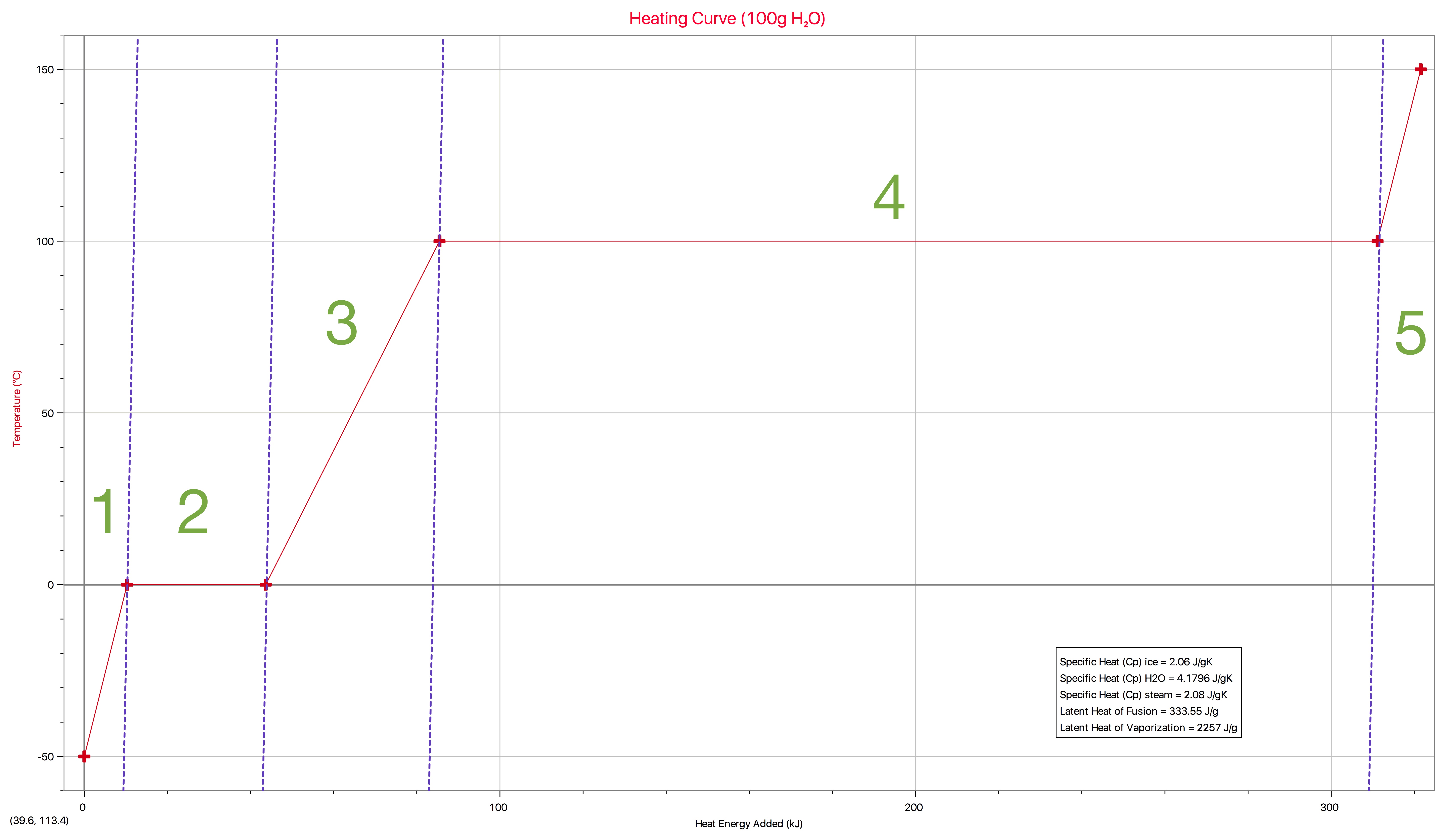
What is represented on the y-axis of the graph?
Temperature in Fahrenheit
Temperature in Kelvin
Temperature in Celsius
Time
At what temperature does the phase change from solid to liquid occur?
100 degrees Celsius
0 degrees Celsius
32 degrees Fahrenheit
212 degrees Fahrenheit
What happens to the potential energy during the phase change from solid to liquid?
It increases
It decreases
It remains constant
It fluctuates



Different isotopes of an element contain different numbers of ___.
protons
neutrons
electrons
elements
If a proton is added or removed from an atom, what happens?
It becomes a different element.
It becomes a different isotope.
Nothing happens.

How many neutrons are in 1 atom of Carbon-13?
6
13
7
20
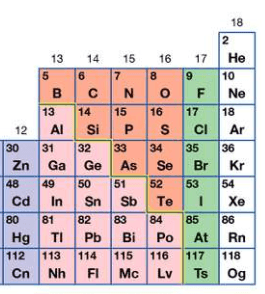
How many neutrons are in an atom of Nitrogen-16?
9
7
16
20

How many protons are in an atom of Nitrogen-16?
7
9
16
What is the difference between Neon-20 and Neon-22?
They have different numbers of electrons.
They have different numbers of neutrons.
Only 1 is radioactive.
No difference.

Which atom of these isotopes has 3 protons? The symbol for lithium is Li.
Lithium-6
Lithium-7
All of them.
Lithium-9

How many neutrons are in this isotope?
20
41
61
21
Which is the correct symbol for Fluorine-18?


How many protons are in this isotope?
9
21
12

