
 Worksheets
Chapter- Atomic Structure and Bonding
Total questions: 34
Worksheet time: 19mins

A combination of 2 or more elements in fixed proportions is ...
a compound
a molecule
an atom
an element
Elements are rarely found in their pure state because ....
they are stable
they aren't neutral
they are unstable
they are neutral
Atoms can become stable if ....
they bond with an atom with the opposite charge
they have 2 valence e- or any number of valence electrons that is a multiple of 2
there outer energy level is full or has 8 valence e-
all of the above
A force of attraction between atoms or ions is
a molecule
a compound
a covalent bond
a chemical bond

The subatomic particles involved in bonding are ....
protons & neutrons
protons
electrons
valence electrons
During an ionic bond ....
electrons are shared by atoms
electrons are given and taken by different atoms
protons are given and taken
protons are shared

In a covalent bond ....
electrons are shared
electrons are given and taken
protons are shared
protons are given and taken
An atom will have a 2+ charge if ....
it gains 2 protons
it loses 2 protons
it gains 2 electrons
it loses 2 electrons
The strongest type of bond is ....
ionic
covalent
hydrogen

A force of attraction between atoms when they exchange electrons is ....
a metallic bond
a hydrogen bond
an ionic bond
a covalent bond
The compound NaF (Na is at. # 11 & F is # 9) would be formed by ....
an ionic bond
a covalent bond
sharing of 1 valence electron
sharing of 2 valence electrons

An atom in the first column of the periodic table (Li, Na, K ,...) would want to __________________ in an ionic bond.
take 7 valence e-
share 7 valence e-
give 1 valence e-
share 1 valence e-
A covalent bond bond is formed when .....
an atom gives or takes at least one electron
an atom shares 2 electrons
an atom gives or takes 2 valence electrons
an atom shares one or more valence electrons
The octet rule says that ....
column 8 on the periodic is unstable
atoms must share 8 valence e-
atoms are stable with 8 valence e-
most energy levels hold 8 electrons

How many protons are in a Carbon atom (at # 6)?
(Type a whole number only!)
(a)
What is the charge of a neutron, and what is its location in an atom?
Neutral charge, located in nucleus.
Negative charge, located in nucleus.
Neutral charge, located in the orbitals/cloud.
Negative charge, located in the orbitals/cloud.
What is the charge of a proton, and what is its location in an atom?
Neutral charge, located in nucleus.
Positive charge, located in nucleus.
Neutral charge, located in the orbitals/cloud.
Positive charge, located in the orbitals/cloud.
What is the charge of an electron, and what is its location in an atom?
Negative charge, located in nucleus.
Neutral charge, located in nucleus.
Negative charge, located in the orbitals/cloud.
Neutral charge, located in the orbitals/cloud.
The mass number of an atom is the number of ...
Electrons plus Protons
Neutrons plus Electrons
Protons plus Neutrons
neutrons

If an atom of (Mg) Magnesium (atomic # 12) has 13 neutrons, what is its mass number?
(a)

In an atom of boron (B) (atomic #5) has a mass number of 11 how many neutrons are present?
Type a whole number!
(a)
The smallest part of an element that still has the properties of that element is/are ....
a compound
an atom
subatomic particles
protons
A pure substance made of atoms containing the same number of protons is ....
an atom
an ion
an element
a compound
Particles with opposite charges ....
are dangerous if placed near each other
repel each other
are known as ions
attract each other
An atom could become charged if ....
it loses/gains a proton
it loses/gains a neutron
it loses/gains an electron
it loses/gains a proton or an electron
An atom that loses an electron would become ....
a type of subatomic particle that makes up electrons
a neutral ion
a (+) charged ion
a (-) charged ion
Match the following
an atom w/ 11 protons and 11 e- compared to an atom w/ 10 protons & 11 e-
different element
an atom w/ 11 protons & 10 e- compared w/ an atom w/ 11 protons & 11 e-
a (+) ion
an atom w/ 10 protons & 10 neutrons compared w/ an atom w/ 10 protons & 11 neutrons
same element
an atom w/ 9 protons & 10 e- compared w/ an atom w/ 9 protons & 9 e-
a (-) ion
The nucleus of the atom is it's center and contains ....
protons and neutrons
protons and electrons
neutrons and electrons
protons, neutrons and electrons
Because atoms have the same number of protons and electrons, ....
the nucleus and cloud area are about the same size.
the nucleus is relatively large combared to the cloud.
they are neutral.
they are stable.
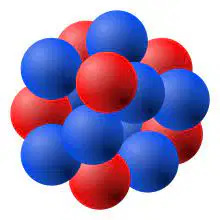
Overall, the nucleus ....
has a (+) charge
has a (-) charge
has no charge
Electrons (especially those on the inner energy levels/shells) tend to stay orbitting the nucleus without ever leaving the atom because, ...
the (-) electrons are attracted to the (+) nucleus
the (+) electrons are attracted to the (-) nucleus
the mass of the electrons is so small they can't escape the gravitaional pull of the nucleus
once an electron is located on a shell, it is very difficult for it to obtain enough energy to leave
Valence electrons are ....
the more negatively charged electrons
the electrons on the outer energy level of an atom
the electrons that cannot leave their energy levels
the electrons that orbit the nucleus faster than he dother electrons
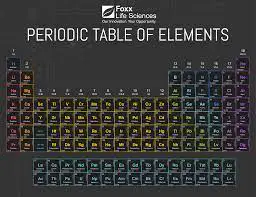
The periodic table is called the periodic table because ....
The periodic table was developed over a very long period of time and so, was only worked on periodically
it is named for its developer, Sir Frances Edward Periodic
the number of protons repeats down a column
the number of valence electrons repeats from left to right, across each row
The atom Cl (atomic # 17) will have ___ valence electrons.
2
7
8
17

