
 Worksheets
Quizizz about human tissues
Total questions: 48
Worksheet time: 26mins

The tissue type shown in the photomicrograph below is a ___ tissue
Blood
Bone
Areolar
Adipose
Hyaline Cartilage

The tissue typeshown in the line drawing is ___tissue
Blood
Reticular
Adipose
Bone
Reticular Connective

Nervous
Muscular
Connective
Reticular
Epithelial
What tissue type is the spinal cord primarily composed of?
epithelial
connective
muscle
nervous
Which tissue type functions and secretion, absorption, protection, and excretion
Epithelial
connective
Arelolar
muscle
Nervous
What tissue type are the biceps primarily composed of?
epithelial
connnective
muscle
nervous
What tissue type is blood primarily composed of
epithelial
connective
muscle
nervous
What tissue type is the heart primarily composed of
epithelial
connective
muscle
nervous
Which tissue type is the brain primarily composed of
epithelial
connective
muscle
nervous
Which tissue type covers body surfaces , covers and lines internal organs and composes glands
epithelial
connective
muscle
nervous
There are four primary tissue types that interweave to form the "fabric" of the body, they are;
epithelial,connctive,muscle,nervous
skeletal,cardiac,smooth,adipose
epithelial,skeletal,nervous,squamous
cartilage,muscle,epithelial,areolar
Groups of cells that are similar in structure and preform a common or related function are called
membranes
tissues
organs
cellular systems
Collagenous and elastic fibers are found exstensively in
epithelial
nervous
connective
muscle
Which of the following are all types of muscle tissue
neurons, neuroglial, matrix
blood, arelolar, reticular
skeletal, smooth, cardiac
stratisfied,
transitional, simple
Which term means, a flattened cell shape?
Stratified
Squamous
Simple
Columnar
Cuboidal
Which term means, cells that are longer than they are wide?
Stratified
Squamous
Simple
Columnar
Cuboidal
Which term means, more than one layer of cells?
Stratified
Squamous
Simple
Cuboidal
Columnar
Which term means, cube-shaped cells?
Stratified
Squamous
Simple
Columnar
Cuboidal
Which term means, one layer of cells?
Simple
Stratified
Columnar
Cuboidal
Squamous
Connective tissues includes:
Tendon
Bone
Fat
Nerves
How many types of tissue are found in the body?
1
2
3
4
5
While doing work and running, you move your organs Like hands, legs etc. Which among the following is correct?
Smooth muscles contract and pull the ligament to move the bones.
Smooth muscles contract and pull the tendons to move the bones.
Skeletal muscles contract and pull the ligament to move the bones.
Skeletal muscles contract and pull the tendon to move the bones.
Select the incorrect sentence.
Blood has a matrix containing proteins, salts and hormones
Two bones are connected by ligament
Tendons are non-fibrous tissue and fragile
Cartilage is a form of connective tissue
Cartilage is not found in
nose
ear
kidney
larynx
Bone matrix is rich in
Fluoride and calcium
Calcium and phosphorus
Calcium and potassium
Phosphorus and potassium
Which of the following cells is found in the cartilaginous tissue of the body?
(a) Mast cells
(b) Basophils
(c) Osteocytes
(d) Chondrocytes
Choose the wrong statement.
(a) The nature of matrix differs according to the function of the tissue
(b) Fats are stored below the skin and in between the internal organs
(c) Epithelial tissues have intercellular spaces between them
(d) Cells of striated muscles are multinucleate and unbranched
The cells of ……………. muscular tissue are long, cylindrical, unbranched and multinucleate (having many nuclei)
(a)
Blood has a fluid (liquid) matrix called …………….. in which red blood cells (RBCs), white blood cells (WBCs) and (a) are suspended.

Name this tissue.
(a)
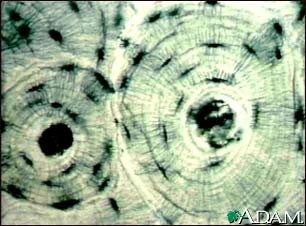
smooth muscle
bone
nerve
blood


What tissue is this?
Epithelial
Nervous
Connective
Muscular
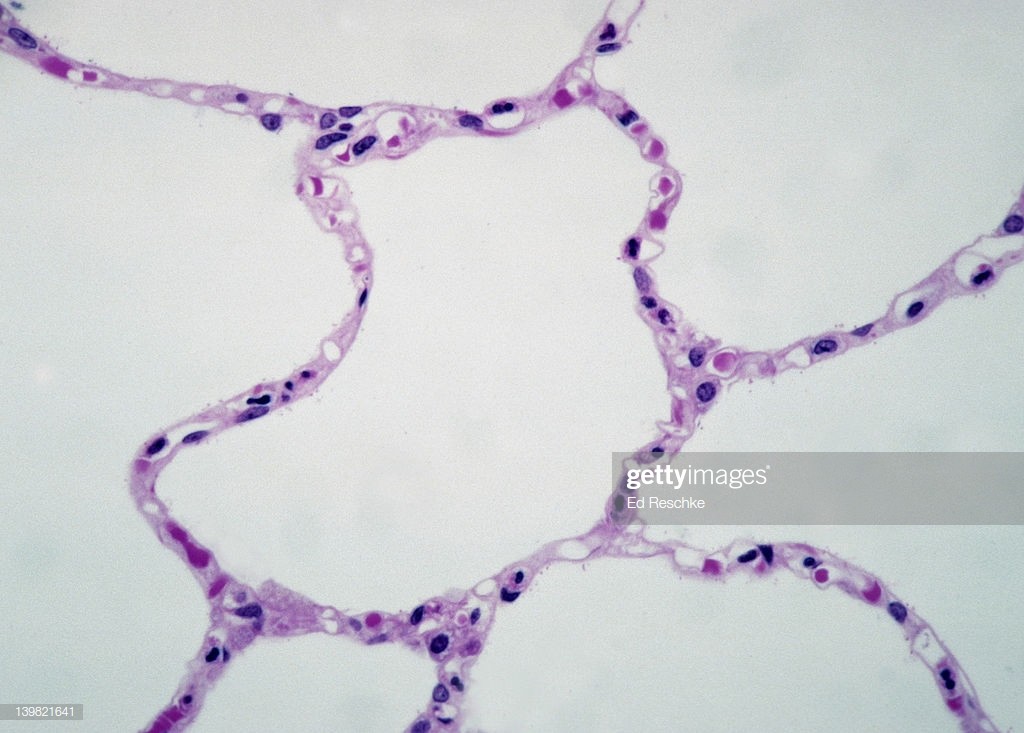
What type of epithelium lines the air sacs in this slide of lung tissue?
simple cuboidal
simple columnar
simple squamous
pseudostratified columnar
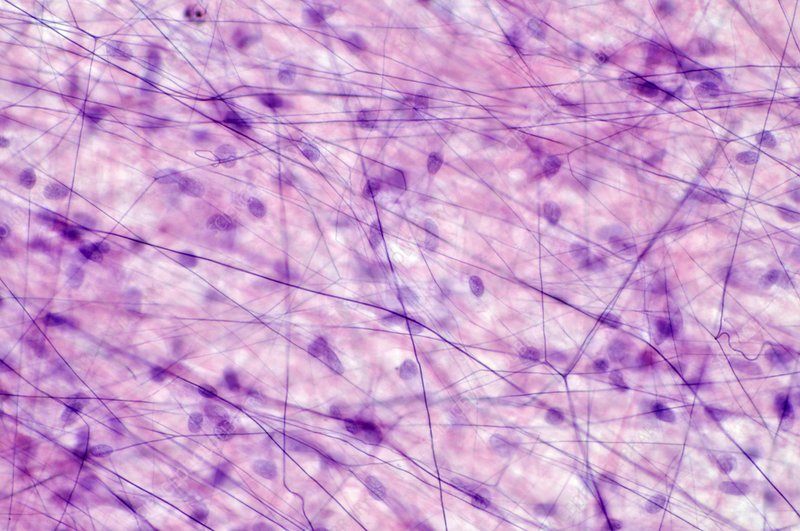
What type of tissue is this?
Loose connective tissue
Dense connective tissue
Elastic connective tissue
Hyaline connective tissue

