
 Worksheets
APES Unit 4: Earth Systems & Resources
Total questions: 61
Worksheet time: 40mins
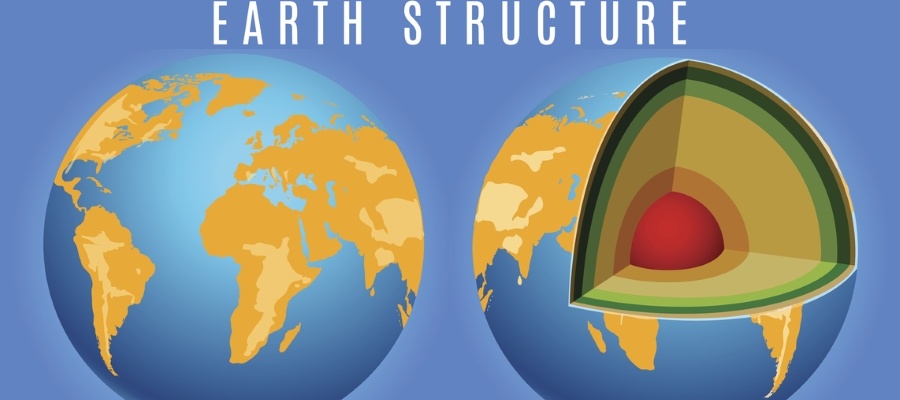
The surface of the earth, otherwise known as the ______, is broken into seven major pieces and sits atop a liquid layer called the _______
lithosphere, asthenosphere
astenosphere, mantle
crust, litosphere
asthenosphere, lithosphere
Sea surface temperature changes great than 0.5oC for greater than 5 months across the central tropical Pacific Ocean are known as
the arctic effect
the get stream
a typhoon
El Nino-Southern Oscillation

I. variation in the angle of sunlight that reaches Earth
II. variation in the amount of surface area over which the Sun's rays are distributed
III. variation in the amount of sunlight reflected from clouds


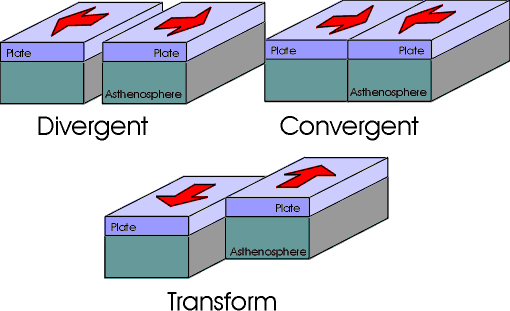
The type of plate boundary where two plates come together is a .....
Convergent Boundary
Divergent Boundary
Transform Boundary
Plate Boundary

What type of event will occur at this boundary?
Earthquake
Volcano Eruption
Tornado
Mountain Building
A divergent boundary occurs when plates ....
Pull apart
Come together
Slide past each other
subducting
Mountains are created when....
Two continental plates collide
Two oceanic plates pull apart
An Oceanic plate subducts under a Continental Plate
Two continental plates pull apart

The process by which the ocean floor sinks beneath a deep-ocean trench and back into the mantle is known as _______
convection.
continental drift.
subduction.
conduction.

What is the correct order (starting from the surface) of Earth’s layers?
crust, outer core, inner core, mantle
mantle, outer core, inner core, crust
crust, mantle, outer core, inner core
outer core, inner core, crust, mantle

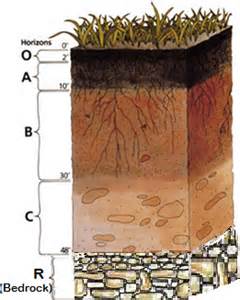
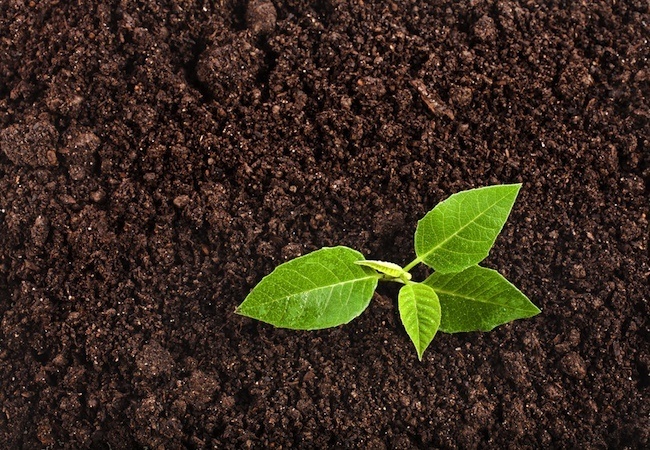


The rate at which water flows through the soil is called soil percolation or ______.
Groundwater
Permeability
Soil Pores
Porosity


The movement of the tectonic plates is caused by
the rotation of the Earth.
convection currents in the Asthenosphere
the gravity of the iron-nickel core.
the Moho discontinuity.
The movement of the tectonic plates is caused by
the rotation of the Earth.
convection currents in the Asthenosphere
the gravity of the iron-nickel core.
the Moho discontinuity.
In some areas of the world, like California and Japan, earthquakes are a common occurrence. How can this best be explained?
The strong ocean currents are undermining both areas causing earthquakes.
Both areas are located near the edge of the Pacific Ocean, the unstable sand causes earthquakes.
Both areas are subjected to strong ocean wind and waves that causes earthquakes.
Both areas are on the boundary of active plates, the motion of the plates causes earthquakes.
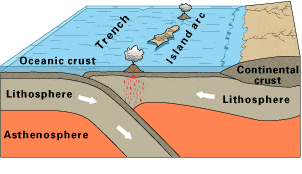
Observe this diagram of a plate boundary. One statement BEST describes what is happening. It is that
the oceanic crust is melting.
the denser ceanic crust is subducting under the less dense oceanic crust
volcanic islands are forming.
the tectonic plates are moving away from each other.
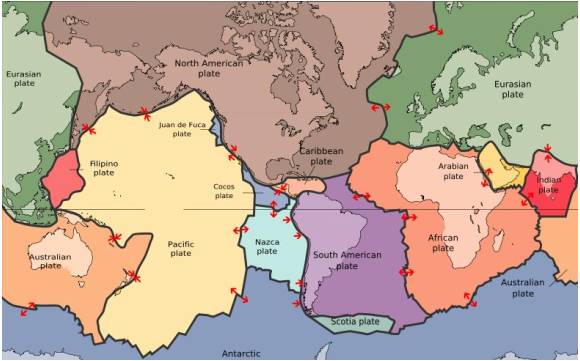
The map in the picture shows tectonic plate boundaries. This map would be useful in predicting the location of future
droughts
hurricanes
earthquakes
tornadoes
In which layer of the atmosphere does ozone help block UV radiation from striking the Earth?
troposphere
mesosphere
stratosphere
thermosphere
In which layer of the atmosphere do all the pressure, wind, and precipitation changes occur?
Outer space
stratosphere
troposphere
mesosphere
Some consequences of El Niño are _____ in South America.
increased rainfall and flooding
stronger tradewinds
stronger winter storms
warmer temperatures and drought
The SECOND most common gas in our atmosphere is ____.
N
O
Ne
Ar
In which atmospheric layer do meteors burn up in?
Mesosphere
Exosphere
Stratosphere
Thermosphere
The type of tectonic plate boundary that is NOT usually associated with volcanoes is _____.
Transform
Convergent
Divergent
Which of the following does NOT exert a major influence on Earth's overall climate?
The distribution of land masses and oceans, in combination with Earth's topography.
The daily rotation of Earth on its axis, along with its annual revolution around the sun.
The annual amount of solar radiation that reaches Earth's surface.
All of these can exert a major influence.

What layer of the atmosphere absorbs harmful ultraviolet radiation?
Troposphere
Stratosphere
Mesosphere
Thermosphere
Which of the following changes in eastern Pacific Ocean food webs is typically associated with La Niña events?
Decreased populations of squid
Decreased populations of anchovies
Increased phytoplankton concentrations
Increased famine among sea lions and seals
This phenomenon occurs when a coastal mountain range blocks the passage of precipitation to the leeward side of the mountains.
thermal inversion.
Coriolis effect.
rain shadow effect.
urban heat island effect.
ENSO.
This air circulation pattern occurs between 0 degrees latitude and 30 degrees latitude.
Hadley cell
Ferrell cell
polar cell
Coriolis effect
The primary cause of Earth's seasons is the
constant tilt of Earth's rotational axis with respect to the plane of its orbit around the Sun
changing distance of Earth from the Sun at different times of the year
periodic wobbling of Earth on its axis of rotation
changing relative positions of Earth, its Moon, and the Sun
The Sun’s radiation provides the energy for all of the following EXCEPT
plant growth
ocean currents
hurricanes
plate tectonics

The image associated with this questions is an example of what natural phenomena?
La Nina
El Nino
Hadley Cells
Coriolis Effect

Which soil has 40% sand, 30% silt, and 30% clay?
Loam
Clay Loam
Sandy Clay Loam
Sandy Clay
Larger pore spaces generally create soils with
high permeability.
low permeability.
What are properties of the soil determined by
time
parent material
climate
topography
ALL of these determine the properties of the soil
How does compacting soil from anthropogenic means impede water drainage?
Drying at deeper layers of soil
Waterlogging-water not draining
preventing soil development
Each of these is an affect of compacted soil

Why might very old soil be nutrient poor in the picture above?
more organic material is present
plants and water leaching nutrients
less biodiversity
soil is compacted

