
 Worksheets
Topic 1B
Total questions: 73
Worksheet time: 2hrs 49mins
In biomechanics, what is the primary focus of study?
The circulatory system
The nervous system
The muscles, bones, ligaments, and tendons
The digestive system
Which of the following is not one of the three planes of movement in biomechanics?
The sagittal plane
The frontal plane
The diagonal plane
The transverse plane
How is the body positioned in the anatomical position used as a reference point for movement analysis?
Upright with arms up
Upright with palms facing backward
Upright with arms at the side and palms facing forward
Lying down with arms stretched out
Which plane of movement divides the body into left and right sides?
The sagittal plane
The frontal plane
The transverse plane
The diagonal plane
When observing sagittal-plane movement, where should you stand in relation to the athlete?
In front of the athlete
Behind the athlete
To the side of the athlete
Above the athlete
What is an example of a movement that occurs in the sagittal plane?
Side stepping in invasion games
Lateral raises in the gym
A chest pass in basketball
A cartwheel in gymnastics
The frontal plane divides the body into which halves?
Top and bottom halves
Left and right halves
Front and back halves
Diagonal halves
When observing frontal-plane movement, where should you stand in relation to the athlete?
To the side of the athlete
Behind the athlete
In front of the athlete
Above the athlete
What is an example of a movement that occurs in the frontal plane?
A pirouette in ice skating
A full body twist in trampolining
Squatting
Side stepping in invasion games
The transverse plane divides the body into which halves?
Top and bottom halves
Left and right halves
Front and back halves
Front and rear halves
Which axis runs from the front to the back of the body and is associated with sagittal-axis movements?
Sagittal axis
Frontal axis
Vertical axis
Transverse axis
In which plane does the body rotate around the sagittal axis?
The sagittal plane
The frontal plane
The transverse plane
The diagonal plane
Which axis runs from right to left through the center of the body and is associated with frontal-axis movements?
Sagittal axis
Frontal axis
Vertical axis
Transverse axis
In which plane does the body rotate around the frontal axis?
The sagittal plane
The frontal plane
The transverse plane
The diagonal plane
Which axis runs through the center of the body from top to bottom and is associated with vertical-axis movements?
Sagittal axis
Frontal axis
Vertical axis
Transverse axis
In which plane does the body rotate around the vertical axis?
The sagittal plane
The frontal plane
The transverse plane
The diagonal plane
Which of the following is NOT an example of sagittal-plane movement?
A forward somersault
Walking
Jumping jacks
Push-ups
Which plane of movement is responsible for rotational-style movements?
Sagittal plane
Frontal plane
Transverse plane
Diagonal plane
Which axis is associated with a movement like a backflip?
Sagittal axis
Frontal axis
Vertical axis
Transverse axis
What is an example of a movement that occurs in the transverse plane?
Squatting
A chest pass in basketball
A pirouette in ice skating
Lateral raises in the gym
In which plane does a cartwheel primarily take place?
The sagittal plane
The frontal plane
The transverse plane
The diagonal plane
Which plane of movement is typically associated with side stepping in invasion games?
The sagittal plane
The frontal plane
The transverse plane
The diagonal plane
Which axis is associated with a movement like a pirouette in ice skating?
Sagittal axis
Frontal axis
Vertical axis
Transverse axis
What is the primary function of a lever in the human body?
To transport blood
allow us to move our limbs and other body parts efficiently
To give us energy
To help us jump
In a first-class lever, where is the fulcrum located in relation to the load and effort?
In the middle of the load and effort
Closer to the load than the effort
Closer to the effort than the load
It varies depending on the situation
Which lever type is also known as the 'seesaw' lever?
Second-class lever
Third-class lever
First-class lever
None of the above
In a second-class lever, where is the load located in relation to the fulcrum and effort?
In the middle of the fulcrum and effort
Closer to the fulcrum than the effort
Closer to the effort than the fulcrum
It varies depending on the situation
Which muscle is responsible for providing effort in a calf raise, which is an example of a second-class lever?
Bicep
Gastrocnemius
Quadriceps
Hamstring
In a third-class lever, where is the effort located in relation to the fulcrum and load?
In the middle of the fulcrum and load
Closer to the fulcrum than the load
Closer to the load than the fulcrum
It varies depending on the situation
Which of the following is an example of a third-class lever in action?
Jumping
Bicep curl
Push-up
Squat
When talking about levers, when the effort arm of the lever is longer than the load arm, the lever is adopting what?
(a)
How is mechanical disadvantage in levers described in sports?
Making tasks easier
Making tasks more challenging
Achieving balance
Increasing efficiency
Which example demonstrates a lever with mechanical advantage in sports?
Baseball bats
Hurdles
Weightlifting bars
Trampolines
What is a vector quantity characterized by?
Magnitude and weight
Magnitude and direction
Speed and acceleration
Distance and time
Which sporting movement is cited as an example of a vector quantity?
High jump
Throwing a football
Marathon running
Weightlifting
What is a scalar quantity defined by?
Magnitude and direction
Magnitude only, with direction being unimportant
Speed and weight
Time and energy
Which of the following is an example of a scalar quantity in sports?
Throwing a javelin
Running a 100m race in 10.02 seconds
Tennis serve
Basketball dunk
How many of Newton's laws of motion are there?
1
2
3
4
Which law of motion deals with the concept that a body at rest will remain at rest unless acted upon by an external force?
Newton's 1st law
Newton's 2nd law
Newton's 3rd law
Newton's 4th law
What determines the amount of inertia an object has?
Its color
Its size
Its mass
Its shape
Which law of motion deals with how a body's velocity changes when acted upon by an external force?
Newton's 1st law
Newton's 2nd law
Newton's 3rd law
Newton's 4th law
What formula is used to calculate acceleration according to Newton's 2nd law?
E=mc²
F=MA
V=IR
P=VI
In Newton's 2nd law, what does 'F' represent in the formula F=MA?
Force
Mass
Velocity
Time
When a player increases their leg strength through resistance training, what is the expected result according to Newton's 2nd law?
Decreased acceleration
No change in force
Increased capacity to generate greater force
Slower running speed
Which law of motion states that for every action (force), there is an equal and opposite reaction (counterforce)?
Newton's 1st law
Newton's 2nd law
Newton's 3rd law
Newton's 4th law
What happens when a Gaelic footballer generates a force into the ground when attempting to catch a kick-out, as described by the law of reaction?
The ground remains still
The ground moves upward
The ground produces a counterforce
The ground disappears
How does the law of reaction apply to a swimmer using the front crawl technique?
The water pushes the swimmer backward
The water exerts a force, but there is no reaction
The swimmer creates a counterforce against the water
The swimmer floats on the water
What does movement economy in sports refer to?
The cost of purchasing sports equipment
How fast an athlete can perform a movement
How energy efficient an athlete is when in motion
The number of spectators at a sporting event
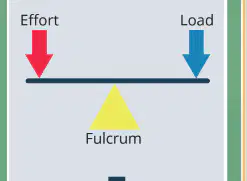
The following is an example of what type of lever system
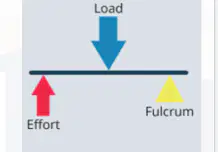
The following is an example of what type of lever system
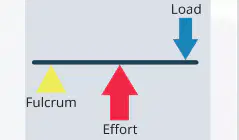
The following is an example of what type of lever system
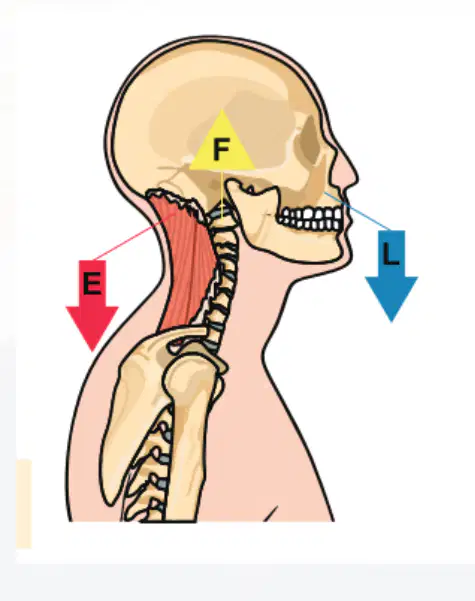
The following is an example of what type of lever system
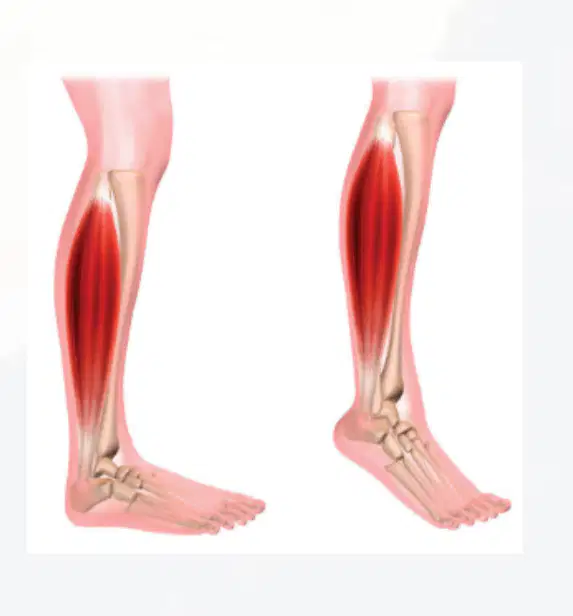
The following is an example of what type of lever system
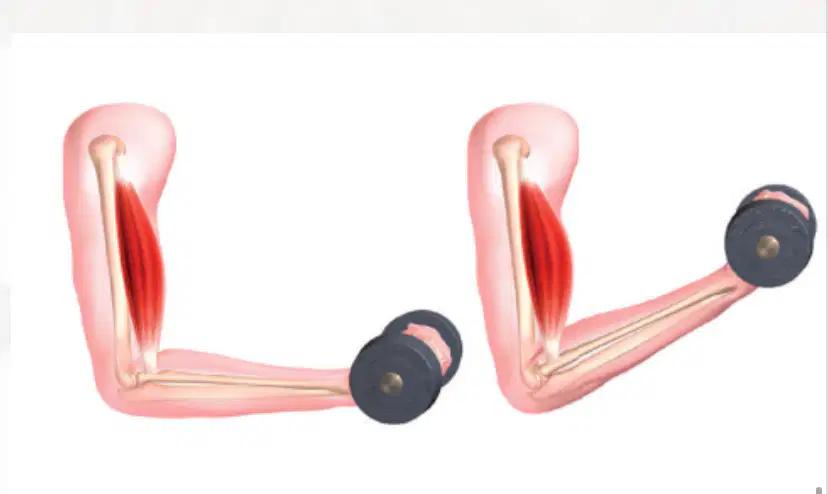
The following is an example of what type of lever system

The following is an example of which plane
Sagittal
Frontal
Transverse
Vertical axis

The following is an example of which plane
Sagittal
Frontal
Transverse
Sagittal axis

The following is an example of which plane
Sagittal
Frontal
Transverse
Frontal axis
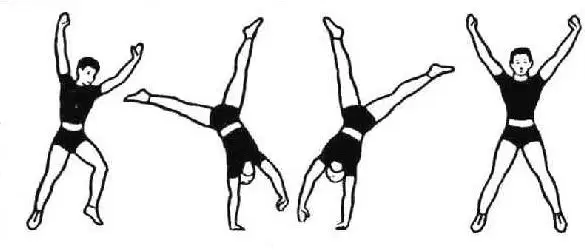
The person in the picture is performing an activity using which axis of movement
Sagittal Axis
Frontal Axis
Vertical Axis
Sagittal Plane
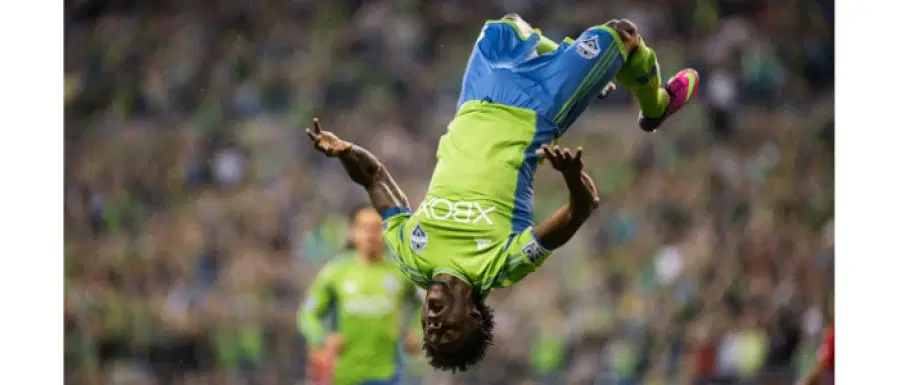
The person in the picture is performing an action using what plane of movement
Sagittal Axis
Frontal Axis
Vertical Axis
Transverse Plane

This image shows some performing a movement in which axis
Sagittal Axis
Frontal Axis
Vertical Axis
Frontal Plane
This is the resistance of a body to a change in motion
(a)
This is the a constant downward vertical acceleration on the athletes body
(a)
This is a force that can slow down an athlete, it can be through water or air
(a)
Displacement, acceleration, velocity and force are example of what?
(a)
Mass, energy, time and volumn are examples of what?
(a)
When talking about levers, when the load arm is longer than the effort arm, the lever is said to have what?
(a)
When talking about levers, when the effort arm of the lever is longer than the load arm, the lever is adopting what?
(a)
What statement helps us remember the 3 different types of lever systems?
(a)
What statement helps us remember which axis' works with which planes?
(a)
When a sporting movement uses multiples planes is is said to be?
(a)
Newton's 1st law states that a body at rest will remain at rest and a body in motion will remain in motion at a constant _____ ___ _________ unless acted on by an external force.
(a)
Newtons 2nd law states a body in motion will only change its (a) when acted on by an external force.
Newtons's 3rd law states that to every action there is an _____ ___ ________ reaction.
(a)

