
 Worksheets
Unit 2 Exam Review
Total questions: 80
Worksheet time: 2hrs 47mins


What are two major differences found in plant and animal cells?
Plant cells have a cell wall and chloroplasts, while animal cells do not.
Plant cells have a nucleus and vacuoles, while animal cells do not.
Plant cells have no mitochondria or cytoplasm, while animal cells do.
They are the same.
Gives eukaryotic cells their shape and internal organization. Made up of microfilaments and microtubules.
cell membrane
cell wall
cytoskeleton/centrioles
cytoplasm
Found in plantes, algae, fungi, and many prokaryotes. Lies outside the cell membrane. Provides support and protection for the cell.
Cell Membrane
Cell Wall
Nucleus
Nuclear Envelope
Regulates what enters and leaves the cell and also provides protection and support.
mitochondria
vacuoles
Endoplasmic Reticulum (rough and smooth)
Cell membrane
Small particles of RNA and protein found throughout the cytoplasm where proteins are assembled.
Ribosomes
Endoplasmic Reticulum (rough and smooth)
Golgi Apparatus
Nucleolus
Modifies, sorts, and packages proteins and other materials from the endoplasmic reticulum for storage in the cell or secretion outside the cell.
Chromatin
Chloroplasts
Golgi Apparatus
Nucleus
Small organelles filled with enzymes. These break down materials in the cell.
Lysosomes
Cell Membrane
Ribosomes
Cytoskeleton/Centrioles
Store materials.
Lysosomes
Cytoplasm
Vaculoes
Nuclear Envelope/Membrane
Convert the chemical energy stored in food into compounds that are more convenient for the cell to use.
Cytoplasm
Mitochondria
Golgi Apparatus
Vacuoles
Capture energy from sunlight and convert it into a chemical energy in a process called photosynthesis. Contain the green pigment chlorophyll.
Chromatin
Mitochondria
Lysosomes
Chloroplasts
Houses gel-like fluids that support cell organelles and holds them in place.
cytoplasm
endoplasmic reticulum (e.r.)
golgi bodies
nucleus
Match the organelle to its description.
Proteins are made on these small structures.
Ribosomes
Controls all activity in the cell (the brain) and stores DNA
Nucleus
The fluid that fills the cell and
keeps the organelles in place
Cytoplasm
Power plant of the cell. They
create energy called ATP.
Mitochondrian
Outer lining the cells.
Controls what goes
in and out.
Cell Membrane
Drag label to the correct cell.
Golgi Apparatus
Cell Membrane
Nucleus
Mitochondrion
Endoplasmic Reticulum
Drag label to the correct cell.
Golgi Apparatus
Cell Membrane
Nucleus
Mitochondrion
Endoplasmic Reticulum
Match the organelle to the plant cell.
Cell Membrane
Endoplasmic Reticulum
Mitochondrion
Chloroplast
Cell Wall
Nucleus
Golgi Apparatus
Vacuole
Place the Organelle in the correct category
cell membrane
nucleus
cytoplasm
mitochondrion
vacuole
ribosomes
golgi apparatus
lysosomes
endoplasmic reticulum
cell wall
chloroplasts
The (a) is to the cell as the Brain is to the body. Just like the brain controls and manages the body's functions, the (b) controls and manages the cell's activities.
Match the following organelles
Nucleus
Contains the codes & information for protein synthesis
Rough ER
Transports the proteins
Golgi
Packages the proteins
Mitochodrion
Supplies ATP to all organelles
Ribosomes
Synthesizes the proteins
The model that describes the current understanding of the cell (plasma) membrane structure is
fluidity model
fluid mosaic model
semi-permeable model
flexible mixture model
What is the "big idea" of the fluid mosaic model of plasma membranes?
the plasma membrane creates a specialized FLUID that looks like a MOSAIC.
the plasma membrane is a MOSAIC.
the fluid mosaic model is NOT related to the plasma membrane.
a plasma membrane is a MOSAIC of components that move FREELY and FLUIDLY.

Match the organelle with its correct function.

Stores and Protects DNA

Builds Proteins

Generates energy for the cell

Controls what enters and leaves the cell

Packages up proteins to be shipped out of the cell
Cell with no nucleus or membrane-bound structures.
Prokaryote
Clear gel-like fluid in cells that holds the organelles.
Cytoplasm
Contains digestive enzymes to break down harmful substances.
Lysosomes
Long hair-like projection used for movement in cells; uses a whip-like motion.
Flagella
Network of proteins found within the cytoplasm for support and structure.
Cytoskeleton
Cell with membrane-bound organelles and a nucleus.
Eukaryote
Short numerous hair-like projections that move in wave patterns for movement.
Cilia
Serves as a semi-permeable boundary between the cell and its environment.
Cell Membrane
Packages and modifies proteins.
Golgi Apparatus
Organelle in plants that uses light energy to make glucose in a process called photosynthesis.
Chloroplast
How do floating ribosomes differ in function from the ribosomes attached to the ER?
Floating = produce proteins for INSIDE cell; Attached = produce proteins for OUTSIDE cell
Floating = produce proteins for OUTSIDE cell; Attached = produce proteins for INSIDE cell
Floating = produce lipids for INSIDE cell; Attached = produce lipids for OUTSIDE cell
Floating = produce lipids for OUTSIDE cell; Attached = produce lipids for INSIDE cell
Floating = INSIDE cytoplasm; Attached = Attached to ER
Makes, breaks down, and carries lipids (fats)---lipid metabolism
Rough ER
Smooth ER
Golgi Apparatus
Cytoplasm
Plasma Membrane
make ribosomes
NUCLEUS
NUCLEOLUS
RIBOSOMES
CHROMOSOMES


The solution surrounding the cell in Diagram B, would be defined as:
hypertonic
hypotonic
isotonic


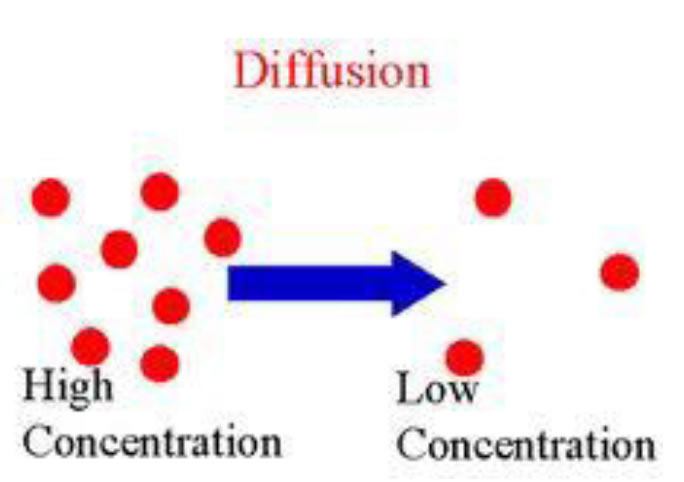
when some molecules can cross the membrane while others cannot.

Nemo and other ocean dwelling fish cannot survive in freshwater because......
freshwater is hypertonic to Nemo's cells and will result in water leaving them causing the cells to shrink
freshwater is hypotonic to Nemo's cells and will result in water leaving them causing the cells to shrink
freshwater is hypertonic to Nemo's cells and will result in water entering them causing the cells to swell and burst
freshwater is hypotonic to Nemo's cells and will result in water enter them causing the cells to swell and burst

Simple Diffusion
Facilitated diffusion


Simple Diffusion
When molecules passively cross the plasma membrane through the phospholipid bilayer
Facilitated Diffusion
When molecules passively cross the plasma membrane through a channel protein
Osmosis
The movement of water across the cell membrane
Endocytosis
Bringing in large materials through the cell membrane into a vacuole.
Exocytosis
Moving larger amounts or large quantities of materials through the cell membrane
Hypertonic
The solution contains a high concentration of solute an and low concentration of water
Hypotonic
The solution contains a low concentration of solute an and high concentration of water
Isotonic
The solution has an equal concentration of solute and water compared to the inside of the cell

An example of diffusion is
CO2 and O2 exchange in the lungs
Glucose transport
Na+ / K+ Pumps
Exocytosis
An example of facilitated diffusion is
CO2 and O2 exchange in the lungs
Glucose transport
Na+ / K+ Pumps
Endocytosis

Match the following:
stabilizes and maintains flexibility of cell membrane
Cholesterol
2 layers; allows small & non-polar molecules to pass through the membrane
Phospholipid bilayer
regulates what goes in and out of the cell
Plasma or Cell Membrane
allows large and polar molecules to pass through the membrane
Transport or Channel Proteins
located outside of the membrane; helps with cell communication and cell-to-cell connections
Carbohydrates

What is the function of the transport and channel proteins of the cell membrane?
allows large molecules to pass through the cell membrane
allows small, non-polar molecules to pass through the cell membrane
identifies the cell and allow for cell-to-cell communication
stabilizes the fluidity of the cell membrane

Which of the following describes the 4 parts of the cell membrane?
phospholipid bilayer, transport proteins, carbohydrates, and cholesterol
phospholipid bilayer, transport proteins, carbohydrates, and cell wall
phospholipid bilayer, starch, carbohydrates, and cholesterol
cellulose, transport proteins, carbohydrates, and cholesterol
What is the function of the carbohydrates of the cell membrane?
allows large molecules to pass through the cell membrane
allows small, non-polar molecules to pass through the cell membrane
identifies the cell and allow for cell-to-cell communication
stabilizes the fluidity of the cell membrane

What is the function of the cholesterol of the cell membrane?
allows large molecules to pass through the cell membrane
allows small, non-polar molecules to pass through the cell membrane
identifies the cell and allow for cell-to-cell communication
stabilizes the fluidity of the cell membrane

Which part of the phospholipid is the hydrophilic portion (likes water)?
Glycerol
Fatty acids
Water
Glycogen
Which part of the phospholipid is the hydrophobic portion (repels water)?
Glycerol
Fatty acids
Water
Glycogen

In the diagram, what is letter A?
Phospholipid
Phospholipid bilayer
Cholesterol
Carbohydrate
Carrier or transport protein
In the diagram, what is letter G?
Phospholipid
Phospholipid bilayer
Cholesterol
Carbohydrate
Carrier or transport protein
In the diagram, what is letter G?
Phospholipid
Phospholipid bilayer
Cholesterol
Carbohydrate
Carrier or transport protein
In the diagram, what is letter E?
Phospholipid
Phospholipid bilayer
Cholesterol
Carbohydrate
Carrier or transport protein
In the diagram, what is letter H-I?
Phospholipid
Phospholipid bilayer
Cholesterol
Carbohydrate
Carrier or transport protein
In the diagram, what is letter D?
Phospholipid
Phospholipid bilayer
Cholesterol
Carbohydrate
Carrier or transport protein

The cell membrane is made up of several components, each with their own function. The main part is the (a) , which allows small or non-polar molecules (such as (b) or steroid hormones) to pass through the membrane. Larger and polar molecules (such as (c) and sugars) are too big to pass through the phospholipid bilayers so they use the (d) to travel in or out of the cell. (e) helps make the cell membrane more rigid or loose to control what goes in and out of the cell.

The cell membrane, also known as the (a) membrane, is found in (b) types of cells. It controls and (c) what is allowed in and out of the cell to help maintain (d) or a balanced environment. It also is known as the (e) because the different parts of the cell membrane can move around and are not fixed in one location.
1.) They act like gatekeepers, only let certain things in.
2.) Enzyme receptors embedded in the membrane.
What is the smallest living unit of an organism?
Nucleus
Atom
Molecule
Cell
How many cells are bacteria made of?
one
two
three
none
Put the components of Cell Theory in their investigative order:
all organisms are composed of cells
all cells come from pre-existing cells
cells are the basic unit of life
Cell theory states that...
cells are the basic building block of life
cells are cool
cells are microscopic
cells cannot be destroyed

The 3 parts of the Cell Theory are...?
All living things are composed of cells
Cells are the basic units of structure and function in living things
All cells are produced from other cells
All living things are composed of cells
Cells are the basic units of dance and vibes in living things
All cells are destroyed from other aliens
All living things are composed of Jell-O
Cells are the basic units of structure and function in living things
All cells are produced from factories in Canada
All living things are composed of cells
Cells do karate and practice eating whole pies in their free time
All cells are produced from other cells

