
 Worksheets
Unit 3 Quizizz
Total questions: 66
Worksheet time: 42mins

This regulates what goes in and out of the cell.
Cell membrane
Nucleus
Ribosome
Mitochondria

Gel-like fluid inside the cell that suspends the organelles
cytokines
vacuole
cytoplasm
boba

This organelle helps organize cell division and creates microtubules.
Mitochondria
Centriole
Lysosome
Vacuole

Cellular respiration takes place here and produces energy called ATP.
Lysosome
Golgi apparatus
Nucleus
Mitochondria

Breakdown lipids, carbs, proteins, old organelles (has enzymes to break down waste). Clean up crew. Also fight against bacteria, viruses, and other antigens
Lysosome
Vacuole
Centriole
Mitochondria

Store materials like water, salts, proteins, and carbs. And also store wastes to prevent cell contamination. Plants have a large one.
Nucleus
Vacuoles
Mitochondria
Ribosomes

Transport important things (like proteins) throughout the cell
Lysosomes
Vacuoles
Nucleus
Vesicles

Makes and stores lipids (fats). Also breaks down toxins.
Rough ER
Smooth ER
Golgi Apparatus
Vacuoles

Transports materials like proteins throughout the cell. Helps with proteins production/folding. Looks rough because of the ribosomes.
Rough ER
Golgi Apparatus
Smooth ER
Ribosomes

Makes proteins (protein synthesis)
Ribosomes
Rough ER
Nucleus
Cytoplasm

Main function is to produce and assemble ribosomes.
Nucleus
Vacuole
Nucleolus
Mitochondria

Usually found in the center. This is the “Control Center.” It coordinates activities like metabolism and growth. It also houses genetic information (DNA).
Nucleolus
Nucleus
Mitochindria
Ribosomes

Modify, sort, and package proteins and other materials from the ER for storage in the cell or secretion outside the cell
Golgi Apparatus
Rough ER
Smooth ER
Nucleus

Protein filaments that help maintain structure
Mitochondria
Cytoplasm
Cytoskeleton
Lysosomes

Traps sunlight and converts it into energy for plants.
Chloroplasts
Cell wall
Cell membrane
Vacuole

It provides plant and some bacterial cells with protection and structural support.
Nucleus
Cell Wall
Cytoplasm
Mitochondria
Which of the following is a single-celled organism?
bacteria
seaweed
ants

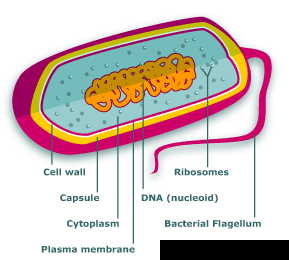
In a bacterial cell, what is V labeling?
Flagellum
Pilus
Cell Membrane
Chromosomal DNA

What is the name of the theory that explains how prokaryotic cells merged to become eukaryotic cells?
Cell Theory
Endosymbiotic Theory
Emergent Theory
Evolution Theory
One of the modern cell theory ideas is that all cells have ________.
Nuclei
Evolution
Metabolism
Chloroplasts
There are three parts to the OG cell theory. Which is NOT one of those parts?
What did Francesco Redi's experiment with meat in a jar do for the cell theory
Proved that living things come from other living things
Proved that spontaneous generation is correct
Proved that meat is smelly and attracts flies
Proved that he had really good hair
This scientist was the first to identify and name cells them:
Which of the following is not a characteristic of a Prokaryotic cell?
What was the name of the experiment Louis Pasteur did to disprove spontaneous generation?
Bird neck flask experiment
Bye Bye spontaneous generation experiment
Swan-neck flask experiment
Pasteurization experiment
Bacteria is an example of a(n)
prokaryotic cell.
eukaryotic cell.
Which statement is NOT a part of the modern Cell Theory Additions?
Metabolism/Energy Flow occurs within cells
Hereditary information (DNA) is passed from one cell to another
All cells are formed in heated environments
All cells have the same basic composition
Which scientist popularized the microscope by drawing animalcules?
Robert Hooke
Anton von Leeuwenhoek
Louis Pasteur
Francesco Redi
The correct theory of how cells generate/appear is called ___.
Spontaneous Generation
Spontaneous cell growth
Metabolism
Biogenesis

A widely accepted explanation of a natural phenomenon constructed using the scientific method, and which brings together many facts and hypotheses
Theory
Law
Hypothesis
Explanation
A scientific ____________ is a statement that describes what always happens under certain conditions in nature that is usually mathematically defined.
law
hypothesis
theory
method
Why was the popularization of the microscope so important?
It allowed scientists to prove spontaneous generation
It advanced the careers of scientists like Anton Von Leeuwenhoek
It led to the discovery of a new species called "animalcules"
It led to the creation of the cell theory by allowing scientists to see the smallest unit of life
Most of the cell membrane is made mostly of...
Phospholipids
What forms the channels and pumps in the phospholipid bilayer?
carbohydrates
proteins
hydrophilic heads
lipids

Which of the following is responsible for getting large molecules across the cell membrane?

Part of the plasma membrane called glycoproteins that are responsible for cell recognition...

Which structure in this image is a Protein transport channel?


Diffusion is a form of __________ transport.
Passive
Active
Easy
Free
_____________ is the free movement of particles across the phospholipid WITH the concentration gradient (high --> low)
simple diffusion
facilitated diffusion
active transport
fusion
What is the movement of particles with the concentration gradient using protein "helpers"?
diffusion
facilitated diffusion
active transport
enzymatic reactions

The sodium potassium pump is an example of
Passive Transport
Active Transport
Facilitated Diffusion
Endocytosis
Human red blood cells contain 0.9% sodium chloride as a component of their cytoplasm. What would happen if an IV solution containing 3.5% sodium chloride is introduced into a person?
The red blood cell would get bigger and burst.
The red blood cell would stay the same size.
The red blood cell would shrink.
The red blood cell would first loose water and then absorb water.
If the body can no longer make ATP, which type of transport would be impacted?
Facilitated Diffusion
Osmosis
Active Transport
Simple Diffusion
Diffusion (passive transport) occurs when molecules
move through a permanent barrier
move against the concentration gradient
move from high to low concentration
move from low to high concentration

Maintaining a constant internal state in a changing environment is called ___.
What term describes a solution that has the same solute concentration inside of and outside of the cell?
Hypertonic
Hypotonic
Isotonic
When water is freely moving into and out of the cell at an equal rate, this is called
Hypertonic Equilibrium
Facilitated Equilibrium
Dynamic Equilibrium
Solute Equilibrium
Cell specialization explains why cells are a "specialized" because their " (a) fits (b) "
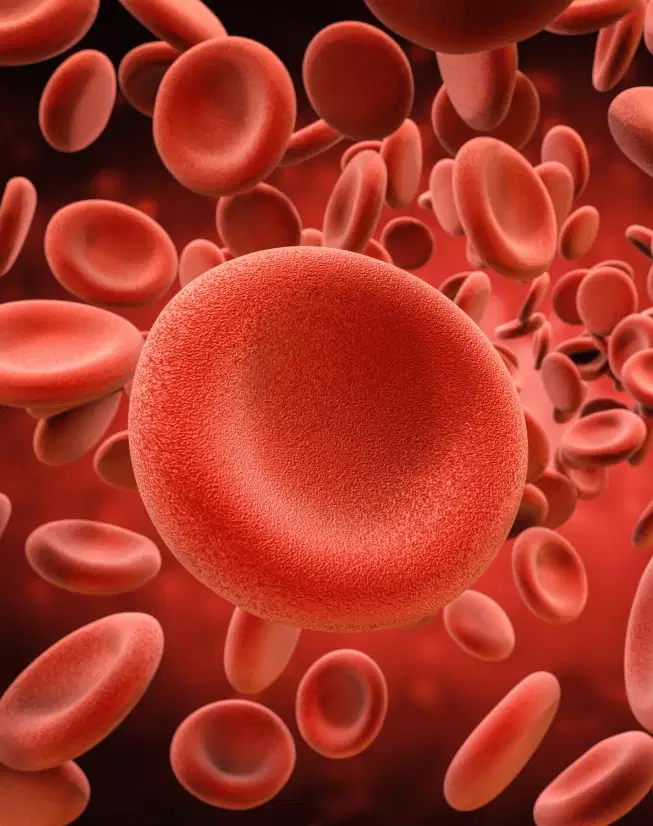
In the heart rate lab we discussed how the red blood cell's concave shape helps it squeeze through tiny blood vessels to deliver _____ to the body.
carbon dioxide
water
glucose
oxygen

An un-specialized cell that can transform into any specialized cell is called a
Epithelial Cell
Stem Cell
Neuron Cell
Muscle Cell
Aquatic animals adapt to their environment to maintain homeostasis. What do you think would happen if you put a saltwater adapted fish into a freshwater pond?
The fish's cells would shrink, and it could die because its being placed in a hypertonic solution
the fish's cells would swell, and it could die because it is being placed in a hypotonic solution
The fish's cells would not do anything, and it will maintain dynamic equilibrium.

