
 Worksheets
DNA and Enzyme Review
Total questions: 47
Worksheet time: 38mins

DNA is related to
Carbohydrates
Photosynthesis
Cellular Respiration
Genetics

What do organisms have in common?
DNA sequence made of A,C,T,G
DNA sequence is in the same order
DNA sequence between organisms have nothing in common
DNA sequence made of A,U,C,T,G

What is "A"?
Nucleotide
Deoxyribose Sugar
Nitrogenous base
Phosphate
What is "B"?
Nucleotide
Deoxyribose Sugar
Nitrogenous base
Phosphate
What is "C"?
Nucleotide
Deoxyribose Sugar
Nitrogenous base
Phosphate
What is the molecule in the image?
Nucleotide
Deoxyribose Sugar
Nitrogenous base
Phosphate
What is the complimentary sequence of the following sequence:
GATCAG
TGACAT
GACATG
CTAGTC
CGACTA

What is bonded to Adenine in the image to form a section of the DNA molecule?
Guanine and Phosphate group
Cytosine and Deoxyribose sugar
Thymine and Deoxyribose sugar
Deoxyribose sugar and Phosphate group
What determines the specific traits in an organism?
The number of carbons in the DNA molecule.
The number of hydrogen bonds that hold the strands of DNA together.
The sequence of nucleotide bases in the DNA molecule.
The sequence of phosphates along each DNA strand.

ATG TGA CAG

it is very small and very complicated
it's in everything
it serves as the blueprint (instructions) for traits of all living things
because we eat it every day for energy


AATCATGGA

Enzymes are
Lipids
Protein
Carbohydrates
Nucleic Acids
Enzymes are responsible for-
Speeding up reactions
Giving the body energy
Slowing down reactions
Which of these is most likely an enzyme?
Sucrose
Galactose
Fructose
Amylase
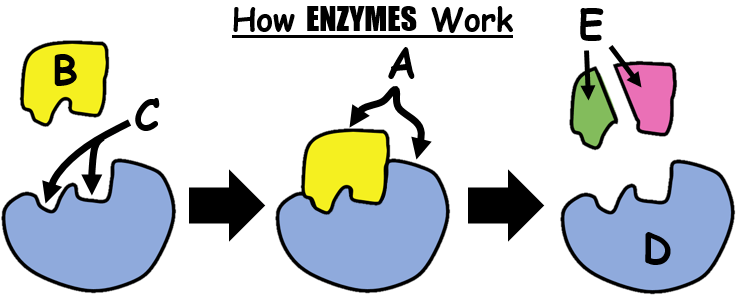
Letter D...
active site
enzyme
substrate
products
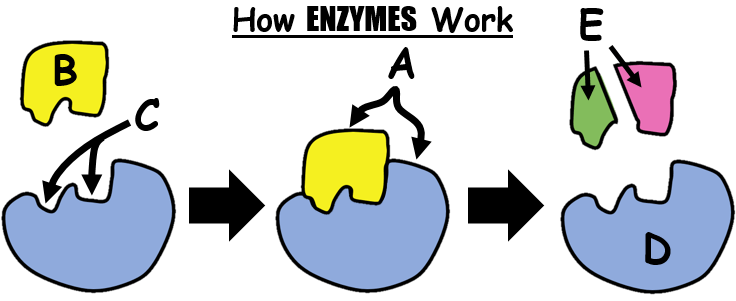
Letter B...
active site
enzyme
substrate
products
Letter c...
active site
enzyme
substrate
products
What is a substance called if it speeds up a chemical reaction?
reusable
catalyst
specific
fragile
What happens when enzymes are heated to a high temperature?
The enzymes die.
The shapes of the enzyme are altered denature
The enzymes' amino acid sequence changes.
The enzymes remain the same
What are two of the functions of an enzyme? Pick two
Break down molecules
Build up molecules
Speed up the rate of reaction
Decrease the rate of reaction

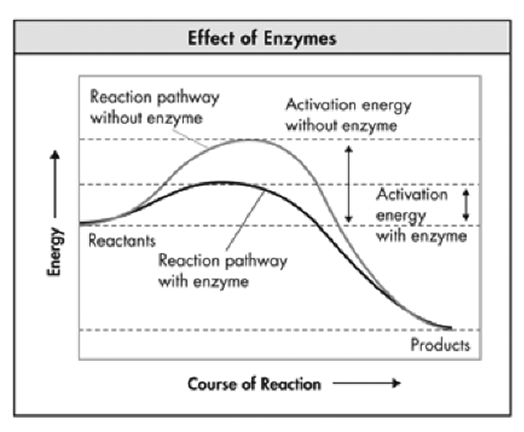
In the diagram, what is letter A?
product
enzyme-substrate complex
substrate
active site
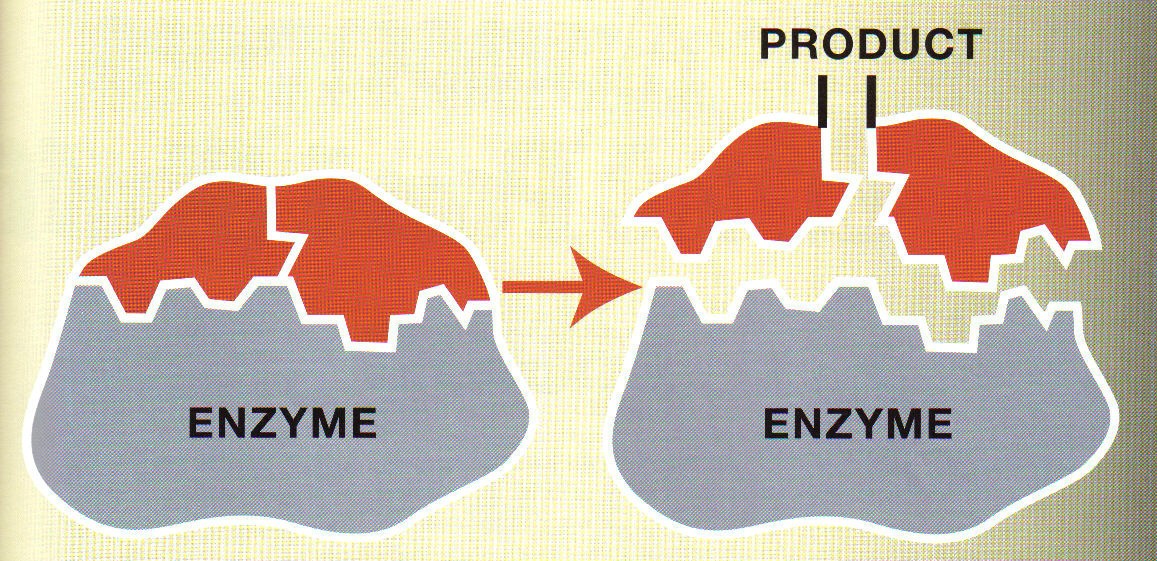
The substance that binds to an enzyme is called a?
Polypeptide
Co-enzyme
Vitamin
Substrate
Changes in pH and temperature can ___________________ an enzyme which causes it to lose its shape and affects its function.
puncture
denature
double
delete
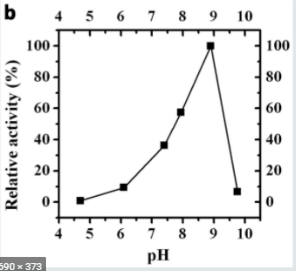
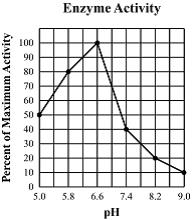
What is the optimal pH for this enzyme?
6
10
9
7
The ____________________ mechanism describes how each substrate must fit into the enzyme.
lock and key
hammer and nail
jigsaw puzzle
seesaw
Where do substrates bind to an enzyme?
calcium channels
active site
receptor molecules
voltage-gated channels
If a DNA sequence has 40% Ts, what percent Gs must it have?
If a DNA Sequence has 30% Cs, what percent As must it have?
Enzymes are _______________ that _____________________ chemical reactions by ____________ the amount of activation energy required to start the reaction.
carbohydrates, slow down, lowering
proteins, speed up, increasing
lipids, speed up, lowering
proteins, speed up, lowering

What is the optimal temperature of this enzyme?
60
40
70
30
Quickly available energy is the function of which biomolecule
Carbohydrates
Nucleic Acid
Protein
Lipid
One of the monomers of lipids is fatty acids. What is the other
Nucleotides
Glycerol
Deoxyribose
Thymine
True or False: Not all living things are composed of genetic material (DNA)
True
False
The nitrogenous base Guanine pairs with Cytosine. The nitrogenous base Adenine pairs with
Thymine
Amino Acids
Deoxyriobse
Phosphate

