
 Worksheets
Year 8 Science Exam Revision
Total questions: 143
Worksheet time: 3hrs 35mins

The cell theory applies to all organisms, including the five shown. Which of the following statements describes how these organisms are an example of the cell theory?
The organisms have cells that lack a nucleus.
The organisms are made of one or more cells.
The cells of the organisms undergo photosynthesis.
The cells of the organisms are identical to each other.
x-rays
computers
the light microscope
the scanning electron microscope
The cell theory developed from the work of many different scientists. Which of the following statements is NOT part of the cell theory?
All cells come from other living cells.
The cell is the basic unit of all living things.
All cells of living things have the same organelles.
All living things are made up of one or more cells.
There are three tenets of the Cell Theory. Which of the following is NOT a tenet?
Cells are the basic structure and function of life.
All living things are made of one or more cells.
The cell is the basic unit of matter.
All cells come from preexisting cells.
Cells that are only made of (a) cell are called unicellular.
Which of the following statements is true?
Plants and animal cells have cell walls for protection.
Animal cells have one large vacuole; the plant cell has tiny ones.
Plant cells contain chlorophyll; animal cells have lysosomes.
Animal cells are box shaped; plant cells are circular.
Which picture does NOT belong?


Bacteria is classified as a what?
Prokaryote
Eukaryote
Choose 3:
What are the three main differences in plant and animal cells?
Cell Wall
Mitochondria
Chloroplast
Larger Vacuole
Cell Membrane
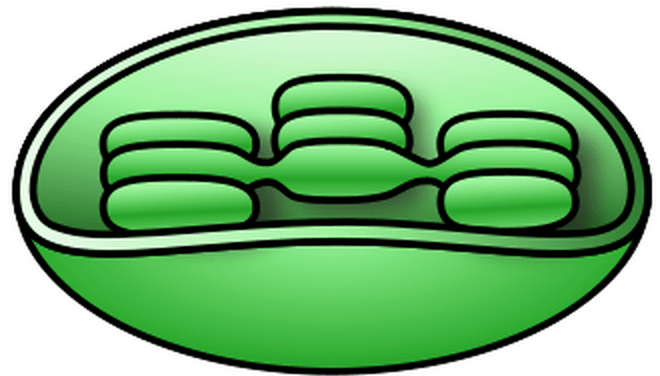
Which organelle produces proteins?
Ribosomes
Lysosomes
Nucleus
Vacuoles
Which cell parts are not present in animal cells?
cell membrane & cytoplasm
nucleus & chloroplasts
cell wall & chloroplasts
ribosomes & mitochondria
Which organelle is the location of DNA (genetic material)?
mitochondria
ribosomes
nucleus
Endoplasmic Reticulum


What is the cell membrane's function (job)?
Gives the plant cell its shape, structure, and support
Controls what enters and leaves the cell like security at the airport
jelly-like substance that holds the organelles in place

What is the cell wall's function (job)?
give the plant cell its structure, shape, and support
Powerhouse of the cell that gives the cell energy to use
controls what enters and leaves the cell

The solution surrounding the cell in Diagram B, would be defined as:
hypertonic
hypotonic
isotonic

The solution surrounding the cell in Diagram C, would be defined as
hypertonic
isotonic
hypotonic


What will happen to the cell in the given solution?
Swell up
Shrink
Stay the same


Movement of SOLUTE through the cell membrane from high to low concentration is called.....
diffusion
active transport
facilitated diffusion
osmosis

Which molecule is in equilibrium? How can you tell?
Molecule A; equal amounts inside and outside
Molecule B; passive movement into the cell
Molecule C; equal amounts inside and outside
Molecule C; all molecules are inside the cell
What is the difference between active and passive transport?
Active is high to low; Passive is low to high
Active uses no cell energy; Passive uses cell energy
Passive is high to low and uses no energy; Active uses energy and is low to high
Passive uses no cell energy
Fill in the blank:
Osmosis is the movement of ________ across a cell membrane from high to low.
Carbon dioxide
Starch
Water
Oxygen

In an isotonic solution which way will the water flow
it will not flow at all
it will flow into the cell
it will flow both ways at equal rates
out of the cell
A solution outside of a cell that contains a higher water concentration than the cytoplasm of a cell is called:
solution
hypertonic
hypotonic
isotonic
What would happen to a cell placed in a hypertonic solution
The cell would shrink
The cell would expand and possibly burst
The cell would remain the same
The cell would dance and do the Nay Nay!
How do molecules move during diffusion?
From high concentration to low concentration
From low concentration to high concentration
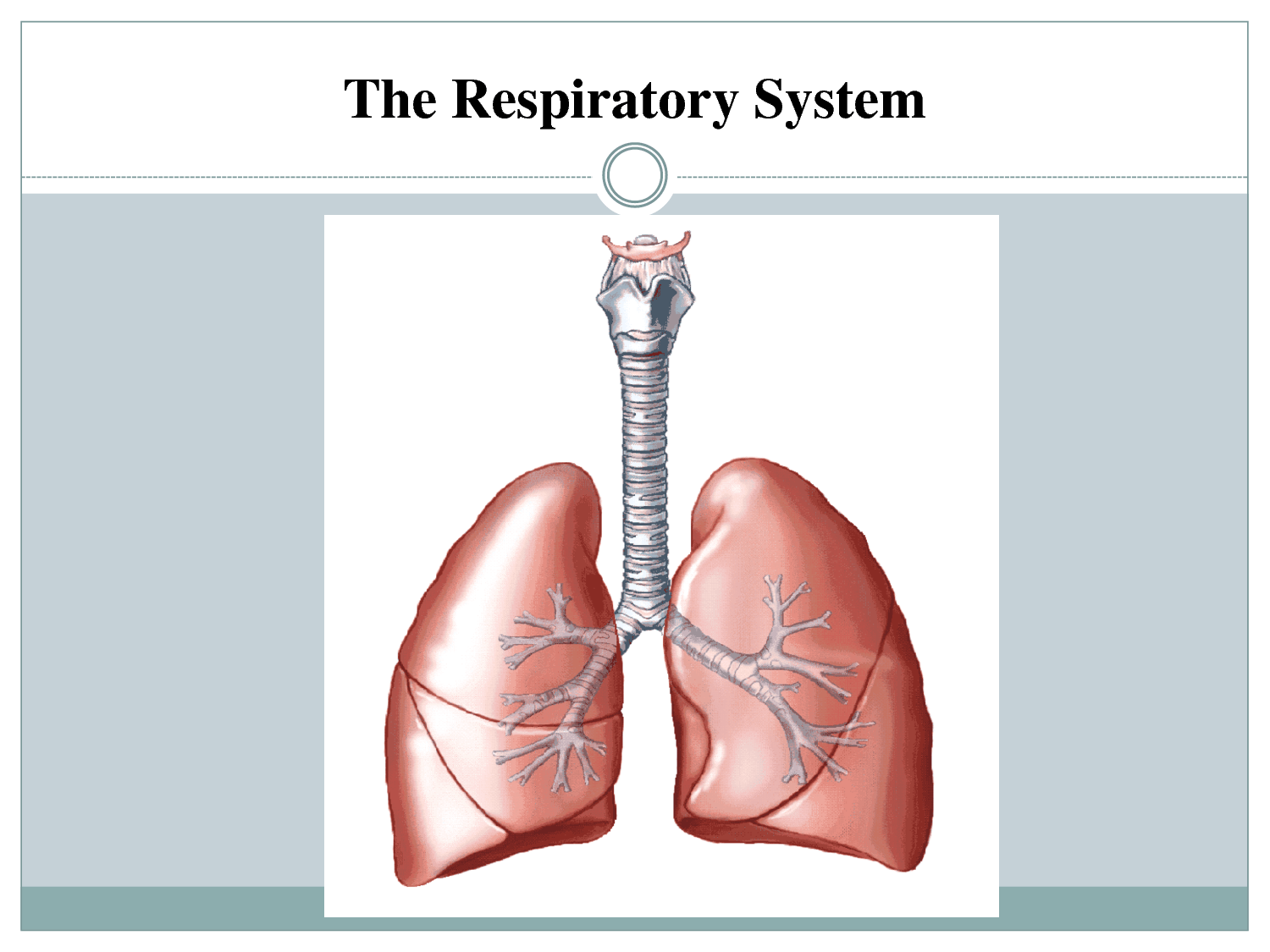

What is the main function of the respiratory system?
to provide oxygen and remove carbon dioxide from the body
to bring oxygen to the body
to break down food and absorb nutrients
to remove oxygen from the body and deliver carbon dioxide
I. High surface area
II. Thin walls
III. Dry surfaces
What type of digestion takes place in the stomach?
mechanical
chemical
both mechanical and chemical
What enzyme is found in saliva that starts digesting carbohydrates?
amylase
chyme
pepsin
bile
Where does the absorption of nutrients from food take place?
stomach
liver
small intestine
large intestine
What part of the digestive system mechanically and chemically breaks down food?
mouth
stomach
both the mouth and stomach
What chemically breaks down food into smaller molecules?
teeth
muscles of the stomach
enzymes
Numerous fingerlike projections in the folds of the wall of the ileum is classified as
Bolus
Chyme
Bile
Villi
The majority of the absorption of nutrients into the bloodstream occurs in the _______.
Stomach
Small intestine
Large intestine
Liver
What increases the surface area of the small intestine?
duodenum
villi
ileum
pancreas
What is the purpose of the villi? (select all that apply)
increase the surface area
chemically break down food
absorb nutrients into the bloodstream
mechanically break down food
Which structures increase the surface of the gut?
Lacteal and villi
Villi and microvilli
Intestinal glands and microvilli
Capillaries and membrane proteins

In reference to the image above, how would the absorption of a person with Celiac disease be affected ?
No effect on absorption.
The villi are flattened and therefore their absorption of nutrients would increase.
The villi are flattened and therefore their absorption of nutrients would decrease.
The villi are enlarged and absorption would increase.
the variable changed by the scientist
independent variable
dependent variable
the variable that might change because of what the scientist changes
independent variable
dependent variable
the result that is measured after the experiment
independent variable`
dependent variable
If I drink too much caffeine before bed, then I won't get much sleep. What is the IV?
drinking caffeine
amount of sleep
If I drink too much caffeine before bed, then I won't get much sleep. What is the DV?
drinking caffeine
amount of sleep
controls or constants
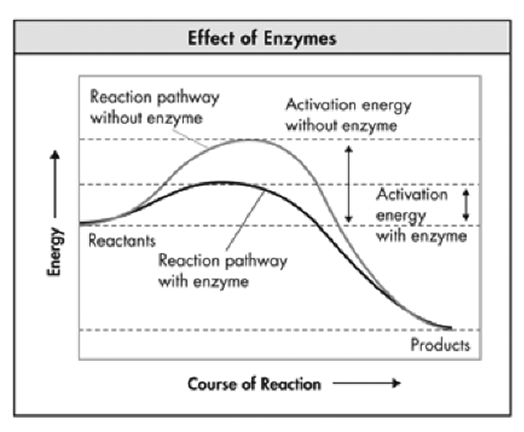
What is the purpose of an enzyme?
give permission for the reaction
raise activation energy
speed up reactions (catalyst)
control how many reactions occur

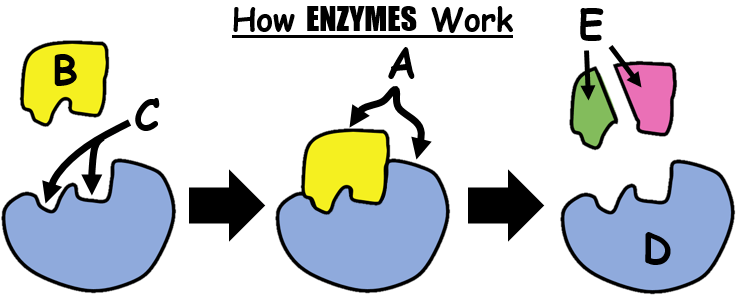
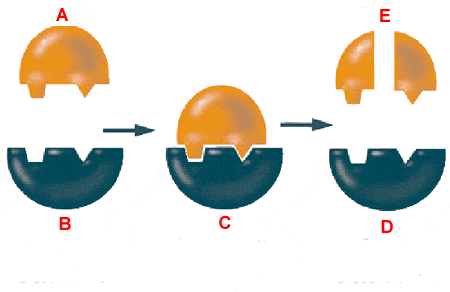
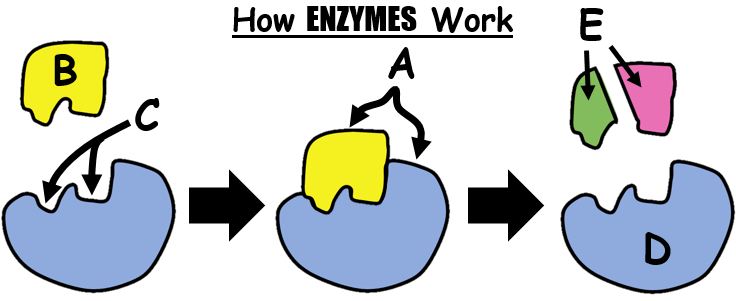
Letter C, where the reaction take place is called the
active site
enzyme
substrate
products
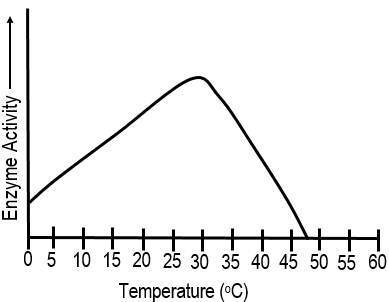
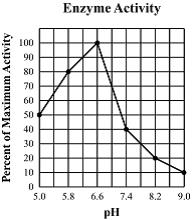
Enzymes in your body probably work best at which of the following temperatures>
25oC
98oC
37oC
210oC


The Atomic number is known as the _______
Number of electrons in an atom
Number of Protons in an atom
Number of neutrons in an atom
Number of Protons and electrons in an atom
What charge do protons have?
Positive
Negative
Neutral
What is Atomic Mass Number ?
Number of Protons
Number of Neutrons
Number of Protons and Neutrons
Number of Protons and Electrons
The number of electrons in an atom is equal to the...
Atomic number
Protons
Atomic Mass
Neutrons
The formula used to calculate the number of neutrons is:
Mass Number - Atomic Number
Protons + Electrons
Atomic Number - Mass Number
Protons x2
Which group does Hydrogen belong to?
Group 1
Group 2
Group 3
Group 4
Which group does Aluminum belong to?
Group 3
Group 13
Group 6
Group 26
Which period is Oxygen found in?
Period 1
Period 2
Period 3
Group 16
Which Period is Gold (Au) found in?
Group 11
Group 6
Period 11
Period 6
Which element is found in Period 4, Group 8?
Iron
Oxygen
Nickel
Silver
Which element is in the SAME GROUP as Oxygen?
Hydrogen
Helium
Sulfur
Carbon
Which element is in the SAME PERIOD as Helium?
Hydrogen
Neon
Nitrogen
Potassium
What is the ATOMIC NUMBER of the element found in Period 4, Group 1?
41
4
1
19
What Group and Period does Chlorine (Cl) belong to?
Group 3, Period 17
Group 2, Period 17
Group 17, Period 3
Group 17, Period 4
These are examples of ruminants:
pigs, horses, humans and chickens
sheep, goats, cattle, deer, giraffes
pigs, sheep, cattle, chickens
pigs, hippos, llamas
Ruminants have ___ complex stomach stuctures
1
2
3
4
What is the plant cell carbohydrate called that cows can digest and humans can't?
carotene
chlorophyl
cellulose

Identify the given diagram
lungs
spiracles
gills
none of this
the fish have Lung for respiration
true
false
Gills take in oxygen from the water while lungs take in oxygen from the air.
Gills of a fish are equipped with blood vessels to help in the exchange of gases
True
False
How do plants breathe?
Through the stem
Through the stomata
Through the chloroplast

What is the function (job) of fish gills?
To absorb water from the water
To make the fish faster
To make the fish lighter
To absorb oxygen from the water
Fish breathe using
gills
lungs
antennae
Which results in offspring that are genetically unique and display a combination of traits from each parent?
Sexual
Asexual
Neither
Both
Which type of reproduction results in offspring that are identical to the parent?
Sexual
Asexual
Neither
Both
Which type of reproduction tends to produce more offspring?
Sexual
Asexual
They occur at the same rate

What type of asexual reproduction is it?
budding
vegetative propagation
sporulation
binary fission

What type of asexual reproduction is it?
vegetative propagation
sporulation
budding
binary fission

What type of asexual reproduction is it?
vegetative propagation
sporulation
budding
binary fission
Which organism would you classify as sexually reproducing?
A strawberry plant that reproduces through runners in the ground
A starfish that reproduces by breaking off and regenerating parts of its body
An amoeba that splits through binary fission
A chicken egg that is fertilized by a rooster

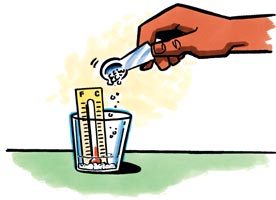



Which of these is an adaptation alveoli have for efficient gas exchange?
thick walls
thin walls
small surface area

