wayground logo

Free Printable Worksheets

Font size

S
M
L
XL
Worksheets

Physical Science Midterm Review

Total questions: 140

Worksheet time: 2hrs 36mins

Name
Class
Date
1.
Using one or more of your senses to gather information.
a)
inferring
b)
predicting
c)
classifying
d)
observing
2.
When you explain or interpret the things you observe.
a)
Predicting 
b)
classifying
c)
Inferring
d)
skepticism
3.
Which is the dependent variable in Amelia's experiment?
a)
the number of bean plants in each group 
b)
the amount of water given daily to each plant 
c)
the height of each bean plant 
d)
the amount of fertilizer given to each group of bean plants
4.
In the paper airplane experiment, changing the size of the airplane would be which variable?
a)
Dependent
b)
Independent
c)
Control
d)
Conclusion
5.

Using one or more senses to gather information is an ________.

a)

inference

b)

observation

c)

analysis

d)

interpretation

6.

A variable in an experiment that is being changed by the scientist is the _________.

a)

dependent variable

b)

independent variable

c)

data

d)

control group

7.

A possible explanation to a problem that has not yet been tested is a(n) ________.

a)

data

b)

theory

c)

hypothesis

d)

fact

8.
The independent variable is the ONE thing you _____.
a)
change
b)
keep the same
c)
experiment with
d)
investigate
9.
What is the condition being changed in an experiment called?
a)
Control
b)
Observation
c)
Variable
d)
Changer
10.

The variable that is observed or measured during an experiment is the ___________.

a)

independent variable

b)

dependent variable

c)

control

d)

constant

11.

A procedure that is used to test a hypothesis is _________.

a)

a variable

b)

an experiment

c)

a theory

d)

an observation

12.

Both variables are increasing in a graph

a)

Direct

b)

Indirect

c)

Constant

d)

Cyclic

13.

One variable is increasing while the other is decreasing in a graph

a)

Direct

b)

Indirect

c)

Constant

d)

Cyclic

14.

One variable increases while the other stays the same in a graph

a)

Direct

b)

Indirect

c)

Constat

d)

Cyclic

15.

Graph repeats in a predictable pattern

a)

Direct

b)

Indirect

c)

Constant

d)

Cyclic

16.

Matter is anything that has mass and

a)

Is alive

b)

Takes up space

c)

Holds water or air

d)

Is a chemical change

17.

What are the three states of matter?

a)

Solid, mass and temperature

b)

Color, size and shape

c)

Solid, liquid and gas

d)

Air pressure, temperature and air mass

18.

A chemical change always results in

a)

A different kind of matter

b)

Change in size

c)

Loss of matter and energy

d)

An explosion

19.

Which of the following is an example of a physical change?

a)

Metal rusting

b)

Coins tarnishing

c)

Wood burning

d)

Water boiling

20.

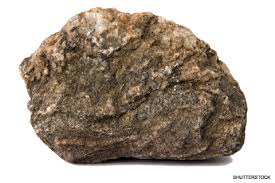
What tool would you use to measure an irregular object such as a small rock?

a)

Graduated cylinder

b)

Meter stick

c)

Balance scale

d)

Thermometer

21.

Digesting food is an example of a

a)

Physical change

b)

Density

c)

Volume

d)

Chemical change

22.

Cutting paper is an example of a

a)

Mass

b)

Physical change

c)

Chemical change

23.

When you combine pudding mix with water, you are making a

a)

Solution

b)

Chemical change

c)

Thermometer

d)

Mixture

24.

An unknown substance has a mass of 200 grams and a volume of 100 cm3. What is the density?

a)

2 g/cm3

b)

10 g/cm3

c)

87 g/cm3

d)

20 g/cm3

25.

An object with a density that is greater than 1 will

a)

float

b)

sink

c)

neither

26.

If the density is 5 g/cm3 and the volume is 5 cm3, the mass must be

a)

5 g

b)

100 g

c)

25 g

d)

125g

27.

What is the amount of matter in an object?

a)

volume

b)

liters

c)

grams

d)

mass

28.

What is the amount of space that matter occupies?

a)

volume

b)

mass

c)

density

d)

peanut butter

29.

You would use a triple beam balance to measure what?

a)

volume

b)

weight

c)

viscosity

d)

mass

30.

The formula for density is

a)

D=LxW

b)

D=M/V

c)

D=V/M

d)

D=L/Q

31.

The formula for volume is

a)

D=M/V

b)

V=G

c)

V=LxWxH

d)

V=mph x force

32.
What is the object pictured used to measure?
a)
Weight
b)
Density
c)
Volume
d)
Mass
33.
What is the volume of the fish inside the graduated cylinder?
a)
38 mL
b)
6 mL
c)
32 mL
d)
Not enough information to solve
34.
This object is used to measure:
a)
Size
b)
Mass
c)
Length
d)
Temperature
35.
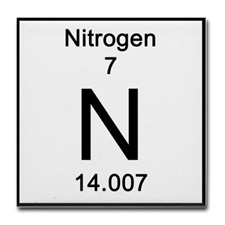
What is the number of protons that the element in this image contain?
a)
14
b)
7
c)
15
d)
18
36.
What is the atomic mass of "F"
a)
9
b)
18
c)
17
d)
19
37.
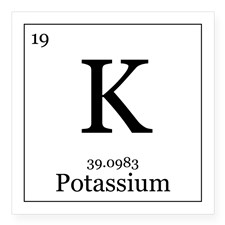
How many neutron are in the atom "K"?
a)
7
b)
2
c)
39
d)
12
38.
The first energy level can hold up to how many electrons?
a)
8
b)
4
c)
2
d)
5
39.
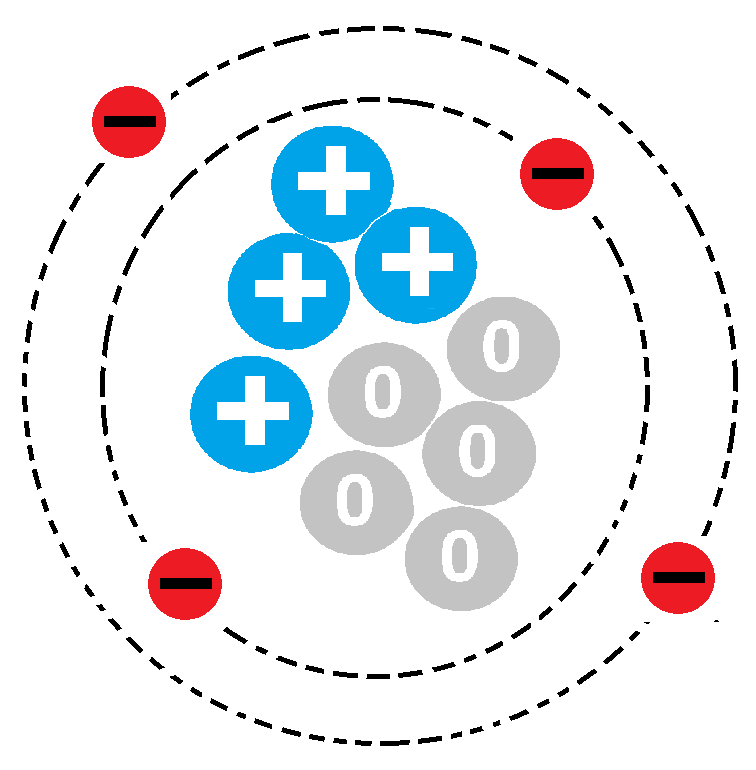
What is the overall charge of this atom?
a)
+4
b)
-3
c)
+1
d)
-1
40.
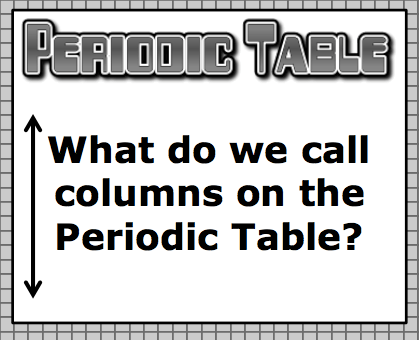
True or False: A "group" on the periodic table is also known as a "family".
a)
True
b)
False
41.
In an atom, which of the following has a NEGATIVE charge?
a)
Protons
b)
Neutrons
c)
Electrons
d)
Protons & neutrons
42.
The number of valence electrons an atom has can be determined by looking at what?
a)
The atom’s period number
b)
The atom’s group/family number
c)
The atom’s atomic number
d)
The atom’s atomic mass
43.
Fill in the blanks: A(____)=P(____)=E(_____)
a)
Atomic #=
Protons=Electrons
b)
Atom=Protons=
Electrons
c)
Atomic Mass=Protons=valence Electrons
44.
If given the number of protons, an elements __________ can then be determined.
a)
Atomic mass
b)
# of neutrons
c)
Atomic #
45.
A neutron has what kind of charge?
a)
Positive
b)
Negative
c)
No charge
46.

All matter is made of what

a)

energy

b)

atoms

c)

electrons

d)

compounds

47.

The central region of an atom where its neutrons and protons are is its

a)

nucleus

b)

electron cloud

c)

core

d)

center

48.
What does the nucleus consist of?
a)
Protons + Electrons
b)
Neutrons + Electrons
c)
Atoms
d)
Protons + Neutrons
49.
What is the atomic mass? 
a)
12
b)
6
c)
d)
18
50.
How many neutrons are in potassium? 
a)
39
b)
19
c)
20
d)
58
51.
What's a valence electron?
a)
electrons in the second energy level
b)
electrons in the outermost energy level
c)
the atomic number
d)
electrons in the first level
52.
What is the atomic number of this atom?
a)
4
b)
5
c)
9
d)
none of the above
53.
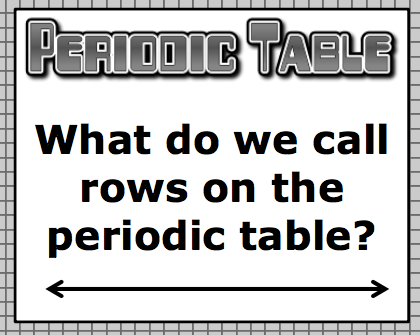
a)
Periods
b)
Groups
54.
a)
Periods
b)
Groups
55.
a)
energy levels
b)
valence electrons
c)
protons
d)
neutrons
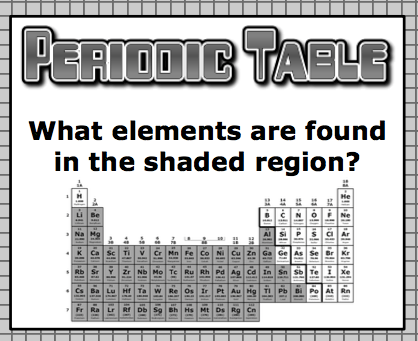
56.
a)
Metals
b)
Nonmetals
c)
Metalloids
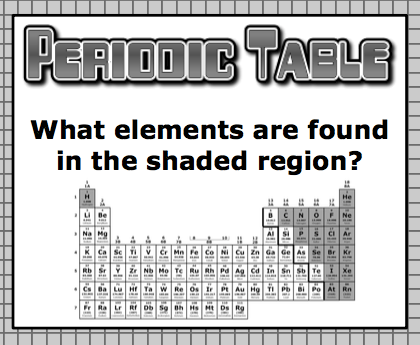
57.
a)
Metals
b)
Nonmetals
c)
Metalloids
58.
a)
Metals
b)
Nonmetals
c)
Metalloids
59.
The number at the bottom of each square on the periodic table is the ...
a)
atomic number
b)
atomic mass
c)
chemical symbol
d)
element name
60.
The number at the top of each square on the periodic table is the ...
a)
atomic number
b)
atomic mass
c)
Chemical Symbol
d)
Element Name
61.
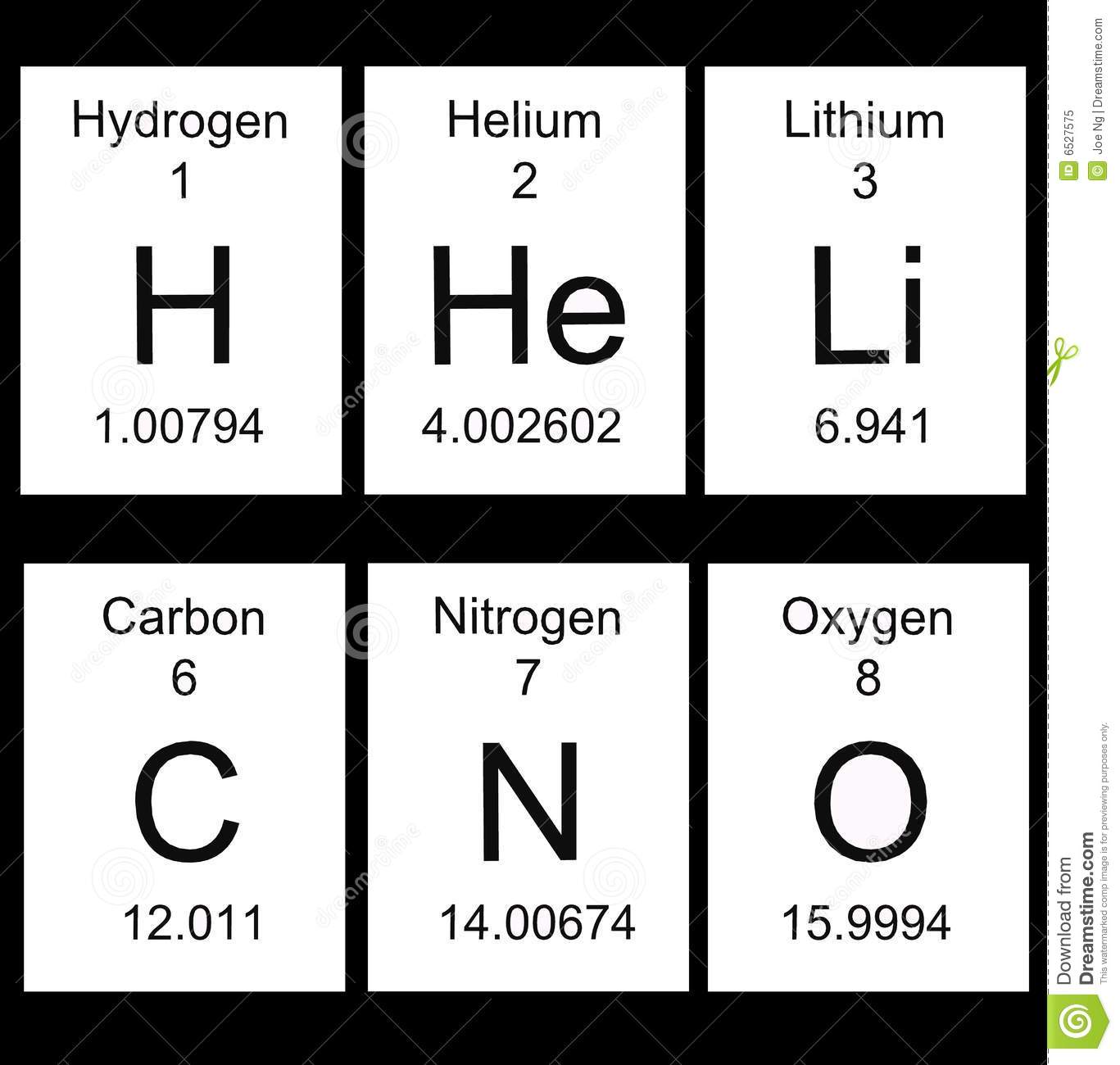
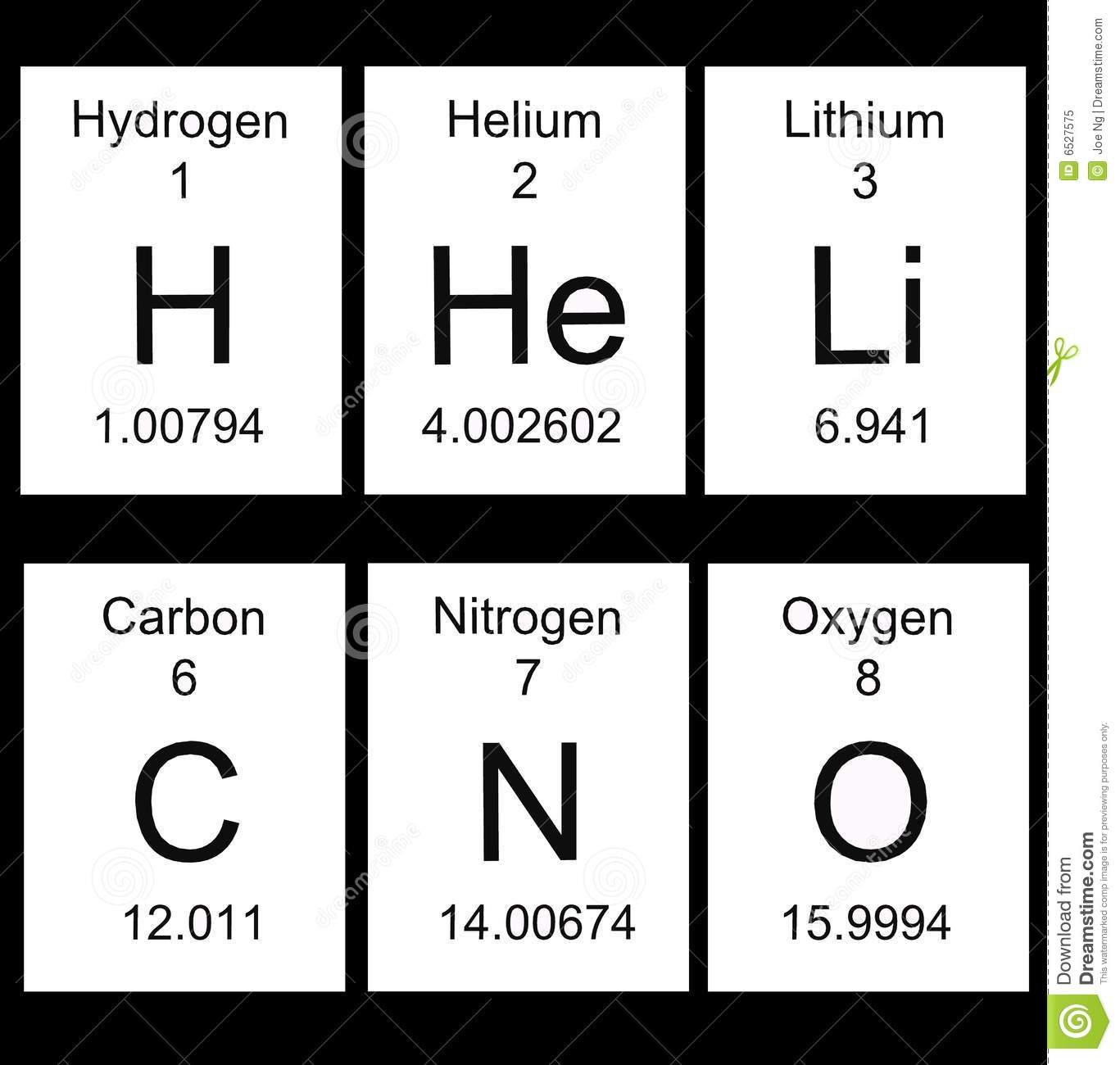
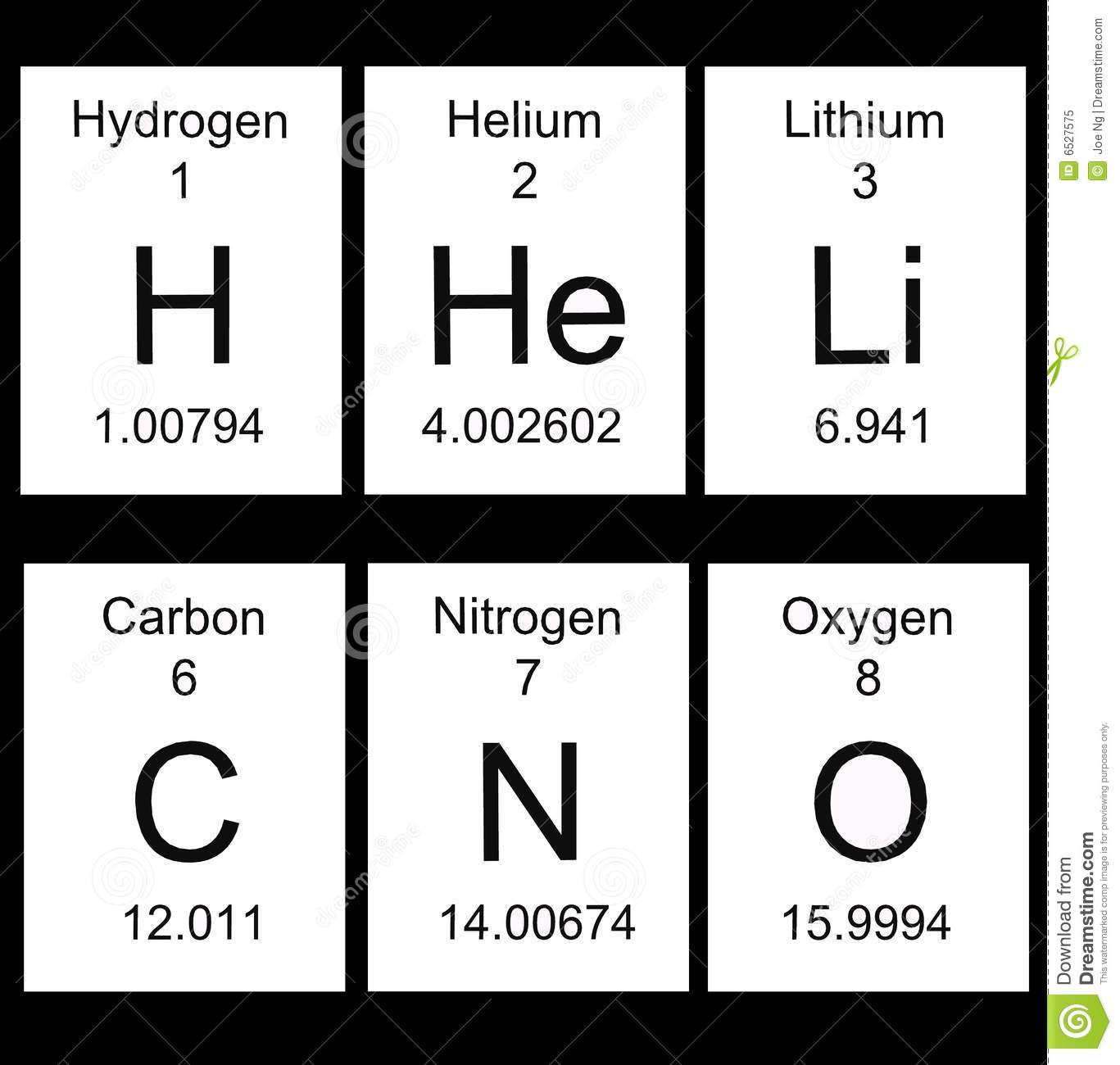
What is the chemical symbol for Lithium?
a)
H
b)
He
c)
Li
d)
N
62.
Beryllium is in group number______.
a)
Group 2
b)
Group 3
c)
Group 4
d)
Group 7
63.
The period for Bromine is ___________.
a)
3
b)
2
c)
4
64.
Which group of METALS is the most reactive?
a)
Group 2- Alkaline Earth
b)
Group 17- Halogens
c)
Group 18- Noble Gases
d)
Group 1- Alkali metals
65.
Which of these is a property of metals?
a)
It's malleable
b)
It can't conduct electricity
c)
They are used in food
d)
It's very brittle
66.
Which of the following is NOT a characteristic of most metals?
a)
Brittle
b)
Good conductor
c)
Ductile
d)
Malleable
67.
Which of these grouping of elements could have the characteristic of luster (shiny)?
a)
Metal
b)
Nonmetal
c)
metalloids
d)
Both metals and metalloids
68.
All of the following would classify an element as a metal except?
a)
Dull
b)
Luster
c)
Malleable
d)
Hard
69.
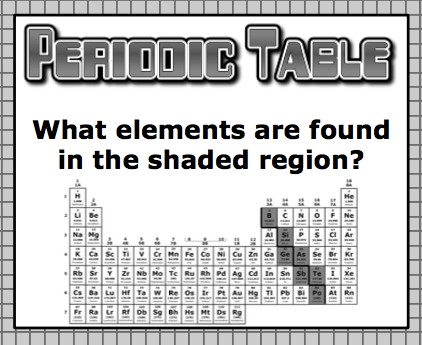
Which elements are found on the left to middle of The Periodic Table? 
a)
Metals
b)
Nonmetals
c)
Metalloids
d)
Candles
70.
I have an object that is dull, brittle, and an insulator, what is it?
a)
metalloid
b)
non-metal
c)
metal
d)
matter
71.
The elements argon, krypton, and xenon are all non-metals. What property would these elements have in common?
a)
Good conductor of thermal energy
b)
Poor conductor of electricity
c)
Shiny, lustrous surface
d)
Soft and malleable
72.
What physical properties are used to classify elements as metals, non-metals, or metalloids?
a)
Color, smell, physical state
b)
Reactivity, streak, hardness
c)
Ability to burn, mass, density
d)
Luster, conductivity, malleability
73.
How many different elements are in this chemical formula: C2H2ClK3
a)
6
b)
8
c)
2
d)
4
74.
Which of the following is not a compound?
a)
HCl
b)
Cl
c)
NaCl
d)
CO2
75.
Which of the following represents an element?
a)
H2O
b)
H2
c)
NaCl
d)
CaCO3
76.
Salt has a chemical formula of NaCl.  Salt is a...
a)
Compound
b)
Element
c)
Mixture
d)
None of the Above
77.
What cannot be broken down into other substances?
a)
Compound
b)
Mixture
c)
Solids
d)
Element
78.
What is made up two or more elements that are chemically combined?
a)
Element
b)
Mixture
c)
Compound
d)
Solids
79.
How many elements are represented in the compound?
Na2CO3
a)
1
b)
2
c)
3
d)
4
80.
A combination of substances that are not chemically combined is called a(n)____________. 
a)
mixture
b)
compound
c)
physical
81.
Mixtures are separated through ___________changes.
a)
mixture
b)
compound
c)
physical
82.
An element is made up of only one kind of _____.
a)
isotope
b)
plastic
c)
atom
d)
metal
83.
_____ small particles that make up most types of matter on Earth.
a)
compounds
b)
atoms
c)
mixtures
d)
elements
84.
In general, metals are _____. 
a)
poor conductors of heat
b)
brittle
c)
poor conductors of electricity 
d)
good conductors of heat
85.
Which of these is a mixture?
a)
Uncooked chocolate chips and cookie dough blended together with a spoon.
b)
Distilled water
c)
A nugget of gold
d)
A molecule of Oxygen
86.

What type of mixture is a salad

a)

homogeneous

b)

heterogeneous

87.

What type of mixture is blood

a)

homogeneous

b)

heterogeneous

88.

What type of mixture is kool aid

a)

homogeneous

b)

heterogeneous

89.

Identify the following: helium

a)

homogeneous

b)

heterogeneous

c)

compound

d)

element

90.

What kind of mixture is shown in the picture?

a)

Homogeneous

b)

Heterogeneous

91.

What kind of mixture is shown in the picture?

a)

Homogeneous

b)

Heterogeneous

92.

What kind of mixture is shown in the picture?

a)

Homogeneous

b)

Heterogeneous

93.
the central part of Earth
a)
core
b)
mantle
c)
crust
d)
magma
94.
thick layer of solid and molten rock surrounding the core
a)
crust
b)
mantle
c)
hydrosphere
d)
magma
95.
thin layer of solid rock that makes up the outermost layer of Earth
a)
core
b)
mantle
c)
crust
d)
fault
96.
all of Earth's water
a)
mantle
b)
core
c)
hydrosphere
d)
landform
97.
hot, melted rock
a)
sedimentary
b)
igneous
c)
metamorphic
d)
magma
98.

a layer of molten iron and nickel that surrounds inner core

a)

outer core

b)

inner core

c)

mantle

d)

crust

99.

a rigid layer made of the mantle and crust

a)

outer core

b)

lithosphere

c)

asthenosophete

100.

The gas layer that surrounds the Earth?

a)

Carbon Dioxide

b)

Oxygen

c)

Lithosphere

d)

Atmosphere

101.

The solid part of the Earth?

a)

hydrosphere

b)

atmosphere

c)

lithosphere

d)

universe

102.

The part of the Earth that is made up of salt and fresh water is called?

a)

Lithosphere

b)

Hydrosphere

c)

Atmosphere

d)

Ocean

103.

What makes up about 97% of the hydrosphere?

a)

Lakes

b)

Streams

c)

Salt Water

d)

Oxygen

104.
This rock was formed when heat and pressure changed its minerals around into new minerals. What type of rock is it?
a)
Metamorphic Rock
b)
Igneous Rock
c)
Sedimentary Rock
d)
Boring Rock
105.
This rock was formed when molten rock cooled into a solid. What type of rock is it?
a)
Igneous Rock
b)
Metamorphic Rock
c)
Sedimentary Rock
106.
This rock formed when bits of other rocks became pressed into a solid. What type of rock is it?
a)
Sedimentary Rock
b)
Metamorphic Rock
c)
Igneous Rock
107.
What are the 3 major types of rocks?
a)
Igneous, Metamorphic, Sedimentary
b)
Metamorphic, Igneous, Cementation
c)
Brown, Red, Gray
d)
Streak, Hardness, Breakage
108.
The process where one type of rock can change into another type of rock is known as ____
a)
The rock cycle
b)
Sedimentation
c)
Igneous
d)
Composition
109.
What does Mohs Chart measure?
a)
The Density of Liquid
b)
The Density of Air
c)
The Hardness of Minerals
d)
The Hardness of Atoms
110.
What process is used to form metamorphic rocks?
a)
Lava cools and hardens to form a rock.
b)
Bits of sand and gravel form layers that turn into rock from pressure.
c)
Extreme heat and pressure from inside the Earth turn rocks into new rocks.
111.
This rock was formed by smaller pieces of rock that settled at the bottom of a lake millions of years ago. What type of rock is this?
a)
Sedimentary
b)
Igneous
c)
Metamorphic
112.
What is Igneous?
a)
Formed from heat and cooling
b)
Layered rocks formed by compaction  
c)
Magma
d)
All of the above
113.
How does Igneous turn into Sediments?
a)
Heat and pressure
b)
Weathering and Erosion 
c)
Minerals 
d)
Mrs. Hicks ice powers
114.
What type of energy is in this picture?
a)
Kinetic
b)
Potential
c)
Chemical
d)
Sound
115.
Energy of motion is which type of energy?
a)
Potential
b)
Kinetic
c)
Sound
d)
Gravitational
116.
What kind of energy does this device use?
a)
Chemical
b)
Electrical
c)
Thermal
d)
Chemical
117.
What kind of energy is represented in this picture?
a)
Thermal
b)
Potential
c)
Nuclear
d)
Mechanical
118.
A battery converts what type of energy to another?
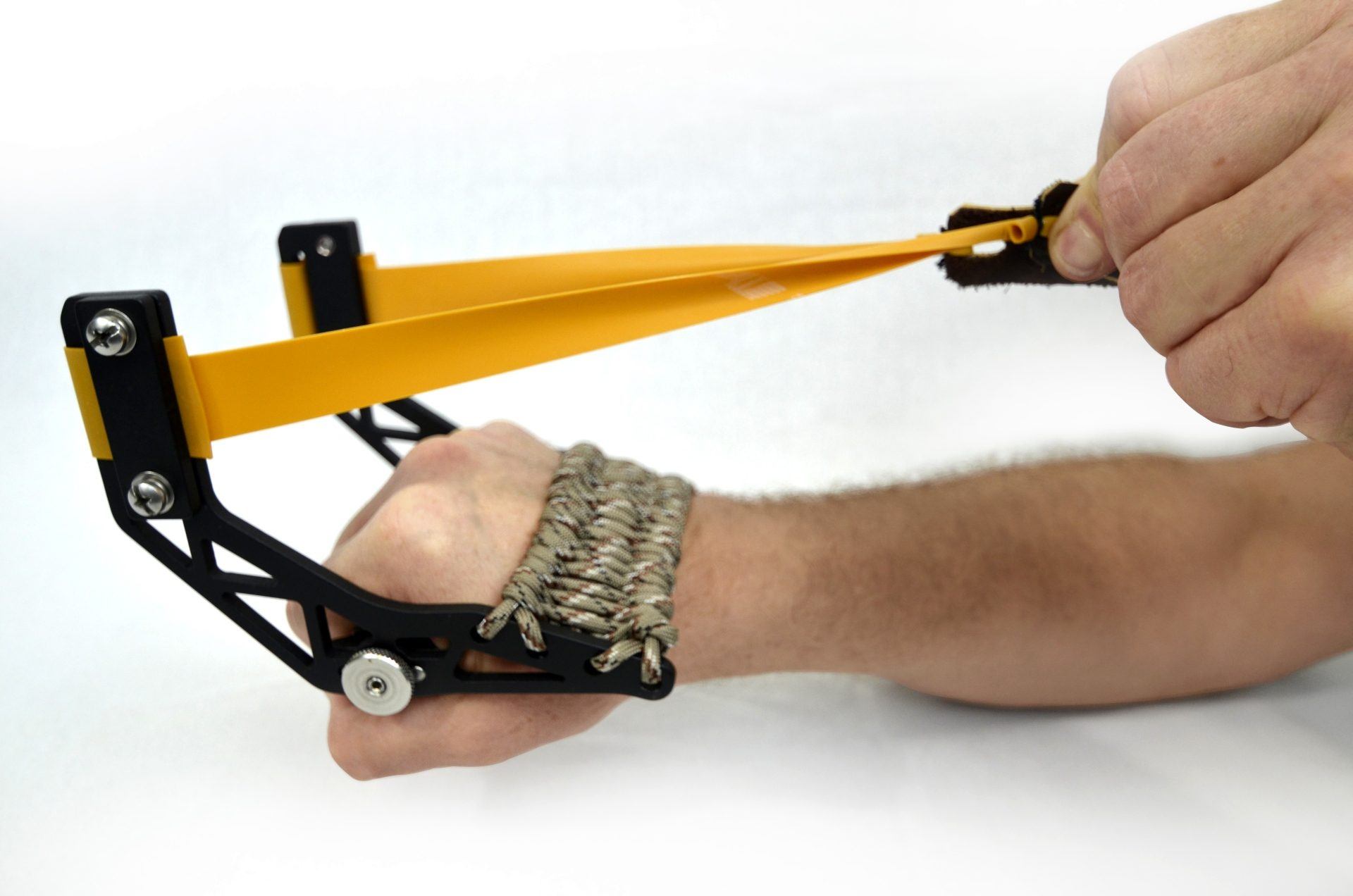
a)
sound to kinetic
b)
light to heat
c)
mechanical to electrical
d)
chemical to electrical
119.
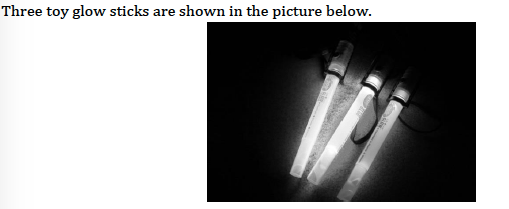
The glow sticks produce light for a short amount of time. The light from the glow stick is a conversion from what to what?
a)
thermal to light
b)
gravitational to potential
c)
radiant to electrical
d)
chemical to light
120.
On a roller coaster, where is maximum kinetic energy?
a)
At the bottom of a big hill
b)
When going around a corner
c)
When going upside down
d)
At the top of a big hill
121.
The kind of heat transfer that travels through space in electromagnetic waves is ______________________.
a)
insulation.
b)
Radiation
c)
Conduction
d)
Convection
122.
The type of heat transfer that happens through direct contact of molecules or particles with each other is ___________________.
a)
Convection
b)
Conduction
c)
Radiation
d)
insulation.
123.
___________________ is the type of heat transfer that occurs in fluids, such as warm air rising and cold air sinking; creating wind.
a)
Convection
b)
Conduction
c)
Radiation
d)
insulation.
124.
Heat from warm sand at the beach moves through the atmosphere by what method of heat transfer?
a)
Convection
b)
Conduction
c)
Radiation
d)
insulation.
125.
Freezing
a)
Solid to gas
b)
Liquid to solid
c)
Gas to solid
d)
Liquid to gas
126.
Boiling
a)
liquid to gas
b)
gas to solid
c)
gas to liquid
d)
solid to liquid
127.
Which state of matter has tightly packed molecules?
a)
solid
b)
liquid
c)
gas
128.
Which state of matter has a definite shape?
a)
solid
b)
liquid
c)
gas
129.
Define a liquid.
a)
Indefinite shape, indefinite volume
b)
Definite shape, definite volume
c)
Found in stars
d)
Definite volume, indefinite shape
130.
The state of matter that has no definite size or shape is
a)
Solid
b)
Liquid
c)
Gas
131.
What is condensation?
a)
gas to solid
b)
gas to liquid
c)
liquid to solid 
d)
solid to liquid 
132.
The molecules in the picture are tightly held together with little movement. They have shape and energy.  Therefore, the picture represents _________.
a)
solid
b)
liquid
c)
gas
d)
plasma
133.
Molecules move quickest in which state of matter
a)
solid
b)
liquid
c)
gas
d)
solid, liquid and gas
134.
Which state of matter has particles arranged like this?
a)
solid
b)
liquid
c)
gas
135.
Which state of matter has particles arranged like this?
a)
solid
b)
liquid
c)
gas
136.
Which state of matter has particles arranged like this?
a)
solid
b)
liquid
c)
gas
137.
Wood is an example of a
a)
solid
b)
liquid
c)
gas
138.
Air is an example of a
a)
solid
b)
liquid
c)
gas
139.
Oil is an example of a
a)
solid
b)
liquid
c)
gas
140.
What happens to the particles when I add heat?
a)
The particles get bigger
b)
The particles get smaller
c)
The particles get slower
d)
The particles get faster