
 Worksheets
Rock cycle full test revision
Total questions: 135
Worksheet time: 45mins
Which terms best describe igneous rocks?
light and easily broken
soft and smooth
hard and dense
soft and dense
Magma that is low in silica usually forms light-colored rocks, such as granite.
True
False
How do coarse-grained intrusive igneous rocks form?
from sedimentary rocks changed under pressure
from large rock particles cemented together
from rapidly cooling lava
from slow cooling magma
Igneous rocks are classified by their origin, texture, and mineral composition.
True
False
Extrusive rocks have larger grains than intrusive rocks.
True
False
When all the grains in a rock are large and easy to see, the rock is described as
Fine-grained
Coarse-Grained
Glassy
An igneous rock commonly used as building material is
Slate
Sandstone
Granite
An igneous rock that is formed from lava is called an
Extrusive
Intrusive
The slower magma cools, the smaller the mineral crystals form.
True
False
Extremely rapid cooling of lava in which no crystals form, creates what type of texture?
Fine-Grained
Coarse-Grained
Glassy
High silica content in magma=
Darker-colored rock
Lighter-colored rock
Low silica content in lava=
Darker-colored rock
Lighter-colored rock
What type of igneous rock forms from rapidly cooling lava?
Intrusive
Extrusive
Metamorphic
Sedimentary
Which of the following is a characteristic of intrusive igneous rocks?
They have fine grains
They form from lava
They cool slowly
They are light-colored
Which igneous rock is known for its glassy texture?
Granite
Basalt
Obsidian
Rhyolite
What is the primary difference between intrusive and extrusive igneous rocks?
Color
Grain size
Mineral composition
Density
Which of the following is an example of an intrusive igneous rock?
Basalt
Obsidian
Granite
Pumice
An example of chemical weathering is -
Ice wedging
Oxidation
Animals burrowing
Crashing waves

Ice wedging is an example of -
Physical weathering
Chemical weathering
Both physical AND chemical weathering
Over millions of years, weak carbonic acid can dissolve limestone to form -
Cracks in rocks
Caves and caverns
Mountains and cliffs

Lichens cause
Chemical weathering
Physical weathering
Moving sediment from one place to another
Weathering
Deposition
Erosion
Earthquake
The dropping off of sediments in a new place.
Weathering
Erosion
Deposition
Volcano
Which process involves the movement of rock particles by wind, water, ice, or gravity?
Weathering
Erosion
Deposition
Sedimentation
Which type of weathering is most likely to occur in a hot and wet climate?
Physical weathering
Chemical weathering
Both physical and chemical weathering
Neither physical nor chemical weathering
Which process is responsible for breaking down rocks into smaller pieces without changing their chemical composition?
Physical weathering
Chemical weathering
Erosion
Deposition
What is the main difference between physical and chemical weathering?
Chemical weathering does not involve any chemical reactions.
Chemical weathering breaks rocks into smaller pieces without altering their composition.
Physical weathering changes the chemical composition of rocks.
Physical weathering breaks rocks into smaller pieces without altering their chemical composition.
Which process is responsible for the formation of thin sheets on rock surfaces in deserts?
Frost wedging
Abrasion
Exfoliation
Salt weathering
What happens to water when it freezes in rock cracks?
It contracts and reduces pressure.
It evaporates and leaves salt behind.
It expands and exerts outward pressure.
It dissolves minerals in the rock.
Which type of weathering is most common in alpine and polar climates?
Thermal expansion
Abrasion
Salt weathering
Frost wedging
What is the result of crystallization of salts in rock pores?
Expansion of rock cracks
Formation of clay minerals
Rusting of rock surfaces
Formation of honeycomb-like pits
Which agent of abrasion is responsible for rounding pebbles in rivers?
Wind
Glaciers
Waves
Rivers
How do plant roots contribute to physical weathering?
By secreting acids that dissolve minerals
By growing into cracks and widening them
By forming clay minerals
By oxidizing iron-bearing minerals
What is hydrolysis in the context of chemical weathering?
The reaction of minerals with oxygen
The reaction of minerals with water
The dissolution of minerals by carbonic acid
The crystallization of salts in rock pores
What is the result of oxidation in rocks?
Formation of iron oxides
Formation of clay minerals
Formation of salt crystals
Formation of carbonic acid
Which process is responsible for the formation of limestone caves?
Salt weathering
Acidic dissolution
Hydrolysis
Oxidation
What is the role of carbon dioxide in acidic dissolution?
It forms strong acids with sulfur oxides.
It reacts with water to form carbonic acid.
It oxidizes iron-bearing minerals.
It crystallizes into salt in rock pores.
How do lichens contribute to chemical weathering?
By growing into cracks and widening them
By oxidizing iron-bearing minerals
By forming clay minerals
By secreting organic acids that dissolve minerals
What is the effect of human activities on weathering?
They only contribute to physical weathering.
They have no effect on weathering processes.
They only contribute to chemical weathering.
They can accelerate both physical and chemical weathering.
What is the main agent of abrasion along coasts?
Glaciers
Waves
Rivers
Wind
Which process is responsible for the 'rusted' look of some rocks?
Salt weathering
Acidic dissolution
Oxidation
Hydrolysis
What is the main effect of thermal expansion and contraction on rocks?
Formation of clay minerals
Cracking and peeling of rock surfaces
Formation of salt crystals
Dissolution of carbonate minerals
Which process is particularly common in deserts?
Oxidation
Exfoliation
Frost wedging
Salt weathering
What is the main effect of salt weathering on rocks?
Formation of clay minerals
Formation of honeycomb-like pits
Formation of carbonic acid
Formation of iron oxides
Which process involves the reaction of minerals with slightly acidic water?
Oxidation
Hydrolysis
Acidic dissolution
Salt weathering
What is the main result of hydrolysis in rocks?
Formation of carbonic acid
Formation of salt crystals
Formation of clay minerals
Formation of iron oxides
Which process is responsible for the formation of striations on rocks?
Exfoliation
Frost wedging
Abrasion
Salt weathering
What is the main effect of oxidation on rocks?
Formation of carbonic acid
Formation of clay minerals
Formation of salt crystals
Weakening and disintegration
Which process is responsible for the formation of sinkholes?
Hydrolysis
Acidic dissolution
Salt weathering
Oxidation
What is the main effect of acidic dissolution on carbonate minerals?
Dissolution and removal in solution
Formation of iron oxides
Formation of salt crystals
Formation of clay minerals
Which process is accelerated by acid rain in industrial regions?
Oxidation
Acidic dissolution
Salt weathering
Hydrolysis
What is the main role of microorganisms in chemical weathering?
They secrete organic acids that dissolve minerals.
They grow into cracks and widen them.
They oxidize iron-bearing minerals.
They form clay minerals.
What is the main effect of biologically mediated chemical weathering?
Formation of iron oxides
Dissolution and alteration of minerals
Formation of salt crystals
Formation of clay minerals
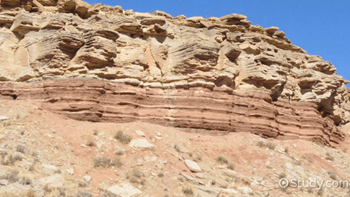
What factors can lead to the formation of a sedimentary rock?
melting and solidification
extreme heat and pressure
compaction and cementation
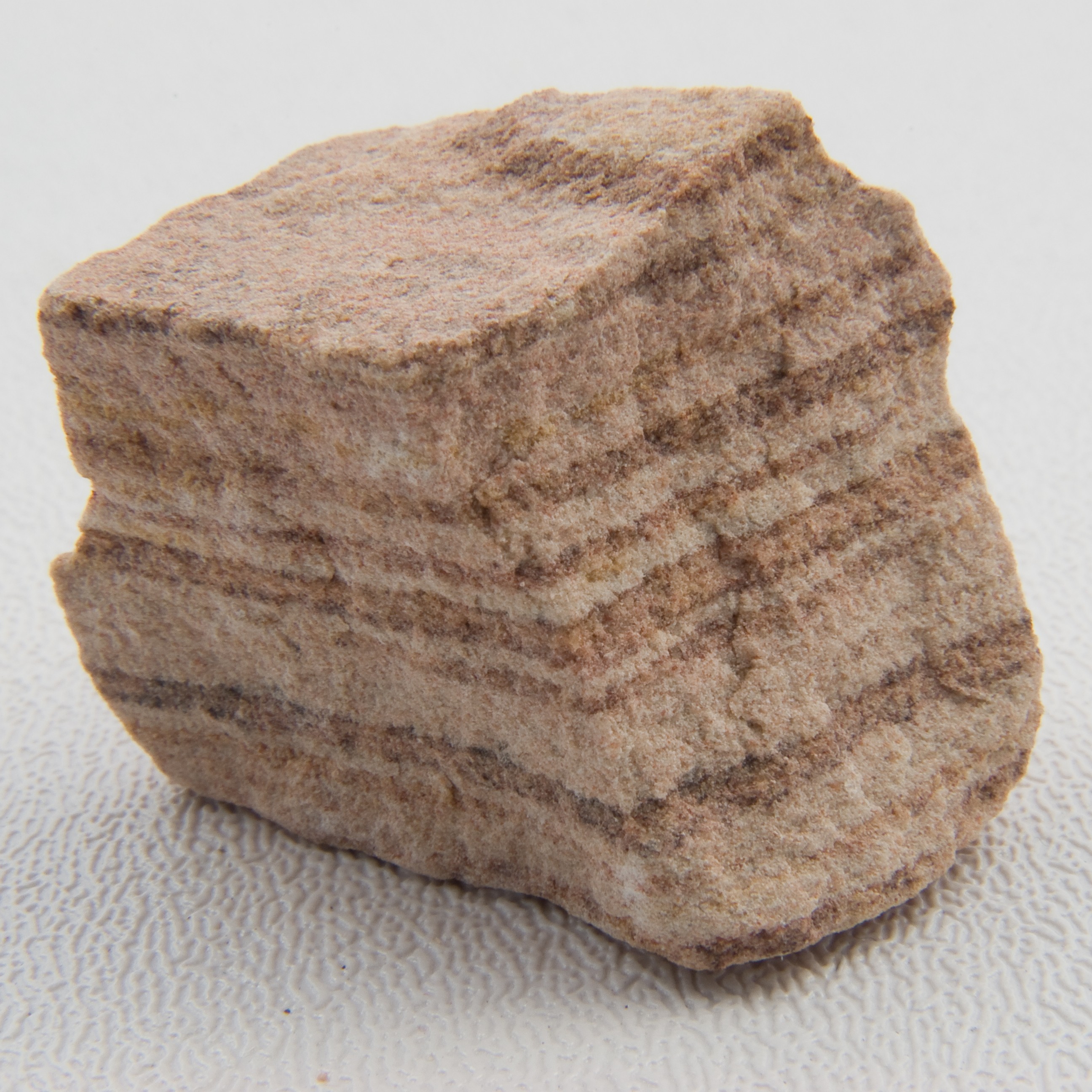
Describe the method of lithification for sandstone.
melting and solidification
compaction and cementation
evaporation and precipitation
extreme heat and pressure
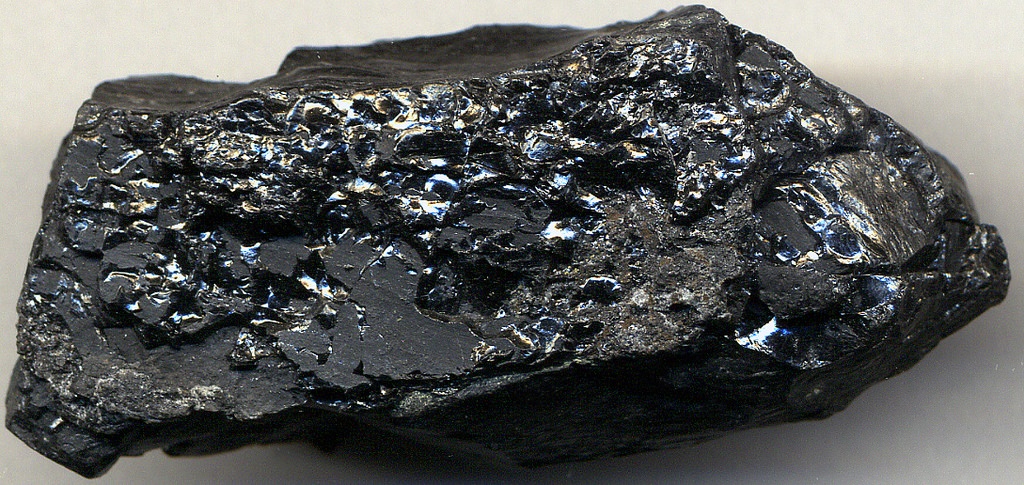
Which of the following is an organically formed sedimentary rock?
obsidian
coal
siltstone
shale

extrusive rock
Organic sedimentary rocks are...
Made from heat
Made when water evaporates and minerals crystallize
Made from the remains of dead animals/plants
Made from pieces of other rocks
What is an example of an organic sedimentary rock?


Which formation process do most sedimentary rocks follow?
cementation, compaction, deposition, erosion
erosion, compaction, cementation, deposition
erosion, deposition, compaction, cementation
The three groups of sedimentary rocks are classified by
What type of sedimentary rock is formed from the precipitation of minerals from water?
Clastic
Chemical
Organic
Metamorphic

Which of the following is true
Examples of sedimentary rocks include chalk and limestone
Sedimentary Rocks are natural occurrences
All of these are correct
Sedimentary Rocks are made up of accumulated sediments
Which type of sedimentary rock is made of pre-existing rocks?
Clastic
Chemical
Organic
Which stage of sedimentary rock formation involves pressure pressing pieces of sediment together?
Erosion
Deposition
Compaction
Cementation
magma in the Earth's mantle


clastic sedimentary
basalt
True / False: Metamorphic rocks can only form from sedimentary rocks.
True
False
Which process is primarily responsible for the formation of metamorphic rocks?
Erosion
Melting
Heat and Pressure
Deposition


When subjected to intense heat and pressure granite can become

The best answer for section "7" in the diagram
metamorphic/melting
compaction/cementation
weathering/erosion
heat/pressure

The best answer for section "4 and 9" in the diagram
metamorphic/melting
compaction/cementation
weathering/erosion
heat/pressure

The best answer for section "8"
metamorphic/melting
compaction/cementation
weathering/erosion
heat/pressure
What process is used to form sedimentary rocks?
Lava cools and hardens to form a rock.
Weathering, Erosion, Deposition, Compaction, Cementation
Extreme heat and pressure from inside the Earth turn rocks into new rocks.
Magma trapped under the Earth's surface cools and solidifies.

The process when rocks break into smaller pieces due to exposure to natural elements is called
erosion
weathering
cementation
deposition
compaction

Which letter in the rock cycle diagram represents igneous rock?
A
C
F
E

What letter on the diagram represent magma?
A
C
B
F

Letter F on the rock cycle diagram represents sediments. What processes causes sediments to form?
melting & cooling
heat and pressure
compaction & cementation
weathering & erosion

Box number 5 on the diagram represents
igneous rock
magma
metamorphic rock
sedimentary rock

What does box number 4 represent?
magma
weathering and erosion
metamorphic rock
heat and pressure
The best answer for section "A"
Sedimentary
Metamorphic
Igneous
Sediments
The best answer for section "B"
Sedimentary
Metamorphic
Igneous
Sediments
Rocks that form by the cooling and crystallization of magma
Igneous rock
Sedimentary Rock
Metamorphic Rock
Sediment

Rocks that form when sediments are compacted and cemented together
Metamorphic Rock
Magma
Sedimentary Rock
Igneous rock
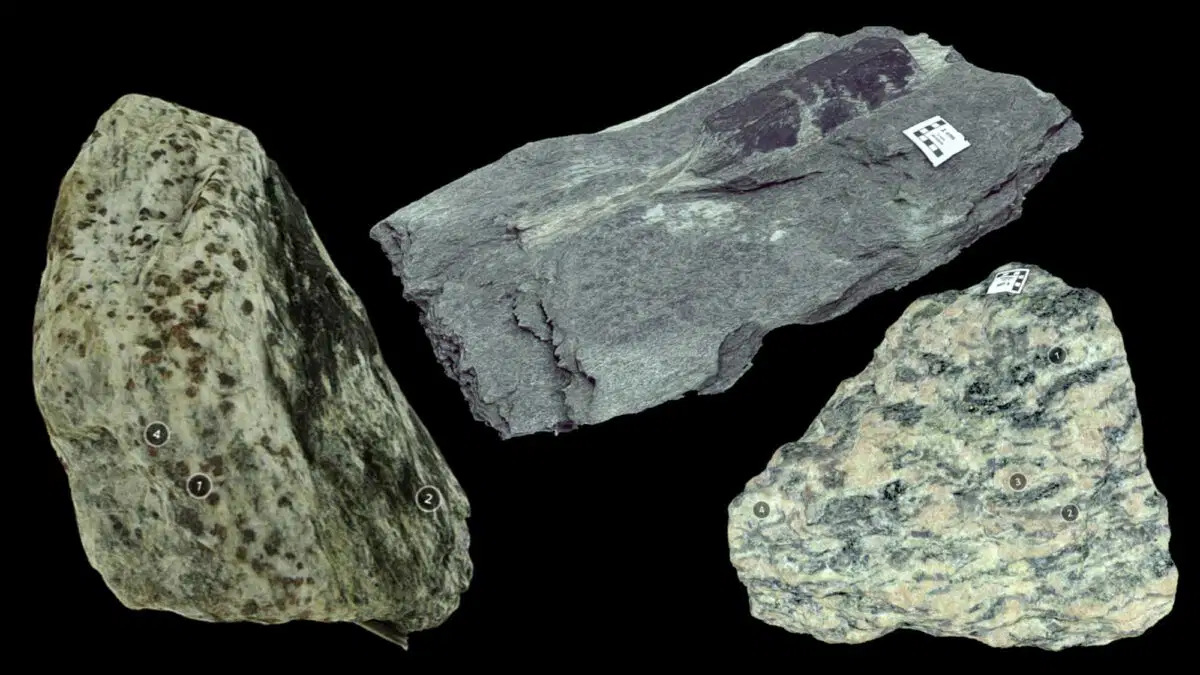
Existing rocks that undergo heat and pressure and become a new type of rock
Sedimentary Rock
Metamorphic Rock
Sediment
Igneous rock

Fragments (small pieces) that result from the breaking (weathering) of rocks, minerals, and organic matter
Metamorphic Rock
Sedimentary Rock
Igneous rock
Sediment

The physical and chemical breakdown of rocks exposed at the Earth’s surface
Weathering
Erosion
Deposition
Compaction

The transport (movement) of weathered materials (sediment)
Weathering
Cementation
Deposition
Erosion

The laying down of sediment by water, wind, or ice
Compaction
Deposition
Cementation
Crystallization
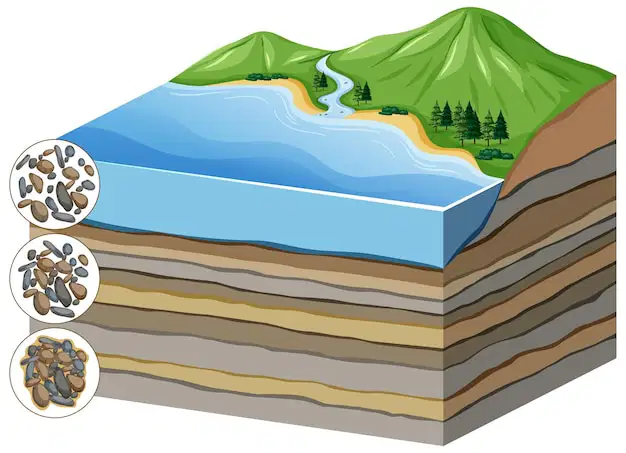
Reduction in volume or thickness of fine-grained sediments due to the increasing weight of the overlying material
Cementation
Deposition
Compaction
Crystallization
The gradual formation of crystals (minerals with an internal structure) from a liquid (magma)
Compaction
Cementation
Crystallization
Deposition
Change in state from solid to liquid
Crystallization
Erosion
Compaction
Melting
The process by which rocks are broken down into smaller pieces by physical or chemical means
Weathering
Erosion
Compaction
Cementation
The transformation of sediment into sedimentary rock through pressure and mineral precipitation
Compaction
Cementation
Crystallization
Deposition

