
 Worksheets
Cells Unit Exam
Total questions: 60
Worksheet time: 34mins
Plant cells perform photosynthesis, which occurs in the _______.
A. chloroplast.
B. cytoplasm.
C. mitochondria.
D. nucleus.
What is the primary function of a vacuole in a cell?
enzyme production
protein synthesis
storage
reproduction
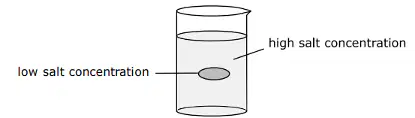
This diagram shows a red blood cell in a beaker that contains a solution with higher salt concentration than that inside the red blood cell. What will happen to the red blood cell in this environment?
The size of the red blood cell will remain constant.
The red blood cell will swell at first and then shrink.
The red blood cell will swell from absorbing salt molecules.
The red blood cell will shrink from losing water molecules.
During which phase of the cell cycle does most cell growth occur?
cytokinesis
interphase
prophase
mitosis
The chemical colchicine disrupts cell division. Which cell process would most likely stop if colchicine were added to a culture of human liver cells?
mitosis
meiosis
endocytosis
active transport
A contractile vacuole helps protists eliminate excess liquid. This is a "pumping" process which reduces pressure inside the cell and prevents the cell from bursting. This process requires energy. Which organelle in the cell is the source of energy for the cell?
DNA
golgi body
mitochondria
ribosomes
During the cell cycle, proteins called cyclins bind to enzymes that send signals for the cell to progress through stages of cell replication. At the end of this cycle, the cyclins degrade to prevent further signaling for the cell to divide. Uncontrolled production of cyclins will most likely result in-
the formation of cancer cells
healthy cells
the transfer of cyclins
an increase in mitochondria within the cell
What would most likely be produced when a cell with eight chromosomes undergoes mitosis?
Two cells with four chromosomes each
Two cells with eight chromosomes each
Four cells with four chromosomes each
Four cells with eight chromosomes each
Which statement describes the process of osmosis in an animal cell?
Sugar molecules move across the plasma membrane until the cell has enough energy to grow in size and divide.
Water molecules move across the plasma membrane until solute concentrations are equal on both sides of the membrane.
Ions move across the plasma membrane until the inside of the cell has a higher concentration of positive charges.
Enzymes move across the plasma membrane until the cell has completed metabolism.

Students construct a graphic organizer to illustrate the different levels of biological organization. Which term does the letter X represent in the graphic organizer?
molecule
tissue
ecosystem
atom
Which of the following is found in a eukaryotic cell, but is not found in a prokaryotic cell?
A. Cytoplasm
B. Cell membrane
C. Nucleus
D. Flagella
Which of the following organelles would you not find in a plant cell?
A. chloroplast
B. lysosomes
C. central vacuole
D. cell wall
Where you can find ribosomes in the cell?
A. cytoplasm
B. rough ER
C. smooth ER
D. A and B
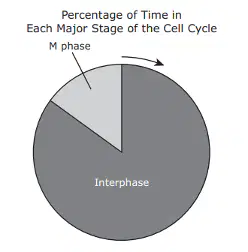
The diagram shows the major stages of the cell cycle and the percentage of time spent in each phase. Which statement best describes why a cell spends the majority of its time in interphase?
The cell is growing and carrying out processes such as metabolism and DNA replication.
The cell is aging and processes are stopping as lysomes clear dead cell matter away.
The cell needs time to synthesize spindle fibers to complete mitosis.
The cell needs time to complete cytokinesis.
What type of cellular transport requires a cell to use energy?
A. facilitated diffusion
B. active transport
C. diffusion
D. osmosis
Bacteria perform a specific type of asexual reproduction called ________.
budding
sporulation
fragmentation
binary fission
Which level of organization forms the fundamental base for all other levels in the hierarchy of life?
A. cell
B. tissue
C. organ
D. organism
A scientist is looking at cells under a powerful microscope and sees a cell with replicated chromosomes lined up in the middle of the cell. The scientist does not see a nuclear membrane but does see long spindle fibers connected to the chromosomes. Which phase of mitosis is this cell in?
metaphase
prophase
anaphase
telophase
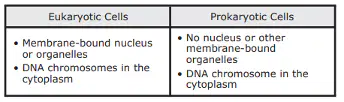
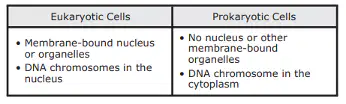
Students created note cards comparing characteristics of eukaryotic and prokaryotic cells. Which set of note cards most accurately compares these cells?
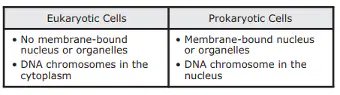
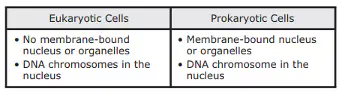
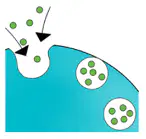
This process occurs when the cell expends (uses) energy to bring something into the cell from outside the cell. Shown in the image below:
A. endocytosis
B. exocytosis
C. osmosis
D. diffusion
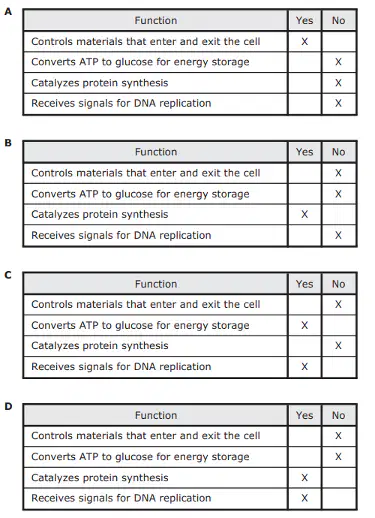
Which table correctly identifies how the cell membrane contributes to the maintenance of cellular homeostasis?
A
B
C
D
A student is studying for a biology test and gets a paper cut. Which function of the cell cycle is most related to how the cut is going to heal?
The cut will heal using asexual reproduction.
The cut will heal by the cells growing.
The cells will divide and repair the damaged skin.
The cells will divide to make different cells.
The process of DNA replication occurs just before _________.
cytokinesis
gap 1 phase
mitosis
nucleosynthesis
During which phase of mitosis do sister chromatids separate from each other?
A. prophase
B. metaphase
C. anaphase
D. telophase
Which organelle is critical for cell division?
A. centrioles
B. lysosomes
C. vacuoles
D. vesicles
Which of the following BEST explains the difference between stem cells and differentiated cells?
Stem cells have a specific function, whereas differentiated cells do not.
Differentiated cells have a specific function, whereas stem cells do not.
Stem cells divide uncontrollably, whereas differentiated cells do not.
Differentiated cells divide uncontrollably, whereas stem cells do not.
Two newly divided daughter cells are observed by a scientist. One cell has double the amount of DNA and the other has no DNA in it. Which of the following statements is the most logical explanation of what went wrong?
The cell skipped cytokinesis.
The chromatin did not condense into chromosomes during prophase.
The nuclear membrane did not disappear.
The spindle fibers did not attach to one side of the chromosomes during anaphase.
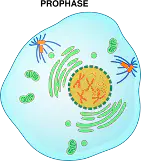
Which stage of mitosis is the cell in?
interphase
prophase
telophase
anaphase
Which of the following correctly identifies the difference between cytokinesis in plant and animal cells?
Animal cells divide the nucleus and plants do not.
Plant cells use a cell plate to divide the cytoplasm.
Plant cells divide the nucleus and animals do not.
Animal cells use a cell plate to divide the cytoplasm.
Which of the following is NOT true of cancer?
Cancer can be caused by carcinogen exposure or passed from parent to offspring, genetically.
Cancer can create tumors, which can be malignant or benign.
Cancer always results in apoptosis of the cells.
Cancer is generated by uncontrolled cell growth.
Which is NOT a current use of stem cells in the United States?
Creating human clones from pluripotent cells.
Creating tissues from embryonic stem cells.
Testing the effectiveness of medicines.
Reprogramming stem cells to mimic skin cells.
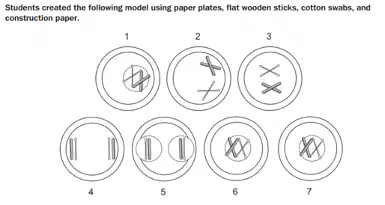
Use the picture to answer the question. Which statement correctly uses the model to explain how mitosis maintains genetic continuity?
The chromosomes in cell 1 are the same as in cells 6 and 7.
Crossing over occurs in cell 4, which increases genetic diversity in cell 6 and 7.
When the nuclear membrane reforms in cell 5, the chromosomes are duplicated.
The chromosomes that are represented in cell 2 duplicate in cell 3.
DNA is replicated during ______ of the cell cycle.
Gap 1
Synthesis (S phase)
Gap 2
Gap 0
During most of interphase, DNA is found in a relaxed form called
chromosome
centromere
centriole
chromatin
During mitosis, DNA is found in the condensed form called a
chromosome
centromere
centriole
chromatin
In prophase of mitosis, chromosomes
form and the nuclear envelope disappears.
are pulled toward opposite ends of the cell.
chromosomes line up along the equator of the cell
chromosomes begin to decondense and the two new nuclei begin to form.
In anaphase of mitosis, chromosomes
form and the nuclear envelope disappears.
are pulled toward opposite ends of the cell.
chromosomes line up along the equator of the cell
chromosomes begin to decondense and the two new nuclei begin to form.
In telophase of mitosis, chromosomes
form and the nuclear envelope disappears.
are pulled toward opposite ends of the cell.
chromosomes line up along the equator of the cell
chromosomes begin to decondense and the two new nuclei begin to form.
After mitosis, the cytoplasm and organelles are divided between the two new forming cells in a process called
centriole
chromatin
cytokinesis
centromere
These undifferentiated cells can become specialized cells after receiving a chemical signal.
stem cells
generic cells
blank cells
empty cells
The stage of mitosis where the sister chromatids separate:
prophase
anaphase
telophase
metaphase
One difference between a cancer cell and a normal cell is that _____.
cancer cells divide uncontrollably
cancer cells cannot make copies of DNA
Normal cells divide uncontrollably
normal cells cannot make copies of DNA
Organize the parts of the body system from most basic to most complex according to the levels of organization in multi-cellular organisms.
Human being --> central nervous system--> brain -->nerve tissue -->neurons (brain cell)
Neurons (brain cell) -->brain -->nerve tissue -->central nervous system -->human being
Neurons (brain cell) -->nerve tissue -->brain -->central nervous system -->human being
Nerve tissue -->central nervous system -->neurons (brain cell) -->brain--> human being
While in the womb, the webbed fingers of the embryo undergo program cell death, also known as ______.
cytokinesis
apoptosis
interphase
DNA replication
Which principle of the cell theory best supports the idea that new cells will replace damaged cells in a scrapped knee?
All living things are made of one or more cells.
Cells are the basic unit of life.
All cells come from pre-existing cells.
The nucleus of cells in animals reproduces when exposed to air.
How can cells from the same organism have such different shapes and functions?
Mutations in the cells’ nuclei lead to new combinations of DNA, resulting in different shapes and functions in the different types of cells.
During differentiation, different parts of the DNA in each type of cell are activated, resulting in the different structure and function of the cells
Each cell turned into a stem cell during fertilization and did not undergo mitosis.
During mitosis, different types of cells produce proteins which destroy the nonactive DNA, leading to the creation of stem cells
How do some chemicals increase a person's risk of getting cancer?
by causing cell mutations
by causing a vitamin D deficiency
by increasing toxins in the skin
by causing a decrease in immune response
During which phase of the cell cycle does most cell growth occur?
cytokinesis
interphase
metaphase
prophase
Why must DNA replication have to occur before a cell can divide by mitosis?
to maintain the same number of chromosomes in the daughter cells as in the parent cell
to cause one of the cells produced to have double the number of chromosomes as the parent cell
to allow crossing over to occur in each of the cells
to cause all of the cells produced to have 1/2 the number of chromosomes as the parent cell
Why is it important for cells of multi-celluar organisms to undergo mitosis?
Mitosis allows for reproduction with male and female gametes.
Mitosis increases variation within an organism.
Mitosis produces cells that are different from the original dividing cell.
Mitosis produces cells that are identical to the original dividing cell.
Substances known to produce or promote cancer are called _____.
carcinogens
kinases
cyclins
growth factors
Which of the following statements is NOT true concerning the cell cycle?
There are checkpoints that regulate the cell processes.
DNA replication takes place in the S phase of interphase.
During prophase, the chromosomes are pulled to opposite poles of the cell.
During cytokinesis, the cytoplasm begins to pinch in half.
A cell that has a distinct function is known as a _____ cell.
malignant
benign
differentiated
stem
The accululation of abnormal cells to form a mass of tissue is referred to as a _____.
gamete
apoptosis
cell plate
tumor

