
Font size
 Worksheets
Chemistry part 2 Test
Total questions: 73
Worksheet time: 3hrs 43mins
proton
lives in the nucleus & positively charge
electron
lives in the cloud & negatively charge
neutron
lives in the nucleus & no charge
valence electron
lives in the last ring & negatively charge
nucleus
where protons & neutrons are found and largest mass
metalloids
characteristics of both metals and nonmetals
metals
generally shiny, malleable, ductile, and good conductors of heat and electricity
nonmetals
generally dull, brittle, and poor conductors of heat and electricity
groups/family
vertical columns on the Periodic Table that contain elements with similar properties
period
the horizontal rows of elements on the Periodic Table

This change is a
chemical reaction
physical change
musical change
Ice Ice baby
How is a chemical change different from a physical change?
there is no difference
a physical change creates a new substance
a chemical change creates a new substance

A white tablet is dropped into water. The water becomes cloudy and bubbles are produced. What type of change has occurred?
Physical change
Chemical change
No change
The prefix that represents the number 7
Hexa
Hepta
Nona
Penta
The prefix that represents the number 4
Rectangle
Square
Deca
Tetra
This bond shares electrons
ionic
covalent
This bond consist of givers of electrons and takers of electrons.
ionic
covalent
What is the formula for Phosphorous trichloride?
PO3
PTO
P3O
P3O3
What type of bond is Ag2 (silver on Silver)
ionic
covalent
metallic


Is this a metal or nonmetal
Metal
nonmetal
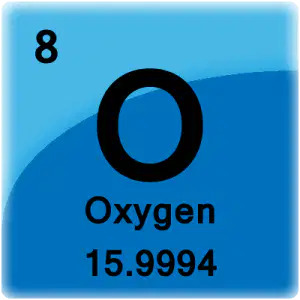
Is this a metal or nonmetal
Metal
nonmetal
Match the following prefixes with the correct numerical answer
5
penta
4
tetra
3
tri
2
di
1
mono
What is the prefix for the number 9? (a)
What is the prefix for the number 8 (a)
What is the prefix for the number 10? (a)
How many valence electrons are required for an atom to be stable.
5
6
8
7


What is the atomic mass of this nucleus?
1
3
4
7
Which of the following is true?
An atom must always have a proton, neutron and electron.
An atom can have only electrons and neutrons but no proton.
The number of protons are equal to number of electrons.
The number of neutrons cannot be more than 2.
The isotopes of an element contains _______________ .
same number of neutrons but different number of protons
same number of neutrons but different number of protons
different number of protons as well as different number of neutrons
different number of neutrons but same number of protons
An element with a mass number of 11 and an atomic number of 5 has how many neutrons?
11
5
6
16
An atom has 10 protons, 15 neutrons and 10 electrons what is its mass number.
20
10
5
25

Which of these is incorrect?


What is this element?
Beryllium (atomic #4)
Boron (atomic #5)
Carbon (atomic #6)
Nitrogen (atomic #7)

How many valence electrons?
2
3
4
5
Match the following sub-orbitals with its proper electron capacity
s
2
p
6
d
10
f
14
Match the following orbits with its maximum electron sub orbital
orbital 1
s 2
orbital 2
s 2
p 6
orbital 3
s 2
p 6
d 10
orbital 4
s 2
p 6
d 10
f 14
The smallest build(representative) building block of elements
atoms
ions
molecules
particles
Metal atoms tend to _____________electrons and become ____________ ions.
gain, positive
gain, negative
lose, positive
lose, negative
Atoms gain or lose electrons to acquire _____________
valence shells in order to become more _____________.
empty, stable
full, stable
empty, reactive
full, reactive
When ionic compounds form, positive and negative _______________ combine in a ratio that make the compound _______________
atoms, stable
atoms, neutral
ions, stable
ions, neutral
Chemistry is the...
study of the composition, properties, and interactions of matter
study of stuff
study of physical and chemical properties




______________ refers to the way a metal can be hammered or rolled into thin sheets.
Luster
Malleable
Metalloids
Solid
This group of elements have properties that are opposite those of metals. ______________________
luster
nonmetals
metalloids
metals
Iron is a good conductor, malleable and magnetic. What type of element is Iron?
Metal
Nonmetal
Metalloid
Carbon is dull and brittle. Carbon is a
metal
nonmetal
metalloid



