wayground logo

Free Printable Worksheets

Font size

S
M
L
XL
Worksheets

A&P I TCA 1 Review

Total questions: 85

Worksheet time: 3595secs

Name
Class
Date
1.
Going towards the head of the body. 
a)
Inferior 
b)
Lateral 
c)
Anterior 
d)
Superior 
2.
Further away from the point of attachment/origin 
a)
Proximal 
b)
Superior 
c)
Distal 
d)
Ipsilateral 
3.
Going away from the midline of the body. 
a)
Visceral 
b)
Posterior 
c)
Lateral 
d)
Inferior 
4.
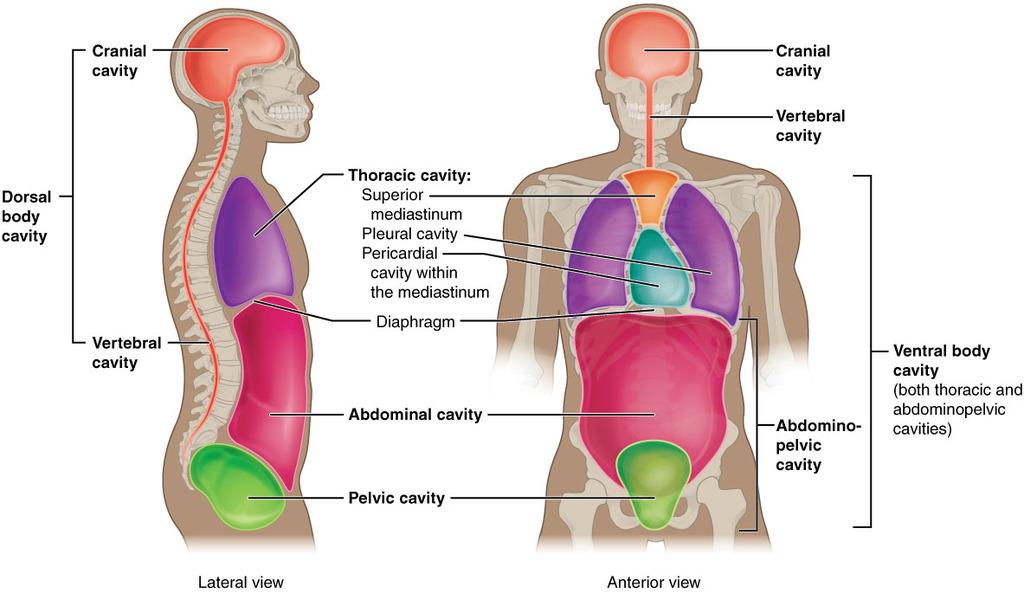
The cranial cavity and the spinal (vertebral) cavity are both contained within the _______ cavity.
a)
dorsal
b)
ventral
c)
abdominal
d)
throacic
5.
Which body cavity is located above the diaphragm and is surrounded by the rib cage?
a)
abdominal
b)
pelvic
c)
thoracic
6.
Group of cells with the same specialized purpose
a)
organ
b)
transitional
c)
tissue
d)
cells
7.
A line dividing the body into right and left sides is called
a)
superficial
b)
sagittal
c)
transverse
d)
proximal
8.
Hair is apart of which system?
a)
Endocrine
b)
Skeletal
c)
Integumentary
d)
Muscular
9.
Which body cavity contains organs including the stomach, spleen, liver, gallbladder, and pancreas?
a)
abdominal
b)
pelvic
c)
thoracic
10.
What divides the thoracic cavity from the abdominal cavity?
a)
Diafragm
b)
Diaphragm
c)
Skin
d)
Liver
11.

The ____________ skeleton is the upper and lower extremities

a)

axial

b)

appendix

c)

appendicular

d)

appennavicular

12.

Three types of cartilage include (3);

a)

hyaline

b)

fibrocartilage

c)

arthrocartilage

d)

elastic

13.

Elastic cartilage can be found in your....

a)

Intervertebral discs

b)

Ears

c)

Ribs

d)

Throat

14.

avascular means

a)

without blood

b)

with blood

c)

without nerves

d)

with nerves

15.
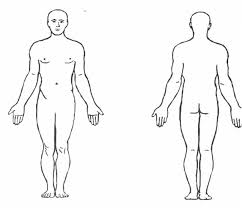
Body is standing straight, facing forward, upper limbs at side and palms facing forward. 
*right and left refer to "right" and "left" of the body in position.
a)
Sagittal
b)
Anatomical Position
c)
Anterior Position
d)
Anatomical Plane
16.

Which of the following is NOT one of the 4 major categories of tissues found in the human body?

a)

nervous

b)

vascular

c)

epithelial

d)

muscular

17.
Fat cells
a)
adipose
b)
areolar
c)
reticular
d)
nervous
18.
Most abundant type of body tissue
a)
Epithelial
b)
Connective 
c)
Muscle
d)
Nervous
19.
Nerve cells that send and receive messages
a)
neuroglia
b)
neurons
c)
chondrocytes
d)
Schwann cells
20.
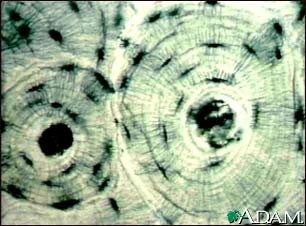
What major tissue type does bone represent?
a)
epithelial
b)
connective
c)
muscle 
d)
nervous
21.
which epithelial tissue is single layered but appears multi-layered?
a)
simple squamous
b)
stratified squamous
c)
pseudostratified ciliated columnar
d)
transitional
22.
Which of the following tissues allows materials to pass through diffusion and filtration? 
a)
stratified squamous
b)
simple cubiodal
c)
simple columnar
d)
simple squamous
23.
Found in organs like the bladder that need to stretch
a)
Areolar
b)
Stratified squamous
c)
Pseudostratified
d)
Transitional
24.
Identify:
a)
Areolar
b)
Smooth Muscle
c)
Transitional
d)
Simple Squamous
25.
a)
smooth muscle
b)
bone
c)
nerve
d)
blood
26.

A type of inter-cellular connection in which the outermost portions of the two cell membranes have a tight seal together is termed a(n)

a)

tight junction

b)

intermediate junction

c)

gap junction

d)

desmosome

27.
Allows for a flow of ions to between adjacent heart cells, permitting contractions
a)
Desmosomes
b)
Tight Junction
c)
Gap Junction
d)
plasmodesmata
28.

Epithelial tissue functions in

a)

secretion, absorption, and protection.

b)

contraction, movement, and reflexes.

c)

reacting to stimuli, thinking, and remembering.

d)

nourishing and hydrating tissues.

29.
Most connective tissue is well vascularized. What does that mean?
a)
Poor blood supply
b)
Good blood supply
30.
Which of the following is NOT a type of connective tissue?
a)
Bone
b)
Cartilage
c)
Skin
d)
Blood
31.
Initiate Swelling of tissue when exposed to an 'allergen'.
a)
Adipose Cells
b)
Mast Cells
c)
Mesenchymal Cells
d)
Lymphocyte Cells
32.
Makers Collagen, Elastin and Reticular 'molecules'.
a)
Fibroblasts
b)
Fibroclasts
c)
Mesenblasts
d)
Mastoblasts
33.

What is the function of a macrophage?

a)

As a first responder, it works by phagocytosis but can also release toxic substances from its granules in order to lyse pathogenic cells

b)

Young white blood cell found in the blood stream which gives rise to a mature phagocytic cell once it migrates to tissues

c)

One of the first responders in the immune system, it phagocytoses pathogens and may present the phagocytosed antigens to other immune cells

d)

Functions specifically to combat parasitic infection, they also help to promote inflammation and play a role in allergic reactions

e)

Functions in transport and gas exchange

34.

Match the following vocabulary to the correct description.

a)

the "filling" between the fibers and the cells

1.

ground substance

b)

all materials found outside of the cells

2.

extracellular matrix

c)

the strongest/largest/most abundant fiber

3.

collagen fiber

d)

this fiber is able to stretch and recoil

4.

elastic fiber

e)

this fiber forms a net-like scaffolding arrangement

5.

reticular fiber

35.

Match the following cells to their role in connective tissue.

a)

fibroblasts

1.

produce the extracellular matrix of CT

b)

adipocytes

2.

fat cells; energy storage

c)

plasma cells

3.

make protein antibodies

d)

mast cells

4.

release histamine for local inflammation

e)

macrophages

5.

engulf foreign substances/invaders

36.

Which type of fiber is the thickest and has the highest strength?

a)

collagen

b)

elastin

c)

reticular

37.

The purpose of connective tissue in the body is to:

a)

Conduct impulses

b)

Enable movement

c)

Protect and line body surfaces

d)

Bind, protect, and support

38.
The largest organ of the human body is the
a)
liver
b)
lungs
c)
skin
d)
heart
39.
Oil glands that are connected to hair follicles are also called?
a)
sudoriferous glands
b)
sebaceous glands
c)
arrector glands
d)
substance glands
40.
Which vitamin enables the body to properly absorb and use calcium?
a)
vitamin A
b)
vitamin C
c)
vitamin D
d)
vitamin E
41.

Which type of fiber has short, fine highly branched fibers?

a)

collagen

b)

elastin

c)

reticular

42.

Which type of fiber is long and thin and allows for stretch and recoil?

a)

collagen

b)

elastin

c)

reticular

43.

Which type of fiber is the thickest and has the highest tensile strength?

a)

collagen

b)

elastin

c)

reticular

44.

Which type of tissue is the most widely distributed, supports and binds other tissues, the universal packing material?

a)

adipose

b)

bone

c)

reticular

d)

areolar

45.

Chondrocytes are the specialized cells found in which type of connective tissue?

a)

blood

b)

cartilage

c)

blood

d)

adipose

46.

It takes tendons and ligaments longer to heal than bone injuries because __________.

a)

they are less vascular

b)

they have no nerve supply

c)

they are more vascular

d)

they lack nuclei

47.

A bone-dissolving cell is called

a)

osteogenic cell

b)

osteoclast

c)

osteoblast

d)

osteocyte

48.

A bone-forming cell is called

a)

osteogenic cell

b)

osteoclast

c)

osteoblast

d)

osteocyte

49.
This tissue carries nutrients, waste, respiratory gases, and many other substances throughout the body.
a)
Bone
b)
Cartilage
c)
Blood
d)
Adipose
50.
The liquid portion of the blood is
a)
leukocytes
b)
erthryocytes
c)
plasma
d)
thrombin
51.

What is the process of blood cells being produced called?

a)

homeostasis

b)

hematopoiesis

c)

hemostasis

d)

homogeneous

52.

The two types of involuntary muscles are

a)

smooth and skeletal

b)

cardiac and skeletal

c)

smooth and cardiac

d)

There is only one group of involuntary muscles.

53.
Which muscle type is found in your stomach, bladder, and intestines?
a)
Skeletal
b)
Smooth
c)
Cardiac
d)
Straight
54.
Which type of muscle is found in your heart?
a)
Skeletal
b)
Smooth
c)
Cardiac
d)
Straight
55.
What is this?
a)
Blood
b)
Bone
c)
Neuron
d)
Adipose
56.

What type of epithelial tissue makes up serous membranes?

a)

simple squamous

b)

simple cuboidal

c)

simple columnar

d)

stratified squamous

57.
Which of the following is not one of the epithelial membranes?
a)
cutaneous membrane
b)
mucous membrane
c)
serous membrane
d)
dermis membrane
58.
Which body membrane contains no epithelial tissue?
a)
synovial
b)
serous
c)
cutaneous
d)
mucous
59.

They are more than one kind of tissue. They are usually a tough layer of connective tissue overlaid with epithelial or lubricating mucus/serous fluid producing cells. They are thin sheets of tissue that cover the body, line body cavities, and cover organs within the cavities in hollow organs.

a)

Membranes

b)

Functions of body membranes

c)

Four types of epithelial membranes

d)

Two types of body membranes

60.

Membrane lining the body cavities open to the outside world. 

a)

serous membranes 

b)

mucous membranes 

c)

cutaneous membrane 

d)

synovial membrane

61.

Membrane lining the body cavities that are closed to the outside world. 

a)

serous membranes 

b)

mucous membranes 

c)

cutaneous membrane 

d)

synovial membrane

62.

This type of muscle tissue is attached to bones and helps control voluntary movement of the body

a)

Skeletal

b)

Cardiac

c)

Smooth

63.
a)

smooth muscle

b)

bone

c)

nerve

d)

blood

64.

What tissue is this?

a)

Epithelial

b)

Nervous

c)

Connective

d)

Muscular

65.

Match the following

a)
1.

Squamous

b)
2.

Cuboidal

c)
3.

Columnar

66.

Match the following

a)
1.

Blood

b)
2.

Bone

c)
3.

Loose Connective

d)
4.

Dense Connective

e)
5.

Hyaline Cartilage

67.

Skeletal muscle is:

a)

Voluntary

b)

Involuntary

c)

Neither voluntary nor involuntary

d)

Both voluntary and involuntary

68.
The protein that makes us "waterproof" is called
a)
keratin
b)
melanin
c)
carotene
d)
mucus
69.

What layer of the skin contains sweat glands?

a)

Dermis

b)

Epidermis

c)

Hypodermis

d)

Subcutaneous

70.

What are the three main layers of the skin? (although the third layer is often not considered an actual layer)

a)
The epidermis, the dermis, and the subcutaneous
b)
The epidermis, the dermis, and the sebaceous
c)
The dermis, the sebaceous, and the sudoriferous
d)
The sudoriferous, the dermis, and the epidermis
71.
The muscle that causes goose bumps when a person is frightened or cold is the?
a)
angled muscle
b)
secretory muscle
c)
absorption muscle
d)
arrector pili muscle
72.
The sweat gland that produces "stinky" sweat is the 
a)
Apocrine gland
b)
Eccrine gland
c)
Sudoriferous gland
d)
Sebaceous gland
73.

What part of the skin doesn't have hair?

a)

Palms

b)

eyelids

c)

earlobes

d)

nose

74.

Which type of cell is found in the hypodermis?

a)

adipose tissue

b)

keratinocytes

c)

Langerhans (dendritic) cells

d)

melanocytes

e)

Merkel cells

75.
The layer of the epidermis that is capable of dividing is
a)
Stratum basale
b)
Stratum corneum
c)
Stratum lucidum
d)
Stratum spinosum
76.
Oil glands that are connected to hair follicles are also called?
a)
sudoriferous glands
b)
sebaceous glands
c)
arrector glands
d)
substance glands
77.

Sweating and shivering are your body's way of regulating ______________.

a)

Hair growth

b)

water loss

c)

temperature

d)

vitamin D absorption

78.
The top layer of the skin is called the _________________.
a)
dermis
b)
oil gland
c)
nerve
d)
epidermis
79.
The oldest cells of the epidermis will be found here
a)
Stratum Corneum
b)
Stratum Basale
c)
Stratum Spinosum
d)
Stratum Granulosum
80.

Melanocytes in the skin produce:

a)

Keratin

b)

Melatonin

c)

Melanin

d)

Biotin

81.

Hair and fingernails are both made from the protein:

a)

Melanin

b)

Keratin

c)

Biotin

d)

Corneatin

82.

Label the parts of the skin shown here.

83.

Which of the following phases is responsible for producing an immediate response to injury?

a)

Maturation

b)

Proliferative

c)

Inflammatory

d)

Glycolysis

84.

(Past year question)

The first event in primary wound healing

a)

Epithelial changes

b)

Organization

c)

formation of blood clot

d)

deposition of connective tissue

85.

If the back of the head, front of the left arm, 1/2 the back and the entire left leg is burned, how much surface area was burned?

a)

72%

b)

54%

c)

45%

d)

36%