
 Worksheets
Earth Science Semester 1 Final Exam 2023-2024
Total questions: 170
Worksheet time: 5hrs 44mins
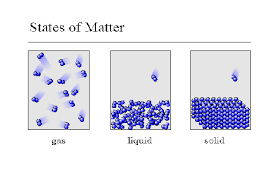
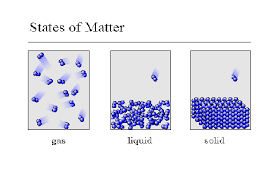

Freezing
Solid to gas
Liquid to solid
Gas to solid

Boiling
liquid to gas
gas to solid
gas to liquid
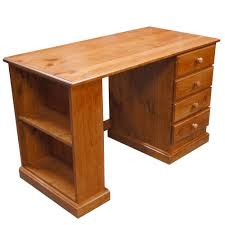

The state of matter that has no definite size or shape is
Solid
Liquid
Gas

Particles in a ______________________ move quickly and are far apart.
gas
solid
liquid
Solid to Gas
Deposition
Sublimation
Evaporation
The slower the particles in a substance move,
the colder it is.
the warmer it is.
the more energy it has.
Liquid to Gas
Condensation
Evaporation
Sublimation
Particles move relative to each other, but remain in contact with each other.
solid
liquid
gas
Basic state of matter with the greatest amount of energy.
solid
liquid
gas
What happens to particles when their temperature increases?
The particles move slower
The particles move faster
The particles lose mass
The particles gain mass
The amount of space something takes up is its...
Mass
Volume
Thermal Energy
Temperature
The energy of MOTION is...
chemical energy
radiant energy
potential energy
kinetic energy
Earth system that includes rocks, sand, and mountains
geosphere
atmosphere
hydrosphere
biosphere
Bears, people, and trees are part of what Earth System?
hydrospere
atmosphere
biosphere
geosphere
What is an interaction with the geosphere?
drinking a glass of water
a factory releasing chemicals into the air
digging a hole in the backyard
a beaver building a dam
Show answersExplanationPreviousNext
Which is an interaction with the atmosphere?
a new tree absorbing rainwater through its roots
a car releasing too much carbon monoxide
a polar bear floating on a glacier
algae growing in a pond
The word for all the Earth's living organisms is the _________.
Biosphere
Hydrosphere
Lithosphere
Atmosphere
Earth's circulating water systems is the ___________.
Biosphere
Hydrosphere
Lithosphere
Geosphere
Earth's surface and interior is the___________.
Biosphere
Atmosphere
Geosphere
Hydrosphere
Earth's relatively thin layer of gases is the __________.
Biosphere
Geosphere
Hydrosphere
Atmosphere
Which is an example of an interaction between the Hydrosphere and Atmosphere?
A cloud forms in the sky
water in the ground is used by plants
ocean waves carve out a cave into a rocky cliff
humans pollute the air
True/False: Cycles of matter show the interactions among earth systems.
True
False
The Geosphere is...
All liquid water on Earth
A 100km thick layer of gases
frozen water on earth
Earths entire solid body
Bio =
Science
Math
Life
Earth
Geo =
Earth
Sphere
Life
Water
Hydro =
Sphere
Earth
Life
Water
The rocky part of the Earth; both solid and semi-solid rock is what system?
Geosphere
Atmosphere
Cryosphere
Atmosphere
How do the geosphere and the hydrosphere interact?
The geosphere stores parts of the hydrosphere.
The geosphere erodes (shapes) the hydrosphere.
The hydrosphere stores parts of the geosphere.
How do the geosphere and the atmosphere interact?
Air contains water.
Volcanic ash can enter the atmosphere.
Living things need air to survive.
The atmosphere is...
all of earths water
the gaseous layer that envelopes the earth.
all the rock on earth
all living things
Rain falls from clouds in the sky and that provide drinking water for wildlife and humans as well as water for plant growth.
This is an interaction between which spheres?
hydrosphere: geosphere
atmosphere: biosphere
geosphere: hydrosphere
hydrosphere: biosphere
Carbon dioxide (CO2) gas is absorbed by the ocean. Which systems interact?
Geosphere : Atmosphere
Atmosphere : Hydrosphere
Hydrosphere : Biosphere
Hydrosphere : Geosphere
All living things on earth are part of the....
Biosphere
Geosphere
Hydrosphere
Cryosphere
The Geosphere is...
All liquid water on Earth
A 100km thick layer of gases
frozen water on earth
Earth's entire solid body
the hydrosphere is made up of
all of earths air
all non living things on earth
all of the Earth’s water
all the nitrogen on earth
the atmosphere is...
all of earths water
the gaseous layer that envelopes the earth.
all the rock on earth
all living things
what are the percentage of gases in the atmosphere
71% nitrogen, 28% oxygen, 1% trace gases
78% nitrogen, 21% oxygen, 1% trace gases
77% nitrogen, 22% oxygen, 1% trace gases
rain falls from clouds in the sky and that provide drinking water for wildlife and humans as well as water for plant growth.
This is an interaction between which spheres?
hydrosphere: geosphere
atmosphere: biosphere
geosphere: hydrosphere
hydrosphere: biosphere
which best represents an interaction between the atmosphere and geosphere
Rain falls and forms rivers and streams
The Sun's radiation is what keeps the Earth's interior hot and molten.
River action erodes banks and uproots plants on the riverbanks.
birds fly through the air
earth is what type of systems
open
closed
isolated
which is an example of a closed system
Yeti cooler
a open pot of boiling water
a closed pot of boiling water
lithosphere


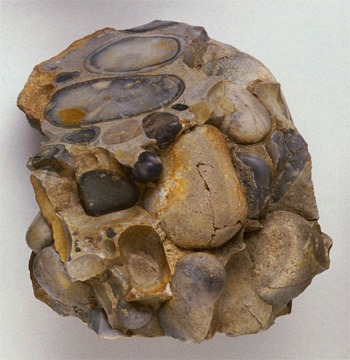


Term used to describe metamorphic rocks that have grains arranged in parallel layers or bands.
exfoliated
foliated
nonfoliated
unfoliated

Which type of rock is formed from the solidification of magma or lava?
igneous
sedimentary
metamorphic
bioclastic

Where is magma located?
above ground
below ground
in the stratosphere
in the thermosphere

Where is lava located?
above ground
below ground
in the core
in the mantle

Describe the texture of the following igneous rock.
smooth
coarse
vesicular
glassy

Describe the texture of the following igneous rock.
glassy
rough
vesicular
coarse

Describe the texture of the following igneous rock (grain size 1-10 mm).
vesicular
glassy
fine
coarse

Describe the texture of the following igneous rock (grain size < 1mm).
glassy
fine
coarse
vesicular

Describe the mineral composition of the following igneous rock.
felsic
mafic

Describe the mineral composition of the following igneous rock.
felsic
mafic

Describe the environment of formation for the following igneous rock (grain size > 10 mm).
intrusive
extrusive

Describe the environment of formation for the following igneous rock.
intrusive
extrusive

Describe the rate of cooling for the following igneous rock (grain size 1-10 mm).
slow cooling
rapid cooling

Describe the rate of cooling for the following igneous rock.
slow cooling
rapid cooling

Describe the environment of formation for the following igneous rock (grain size 1-10 mm).
above ground
below ground

Describe the environment of formation for the following igneous rock (grain size < 1 mm).
above ground
below ground


Which causes rocks to physically weather in to sediments?
Water
Ice
Wind
All of the above


Alfred Wegener thought which 2 continents looked like puzzle pieces that could fit together?
Antarctica and Asia
South America and Africa
South America and Australia
Africa and Pangaea
Alfred Wegener thought South America and Africa have similar coastlines because...
the mesosaurus fossils were found on both continents
He noticed that similar rocks were found on both continents
he thought that the continents used be be joined together
Pangaea was 250 million years ago
What cold environment feature was evidence to support the theory that the continents used to be joined?
Same rocks were found on different continents
Glacial grooves were found on different continents
Fossilized evidence of the same organism found on different continents
Africa and South America look like puzzle pieces that fit together
What evidence of an ancient organism was used to support the theory that the continents used to be joined?
Same rocks were found on different continents
Glacial grooves were found on different continents
Fossilized evidence of the same organism found on different continents
Africa and South America look like puzzle pieces that fit together
What was Pangaea?
It was a supercontinent, made of all of the landmasses on Earth.
It was 2 separate landmasses, one on the Northern Hemisphere and one on the Southern Hemisphere.
It was a supercontinent made of 3 landmasses
It was the name of an ancient organism
What was Alfred Wegenerś Continental Drift theory?
The continents used to be joined together to form a supercontinent.
The continents have since drifted apart to their current location
Pangaea was formed around 250 million years ago
All of the above
What are two pieces of evidence used to support the theory of continental drift?
Fossils and Pangaea
South America and Rocks
Rocks and Fossils
Fossils and Africa
Study of plates, their movement, and Earth’s features that they affect
Plate boundaries
Plate Tectonics
Major mountains


Where did Wegener find plant fossils that today would not be able to survive on that type of land?
North America
Antarctica
China
India

What is the name for the large landmass of all the continents that formed 175 million years ago?
Pangaea
Laurasia
United Continents
What piece of evidence for Continental Drift states that similar types and ages of rocks are found on different continents?
Continent Shape
Fossil/Climate Evidence
Landform/Rock Evidence
Glacial Evidence
What piece of evidence for Continental Drift states that the same plant and animal fossils are found on continents separated by oceans.
Continent Shape
Fossil/Climate Evidence
Landform/Rock Evidence
Glacial Evidence

The Appalachian & the Caledonian Mountain ranges have the same age & composition. This is an example of which type of clue?
Climate
Rock
Fossil
Life
Glacial grooves are an example of which type of clue?
Climate
Rock
Fossil
Life

Wegener found fossils of ancient ferns on Antarctica, this shows
That some ferns can survive temperatures well below freezing
That humans put ferns on Antarctica millions of years ago
That Antarctica drifted from a warmer climate where plants could grow
That fossils can be formed in cold climates

How was Wegener's theory received by other scientists at the time?
They thought it was great
They did not accept it

What does the theory of continental drift state?
The continents were once joined in a super-continent and have moved over time
Continents are stationary and do not move
The Earth is broken into lithospheric plates that move due to convection currents
none of the above
Who proposed the Continental Drift Theory?
Harry Hess
Alfred Wegener
Alfred Hess
None of the above
In what year was the Continental Drift Theory introduced?
1912
1945
1960
1930
What is the name of the single large continent, from which the other continents were formed?
Avatar
Pandora
Pangaea
Amazon
What type of evidence was helpful in proving the Continental Drift theory?
hidden treasures
dinosaur fossils
fossil evidence, continental fit, glacial evidence and landform and rock layers
tropical forests
When did the Earth's continents stopped breaking apart and coming together?
In 1960
It stopped in 1950 then continued to move after 1952
Between 1912 and 1930
It has not stopped, it is continually breaking apart and coming together.
When did Pangea first start to break apart?
175 million years ago
200 million years ago
30 million years ago
178 million years ago
What were the names of the two continents that started drifting apart?
Europe and South America
The Netherlands and Greenland
Laurasia and Gondwanaland
Africa and Australia
Who proposed the Plate Tectonics Theory?
Harry Osborn
Harry Potter
Harry Hess
Harry Jones
What did Harry Hess measure when he was in the navy?
volcanoes around the world
the surface of the ocean floor
how deep the ocean goes
submarines in the ocean
What is the Continental Drift Theory?
A theory that explains the weather.
A scientific discovery made in 1960.
A study of fossils and rocks
The idea that Earth's continents moved apart from a single large continent called Pangaea.
What is a plate boundary?
when two plates come together
the second layer of earth
ocean component
continental drift
What are the types of plate boundaries?
divergent, converge, transform
divergent, oceanic, transform
oceanic, continental, divergent
transform, oceanic, converge
What is a convergent boundary?
two plates that converge
two plates that drift apart
two plates that collide and push against each other
two plates that slide past each other
What type of crustal features form at a convergent boundary?
salt flats
folded mountains
earthquakes
lakes
What is a divergent boundary?
two plates that drift apart
two plates that slide past each other
two plates that collide
a fault
What type of crustal features form at a divergent boundary?
a trench
an ocean whole
an earthquake
a rift or a ridge
What is a transform boundary?
two plates colliding
two plates sliding past each other
two plates drifting apart
tectonic plates
What type of crustal features form at a transform boundary?
volcanoes
trenches
faults
valleys
What makes the plate tectonics move?
hot magma
the ocean floor
convection currents
heat waves
Why does Pangaea no longer exist?
It still exists today.
Continental Drift shifted the plates causing it to separate.
Convection Currents shift the plates causing it to separate.
Volcanic activity causes the continents to shift.
Two or more tectonic plates that move towards one another is a
Divergent Boundary
Transform Boundary
Subduction
Convergent Boundary
Two or more tectonic plates move away from each other is a
Subduction
Transform Boundary
Divergent Boundary
Convergent Boundary
Two or more tectonic plates shift horizontally alongside each other is a
Divergent Boundary
Transform Boundary
Convergent Boundary
Subduction
When one plate slips underneath another plate is called
Subduction
Transform Boundary
Convergent Boundary
Divergent Boundary
The difference between oceanic and continental plates is
oceanic plates are more dense and lower elevation.
continental plates are more dense and lower elevation.
oceanic plates are less dense and higher elevations.
continental plates are less dense and lower elevation.
An oceanic plate converges on a continental plate, which one subducts under the other?
Continental Plate
Oceanic Plate

