
 Worksheets
INF2001 - Intro to software Engineering
Total questions: 139
Worksheet time: 1hrs 12mins
Managing software changes is challenging because
Software development effort must be distributed amongst developers
Software requirements change frequently
All of the options
Developers might be located in different countries
What are the main considerations in perfective maintenance in software projects?
The main considerations in perfective maintenance are about handling exceptions or errors for better backup routines
The main considerations in perfective maintenance are about adapting to new operating systems
The main considerations in perfective maintenance are about correcting logical errors
The main considerations in perfective maintenance are about usability and performance
The main cause of problems in uncontrolled software changes includes: (You may select more than one answers)
The team did not have a procedure in place for notifying others that a change was to be made to a class Application Programming Interface (API)
The project team permits uncontrolled change to the source code master copy
Two or more developers are working on parallel development effort
There was no agreed system of preserving previous (Working) version of software
Which of the following is a configuration item: (Select ALL that is/are correct)
The software design and implementation
Test plan and harness
Problem definition and requirements specification
Source code
User documentation
What is the moving target problem in software development?
Lack of funding for software development
Lack of proper software development tools
Difficulty in finding skilled software developers
Continuous changes in requirements while the software is being developed
If a software has a logical error, such as incorrect sequencing of records, which type of maintenance activity should be applied?
Adaptive maintenance
Preventive maintenance
Corrective maintenance
Perfective maintenance
If a software development team wants to enhance to software reliability, security and robustness, which type of maintenance activity should they focus on?
Adaptive maintenance
Preventive maintenance
Corrective maintenance
Perfective maintenance
What type of maintenance activity would be appropriate if a software needs to charge to the latest operating system?
Adaptive maintenance
Preventive maintenance
Corrective maintenance
Perfective maintenance
In context of software testing, what does it mean to ‘build the right system’?
It refers to the process of debugging, ensuring the software is free of errors
It refers to the process of verification, ensuring the software is designed and developed as per the specified requirement
If refers to the process of validation, ensuring the software meets the client’s true needs and expectations
It refers to the process of coding, ensuring the software is written in the correct programming language
In context of software testing, what does it mean to ‘build the system right’?
It refers to the process of debugging, ensuring the software is free of errors
It refers to the process of verification, ensuring the software is designed and developed as per the specified requirement
If refers to the process of validation, ensuring the software meets the client’s true needs and expectations
It refers to the process of coding, ensuring the software is written in the correct programming language
Which of the following is not a goal of testing
Minimizing time span between insertion, discovery and removal
Minimize the number of defects inserted
Eliminate all defects in software
Maximize number of defects discovered and removed
What process in software testing involves determining if the software is designed and developed as per the specified requirements?
Validation
Debugging
Verification
Coding
What is validation in software testing?
The process of determining if the software is designed and developed as per the specific requirement
The process of examining the functionality and behavior of the software
The process of marketing and selling software
The process of checking if the software has met the client’s true needs and expectations
Which of the following statement(s) is/are true of testing as part of the QA process (You may select more than one option)
Provide the strongest guarantees about the system at all costs
Exhaustive testing is a requirement
Providing the strongest guarantees about the system at minimal effort and cost
Testing of own code is recommended
Exhaustive testing is not possible
What does software testing aim to ensure the software meets?
Software development goals
User requirements
Technical requirements
Both technical and user requirements
What is the main purpose of software testing?
Meeting technical requirements
Ensuring bug-free software
Meeting user requirements
All of the above
If a software development teams is in the process of checking if the software they are building meets the client’s true needs and expectations, which process are they performing?
Validation
Debugging
Verification
Coding
What is the verification in software testing?
The process of determining if the software is designed and developed as per the specific requirement
The process of examining the functionality and behavior of the software
The process of marketing and selling software
The process of checking if the software has met the client’s true needs and expectations
What are the four tasks of detailed design?
Interface design, User interface design, Internal Components and Software design
Interface design, User interface design, Internal components and Data design
Interface design, User interface design, external components and Data design
Interface design, User interface design, internal components and system design
What is the shift in design effort when moving from the Software Architecture design phase to Detailed Design phase?
The shift is from a macro design approach to a construction design approach
The shift is from a macro design approach to a micro design approach
The shift is from micro design approach to a construction design approach
The shift is from a micro design approach to a macro design approach
What are the four properties used to evaluate detailed designs?
Completeness, Correctness, Testability and Maintainability
Completeness, Correctness, Usability and Cost-Effectiveness
Usability, Cost-Effectiveness, Testability and Maintainability
Completeness, Correctness, Testability and Cost-Effectiveness
What are the two major activities for software design according to the Software Engineering Body of Knowledge? (Select TWO (2) activities)
Deployment
Maintenance
Detailed Design
Documentation
Architectural Design
What is the purpose of a software architecture diagram?
To test the software
To write user manuals
To highlight critical system interactions and relationship
To document the code
What does software architecture describe?
The fundamental concepts and properties of a system within the context of its environment, relationship, principles of design, and more
Models that depict the quality and function of the software system. The choice of applying architectural patterns for designing some architectural elements
The detailed design of the system that can be directly translated into code
The micro design approach for creating models that depict the quality and function of the software system
What is the fundamental organization of a system described as in software architecture?
Components and their relationship
Coding and Testing
User interface and environment
Data flow and communication protocols
What is the difference between software architecture and detailed design?
Software architecture and detailed design are the same thing
Software architecture is concerned with usability, while detailed design is concerned with cost effectiveness
Detailed design identifies major components of the system, while software architecture identifies the internal structure of components
Software architecture looks at the big picture, while detailed design looks at the details
What is the main goal of software architecture activities?
To transform software requirements into design elements
To create working code
To evaluate software usability
To test software maintainability
Why is software architecture considered important?
It addresses concerns of various stakeholders
It determines the programming language to be used
It focuses on detailed design
It involves construction design
What is the purpose of a software architecture diagram?
To write user manuals
To highlight critical system interactions and relationships
To test the software
To document the code
Detailed Design patterns are only applicable to specific kinds of applications.
True
False
Software architecture and detailed design both focus on identifying the major components of the system.
True
False
What is the order of the steps in the software architecture process?
[ ] Designing and evaluating the architecture
[ ] Documentation
[ ] Understanding Requirements
[ ] Identifying subsystems and components
[ ] Monitoring and Updating It
(a)
Which symbol in a sequence diagram represents a message Return from one object to another?
Line with oval
Dotted line with empty arrowhead
Line with Diamond
Line with filled in star
Dotted line with filled in arrowhead
Which UML diagram is most suitable for illustrating the collaborating and flow of messages between object during a specific use case or scenario?
Use Case Diagram
Sequence Diagram
Statechart diagram
Component diagram
Storyboard diagram
Which symbol in a sequence diagram represents a message from an actor?
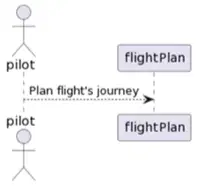
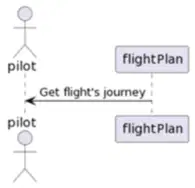
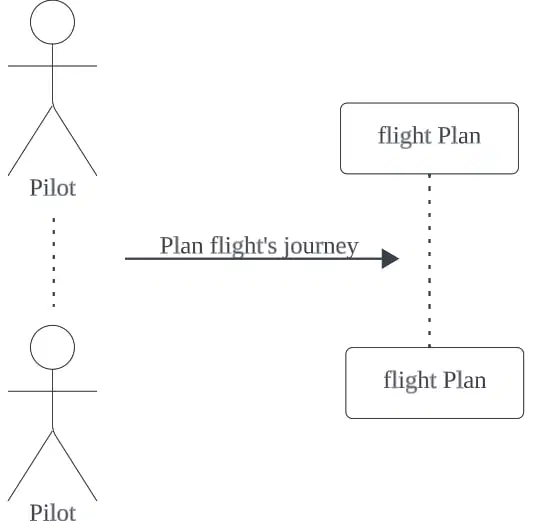
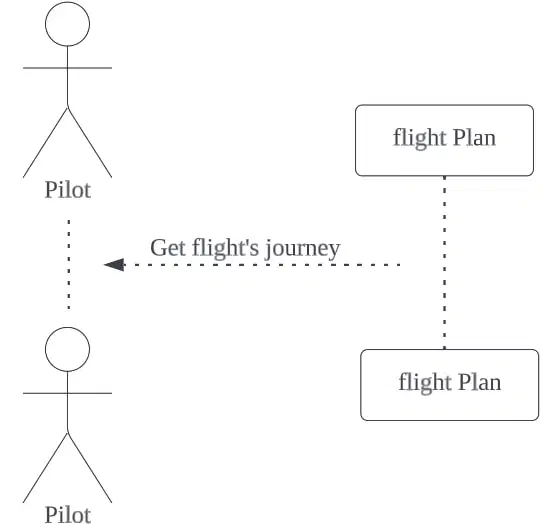
Which symbol in a sequence diagram represents a message to an actor?
Which symbol in a sequence diagram represents a self-message?
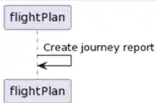
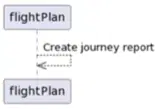
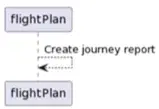
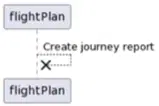
Which of the following is NOT a component of a sequence diagram?
Lifelines
Message
Sequence Numbers
Lifebars
Activation Bars
What is a sequence diagram in UML primarily used for?
None of these mentioned
Describing the structure of classes in a system
Modeling the dynamic behavior and interactions among objects over time
Defining the user interfaces of a software application
Representing the physical deployment of system components
Sequence diagram is belonged to same type of diagrams as?
Timing diagram
Object diagram
Activity diagram
Class diagram
Communication Diagram
How do you represent in a sequence diagram another flow instead of the main flow?
Use the alternative fragment
Use the option fragment
Break up the sequence diagram into multiple parts
Use another fragment
Draw a different sequence diagram and title it as Another Flow
Which symbol in a sequence diagram represents a message sent from one object to another?
Line with Oval
Rectangle
Line with Diamond
Line with filled in star
Line with filled in arrowhead
What is modularity in software decomposition?
It describes code that cannot be reused
It is unrelated to software design
It refers to making code less organized
It is an unnecessary process in software design
It means breaking a program into smaller, self-contained units
Which of the following statements accurately differentiates aggregation from compositions?
Aggregation is collection of objects that the owning class interacts
Aggregation is always a one-to-one relationship, while composition can be one-to-many
Aggregation is denoted by a solid line, while composition is denoted by a dashed line in class diagrams
Aggregation represents a strong ownership relationship, while composition represents a weak relationship
Aggregation allows the aggregated class to exist independently, while composition implies a strong lifecycle dependency
What does the term "multiplicity" refer to in a class diagram?
The visibility of a class's attributes
The number of occurence of the relationship
The number of methods a class has
The number of objects that can be associated with a class in a relationship
The complexity of a class's implementation
In an interactive application, what is the role of a Boundary class?
To manage database connections
To implement core business logic
To ensure the performance of the system
To handle user interface interactions
To encapsulate the data model
Which software decomposition approach promotes the development of reusable components?
Functional Decomposition
Process Decomposition
Object-Oriented Decomposition
Service-Oriented Architecture (SOA)
Module Decomposition
In a software system, what is the primary role of a control class?
Controlling the flow of operations and interactions
Controlling which logic to be implemented
Defining the user interface
Handling exceptions and errors
Storing data
Which of the following is a primary goal of software decomposition?
Slowing down development
None of these mentioned
Reducing modularity
Enhancing maintainability
Increasing code complexity
Which type of class is more likely to have methods for input validation and user input handling?
Interface class
Input class
Boundary Class
Entity class
Validation class
Which of the following is NOT a characteristic of a control class?
All of these mentioned
It typically has a well-defined inheritance
It is often responsible for user interface elements
It encapsulate the data storage for an object
It contains business logic
In a class diagram, what is the purpose of a stereotype?
To define the visibility of class members
None of these mentioned
To indicate a relationship between classes
To provide additional information about a class
To specify the type of inheritance relationship
What is software decomposition?
A process of breaking down a complex software system into smaller, more manageable parts
A process of breaking up a complex concept into modules, making the design more manageable
A process of compressing code to reduce file sizes
A process of optimizing code for faster execution
A process of adding new features to a software design
How is composition represented in a class diagram?
With a dashed line connected classes and a circle shape on the owned class’s end
With a dashed line connecting classes and a diamond shape on the owned class’s end
With a dashed line connecting classes and an arrow pointing to the owning class
With a solid line connecting classes and a full diamond shape on the owning class’s end
With a solid line connecting classes and a full circle shape on the owning class’s end
What is an entity class in software development?
A class that encapsulates a group of related attributes and methods
A class that represents a specific function or operation
A class that groups human users together
A class that is not used in object-oriented programming
A class used for user interface design
When should you use a boundary class in software design?
When you want to represent complex data structures
When you need to interact with external systems, user, or devices
When you want to define a contract that other classes must adhere to
When you need to encapsulate data and operations related to core functionality
None of these mentioned
What does the hollow diamond shape in an aggregation relationship indicate?
It signifies that the aggregated class is a subset of the aggregating class
None of these mentioned
It shows a strong ownership relationship between classes
It represents a “is-a” relationship between classes
It indicates a “part-of” relationship between classes
Which design principle is often associated with control classes?
Generalization
Inheritance
Polymorphism
Encapsulation
Composition
Which of the following is true regarding the size and complexity of control classes?
Control classes should be large to encompass all functionality
None of these mentioned
Control classes should be complex to handle intricate tasks
Control classes should be small and simple
Control classes have no size or complexity constraints
Which software decomposition approach emphasizes encapsulation, inheritance, and polymorphism?
Object-Oriented Decomposition
Functional Decomposition
Component-Based Decomposition
Layered Architecture
Process Decomposition
Which relationship type in a class diagram represents an “is-a” relationship between classes?
Depended
Aggregation
Association
Include
Inheritance
Which of the following best describes the relationship between a control class and other classes in a software system?
Control classes simplify the other classes by removing persistent data logic
Control classes collaborate with other classes to achieve specific functionality
Control classes are used for data storage
Control classes inherit from other classes
Control classes are always subclasses of other classes
In an aggregation relationship, can the aggregated class be associated with multiple aggregating classes simultaneously?
No, an aggregated class can only be associated with a single aggregating class
Yes, an aggregated class can be associated with multiple aggregating classes
Yes, but only if the aggregated class is abstract
None of these mentioned
No, aggregation relationships only involve a one-to-one relationship
Which of the following best describes an interface class in software development?
A class that defines the graphical user interface (GUI) of a software system
None of these mentioned
A class that encapsulates core application data and operations
A class that specifies a contract of methods that other classes must implement
A class responsible for managing communication with external databases
What is a control class in software engineering?
A class that defines the main program flow
None of these mentioned
A class that manages and co-ordinates the behavior of the other classes
A class used to implement user interfaces
A class used to implement user interfaces
In a class diagram, how are entity classes typically represented?
With a table with 3 rows
With a triangle
With a diamond
With a rectangle
With a circle
Which UML notation is used to represent a private method in a class diagram?
$
%
+
-
#
Which UML notation is used to represent a public method in a class diagram?
$
%
+
-
#
In software design, control classes are primarily concerned with:
Co-ordinating and managing interactions between other classes
User interface layout
Data storage and retrieval
Error handling and Debugging
Control class is the controller class in the Model-View-Controller pattern
Which of the following is a primary role of a boundary class?
Facilitating communication between the system and external actors
Implementing complex algorithms
Managing database and connections
None of these mentioned
Defining abstract data structures
In Object-Oriented programming, entity classes often correspond to:
External libraries
Imaginary objects or concepts
Graphical User Interface
Real-world objects or concepts
Database tables
In a class diagram, what is the purpose of a stereotype?
To provide additional information about a class
To define the visibility of class members
To define is a stereo relationship
To specify the type of inheritance relationship
None of these mentioned
How is aggregation represented in a class diagram?
With a solid line connecting classes and a hollow diamond shape on the owning class’s end
With a solid line connecting classes and an arrow pointing to the owned class
With a dashed line connecting classes and a diamond shape on the owned class’s end
With a solid line connecting classes and a hollow circle shape on the owning class’s end
With a dashed line connecting classes and a circle shape on the owned class’s end
What is the benefit of using the Work Breakdown Structure (WBS)?
It enhances communication and understanding of project scope
It automates project scheduling
None of these mentioned
It simplifies resource allocations
It reduces project risk
Which of the following is the correct definition of an object?
A self-contained entity that has data and behavior
A method that is called on an object
None of these mentioned
A class that has been instantiated
A group of objects that are related to each other
Which of the following is not principle of software design?
Abstractions
Modularity
None of these mentioned
Coupling
Cohesion
Which of the following is true about WBS levels?
The WBS should have an odd number of levels
The number of levels is fixed at seven
There are always four levels in a WBS
The number of levels depends on the project’s complexity
None of these mentioned
In object-oriented programming, what is a class?
An instance of an object
A blueprint for creating objects
A type of loop
None of these mentioned
A method that manipulates data
Which of the following is the correct definition of inheritance?
The ability of a class to have multiple parents
The ability of a class to cast an object to another class
None of these mentioned
The ability of a class to inherit the properties and methods of another class
The ability of a class to override the methods of its parent classes
Which of the following is correct definition of polymorphism?
None of these mentioned
The ability of a class to have multiple parents
The ability of a class to cast an object to another class
The ability of a class to override the methods of its parent classes
The ability of a method to behave differently depending on the object that is called on
What are the three prats that all objects and classes should have?
Name, Properties, Values
Identity, Properties, Values
Table, Rows, Name
Identity, State, Services
Name, State, Services
Which of the following is a disadvantage of Object-Oriented Programming?
It is not as widely used as procedural programming
None of these mentioned
It can be more complex than procedural programming
It can be less efficient
It can be more difficult to debug
What is a Work Breakdown Structure (WBS)?
A risk assessment framework
A document management tool
A hierarchical decomposition of project work
None of these mentioned
A scheduling technique
What is an object in object-oriented programming?
A variable
A data type
An instance of a class
A block of code
None of these mentioned
Which concepts allows you to define a blueprint for a class without creating instances of it?
Inheritance
Encapsulation
Polymorphism
None of these mentioned
Abstraction
Which model is used to describe and help better understand the properties of existing systems?
Data model
Constructive model
Analytical model
Process model
Visual model
Which of the following is not a type of inheritance?
None of these mentioned
Single inheritance
Multilevel inheritance
Hierarchical inheritance
Multiple inheritance
Which model is used to describe and help better understand the properties of existing systems?
Constructive model
Data model
Process model
Visual model
Analytical model
Which of the following is true about WBS levels?
The number of levels is fixed at seven
The WBS should have an odd number of levels
There are always four levels in a WBS
None of these mentioned
The number of levels depends on the project’s complexity
What is the purpose of abstract classes is Object-Oriented programming?
To create instance of the class directly
None of these mentioned
To prevent inheritance and polymorphism
To serve as a base class with common attributes and methods for subclasses
To provide a complete implementation of all methods
In Object-Oriented programming, what is a class?
A blueprint for creating a program
A type of loop
None of these mentioned
A method that manipulates data
A program template for creating objects
What is polymorphism in Object-Oriented programming?
The ability of similar classes to be treated as instances of the same class through different interfaces
The process of defining a class within another class
The ability of different classes to be treated as instances of the same class through a common interface
The process of encapsulating data and methods into a single unit
The ability of a class to have multiple constructors
How does abstraction contribute to software development?
It simplifies complex problems by ignoring irrelevant details
It makes software run faster by optimizing code execution
It increase the memory footprint of software applications
It reduces the need for Object-Oriented Programming languages
None of these mentioned
What does the top level of a WBS represents?
Project phases
Project objectives
Detailed tasks
Sub-projects
None of these mentioned
Which of the following is not an example of polymorphism?
Method overriding
Class casting
Operator overloading
Method overloading
None of these mentioned
What is software modeling?
Documenting user requirements
Testing software for bugs and errors
Creating visual representations of software systems
Writing code for software application
All of these mentioned
Which of the following is a disadvantage of object-oriented programming?
It can be less efficient
It can be more difficult to debug
It can be more complex than procedural programming
It is not as widely used as procedural programming
None of these mentioned
Which section of a use case description provides details about what happens after the use case is successfully completed?
Postconditions
Basic Flow
Alternate Flow
None of these mentioned
Preconditions
Which section of a use case description describes the possible variations or exceptional scenarios?
Postconditions
Basic Flow
Alternate Flow
None of these mentioned
Preconditions
Which of the following is NOT a limitation of the COCOMO model?
It may be less suitable for small projects
It requires historical data for calibration
None of these mentioned
It doesn’t consider individual developer preferences
It might not accurately handle complex projects
What is the common drawback of using expert judgement for software estimation?
It is time-consuming and resource-intensive
It may be biased by the personal opinions of the experts
It is only suitable for small projects
None of these mentioned
It cannot be combined with other estimation techniques
What symbol is used to represent a use case diagram?
Square
Triangle
Star
DiamondEllipse
What is the purpose of a use case diagram in requirements engineering?
None of these mentioned
To show the system architecture
To illustrate the flow of interaction between users and the system
To depict the user interface design
To outline the database structure
In a use case diagram, what is the use of system boundary?
It separates the system from its environment
It separates different use cases in the diagram
It separates actors in the diagram
It separates the general use cases from the specialized use cases
It separates use case from their associated actors
Which of the following is NOT a commonly used software estimation technique?
Agile Estimation
Delphi Techniques
Line of Code (LOC)
COCOMO (Constructive Cost Model)
Function Point Analysis
What is the primary purpose of a use case diagram in requirement gathering?
None of these mentioned
To depict the physical architecture of the system
To visualize the interaction between users and the system
To represent the flow of data within the system
To show the internal structure of the system
Which of the following is not a level of effort estimation used in the COCOMO model?
Semi-Detached
Embedded
Organic
Bungalow
Distributed
What section of a use case description typically outlines the steps that the actor and the system take?
Postconditions
None of these mentioned
Alternate Flow
Basic Flow
Preconditions
What is the main advantage of using historical data for software effort estimation?
It eliminates the need for any other estimation techniques
It offers a benchmark based on past project experiences
It provides an accurate predication of exact effort required
None of these mentioned
It helps reduce the complexity of the project
Which software estimation technique is based on the assumption that software development effort can be estimated based on the functional view of the system?
Delphi Technique
COCOMO (Constructive Cost Model)
Agile Estimation
Function Point Analysis
Line of Cycle (LOC)
Which part of the use case description address the conditions that must be true before the use case starts?
Postconditions
Alternate Flow
Preconditions
Basic Flow
None of these mentioned
What does the COCOMO model’s “effort multiplier” account for?
Size of the user interface
Team’s experience
Lines of code
Project’s complexity
None of these mentioned
What is the purpose of using effort multipliers in software effort estimation?
To optimized the user interface of the software
To convert lines of code into function points
To calculate the exact number of bugs in the software
None of these mentioned
To adjust the effort estimate based on the project-specific factors
What is the software estimation?
The process of debugging and testing a software application
None of these mentioned
The process of predicting the cost and effort required for a software project
The process of determination the hardware requirements for a software project
The process of designing the user interface of a software application
In a use case diagram, what does a dashed line with an arrow pointing towards the actor represent?
Include
Extend
Dependency
Generalization
Association
What is the purpose of a “Software Estimation Technique”?
None of these mentioned
To determine the marketing strategy for a software product
To provide a rough idea of the effort,time,and resources required for a software project
To accurately predict the weather during a software project
To calculate the exact duration of a software project
What is the primary purpose of a use case diagram in requirements gathering?
To visualize the interactions between users and the system
To represent the flow of data within the system
To show the internal structure of the system
To depict the physical architecture of the system
None of these mentioned
Which of the following is NOT a common factor influencing software effort estimation?
Project scope
None of these mentioned
Team experience and skills
Complexity of requirements
Developer’s favorite programming language
What is the difference between an include relationship and an extend relationship in a use case diagram?
An include relationship is mandatory, while an extend relationship is optional
An include relationship shows a generalization, while extend relationship shows a special case
An include relationship depicts a temporal sequence, while extend relationship depicts an optional sequence
An include relationship is used for sub-tasks, while extend relationship is used for system events
There is no difference, they can be used interchangeably
What is the main purpose of a use case description?
None of these mentioned
To outline the architectural structures of the software
To provide a visual representation of the system interactions
To define the technical implementation details of the system
To describe the functionality and behavior of a specific use case
What is the most effective way of managing team conflicts?
Assigning blame to one person in particular
None of these mentioned
Discussing the issues openly and coming up with solution together
Ignoring the issue until it goes away
Yelling and screaming at each other until one person breaks down
In which phase of the software development life cycle (SDLC) do you start coding?
Planning
Requirements Gathering
Implementation
Maintenance
Design
What does the term “elicitation” mean in the context of requirements engineering
Prioritizing requirement
Reviewing and approving requirements
Collecting and discovering requirements from stakeholders
Documenting requirements
Which of the following is an example of non-functional requirement?
The system must allow users to log in using their email address
The system must have a responsive user interface
The system must use a relational database
The system must generate monthly reports for management
Which SDLC model is best suited for project with low risk and fixed well-defined scope?
Agile model
Incremental model
Iterative model
Waterfall model
Spiral model
Which of the following is an example of communication barrier that may arise in a team project?
All team members have the same background and skill set
Allowing team members to work completely independently
Language barriers
Everyone likes each other too much
Having too many teams meetings
What is the effective way to track project progress?
Allowing team members to work completely independently
Assigning blame to one person in particular
Conducting regular check-ins and giving clear feedback on progress
None of these mentioned
Setting unrealistic goals to motivate the team
Which of the following is an important factor to consider when setting project timelines?
None of these mentioned
Setting an unrealistic timeline to motivate team
Making the timeline too long to ensure all task are completed leisurely
Withholding information about timeline to prevent under stress on the team
Allowing for buffer time in case of delays
Which of the following is not an essential component of a software requirement specification (SRS)?
Design Diagrams
Non-functional requirements
Functional requirements
Acceptance Criteria
Constraints and Assumptions
Which of the following is a functional requirement?
The system must allow user to create, edit, and delete documents
The system must be user-friendly
The system must be developed using Java programming language
The system must support 1000 concurrent users
If a client wants to develop a software for commercial use that has all its key functions available from an Off-The-Shelf software. Only with very minimal refinements are required. What would you recommend your client to do?
Suggest your client to get Off-The-Shelf software as there may be many IP challenges
Charge the client minimally as the charges are very minor
None of these mentioned
Charge the client highly
What is the main objective of the requirement negotiation process?
To eliminate non-functional requirements
To finalize the software architecture
To achieve consensus among stakeholder on conflicting requirements
To replace user requirements with technical specification
What is the main goal of requirements validation?
To identify conflicts, error and omission in the requirements
To finalize the requirement before development begins
To ensure that the requirements meet international standards
To determine the optimal development methodology
What is the purpose of feasibility study during requirements engineering?
To determine if the software can be developed within the timeline
To access the technical skills of the development team
To create a detail software design
To evaluate the cost-effectiveness and practicality of the software project
What does the term “Verifiable” mean in the context of requirements?
Requirements must be easy to understand
Requirements must be testable and measurable
Requirements must be approved by a verification team
Requirements must be documented using technical language
Which of the following is a characteristic of well-defined requirement?
Completeness
Ambiguity
General Wording
Multiple Interpretations
In which phase of the software development life cycle (SDLC) are the user requirements documented and analyzed?
Planning
Design
Implementation
Requirements gathering
Maintenance
If a client wants to develop a software for commercial use that has a lot of its functions that are unconventional. How would you begin?
None of these mentioned
Don’t waste time with this client and move on to the next
Convince the client to keep it realistic
Conduct a focused interview
Which of the following should be included in the project plan?
A list of team member’s personal phone numbers and address
Personal interests of team members
None of these mentioned
Goals and Objectives
A list of team member’s performance scores

